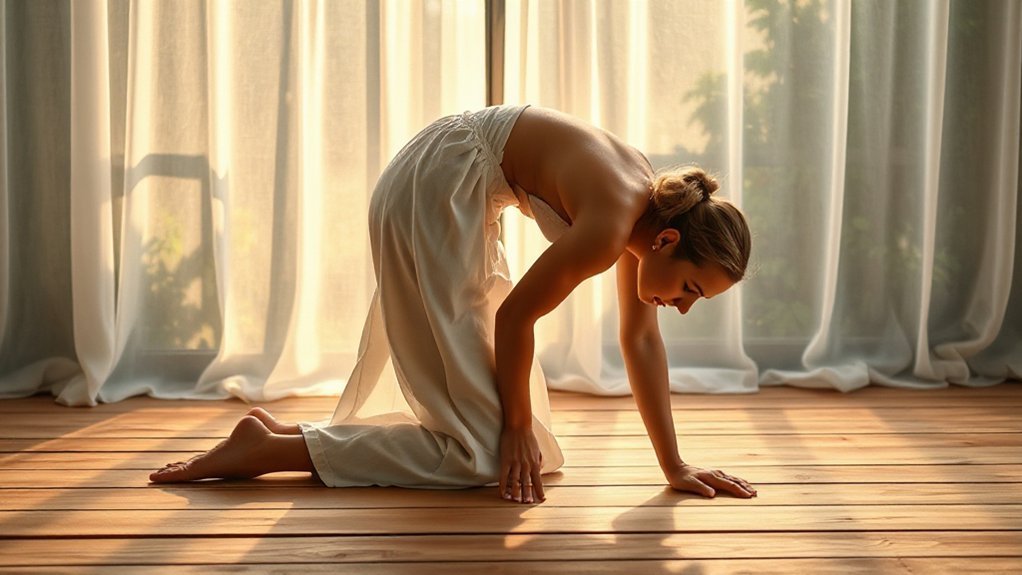

You’ll transform flexibility by breathing intentionally into each stretch—that’s the game-changer. Start with dynamic warm-ups like Cat-Cow, then hold static poses for 30–60 seconds while syncing your breath: inhale to create space, exhale to sink deeper. This nervous-system calm prevents overreaching and builds body awareness. Aim for short sessions most days rather than occasional long ones; consistency wins. Props like blocks and straps aren’t crutches—they’re alignment tools that let you progress safely. Discover how targeted sequences for hips, shoulders, and your lower back unleash genuine mobility.
Key Takeaways
- Start with dynamic stretches like Cat–Cow to warm up, then progress to static holds of 30–60 seconds for flexibility gains.
- Practice 10–20 minutes most days rather than occasional long sessions; consistency builds mobility and control more effectively than sporadic practice.
- Coordinate breathing with movement: inhale to lengthen and create space, exhale to deepen stretches and release tension safely.
- Use props like blocks, straps, and bolsters as alignment tools to modify poses, prevent injury, and safely increase intensity.
- Focus on interconnected tight areas: shoulders, upper back, lower back, and hips; targeted sequences release tension while building strength.
How to Breathe Into Your Stretches: Form, Timing & Technique
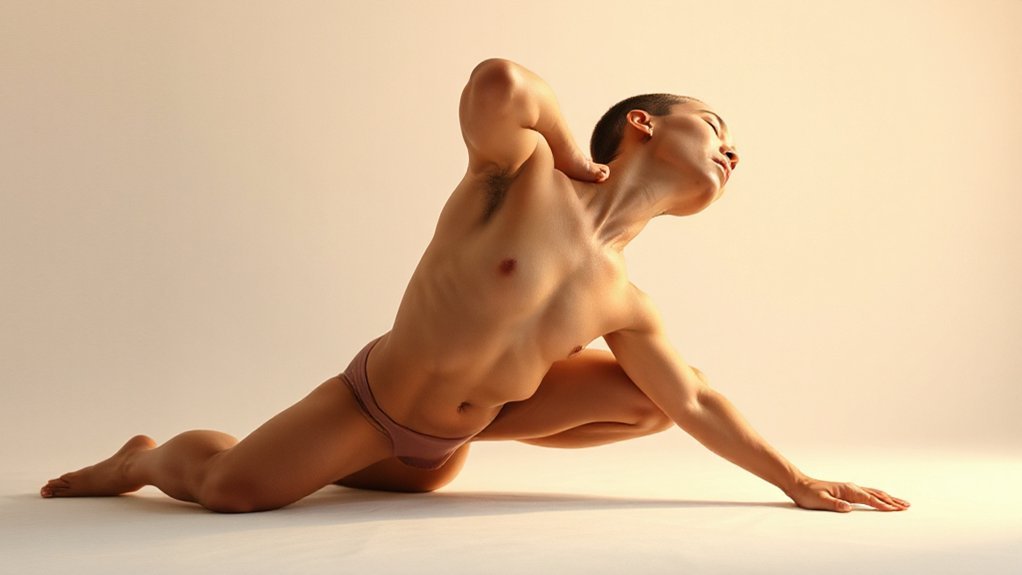
Why does your breath matter so much when you’re stretching? Because it’s literally your gateway to deeper, safer flexibility. Here’s the thing: when you breathe steadily and deliberately, you’re telling your nervous system to chill out. That calm signal? It relaxes the muscles guarding your joints, letting you sink further without forcing anything.
Start with diaphragmatic breathing—slow inhales filling your belly, slow exhales releasing tension. Coordinate this with movement: inhale to lengthen and create space, exhale to fold deeper or soften into the stretch. Hold static stretches for at least 30 seconds, about 5–10 breaths, maintaining that steady rhythm. If intensity spikes, switch to gentle dynamic movement synced with breath instead—inhale back slightly, exhale forward again. Think of breathing as your attentional anchor. Mindful breaths keep you present, prevent overreaching, and build awareness of where pain actually begins. You’re not forcing flexibility; you’re inviting it.
8 Yoga Stretches for Full-Body Flexibility
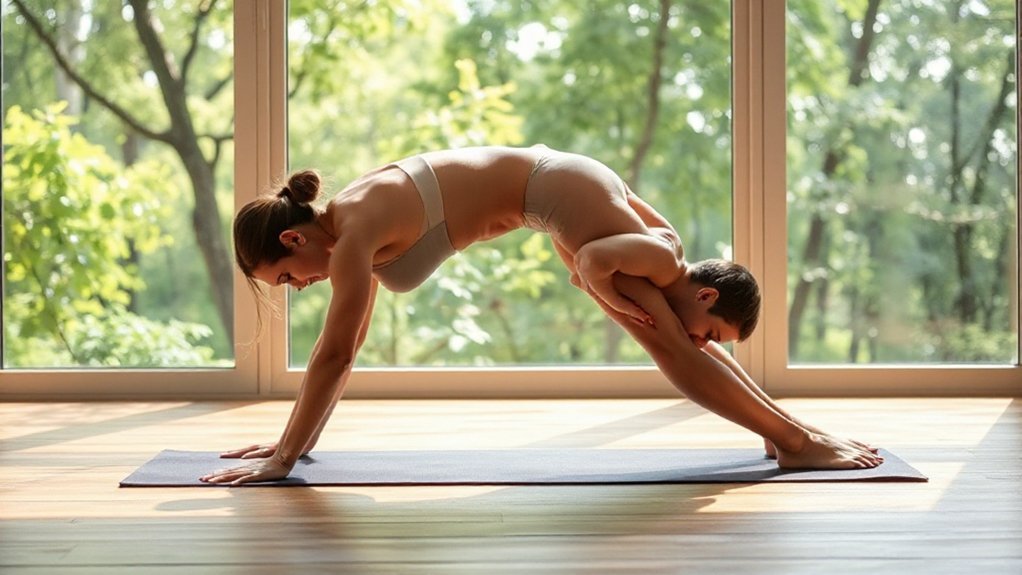
Building a complete yoga stretching routine means hitting every major muscle group—shoulders, hips, spine, hamstrings, the works—and you don’t need an hour to do it. Aim for 30 seconds to one minute per static hold; that’s where the real flexibility magic happens. Ten minutes daily or 20 minutes a few times weekly delivers genuine mobility gains over time.
Start with dynamic, movement-based stretches to warm up your body. Then layer in your key poses: Downward Facing Dog opens shoulders and hamstrings, Child’s Pose releases your low back and hips, and Cobra elongates your spine and hip flexors. Thread the Needle tackles stubborn shoulder tension, while Low Lunge Twist integrates your hips, hamstrings, and spine together.
The beauty? You’re not picking random stretches. You’re strategically covering everything, breath by breath, building flexibility that actually sticks around.
Dynamic or Static: Which Stretches Should You Choose?
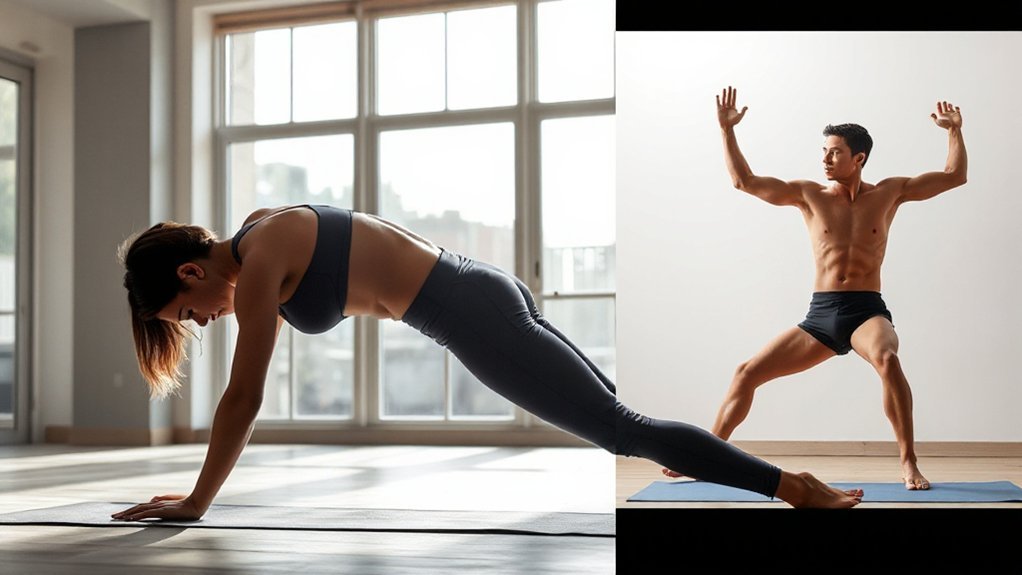
Not all stretches serve the same purpose, and that’s exactly where most people get stuck. Here’s the truth: dynamic stretches—those flowing lunges and Cat-Cow movements—prep your body before activity, warming muscles and boosting performance. Static stretches? Save those held poses for after your workout or dedicated flexibility sessions, holding each at least 30 seconds. Your breath matters here. Coordinate your inhales to lengthen and exhales to release; it’s how you access deeper stretches and find mental calm. Struggling to hold a pose? Convert it to gentle in-and-out movements instead—that’s how you build mobility safely. Choose based on timing and goals: pre-workout demands dynamic energy, post-workout welcomes passive flexibility. Use modifications and props freely. Listen to your body, avoid pain, and let your current comfort level guide you. That’s how you stretch smart.
Yoga Stretch Modifications: Props and Adjustments for Every Body
You’ve got options—lots of them—when it comes to making yoga stretches work for your body, whether you’re building toward deeper holds or protecting joints that need extra care. Props like bolsters, blocks, blankets, and straps aren’t crutches; they’re alignment tools that let you stretch smarter, not harder, by supporting your body in exactly the positions where you need it most. We’ll show you how to modify poses for your shoulders, hips, lower back, and more, plus how to dial intensity up or down so you actually feel the benefits without overdoing it.
Props For Deeper Stretches
Incorporating props into your practice transforms stretching from a one-size-fits-all affair into something that actually works for *your* body—and that’s the whole point. Blocks become your secret weapon: slip one under your sacrum in Bridge Pose for passive support that lets you hold longer without burning out, or place them under your hands in Triangle to safely deepen the stretch while keeping alignment intact. Straps? They’re hamstring lifelines, especially in forward folds where tight muscles resist. Towels work magic under your heels in Downward Dog, easing calf tension instantly. Even stacked blankets lengthen Child’s Pose into genuine rest. The magic isn’t the props themselves—it’s how they let you *actually feel* the stretch without compensation or injury, meeting your body exactly where it lives today.
Body-Specific Pose Adjustments
Because everyone’s body speaks a different language, the same pose that opens one person’s hips might pinch another’s knees—and that’s not a failure, that’s just anatomy. Your job? Listen to what your body needs, then modify accordingly.
- Wrist discomfort in tabletop or Cat-Cow? Lower onto your forearms or make fists instead of flattening your palms.
- Hamstrings screaming in Downward Dog? Bend your knees generously or lift your hands onto blocks to take pressure off.
- Lower back complaining during Bridge? Slip a block under your sacrum—it transforms the pose from effortful to genuinely restorative.
- Balance poses feeling wobbly? Practice against a wall or use a block under your lower hand for stable alignment.
These adjustments aren’t shortcuts. They’re smart, honest ways you honor your body’s actual needs today.
Modifying Intensity With Alignment
Props aren’t crutches—they’re your alignment allies, and they’ll change how you experience every stretch. A block under your hand in Triangle? That’s honest support, not weakness. It keeps your spine neutral while you actually feel the work, rather than strain chasing a pose you’re not ready for.
Use props to dial intensity up or down. Lower that back knee in Lunge. Keep knees bent in Downward Dog. Nestle a bolster under your sacrum in Bridge—your lower back’ll thank you. These tweaks let you breathe deeper, stretch longer, and build real flexibility without fighting your body’s honest limits.
Progress slowly. Raise the block height gradually. Unroll that blanket inch by inch. Small shifts over weeks beat forcing alignment in one desperate session. You’re building sustainable strength, not collecting Instagram moments.
Yoga Stretches by Target Area: Hips, Shoulders, Lower Back & Beyond
You’ve probably noticed that tight hips, stiff shoulders, or an achy lower back don’t show up alone—they’re usually connected, pulling on your whole body like a tangled web of tension. The good news? You don’t need a dozen different stretches; instead, you can target these problem areas with specific poses that also build strength and mobility together, and we’ll walk you through the progression that actually works for your body. Let’s break down hip flexibility first, then move into opening up your shoulders and upper back, and finally address that lower back—because once you understand what each region needs, everything clicks into place.
Hip Flexibility Progression
Building hip flexibility takes patience, consistency, and a smart sequencing strategy—but here’s the good news: you’ll notice real changes within weeks if you stick with it.
Start warm with Child’s Pose and Cat/Cow to wake up your pelvis. Then progress strategically:
- Low Lunge holds (30–60 seconds) lengthen tight hip flexors
- Pigeon Pose with a block under your hip deepens external rotation safely
- Seated forward folds release your posterior hips without forcing depth
- Dynamic leg swings between static stretches maintain mobility and control
Keep sessions short—10–20 minutes most days beats occasional long marathons. Use props generously; they’re not cheating, they’re smart. Breathe into each stretch, exhale to soften deeper. Stop immediately if sharp pain hits. Pair hip work with thoracic and lower-back mobility to prevent compensations and access your full range of motion.
Shoulder & Upper Back
Releasing tension from your shoulders and upper back might feel like opening a door you didn’t know was stuck—and honestly, most of us carry stress right there, in those tight muscles between our neck and spine. You’ll find relief through targeted stretches that link breath to movement, creating real change in your body.
| Stretch | Target Area | Duration | Key Tip |
|---|---|---|---|
| Thread the Needle | Shoulders, neck | 30 sec/side | Exhale as you descend |
| Downward Dog | Upper back, scapula | 30–60 sec | Widen hands if strained |
| Cat–Cow | Thoracic spine | Dynamic flow | Move with breath |
| Child’s Pose | Shoulders, upper back | 30–60 sec | Use bolster for support |
Start with static holds lasting at least thirty seconds—your muscles need that time to genuinely release. Use props liberally. Pain means modify, never push through it.
Lower Back & Core
Your lower back’s relationship with your core isn’t a luxury—it’s the foundation of everything you do, from sitting at a desk to lifting groceries to simply standing tall.
You’ll target spinal mobility and hip flexors with these essential poses:
- Cat-Cow flows that mobilize your spine gently, breath by breath
- Child’s Pose for deep relaxation (use a bolster if needed)
- Cobra or Sphinx to activate your core and open your front body
- Bridge with a block beneath your sacrum for restorative strength
Hold each stretch 30 to 60 seconds, syncing your breath—inhale to create space, exhale to deepen. Short daily sessions, even 10 minutes, build resilience. Stop if you feel sharp or nerve pain. Consistency wins here; you’ll notice real relief within weeks.
Build a 20-Minute Yoga Stretching Practice That Fits Your Day
Crafting a stretching routine that actually works doesn’t mean you’ve got to overhaul your entire day—you just need a smart 20-minute sequence that hits your whole body and flows with your natural rhythm. Pick six to eight poses, spending two to three minutes on each. Start with Child’s Pose or Cat-Cow to warm up, then move into Downward Dog, Low Lunge Twist, and Cobra. Finish with Thread the Needle to really target those tight spots.
Here’s the secret: hold static stretches for thirty to sixty seconds—that’s five to ten full breaths—and tie everything to your exhales. When you breathe out, you sink deeper. When you breathe in, you lengthen. Grab a block or blanket if you need support; modifications aren’t shortcuts, they’re smart choices.
Do this three to five times weekly, or grab three focused stretches on crazy-busy days. Your body—and your nervous system—will thank you.
Frequently Asked Questions
What Is Yoga Stretching?
Yoga stretching blends held poses with mindful breathing to lengthen your muscles and expand your joints’ range of motion. You’re not just passively stretching—you’re integrating strength, stability, and calm through intentional sequences like Downward Dog or Low Lunge. Hold poses for thirty seconds to a minute, breathe deeply, and you’ll notice real gains in flexibility and posture. You can modify everything with props, making it accessible wherever you are.
What Are the 7 Basic Yoga Poses?
You’ve got seven foundational poses to master: Mountain grounds you upright, Downward-Facing Dog stretches your whole back body, Warrior I and II build leg strength and focus, Triangle opens your sides and hamstrings, Tree challenges your balance, Child’s Pose calms everything down, and Cobra gently arches your spine. Hold each thirty seconds minimum—five to ten breaths—and you’ll notice real flexibility gains. These aren’t fancy; they’re your yoga toolkit, honestly.
What Are Some Common Yoga Stretches?
Think of your body like a garden—you can’t rush growth, only tend it wisely. Child’s Pose nestles your hips and lower back into rest. Downward Dog lengthens shoulders, hamstrings, calves. Cat–Cow mobilizes your spine with breath. Cobra opens your chest and hip flexors. Pigeon and Low Lunge crack open those stubborn hips. You’ll hold most stretches five to ten breaths—that’s your sweet spot. Add props when you need them.
So
You’ve mapped your stretching journey—breathing deeply, choosing your style, tweaking poses for your body, targeting trouble spots. Now? You’re ready. That twenty-minute practice isn’t some distant goal; it’s yours to build, modify, own. Your muscles’ll thank you. Your mind’ll settle. You’ve got the tools, the knowledge, the permission to move at your pace. So roll out that mat. Breathe in. Start.





Leave a Comment