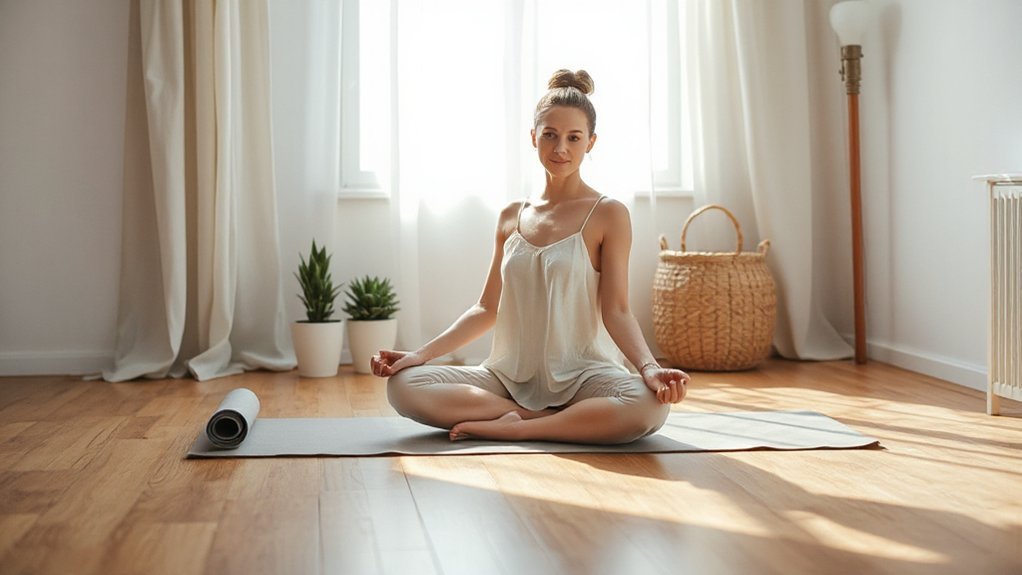

You don’t need flexibility or strength to start—just ten to thirty minutes and willingness to link breath, body, and mind. Yoga reduces stress, builds strength, and improves balance within weeks. Begin with a beginner class or gentle ten-minute home sequence two to three times weekly. Use props like blocks and straps to protect your joints; breathe through your nose, exhale completely. Stop if you feel dizzy or sharp pain. The real magic unfolds once you understand which poses and styles actually fit your goals.
Key Takeaways
- Yoga requires no prior fitness or flexibility; props and modifications make poses accessible to all beginners.
- Start with 10–30 minute sessions 2–3 times weekly; measurable flexibility and balance improvements appear within weeks.
- Focus on foundational poses like Tadasana, Downward Dog, and Child’s Pose with proper breath technique.
- Use props generously—blocks, straps, blankets—to prevent overstretching and protect joints during your practice.
- Enroll in beginner or gentle classes; inform instructors of injuries so they provide safe modifications.
What Yoga Is and Why Beginners Should Start Now
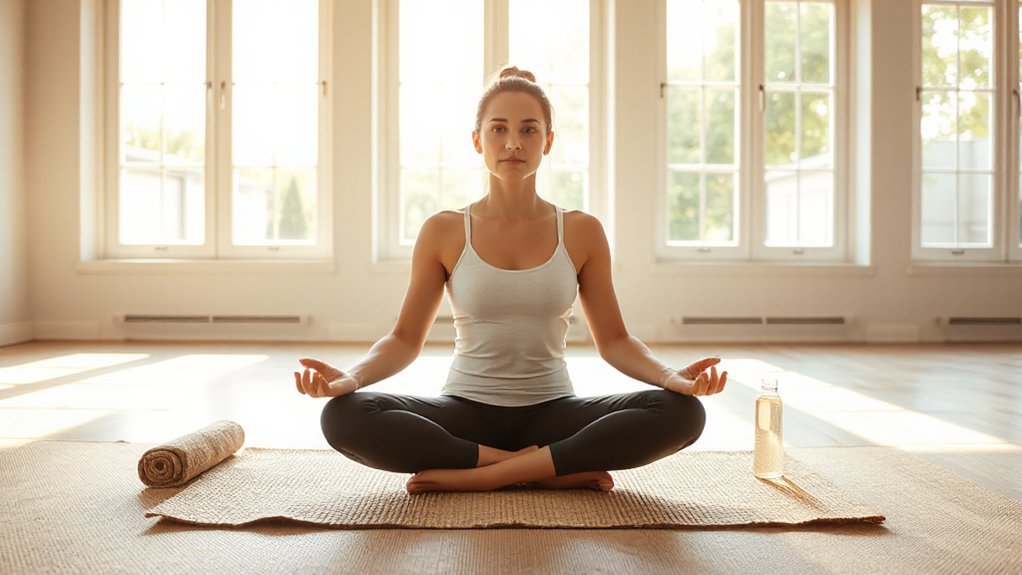
When you hear “yoga,” you might picture someone twisted into a pretzel, but here’s the truth: yoga is really about connecting your body, breath, and mind—that’s what the Sanskrit word actually means, “to yoke.” Born thousands of years ago in India, yoga has evolved from a spiritual practice into a science-backed approach that combines physical postures (called asanas), controlled breathing (pranayama), and mindfulness to help you feel stronger, more flexible, and genuinely calmer.
Why start now? You don’t need to be flexible or fit. Research shows that even short practices—ten to thirty minutes—reduce stress, lower cortisol levels, and ease chronic pain. Modern yoga adapts to you: gentle styles, vigorous flows, blocks, blankets, bent knees. Whatever your body needs, yoga meets you there. You’ll build strength, improve balance, and develop real body awareness. The best time to begin? Today. Start with a beginner class or simple home sequence, let your breath guide you, and move slowly. Your mind and body are waiting.
Health Benefits You’ll Notice First

You’ve made the commitment to begin, and now comes the rewarding part—your body’s going to start changing, faster than you’d expect. Within weeks, you’ll notice shifts that’ll make you wonder why you didn’t start sooner.
- Flexibility gains appear quickly—a systematic review confirmed measurable lower-body improvements within weeks of consistent practice, so those tight hamstrings? They’re already loosening up.
- Balance and coordination sharpen fast—especially after standing poses like Tree and Warrior variations, even just a few sessions in, you’ll feel steadier, more grounded, literally and figuratively.
- Stress melts, mood lifts—eight weeks in, your perceived stress drops noticeably, and that 90-minute session? Studies show it lowers cortisol levels in middle-aged women, meaning you’re actually rewiring your nervous system.
You’re also gaining strength, reducing chronic pain sensitivity, and building body awareness. These aren’t distant promises. They’re happening now.
How to Breathe and Use Props Safely
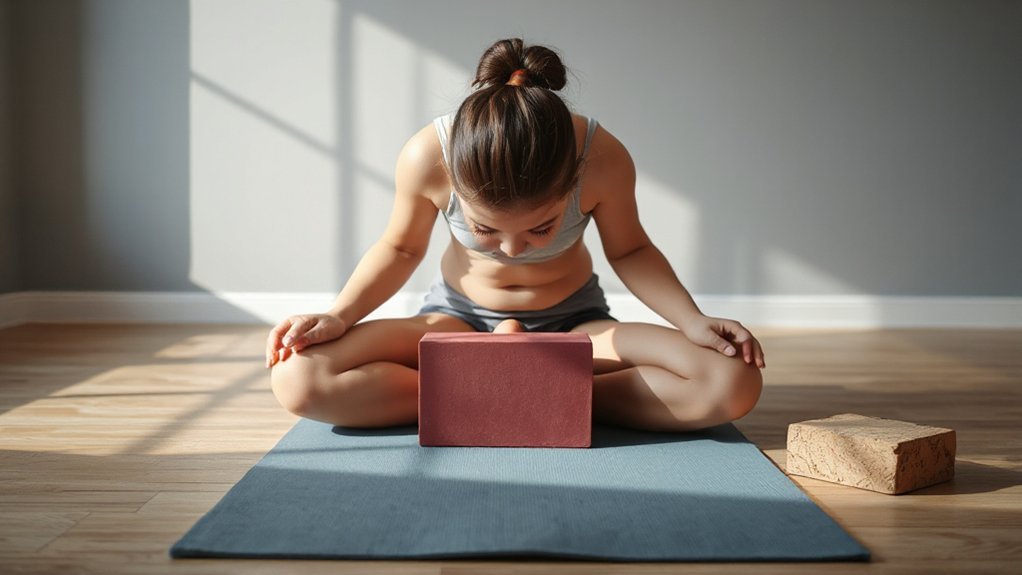
Your breath is literally the foundation of every pose—it’s your built-in safety system, your steadiness meter, all rolled into one.
Inhale slowly through your nose, letting your belly and ribcage expand like you’re filling a balloon. Exhale fully, completely. If your breath gets shallow or movements feel strained, that’s your cue: ease back. Your body’s talking; listen.
Never hold your breath or force deep inhales—that’s asking for trouble. Instead, try Ujjayi pranayama, a gentle throat technique that steadies movement and calms your nervous system. Practice it solo for just 1–5 minutes when you’re starting out.
Now, props aren’t cheating. Blocks, blankets, straps, bolsters—they’re your allies. Slip a block under your hands in Triangle, tuck a folded blanket under your hip in Pigeon. These small adjustments prevent overstretching, protect your joints, and keep you comfortable.
When dizziness, chest pain, or sharp joint pain shows up, stop immediately. Consult your healthcare provider before continuing.
Master 10 Foundational Beginner Poses
Now that you’ve got your breath locked in and you know how to use props like a pro, it’s time to meet the ten poses that’ll form your foundation—the building blocks you’ll return to again and again.
Master ten foundational poses—the building blocks you’ll return to again and again in your practice.
Here’s what you’re working with:
- Standing & Strength Poses: Tadasana, Utkatasana, Virabhadrasana I & II, and Trikonasana build stability and power from the ground up.
- Forward Folds & Gentleness: Adho Mukha Svanasana, Balasana, and Bhujangasana teach you how to fold inward and extend safely.
- Backbends & Core Work: Setu Bandha Sarvangasana, Eka Pada Rajakapotasana strengthen your back while opening your hips.
Practice these 3–5 times weekly, holding each 3–10 breaths depending on the pose. Link your breath to movement—inhale to lengthen, exhale to deepen. Use props generously: blocks under hands, blankets under hips, straps for support. You’ll feel stronger, more mobile, genuinely capable.
Choose Your Yoga Style and Class Format
What style of yoga actually fits *you*—the real you, with your body, your goals, your energy level on a Tuesday morning?
Here’s the thing: there’s no one-size-fits-all answer. If you’re after strength and flexibility without intensity, Hatha‘s your lane—it pairs poses with breath, perfect for beginners building a foundation. Craving cardio and serious sweat? Vinyasa or Ashtanga deliver athletic, breath-linked sequences that’ll challenge you. Need detailed alignment work and props? Iyengar uses blocks and straps for precise instruction, especially helpful if you’re managing an injury.
Restorative, Yin, and Kundalini go slow and deep—ideal if relaxation’s your priority. Hot or Bikram classes boost flexibility through heat, though caution applies if you’re heat-sensitive.
Start with a beginner or gentle class—in-studio or virtual works fine. Aim for once weekly, then gradually increase. Always tell your instructor about injuries or health conditions. They’ll modify moves so you stay safe while progressing.
Structure Your First Weeks of Practice
During those first weeks, you’re building a habit, not chasing perfection—and that’s the whole point. Start modest: a beginner class or 10–20 minute home sequence 2–3 times your first week, then bump up to daily or every-other-day practice as you feel ready. Your body’s adapting, your mind’s settling in, and consistency matters more than intensity.
Here’s how to structure each session:
- Open with breath work (pranayama) and warm up, then flow through 3–5 rounds of Sun Salutations or standing sequences to build strength and rhythm
- Hold poses progressively—think Chair or Extended Side Angle for 30–60 seconds, Downward Dog for 8–10 breaths, Plank for 30–60 seconds—gradually extending duration as you grow stronger
- Use Child’s Pose as your reset button between challenging sequences, plus props and modifications to protect your joints and keep alignment solid
Protect yourself. If you’ve got medical stuff, recent surgery, pregnancy, or nagging pain, talk to your healthcare provider first.
Frequently Asked Questions
Can I Lose Belly Fat by Doing Yoga?
You can lose belly fat through yoga, but here’s the honest truth: it’s not a magic bullet. Vigorous styles like Vinyasa or Power yoga, practiced three to five times weekly, burn real calories and build muscle. Yoga also reduces stress—which cuts cortisol and visceral fat storage. Still, you’ll need a calorie-controlled diet and possibly cardio training alongside it. Consistency matters more than style.
What Kind of Yoga Should I Do as a Beginner?
Start with Hatha or gentle classes—they’re your foundation, building strength and flexibility without overwhelming you. Try restorative or Yin yoga if you want slower, meditative vibes with long holds. Skip Vinyasa for now; you’ll get there once you’ve nailed breath control and foundational strength. Look for beginner classes emphasizing alignment and props like blocks. Begin once weekly, supervised, then gradually increase. Check with your doctor first if you’ve got injuries or health concerns.
So
You’ve got everything you need now—the poses, the breathing, the right class for you. Here’s what’ll hook you: studies show that just eight weeks of regular yoga cuts anxiety by 27 percent. That’s real. You’re not chasing some distant goal; you’re already building something tangible. Start this week. Show up for yourself. Your body’s waiting.




Leave a Comment