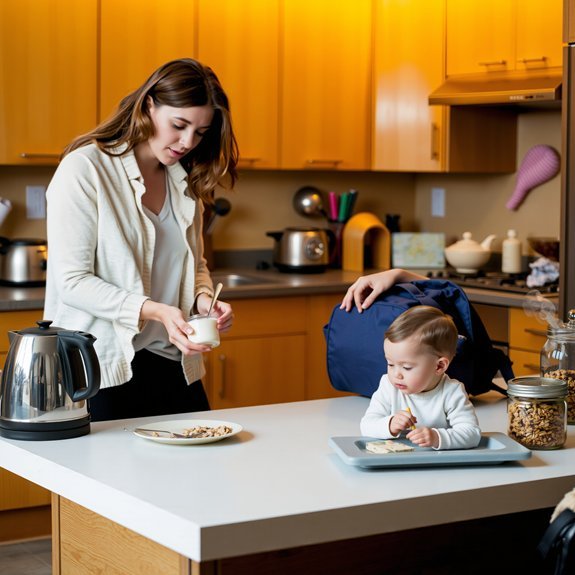

You’re juggling kids, work, and barely-there sleep, so your morning routine has to be realistic and forgiving. Small, consistent actions reduce decision fatigue and actually change stress levels—research backs that. You don’t need a perfect hour; you need a few nonnegotiable wins and simple systems. Here’s a practical framework to try tomorrow.
Set Priorities for the Morning
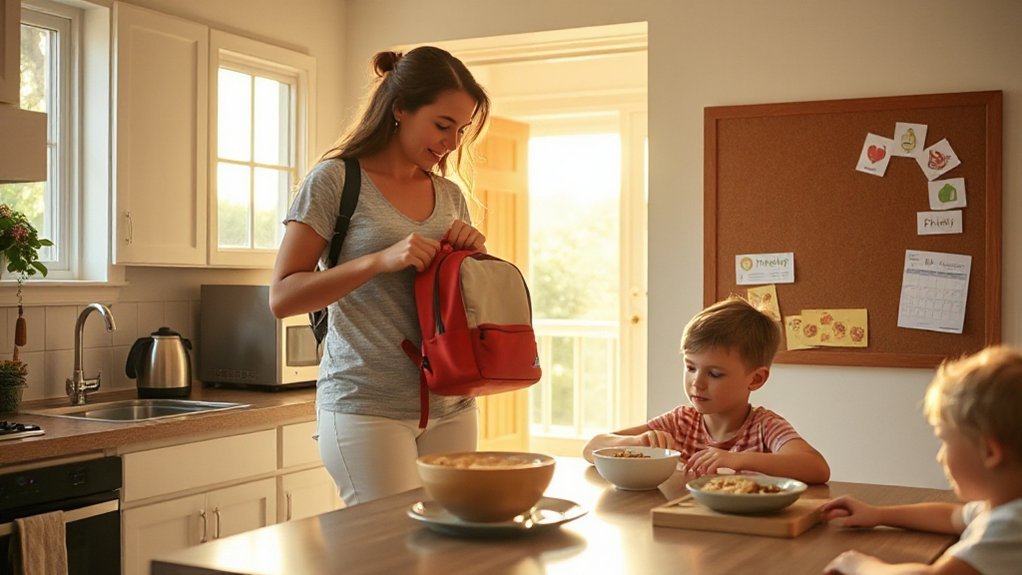
When mornings feel chaotic, choose 2–3 non‑negotiable priorities the night before so you don’t waste energy deciding at 6 a.m.; research shows setting clear goals reduces decision fatigue and stress. Then, identify your Top Tasks: the two things that will make the day feel successful—kid breakfasts done, a work call handled, or a quick workout. Use Energy Mapping to align tasks with when you’re most alert; schedule focused tasks for higher-energy windows and routine chores for low-energy times. Be realistic about time and interruptions, and protect those priorities when possible. You’ll feel steadier, get more done, and model calm for your family. Small, evidence-backed choices compound into less stress and better focus. Repeat this regularly and adjust based on what actually works for you.
Night-Before Prep That Actually Helps

If you spend 10–20 minutes the night before doing a few targeted tasks, your morning will feel calmer and run far more smoothly; research shows predictable routines lower stress and decision fatigue. Start by making priorities and Create checklist items you can actually finish. Lay out clothes, prep lunches, set keys and backpacks by the door, and Charge devices so alarms and tablets last. Evidence shows small, consistent actions reduce cortisol spikes and save time. Be realistic: pick three wins, not ten. The table below helps you choose high-impact tasks.
| Task | Why |
|---|---|
| Lunch prep | Saves 10–15 min |
| Outfit ready | Cuts decision time |
| Pack bags | Prevents last-minute runs |
| Charge devices | Guarantees functioning |
You’ll wake up with options, not chaos, and you’ll feel more capable today.
Streamlined Personal Care in 10 Minutes
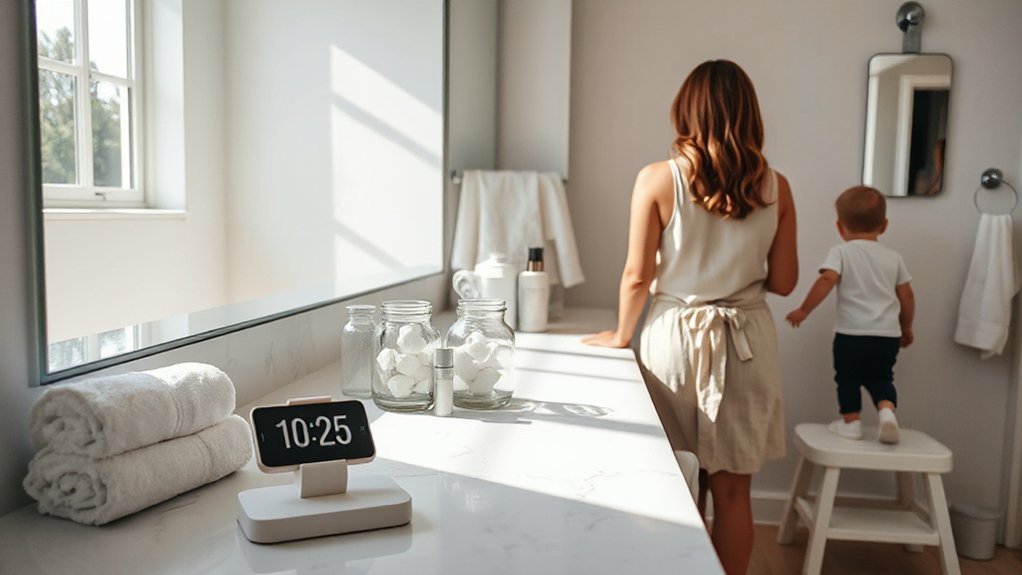
Start by committing to a focused 10-minute sequence you can repeat: set a timer, tackle oral care, a two-step skincare routine, a quick hair fix (dry shampoo or a fast blow-dry), and a simple outfit/accessory choice. You’ll reduce decision fatigue and feel more put-together when you use proven habits: brush and floss, cleanse, apply moisturizer with SPF. For makeup, adopt Makeup Shortcuts like tinted moisturizer, cream blush, and a mascara-only focus; studies link streamlined routines to better adherence. For hair, use Hair Quickies—dry shampoo at roots, a low bun, or a paddle-brush blowout—to save minutes. Lay out a capsule outfit the night before so dressing is automatic. Repeat this compact ritual daily, measure how it affects mood and punctuality, and adjust as needed regularly.
Kid-Friendly Routines That Run Themselves
Creating predictable, low-effort routines helps your kids finish morning tasks with minimal reminders and fewer meltdowns. You’ll set simple cues, visual timers, and systems that tap into kids’ growing executive skills so mornings flow with less nagging. Use Automated Chorecharts for consistent rewards and to offload memory; tech or laminated charts work similarly. Encourage Independent Dressing by laying out choices the night before and practicing one-step buttons or elastic waistbands.
- Post a visual sequence for teeth, clothes, backpack.
- Use a two-minute kitchen timer for shifts.
- Let kids choose between two outfits to build autonomy.
- Try Automated Chorecharts with stickers or apps to track wins.
These steps are kid-tested, research-aligned, and reduce parental cognitive load. They boost confidence and save you time and energy today.
Time-Saving Meal and Breakfast Strategies
How can you shave minutes off hectic mornings without sacrificing nutrition? Plan weekday breakfasts and lunches the night before: portion smoothies, overnight oats, or grain bowls into jars so grab-and-go Portable breakfasts are ready. Use Speedy appliances—immersion blenders, toaster ovens, programmable coffee makers—to cut hands-on time; studies show batch-cooking and small appliances reduce decision fatigue and total prep time. Keep simple protein options (hard-boiled eggs, Greek yogurt, nut butter) visible to speed choices. Involve kids with simple tasks to maintain flow without rework. Schedule one batch-cook session weekly: freeze single-serve portions to reheat quickly. Track what actually gets eaten for a week, then tweak staples; evidence-based adjustments limit waste and stress while keeping meals balanced and realistic. You’ll save time and eat better consistently.
Flexible Habits for Unpredictable Mornings
Mornings won’t always match your meal prep plans, and that’s okay—you can build habits that bend without breaking. You’ll create flexible rhythms with short buffer rituals and task bundling to keep momentum.
- Pack lunches while a load runs to save minutes.
- Group 3 morning wins into one focused burst.
- Keep an exit tote with essentials ready by the door.
- Set visible priorities so nonnegotiables take precedence.
Track skips for a week; evidence shows adaptive routines reduce stress and increase consistency. Keep tools visible (tote, keys, snacks) and set 5-minute checkpoints. You’ll adjust expectations and celebrate small progress each day too. Use brief reviews to refine what works; over time your flexible system will reliably protect priorities while letting small tasks shift naturally and adapt.
Quick Calm Techniques to Reduce Stress
You can calm your morning quickly with evidence-backed techniques like a Two-Minute Breathing Break, Progressive Muscle Relaxation, or a Mindful Mini-Meditation. Each takes just a few minutes, actively resets your nervous system, and studies show they lower anxiety and improve focus. Try one at a time—set a short timer and you’ll notice which fits your routine best.
Two-Minute Breathing Break
Two minutes of focused breathing can lower your heart rate and bring immediate calm—studies show brief paced breathing activates the parasympathetic nervous system and reduces stress markers like cortisol. When mornings feel chaotic, you can use a simple routine: sit tall, do a quick Posture Check, and follow paced inhales and exhales. Use Timing Cues like a ticking timer or song to keep pace without overthinking. You’ll notice a clearer mind and steadier mood that helps you tackle tasks with less strain. This brief practice fits between school lunches and drop-offs and builds resilience over weeks with measurable physiological benefits.
- Sit upright, feet grounded, shoulders relaxed.
- Inhale 4 seconds, hold 1, exhale 5.
- Use phone timer or a two-minute song.
- Repeat twice if time allows.
Progressive Muscle Relaxation
After a brief breathing break, try progressive muscle relaxation to further release built-up tension and sharpen focus. You’ll systematically tense then relax muscle groups—feet to face—so your body recognizes contrast and lets go. Use short Guided Scripts (even a 3–5 minute recording) to lead you through each area, which studies show reduces anxiety and improves sleep when practiced regularly. Start with low intensity and use Intensity Scaling: tighten gently first, then increase only if needed, avoiding pain. Aim for two quick rounds in the morning when kids are occupied. If you’re rushed, focus on jaw, shoulders, and belly. Be consistent; small, evidence-backed sessions add up and make mornings calmer and more manageable. Keep timing flexible and track progress to see gradual benefits over weeks.
Mindful Mini-Meditations
When mornings are hectic, short meditations can reset your nervous system in under five minutes. You don’t need silence or extra time; evidence shows brief practices lower stress and improve focus. Try Sensory Pauses: notice breath, sounds, textures for thirty seconds to ground yourself. Use Gratitude Glimpses: name one small thing you’re thankful for to shift mood. These micro-practices fit into school runs and coffee sips, and they build resilience when repeated.
- Breathe 4-4-6 for one minute to slow your heart.
- Scan your body quickly, release tense areas.
- Notice three sounds around you, anchoring attention.
- Say a simple thank-you to yourself and keep moving.
Do them daily; consistency matters more than duration. Small habits compound; your calm compounds too daily.
Small Wins to Build Consistency Over Time
Starting with small, specific actions makes consistency feel doable: pick one tiny habit—drink a glass of water, lay out the kids’ clothes, or sit for five quiet minutes—and repeat it daily until it becomes automatic. You’ll build momentum by stacking wins; research shows tiny, repeated behaviors strengthen neural pathways and increase long-term adherence. Use Habit Tracking—check a box or use an app—to make progress visible and motivate you on low-energy mornings. Pair each completed habit with Micro Rewards, like a favorite song or a moment of gratitude, to reinforce the pattern. If you miss a day, reset without judgement and resume the next morning. Over weeks, these small wins compound into a reliable routine that fits your life and reduces decision fatigue and stress.






Leave a Comment