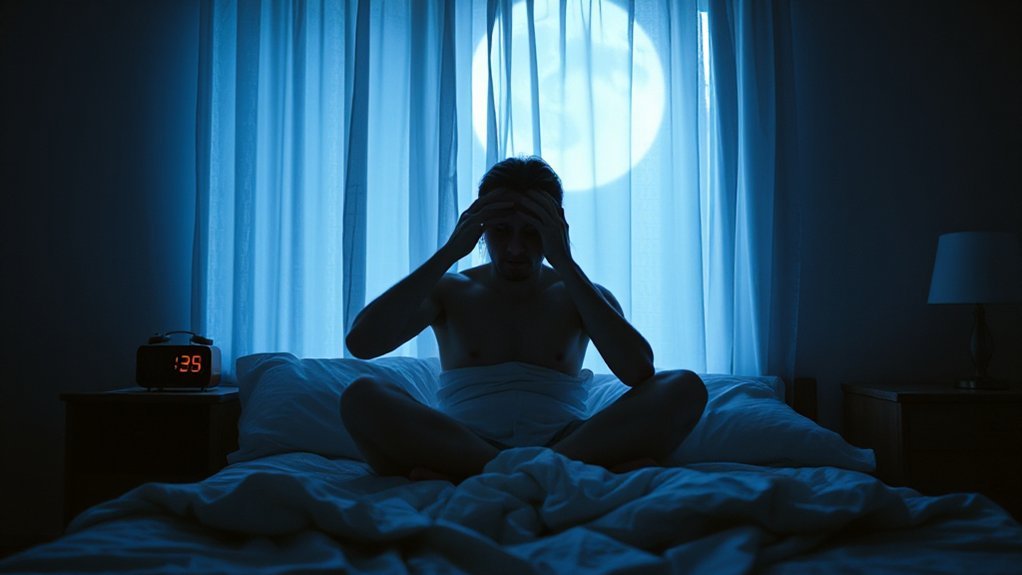

You’re waking because something’s disrupting your sleep—and yeah, it’s fixable. Common culprits? Late caffeine, a too-warm bedroom, racing thoughts, or even undiagnosed sleep apnea. Here’s the move: don’t check your phone or clock. Stay put for twenty minutes; if sleep doesn’t return, slip into another dim room and do something genuinely boring until drowsiness kicks back in. Keep your bedroom cool, dark, and quiet. Skip naps tomorrow to build sleep pressure. If this keeps happening—three-plus nights weekly—or you’re gasping at night, that’s a signal worth investigating further.
Key Takeaways
- Natural REM sleep cycles, nocturia, sleep apnea, substances, and emotional stress are common causes of middle-of-the-night awakenings.
- Avoid checking your phone or clock; instead, stay in bed ~20 minutes, then move to a dim room for boring activities.
- Maintain a cool bedroom (68–77°F), use blackout curtains, white noise, and remove phones to prevent sleep disruptions.
- Skip daytime naps and maintain consistent wake times to build sleep pressure and promote deeper, more continuous nighttime sleep.
- Seek medical evaluation if awakenings occur 3+ nights weekly for months, or if accompanied by snoring, gasping, or night sweats.
Why You Wake Up in the Middle of the Night: Common Triggers
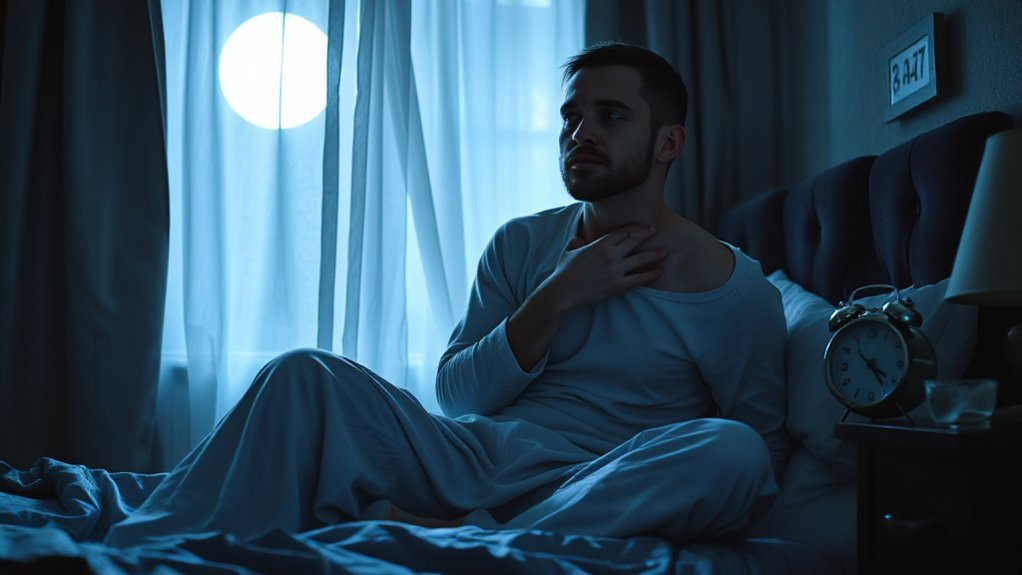
If you’ve jolted awake at 3 a.m. wondering what yanked you from sleep, you’re not alone—and there’s usually a reason.
Your body naturally wakes during REM sleep, when your brain’s most active and dreams dominate. Late-night REM is lighter, easier to disrupt—so you’re primed to wake. But triggering it? That’s another story.
Your body naturally wakes during REM sleep when your brain’s most active. Late-night REM is lighter, easier to disrupt—so you’re primed to wake.
Nocturia—nighttime bathroom trips—is a relentless culprit. Late fluids, pregnancy, enlarged prostate, diabetes, or medications send you sprinting to the toilet repeatedly. Each trip fragments your sleep cycle.
Obstructive sleep apnea causes brief breathing pauses, gasping awake with fragmented rest, morning headaches, loud snoring. Then there’s what you consumed: evening alcohol, caffeine, or blue light from screens suppress melatonin and wreck your architecture. Anxiety and racing thoughts amplify arousal. Overheating the bedroom? Also a saboteur.
The pattern’s clear: identify your trigger, and you’re halfway to sleeping through.
How to Fall Back Asleep Without Watching the Clock
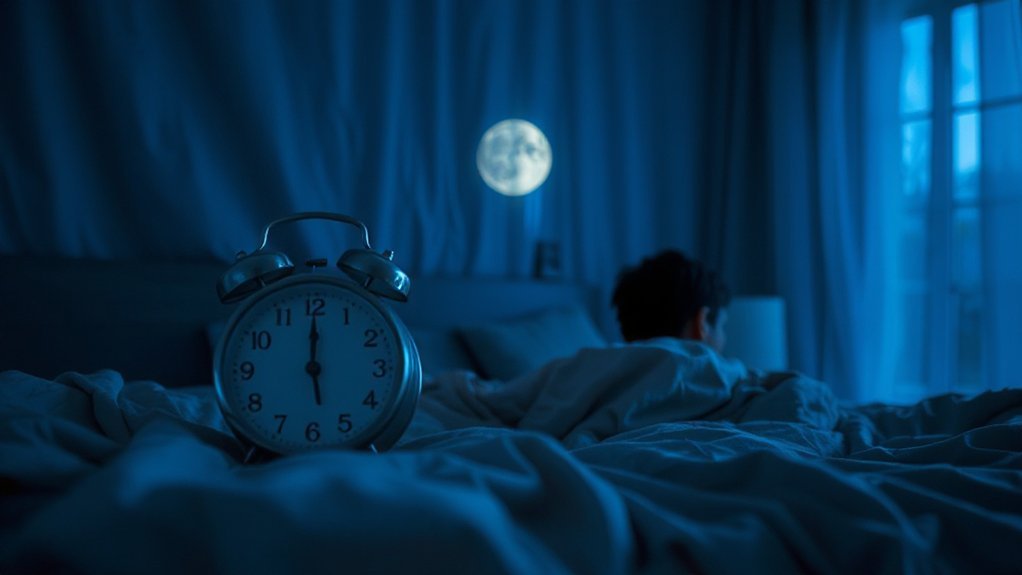
Once you’ve identified what’s pulling you awake, the real work starts—getting back to sleep without spiraling into 3 a.m. panic. First, resist the urge to check your phone or stare at your bedside clock. That blue light and minute-counting? They’ll amp up your anxiety and keep you wired. Instead, flip the clock toward the wall and commit to staying put for about 20 minutes. If sleep doesn’t return, get up. Move to another room with dim lighting and grab a genuinely boring book or soft music. This prevents your brain from linking your bed with wakefulness—crucial for long-term sleep quality. While waiting for drowsiness, try progressive muscle relaxation: tense each muscle group from your toes upward for five seconds, then release with slow breaths. The physical unwinding signals your nervous system it’s safe to sleep again.
Set Up Your Room to Stop Middle-of-the-Night Waking

Why do you wake up at 3 a.m. drenched in sweat, or jolt awake from the neighbor’s dog barking three blocks away? Your bedroom environment’s probably working against you. Here’s the thing: your sleep sanctuary needs to be deliberately designed to keep you down for the count.
Create your ideal sleep setup with these essentials:
- Temperature control: Keep your room between 68–77°F using a fan, air conditioning, or cooling mattress pad with light layers you can adjust quickly
- Block all light: Install blackout curtains, use a sleep mask, and hide alarm clocks to eliminate blue/green light that triggers stress
- Muffle noise: Deploy a white-noise machine, fan, or earplugs to mask those sneaky sounds that jolt you during lighter REM sleep
Remove phones and tablets entirely—seriously, they’ve got no business in your bedroom. Keep things uncluttered and cool. Small adjustments prevent overheating or chilling that wakes you unnecessarily. Your room’s your fortress; make it work for you.
What to Do If You Still Can’t Sleep (When to Leave Bed)
Even with your room dialed in perfectly—temperature locked, lights vanquished, sounds muffled—you might still find yourself staring at the ceiling at 2 a.m., wide awake and frustrated. Here’s the thing: your bed isn’t a thinking spot. If you’re awake for about twenty minutes without dozing, get up. Really.
Move to another dimly lit room and do something genuinely boring—quiet reading, calming music, an audiobook. Keep lights low; you’re protecting your melatonin. Skip screens, work, exercise, anything that jolts your brain awake. Blue light and mental strain? They’re sleep’s enemies.
If racing thoughts won’t quit, jot down tomorrow’s tasks or try progressive muscle relaxation for a few minutes. Offload those worries. Lower your arousal.
Return to bed only when drowsiness actually returns—that genuine pull toward sleep. And here’s the non-negotiable part: keep your morning wake time consistent, no sleeping in, no exceptions. You’re building tomorrow’s sleep tonight.
Recognize When Waking Signals a Health Issue
While occasional night awakenings are totally normal, your body sometimes uses sleep disruptions to signal that something’s off—and you shouldn’t just brush them aside. If you’re waking three or more nights weekly for months on end, or if your nighttime struggles are tanking your daytime focus and mood, that’s your cue to loop in a doctor, because conditions like insomnia, sleep apnea, nocturia from diabetes or prostate issues, and hormonal shifts won’t fix themselves. Pay attention to what’s happening alongside the waking—loud snoring, gasping episodes, night sweats, pain, heartburn, restless legs, or sudden medication changes are all red flags worth reporting to your healthcare provider.
Sleep Disorders Require Medical Evaluation
Not every night wake-up calls for a doctor’s visit, but certain patterns do—and recognizing the difference matters more than you’d think. You’re dealing with something that needs professional attention when your sleep troubles stick around or bring daytime fallout.
Here’s what should trigger a call to your doctor:
- Chronic patterns lasting three months or longer, especially paired with daytime exhaustion, trouble focusing, or that bone-deep fatigue that won’t quit
- Breathing red flags: loud snoring, gasping sounds, or your partner witnessing actual pauses in your breathing—classic signs pointing toward sleep apnea
- Frequent nighttime bathroom trips disrupting your rest, suggesting underlying issues like diabetes, prostate problems, or an overactive bladder
Don’t brush these off. They’re your body’s way of waving a flag.
When Medical Intervention Becomes Necessary
So you’ve spotted the warning signs—the chronic wake-ups, the gasping sounds, the bathroom trips that won’t quit. Don’t brush them off. Your body’s telling you something needs attention.
| What You’re Noticing | What It Might Mean | Your Next Step |
|---|---|---|
| Nightly awakenings lasting 3+ months | Chronic sleep maintenance insomnia | Schedule a doctor’s appointment |
| Loud snoring, gasping, breathing pauses | Obstructive sleep apnea | Seek sleep-center testing promptly |
| Frequent nighttime urination disrupting sleep | Enlarged prostate, diabetes, overactive bladder | Discuss with your healthcare provider |
When pain, anxiety, depression, reflux, or new medications coincide with your disrupted sleep, those connections matter—they’re clues pointing toward treatable causes. You’re not overreacting by seeking help. Chronic sleep issues often require targeted clinical treatment, not just willpower or white noise machines.
Don’t Sleep In Tomorrow: Here’s Why
After you’ve jolted awake at 3 a.m. and finally drifted back to sleep at 4:30, the next morning’s alarm feels like a personal betrayal—and your bed feels impossibly comfortable. But here’s the thing: staying up at your normal time actually works in your favor, even though it doesn’t feel like it.
When you skip the snooze button and get out of bed on schedule, you’re doing something powerful for your sleep system:
- You rebuild sleep pressure. Sleeping in reduces your body’s drive to sleep, making tonight harder. Staying awake preserves that vital homeostatic pressure.
- You protect your internal clock. Consistent wake times re-entrain your circadian rhythm, preventing that frustrating later bedtime tomorrow.
- You accelerate recovery. Yes, you’ll feel tired today—that’s the point. That daytime exhaustion signals your body building momentum for deeper sleep tonight.
Skip the nap. Skip the extra hour. Your future self will sleep better because you toughed it out.
Frequently Asked Questions
What Does It Mean When You Wake up in the Middle of the Night Every Night for the Past 5 Years?
You’re dealing with chronic sleep-maintenance insomnia—that’s five years of interrupted sleep, and honestly, your body’s telling you something needs attention. Medical culprits matter here: sleep apnea, nocturia, restless legs, pain, hormonal shifts. But anxiety and depression? They’re sneaky middle-of-night triggers too. You need evaluation—sleep study, medication review, maybe CBT-I. Don’t tough this out alone; untreated awakenings stack risks for mood problems and heart issues.
So
You’ve got this. Your sleep isn’t broken—it’s just needs recalibrating, like a compass finding north again. You’re building better habits, adjusting your room, recognizing what your body’s telling you. Yeah, you’ll stumble some nights, but you’re armed now: strategies that work, boundaries you’ve set, knowledge that transforms frustration into action. Keep going. Better sleep isn’t tomorrow’s dream—it’s tonight’s foundation.







Leave a Comment