

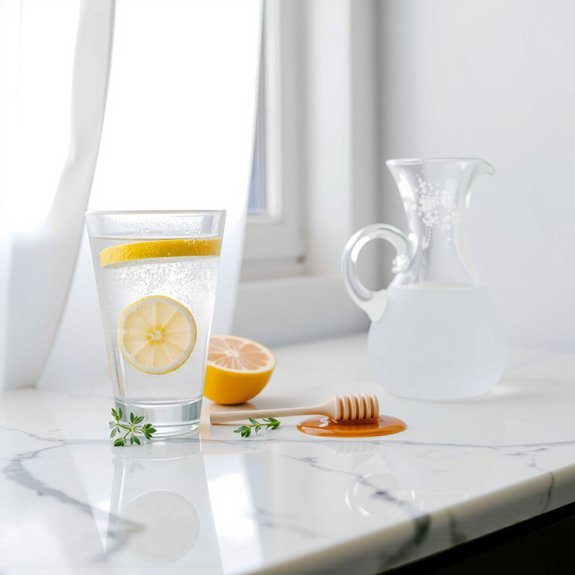
You can transform your mornings with warm lemon water to gently boost hydration, add modest vitamin C, and support digestion and a calm routine. Start with half a lemon in 8–12 ounces of warm water and sip slowly to protect your teeth. It’s low-risk for most people, but there are simple safety tweaks and timing tips that make it more effective—keep going to learn them.
What Happens When You Start Your Day With Lemon Water?

What happens when you start your day with lemon water? You’ll notice a sensory awakening: cool, bright citrus aroma and gentle acidity that prompts mindful breathing and attention to your body. As a patient, you get an easy, low-risk ritual that supports hydration before breakfast. Clinically minded guidance suggests starting with a small, tolerable dose and observing tolerance—especially if you have reflux, dental sensitivity, or acid-related concerns. Use a straw, rinse afterward, or dilute more if needed. Ritual psychology explains how consistent, meaningful steps shape habits and reduce morning stress. Track responses for a week, note sleep, thirst, and comfort, and discuss adjustments with your clinician to confirm the routine fits your health context. Keep expectations realistic and stop if you experience discomfort immediately.
Key Health Benefits and Scientific Evidence

Although lemon water can boost morning hydration and deliver a modest amount of vitamin C, the strongest evidence supports its role as a simple, low-risk way to rehydrate after sleep and to help you meet daily fluid needs; other claims — like meaningful alkalizing effects, dramatic metabolic or weight-loss benefits, or curing detoxification — aren’t supported by high-quality clinical trials. You can expect modest immune support the vitamin C and flavonoids in lemon, but randomized trials showing clinical benefits are limited. Its antioxidant profile contributes to reducing oxidative stress markers in some small studies, yet effects on long-term disease risk remain unproven. Lemon water is safe, inexpensive, and may support healthy habits when used alongside a balanced diet and care from your healthcare team.
How to Make Lemon Water the Right Way

Given the modest benefits of lemon water, you’ll want to make it in a way that maximizes hydration and vitamin C intake while minimizing harm to your teeth and stomach. Use room-temperature or slightly warm water to dissolve vitamin C without shocking gastric lining, and squeeze half a fresh lemon per glass. Prefer a sturdy glass bottle or tumbler — glassware choice matters because acidic drinks degrade plastics and retain odors. Pour over pulp and seeds, then apply simple straining methods (fine mesh or cheesecloth) if you dislike bits; this also reduces seed-derived bitterness. Rinse your mouth after drinking and avoid brushing teeth immediately to protect enamel. If you have reflux or citrus sensitivity, dilute more or consult your clinician for tailored advice as needed.
Best Time and Amount to Drink It
You’ll get the most benefit from lemon water first thing in the morning on an empty stomach, or anytime you need gentle hydration—just pay attention to how your body responds. Start with about 1 cup (240 ml) and work up to 1–2 cups if it feels comfortable, reducing intake if you notice heartburn or tooth sensitivity. Use roughly half a lemon per 8–12 ounces of warm water for mild acidity, and dilute more if you have GERD or enamel concerns.
When to Drink
In the morning, try drinking 8–12 ounces (about 250–350 ml) of warm water with the juice of half to one lemon to rehydrate and get a modest boost of vitamin C; most studies show benefits primarily from increased fluid intake rather than lemon itself. Drink soon after waking to support hydration and digestion, but wait if you have reflux or dental sensitivity. If you work irregular hours, adapt timing around sleep and meals — this helps with shift schedules and preserves appetite. When traveling, prioritize regular sips to maintain travel hydration and avoid caffeinated dehydration. Listen to your body: drink slowly, with meals or 20–30 minutes before eating if that suits you, and stop if you notice discomfort, or consult a clinician for guidance.
How Much to Drink
Although the main benefit comes from the extra fluid, aim for one 8–12 ounce (250–350 ml) serving of warm lemon water soon after you wake and, if it suits you, another 20–30 minutes before a meal to support digestion; that amount rehydrates without filling you so much that it blunts appetite. Keep it simple: track how you feel, adjust timing, and avoid drinking so much that you replace meals. Practical tips:
- Start with one serving and note effects on hunger and reflux.
- If you need more, add a second serving before meals rather than large boluses.
- Use serving conversions to compare to cafe servings (a small latte ≈ 8 oz).
- Discuss changes with your clinician if you have medical conditions.
Dilution and Strength
Aim for about 1–2 tablespoons (15–30 ml) of fresh lemon juice per 8–12 ounce (250–350 ml) glass of water — a mild, evidence-consistent ratio that boosts flavor and hydration without excessive acidity. You’ll sip something gentle on enamel and digestion while retaining vitamin C benefits. Prepare at room temperature or warm — extremes can affect comfort and absorption.
Think about dilution like concentration gradients: lower concentration reduces mucosal irritation and taste fatigue, letting you drink consistently. Ionic strength from dissolved minerals and lemon acids alters flavor and can influence fluid balance modestly; it’s not a replacement for electrolytes. Start with the mild ratio, adjust slightly to tolerance, and avoid undiluted lemon juice. If you have reflux or dental concerns, ask your clinician for guidance.
Potential Risks and When to Be Cautious
Because the citric acid in lemon water can gradually erode tooth enamel, you may experience increased sensitivity and a higher risk of decay. If you have acid reflux or GERD, you may find lemon water triggers or worsens heartburn and regurgitation. To protect your teeth and digestion, dilute the lemon, sip through a straw, rinse with plain water afterward, avoid brushing for 30 minutes, and talk with your clinician if symptoms worsen.
Tooth Enamel Erosion
If you drink lemon water daily or sip it over long periods, the citric acid can soften and erode tooth enamel, increasing sensitivity and cavity risk; studies show frequent exposure to acidic beverages is a key factor in dental erosion. You can reduce harm with practical steps:
- Rinse with water after sipping
- Wait 30–60 minutes before brushing
- Use a soft brush; ask about Fluoride Treatments
- Try Acid Neutralization rinses occasionally
Consider topical varnish with your dentist to strengthen enamel. Use a straw, don’t hold citrus in your mouth, and limit frequency. If you notice persistent sensitivity or visible wear, schedule a dental exam for personalized care. Follow professional advice as needed. Early intervention preserves teeth and reduces future procedures costs.
Acid Reflux Aggravation
The acidity in lemon water can aggravate gastroesophageal reflux (GERD) by lowering the tone of the lower esophageal sphincter and increasing acid exposure to the esophagus, so people who already get heartburn, regurgitation, chronic throat clearing, or nocturnal symptoms should be cautious. If you have known LES dysfunction or frequent reflux, even diluted lemon water may trigger symptoms; monitor how you feel and avoid it if heartburn worsens. Consider drinking plain warm water, taking lemon after meals instead of first thing, or using a straw to limit esophageal contact. Note that anxiety and a heightened Stress response can increase sensitivity to reflux; manage stress with breathing or relaxation techniques. Discuss persistent symptoms with your clinician to tailor safe morning routines. Seek care for alarms.
Tips to Make It a Sustainable Morning Ritual
Regularly making lemon water part of your morning means treating it like any habit: start small, plan it, and adjust for your needs. Use an Accountability Buddy to check progress and a simple Reward System to reinforce consistency. Track days, note symptoms, and adapt temperature or timing to comfort. Keep supplies visible and prepped the night before so you’ll execute with minimal willpower. Set reminders linked to an existing routine, like brushing teeth. If reflux or dental sensitivity appears, pause and consult a clinician. Be patient; habits solidify with consistent, measured practice over weeks only.
- Prep lemons and water night before.
- Start with 1 small glass, increase slowly.
- Log effects and adjust timing.
- Use buddy support and rewards for adherence.
Simple Variations and Pairings to Boost Benefits
Try adding a few simple tweaks—like warm vs. cool water, a sliver of ginger, a teaspoon of honey, or a pinch of turmeric—to tailor lemon water to your goals and tolerance. You can try a Ginger infusion by steeping thin slices for five minutes to soothe digestion; studies suggest ginger reduces nausea and may aid gastric emptying. For freshness and breath benefits, use a Mint pairing—crush a few leaves into the drink, or steep them briefly. If you have reflux, prefer cooler temperatures and skip honey or citrus on an empty stomach. Start small, note how you feel, and adjust concentration. Check interactions with medications and consult your clinician if you have chronic conditions before making routine changes. You’ll see gradual, measurable health improvements.





Leave a Comment