

You can make mornings less frantic in 30 days by picking 2–3 realistic priorities and building tiny, repeatable habits around them. You’ll set a clear wake-up plan, streamline clothes and lunches, and teach kids small, labeled steps with timers and rewards. Use a simple checklist and weekly tweaks to keep progress steady—I’ll show you the practical plan to get started.
Set Clear Morning Goals

If you want mornings to feel calmer, set two or three clear, realistic goals you can actually finish before school or work—think “clothes on, packed lunch, out the door” rather than a long checklist. You’ll feel less rushed when you clarify priorities and choose tasks that truly matter. Pick two to three habits—like breakfast together or backpacks ready—and keep them consistent for a week. Use a simple checklist or a visible chart so everyone can measure progress; celebrate small wins to build momentum. When something blocks the flow, troubleshoot quickly: adjust goals, swap tasks, or shift timing. You’re teaching your family focus and confidence, and small reliable habits will make mornings kinder, simpler, and more doable for everyone. Start today and notice the change.
Create a Simple Wake-Up Plan
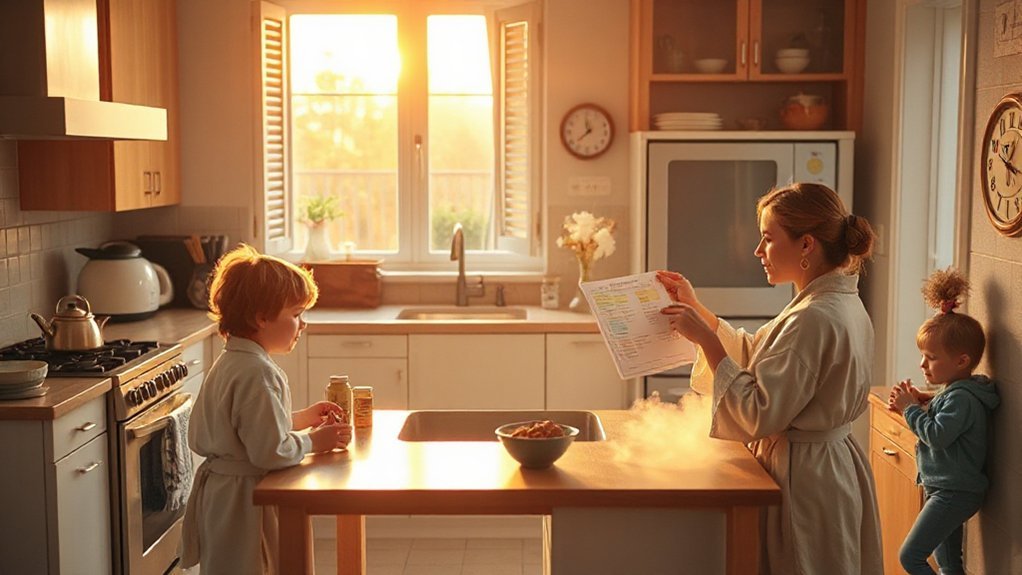
Now that you’ve picked two or three morning priorities, make a simple wake-up plan that gets everyone rolling without drama: pick realistic wake times, set alarms you’ll actually respond to (gentle tones or smart lights for light sleepers), and build in a short buffer so late starts don’t wreck the whole routine. Start with one change at a time and test it for a few days—consistency beats perfection. Consider alarm placement across the room so you have to get up, but keep a soothing option for sensitive sleepers. Maximize natural light exposure by opening curtains or using wake-up lights to help bodies shift out of sleep. Praise small wins and adjust times based on energy, not guilt. You’ll see steady, kinder mornings soon, together.
Streamline Clothes, Meals, and Backpacks
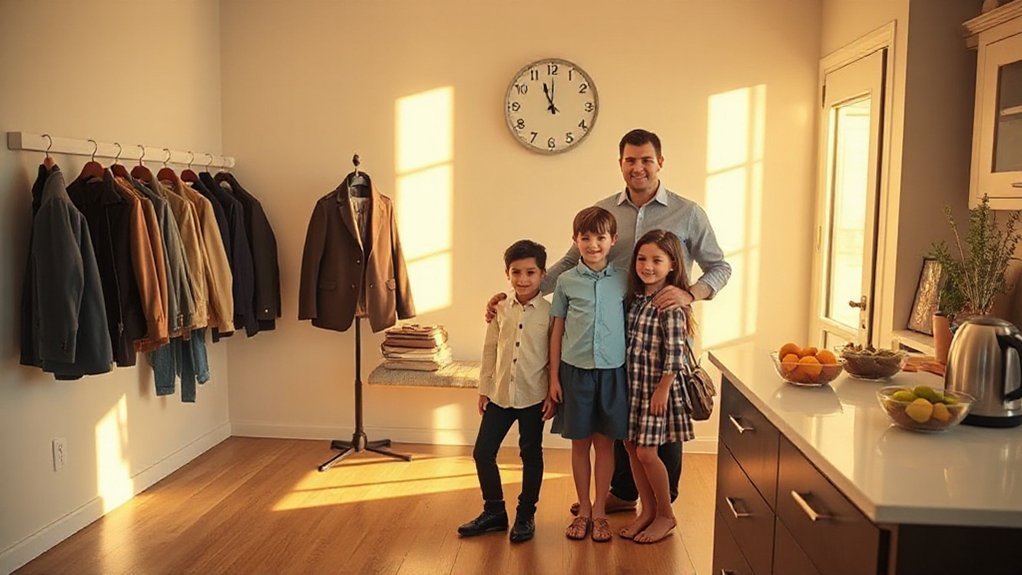
Because small, repeatable steps cut chaos, pick one evening habit—laying out outfits, assembling lunches, or packing backpacks—and make it nonnegotiable. You’ll feel calmer if you set a simple sequence: choose outfits during laundry rotation so clean clothes are ready, prep lunches with portioned containers, and place backpacks by the door. Use Label systems for containers, snack bags, and cubby hooks so everyone finds belongings fast. Keep a short checklist on the fridge and involve family members with one clear task each night—no nagging, just assignment. On busy nights, swap to a backup plan: pre-made breakfasts or wearable layers. Celebrate small wins; consistency creates momentum and mornings will progressively feel smoother and less stressful. Stick with it; you’ll notice easier mornings within a few weeks.
Build Short, Supportive Routines for Kids
Creating short, predictable routines gives kids a sense of safety and makes mornings manageable for you. Keep steps tiny, labeled, and consistent so your child wins frequently; use positive reinforcement and playful shifts to keep momentum.
| Step | Support |
|---|---|
| Wake-up | Cue song and soft light |
| Get dressed | Two tasks, sticker reward |
Celebrate small wins, praise effort, and stay calm when things go off-plan. You’ll build confidence, independence, and friendlier mornings by honoring progress and keeping routines brief. Use simple visual cues, timers, and short choices so they feel in charge; model calm behavior, narrate steps, and give immediate, specific praise to reinforce skills. Start with two routines, add one slowly, and celebrate effort each day. Keep expectations realistic, and enjoy the connection you’re building. Small steps matter. Always
Troubleshoot and Adjust for Long-Term Success
As you settle into short routines, you’ll hit days that need tweaking—sleep changes, a new caregiver, or a busier schedule can throw kids off. When that happens, pause and run quick habit audits: note what’s breaking, when, and why. Invite calm family feedback loops—ask kids and partners one simple question: what helps you start the day? Use answers to adjust timing, prep, or expectations. Test small changes for a week, then reassess. Celebrate tiny wins to build momentum and reassure kids that routines evolve. If setbacks recur, simplify steps or swap tasks between adults. Over time, these simple checks keep mornings flexible yet predictable, so your family stays steady through changes and growth. Keep notes you can revisit monthly to track progress and patterns.






Leave a Comment