

You can transform daytime energy by prioritizing restorative sleep; consistent timing, light exposure, and arousal control directly shape circadian rhythm and recovery. Evidence shows targeted routines—bedtime cues, morning bright light, daytime exercise, and strategic nutrition—improve mood, cognition, and metabolism. Keep going to learn practical, clinically grounded steps and when to seek specialist care.
Why Sleep Is the Hidden Engine of Energy and Productivity
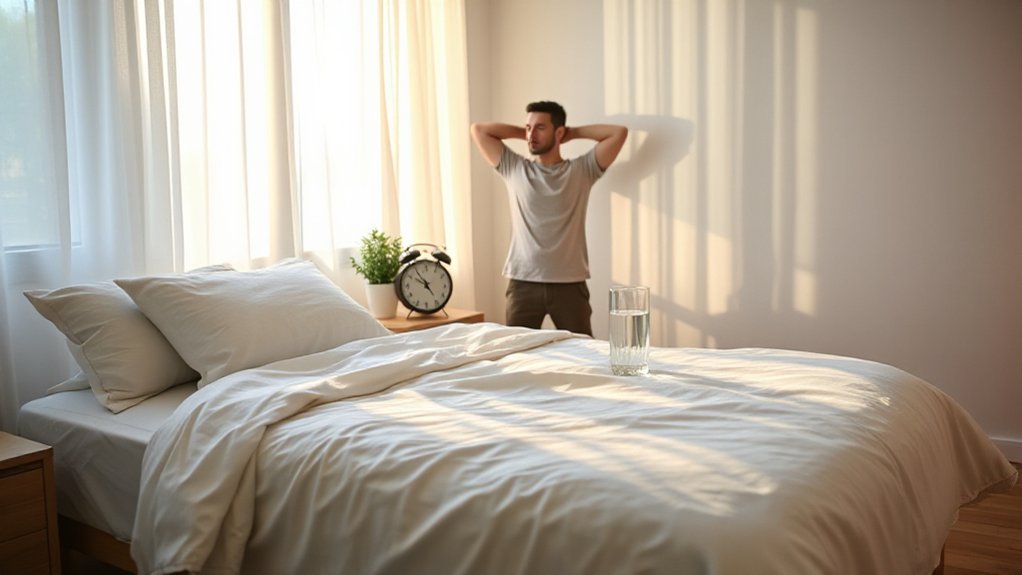
Because sleep drives core restorative and regulatory processes, it underpins daytime energy and cognitive performance. You rely on consolidated sleep to replenish neuronal glycogen, clear metabolic waste via glymphatic function, and restore synaptic homeostasis, which preserves attention and decision-making. Adequate sleep duration and continuity provide measurable gains: faster reaction times, improved working memory, and a documented creativity boost during problem-solving. Sleep also modulates endocrine and inflammatory pathways, supporting immune resiliency and reducing infection risk. Clinically, prioritizing regular sleep schedules, minimizing nocturnal disruptions, and treating sleep disorders yields predictable improvements in daytime alertness and productivity. You should view sleep as a nonnegotiable physiological intervention — one that’s often more effective than stimulants for sustainable energy and cognitive efficiency. Track patterns objectively to guide targeted interventions consistently.
How Sleep Stages Affect Mood, Focus, and Metabolism

When you get adequate amounts of each sleep stage, your brain and body perform distinct, stage-specific functions that shape mood, attention, and metabolic regulation.
| Stage | Function |
|---|---|
| REM | Emotional memory processing, REM emotionality modulation |
| N3 | Slow wave metabolism, physical restoration |
| N2 | Sleep spindles, memory consolidation |
You consolidate memory and emotional processing in REM, reducing reactivity, while slow wave sleep drives metabolic recovery, hormone balance, and cellular repair. Light stages support sensory gating and flexible arousal, preserving daytime focus. Fragmented architecture reduces attentional control, worsens mood stability, and impairs glucose regulation. Prioritize continuity and duration to maintain stage distribution. If you have persistent daytime sleepiness, cognitive decline, or mood disturbance, seek clinical evaluation to assess architecture and guide targeted interventions.
Common Sleep Myths That Drain Your Energy

You may think more sleep always boosts energy, but routinely extending time in bed can fragment sleep and lower sleep efficiency, worsening daytime alertness. You may also believe alcohol helps you sleep, but while it shortens sleep latency it disrupts slow‑wave and REM sleep and increases nocturnal awakenings. Correcting these misconceptions lets you focus on appropriate sleep duration and substance avoidance to restore restorative sleep and daytime energy.
More Sleep Isn’t Better
Although many assume that sleeping longer always restores energy, excess sleep can disrupt circadian timing, fragment sleep architecture, and paradoxically increase daytime fatigue. You should target an evidence-based Ideal Duration rather than more hours. Large cohort studies link habitual oversleeping to metabolic dysregulation, mood disturbance, and impaired alertness; however, Individual Genetic Differences influence sleep need, so clinical assessment must distinguish physiological variance from pathological hypersomnolence. Use consistent sleep timing, objective measurement (actigraphy or polysomnography when indicated), and daytime sleepiness scales to evaluate function. If you experience persistent low energy despite long sleep, investigate sleep disorders, comorbidity, medication effects, and mood. Therapeutic goals prioritize consolidated sleep of appropriate length and alignment with circadian phase to restore daytime function. Adjustments should be individualized and monitored clinically.
Alcohol Helps You Sleep
While alcohol can speed sleep onset, it fragments sleep and degrades restorative architecture, so it doesn’t actually improve overnight recovery or daytime energy. You might think the sedative illusion helps, but alcohol reduces REM and slow-wave sleep, increasing awakenings and next-day fatigue. Short-term benefits fade with tolerance buildup; you need more alcohol for same effect, worsening sleep quality and circadian timing. Clinically, alcohol masks insomnia causes and impairs memory consolidation and mood. If you want sustained daytime energy, prioritize consistent sleep schedule, cognitive-behavioral strategies, and limit evening alcohol. Seek medical evaluation for persistent sleep problems.
- Alcohol: speeds onset but fragments sleep
- REM and slow-wave: reduced by alcohol
- Daytime energy: impaired despite sedation
- Tolerance buildup: increases required consumption
- Use behavioral or medical treatments, not alcohol
Evening Habits That Promote Restorative Sleep
You’ll improve sleep quality by limiting screen exposure in the hour before bed, because blue light and arousal from content suppress melatonin and delay sleep onset. You should keep a consistent bedtime routine—same sleep and wake times and predictable pre-sleep behaviors—to stabilize circadian rhythms and increase slow‑wave sleep. When you combine both strategies, you’ll see measurable gains in sleep efficiency and daytime alertness.
Limit Screen Time
Because blue light and stimulating content suppress melatonin and raise physiological arousal, reducing screen exposure in the hour before bed reliably improves sleep onset and continuity. Turn off or dim screens, and use app blockers to limit exposure; enable notification management to prevent alerts that fragment sleep. Establish a tech-free zone for bedside devices and prefer low-luminance clocks. Use grayscale or night modes only as adjuncts; they don’t fully negate alerting effects. If you need evening screens, lower brightness and increase distance to reduce retinal irradiance.
- Disable push notifications
- Schedule app blockers nightly
- Charge devices outside bedroom
- Use dedicated alarm clocks
- Prefer audiobooks over video
Clinical trials show these measures reduce sleep latency and awakenings, improving restorative sleep. Adopt changes consistently for measurable benefit.
Consistent Bedtime Routine
In the hour before bed, a consistent pre-sleep routine helps signal your circadian system and downregulate sympathetic arousal, making sleep onset quicker and sleep more consolidated. You should establish fixed sleep and wake times, dim lighting, and low-arousal activities—reading, gentle stretching, or breathing exercises—to reduce cortisol and facilitate melatonin secretion. Limit stimulating substances and heavy meals within two to three hours of sleep. Coordinate household factors: schedule Pet Coordination so animals don’t interrupt nocturnal sleep, and conduct Partner Negotiation to align bedtimes and reduce disturbances. Track response objectively with sleep diaries or actigraphy to adjust timing and behaviors. Consistency across weekdays and weekends preserves circadian phase and improves sleep efficiency, daytime alertness, and overall energy. Make changes gradually and consult clinicians for complex cases.
Morning Routines to Sustain Sleep-Driven Energy
How can you turn morning habits into a reliable extension of restorative sleep? You’ll scaffold sleep-driven arousal by sequencing brief, evidence-based actions that stabilize circadian wakefulness and cognitive readiness. Begin with a concise Goal Review to direct attention and reduce morning decision load. Pair low-sensory light exposure and controlled breathing to lower sleep inertia and optimize alertness. Integrate Commute Rituals that preserve calm shift and maintain circadian cues.
- Brief Goal Review (1–3 priorities)
- Bright light exposure within 30 minutes
- Two minutes of paced breathing
- Protective technology boundaries during transit
- Consistent departure time to anchor circadian timing
These routines are clinically supported to reduce morning grogginess, improve sustained attention, and extend restorative sleep benefits through the day and minimize stress-related cortisol spikes through predictable structure daily.
Nutrition and Exercise Strategies to Support Better Sleep
Pairing targeted nutrition and timed physical activity with your morning routine amplifies sleep consolidation and daytime alertness by reinforcing circadian signals and optimizing sleep architecture. You’ll prioritize Protein Timing to support nocturnal muscle repair, modest morning exercise to advance circadian phase, and maintain Hydration Balance to prevent nocturnal disruptions. Schedule resistance or interval sessions earlier in the day; avoid vigorous evening training. Consume balanced meals with lean protein, low glycemic carbs, and micronutrients to stabilize nocturnal glucose and melatonin precursors.
| Strategy | Timing | Effect |
|---|---|---|
| Protein intake | Morning/post-workout | Supports repair; stabilizes sleep |
| Hydration | Throughout day | Prevents nocturnal diuresis |
| Exercise | Morning/afternoon | Advances circadian phase |
| Meal composition | Evening light | Reduces late-night arousal |
Follow these evidence-based adjustments consistently; they rapidly produce measurable improvements in sleep efficiency and daytime cognition.
Managing Stress and Light Exposure for Deeper Rest
Because chronic stress and mistimed light exposure act synergistically to raise physiological arousal and blunt nocturnal melatonin release, you need targeted interventions to restore sleep-promoting neuroendocrine rhythms. You should prioritize consistent Light Timing—get bright morning light and dim evening illumination—to anchor circadian phase. Combine behavioral strategies with brief Breath Exercises (paced diaphragmatic breathing 4–6 breaths/min) to reduce sympathetic tone before bed. Limit evening stimulants and intense cognitive work; use predictable pre-sleep routines that downregulate arousal. If anxiety persists, consider evidence-based therapies like CBT-I or short-term pharmacologic consultation.
- Morning bright light exposure
- Dim lights 1–2 hours pre-bed
- 10-minute paced breath exercises
- Cognitive arousal reduction techniques
- Seek clinical evaluation when needed
Track symptoms and adjust interventions with your clinician for individualized optimization, and medication review if indicated periodically.
Simple Sleep Tools and Tracking Tips to Improve Consistency
When you use a few simple tools and track key metrics consistently, you’ll make measurable improvements in sleep regularity and treatment decisions. Use objective devices—actigraphy, validated wearables or Smart Mattresses—to capture sleep onset, wake times, and movement. Combine device data with a concise Sleep Journal recording bedtime, caffeine, alcohol, naps, and perceived sleep quality. Review trends weekly to identify triggers and adjust behavior or therapies. Quantify variability: aim for no more than a 30-minute night-to-night difference in sleep midpoint. Share compiled reports with your clinician to refine diagnostics or CPAP settings. Use battery-backed devices and standardized logs to reduce data loss. Consistent measurement increases diagnostic accuracy and lets you evaluate interventions with reproducible, evidence-based metrics. Track adherence, symptoms, and daytime function for informed adjustments.






Leave a Comment