

Your morning stretches aren’t just about touching your toes—they’re releasing synovial fluid in your joints, waking your nervous system, and flooding your body with oxygen and endorphins. Start with five minutes of dynamic warm-ups: walking lunges, leg swings, arm circles. Then hold static stretches—knee-to-chest, figure-4, hamstring pulls—for twenty to thirty seconds, two to three reps per side. That’s it. Pain-free progression, daily or three times weekly. But the real magic happens when you understand which sensations mean “keep going” and which scream “stop now.”
Key Takeaways
- Start with 5 minutes of dynamic warm-up exercises like walking lunges, leg swings, and arm circles to prime your nervous system and increase blood flow.
- Perform static core stretches including knee-to-chest, figure-4, and hamstring stretches, holding each 20–30 seconds for 2–3 reps per side.
- Total routine takes only 5–10 minutes daily or 2–3 times weekly to reduce stiffness, boost circulation, and improve posture.
- Use breath quality and normal pulling sensations to guide intensity; stop immediately if sharp pain, shooting sensations, or numbness occur.
- Progress gradually by adding 5–10 seconds to hold times only when next-day soreness is absent and functional improvements like easier mornings appear.
Why Morning Stretching Boosts Mobility, Circulation, and Mental Health

When you roll out of bed stiff and sluggish, your body’s been still for hours—joints locked up, muscles tight, circulation sluggish. A quick five to ten minutes of gentle stretching changes everything. You activate your nervous system, wake up your brain-body connection, and boost oxygen delivery to muscles and joints. That’s the magic: increased synovial fluid lubricates your joints, reversing overnight stiffness fast.
Moves like lumbar rotations, knee-to-chest, and cat-cow restore spinal mobility and melt lower-back tension. Even thirty to sixty second holds per stretch build flexibility over time, improving posture and lowering injury risk throughout your day. But here’s the real win—gentle morning stretching lowers cortisol while promoting endorphin release. You’re reducing stress markers, boosting mood, and gifting yourself a powerful daily self-care ritual. Your body and mind both thank you.
Start Your Morning Routine: Dynamic Warm-Up (5 Minutes)

Before you begin static stretches, your body needs a gentle wake-up call—and that’s exactly what a five-minute dynamic warm-up delivers. You’re priming your nervous system, boosting blood flow, and preparing joints for deeper work ahead.
| Movement | Duration | Reps |
|---|---|---|
| Walking Lunges | 30–60 sec | 6–8 per leg |
| Leg Swings | 30–60 sec | 10–15 per leg |
| Arm Circles | 20 sec each | Both directions |
Start with controlled walking lunges, stepping deliberately and feeling your hip flexors open. Follow with leg swings—forward-back, then side-to-side—keeping them smooth, rhythmic, never bouncy. Arm circles come next: big, slow rotations that mobilize your shoulders and spine.
The key? Move with intention. Breathe steadily. Listen to your body. You’re not rushing; you’re waking up deliberately. Stop immediately if sharp pain appears. This warm-up isn’t punishment—it’s your body’s invitation to move better, feel stronger, and face your day with genuine readiness.
Core Morning Stretches: 8 Static Holds for Relief
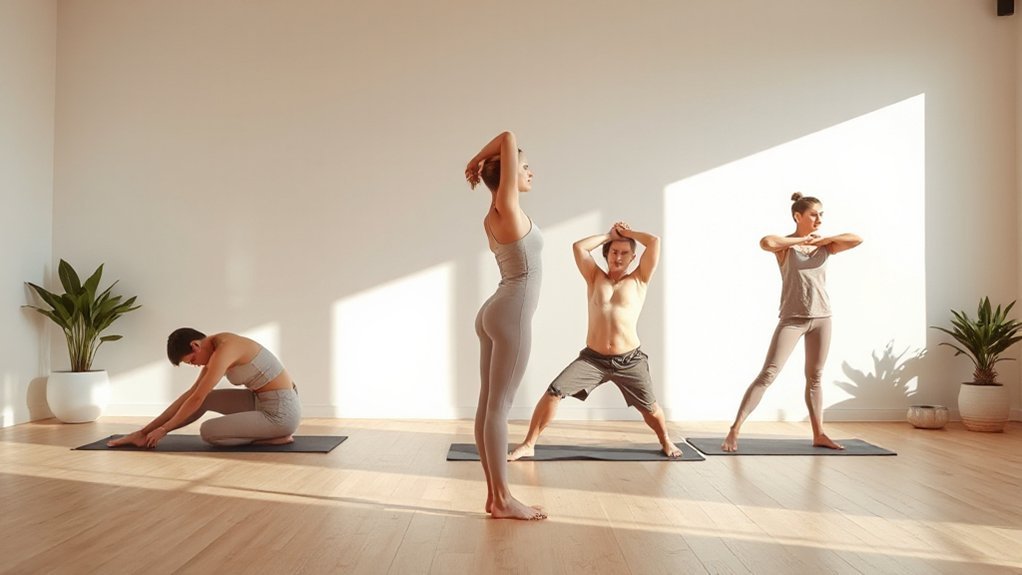
You’re ready to tackle the stretches that’ll actually make a difference—the ones that hit your lower back, hips, and glutes where the tension really lives. These eight static holds aren’t flashy, but they’re the heavy lifters of morning relief, designed to undo the stiffness that overnight sleep leaves behind. You’ll move through each one methodically, holding long enough for your muscles to actually relax rather than resist, so your spine gets the full decompression it’s craving.
Lower Back Mobility Work
Since your lower back bears the brunt of sitting, sleeping, and daily stress, loosening it up first thing in the morning can transform how your spine feels all day long. You’ve got four essential moves here.
Start with lumbar trunk rotation: lie on your back, knees bent, arms out, then gently rotate both knees side to side, holding 10–15 seconds each way. Next, pull one knee toward your chest (20–30 seconds, repeat 2–3 times per side) to flatten that lumbar curve and ease tension.
The Figure-4 stretch targets hidden tightness—cross one ankle over the opposite knee, pull that thigh toward your chest, and hold. Finally, use a strap for your hamstrings: straighten each leg toward the ceiling, holding 20–30 seconds for three reps.
Keep breathing deeply, stop if pain spikes, and you’re golden.
Hip and Glute Relief
Releasing tension from your hips and glutes is the natural next step—these muscles tighten up fast from sitting, running, or just standing around all day, and they pull hard on your lower back in the process. Two stretches tackle this beautifully. First, try the piriformis figure-4: cross your ankle over the opposite knee, then gently pull your thigh toward your chest for 20–30 seconds, three reps per side. You’ll feel that deep glute release immediately. Second, the supine hamstring stretch with a strap lengthens tight hamstrings and unloads your lower back. Loop a strap around your foot, straighten your knee to tolerance, and hold 20–30 seconds, three reps each side. Breathe deeply throughout. These two moves? They’re game-changers for hip mobility.
Spinal Tension Release
Your hips and glutes just got some serious love—now it’s time to show your spine the same care. Spinal tension? We’ve got this.
Start with lumbar trunk rotations: lie on your back, bend your knees, then rotate your lower body side to side for 10–15 seconds each way. Next, pull one knee to your chest (20–30 seconds, 2–3 reps per side) to flatten that lordosis and boost disc circulation.
Cross your ankle over the opposite knee for the figure-4 stretch—hold 20–30 seconds per side to release glute tension and ease sciatic discomfort. Finally, grab a strap for hamstring stretches (20–30 seconds, 2–3 reps) to lengthen your posterior chain.
Here’s the rule: if sharp pain hits, stop immediately. Gentle pulling? That’s your sweet spot.
Timing, Reps, and Props: Building Your Routine
When you’ve got limited time before work or the day gets going, five to ten minutes is genuinely all you need—and that’s the beauty of a focused morning stretch. You’re not training; you’re waking up your body.
Here’s how to build it:
- Hold times matter: Static stretches for hips and hamstrings need 20–30 seconds, done 2–3 times per side. Shorter mobility work—lumbar rotations, gentle twists—only needs 10–15 seconds each.
- Reps that work: Single knee-to-chest, figure-4, and hamstring stretches deserve three solid reps per side. Cat-cow flows for 10–15 breaths to mobilize your spine thoroughly.
- Props make it easier: Grab a yoga strap for hamstrings, use your bed’s edge for leverage, try a foam roller under your chest. These aren’t luxuries—they’re your form insurance.
Start dynamic if you’ll exercise later. Otherwise, lean into slow, static holds. You’ll feel looser, move better, and actually stick with it.
Recognize Normal Sensations and Red Flags
Because stretching’s whole point is to help—not hurt—you’ve got to know the difference between a good pull and a problem.
A normal stretch feels like gentle to moderate pulling or tightness that eases as you breathe. You’re comfortable holding it for 20–30 seconds. Light discomfort or that “good stretch ache” that fades afterward? Totally normal. That’s your body adapting.
But here’s where you stop: sharp, stabbing pain. Shooting sensations down your limb. New numbness or tingling. These are red flags. Close your eyes, ease out, and get professional help.
Also watch what happens after. If pain worsens, limits your movement, or sticks around beyond 48 hours—especially with swelling, fever, or weakness—call a physical therapist or doctor.
When in doubt, breathe deeply, increase your range gradually, and ask a pro which stretches to skip if you’ve got injuries or arthritis. Your body’s wisdom matters here.
Modify as You Build Flexibility: When to Progress
You’ve got to listen to what your body’s actually telling you—that mild pulling sensation means you’re ready to progress, but sharp pain or soreness hanging around past two days? That’s your cue to pump the brakes and potentially reach out to a physical therapist. Gradual progression strategies work because they respect your current capacity while steadily building toward bigger goals, so you’ll bump up hold times from twenty seconds to a minute, add extra sets, or switch to harder variations only once you’re moving pain-free with solid breathing control.
Listen To Your Body’s Signals
As you build flexibility day after day, your body’s gonna give you signals—lots of them—and learning to read them is honestly the difference between steady progress and setback city.
Pay attention to these three markers:
- Sharp pain stops you cold. Shooting sensations? Red flag. Mild, sustained muscle pull? That’s your green light to hold steady.
- Next-day soreness tells the tale. No increased ache means you’re safe to progress. Lingering discomfort says back off.
- Functional wins show real change. Easier mornings, less stiffness, greater range—these victories signal you’re ready for dynamic variations instead of static holds.
Your breath matters too. Deep abdominal breaths that ease tension? You can nudge intensity. Discomfort that climbs? Regress and regroup. Simple as that.
Gradual Progression Strategies Work
most people jump progression way too fast, and that’s exactly how you land in pain. You don’t need to chase deeper stretches every single day. Instead, master what you’ve got first.
Start with 20–30 second holds, about 2–4 reps per side. That’s it. Stick with this baseline for 2–4 weeks, doing your routine consistently—5–10 minutes daily or at least 2–3 times weekly. When those stretches feel genuinely easy and you’re not sore afterward, *then* you progress.
Add 5–10 seconds to holds, grab a strap, or shift positions. Move from supine to seated to standing. Your body’ll tell you when it’s ready—listen for mild pulling only, never sharp pain.
Patience builds flexibility faster than rushing ever will.
Frequently Asked Questions
What Is the Best Morning Stretch Routine?
You’ll want a snappy 5–10 minute routine hitting your whole body. Start with cat–cow and spinal twists, then nail lumbar rotations, knee-to-chest, hamstring stretches, and figure-4 holds—each 20–30 seconds, two or three reps per side. Throw in thread-the-needle, standing side-bends, ankle rolls, and calf stretches. Breathe deep, move slow, skip bouncing. Keep it daily; consistency beats occasional marathons for real flexibility gains.
Is It Good to Stretch Every Morning When You Wake Up?
Yeah, you should stretch every morning—your body’s basically a car that’s been parked overnight, all stiff and creaky. Even five minutes of gentle movements primes your nervous system, loosens overnight tension, and gets you moving comfortably. Daily consistency beats occasional marathon sessions. Just keep it dynamic, not aggressive. Short daily wins stack up fast, transforming how you feel throughout your day, honestly.
What Is David Goggins’ Stretching Routine?
Goggins keeps it simple, not fancy. You’re hitting hips, hamstrings, calves, lower back—the real trouble spots for runners. He pairs static holds with dynamic warm-ups, throws in foam rolling for soft-tissue work. Short, consistent stretches daily, done around your actual training. No elaborate routines; just disciplined maintenance that keeps you durable for serious mileage. That’s it. Consistency beats perfection.
So
You’ve got your morning stretch routine down—five minutes of dynamic warmups, eight solid static holds, and you’re genuinely listening to your body. That’s the thing: consistency beats perfection every time. Start tomorrow, skip the telegraph to tell folks you’re doing it, just roll out of bed and get moving. Your body’ll thank you, your mind’ll settle down, and you’ll wonder why you didn’t start sooner.






Leave a Comment