

You’re losing forty-five minutes to morning chaos that prep the night before prevents. Pack backpacks completely, lay out outfits by the door, batch-cook breakfasts on weekends. Wake yourself first—take five minutes to breathe before waking your kids calmly, aiming for sixty minutes before departure. Build in twenty minutes for movement and grab-and-go breakfast, then use a laminated visual checklist with six to eight simple steps your child marks off. End with a brief connection ritual—a high-five, intention phrase—that quiets anxiety before school. These five foundational pieces work together in ways that’ll transform your mornings entirely.
Key Takeaways
- Prepare the night before by packing backpacks, laying out clothes, and reviewing the weekly schedule to prevent morning chaos.
- Wake early and calm, allowing sixty minutes before departure to avoid rushing, yelling, and starting the day stressed.
- Combine five to ten minutes of movement with a ten to fifteen minute grab-and-go breakfast within the first thirty minutes.
- Use a laminated visual checklist with simple icons and short verbs that children can mark off with dry-erase markers.
- End mornings with a consistent connection ritual like a family high-five or intention phrase to reduce separation anxiety.
Start the Night Before: Stop Morning Chaos Before It Starts
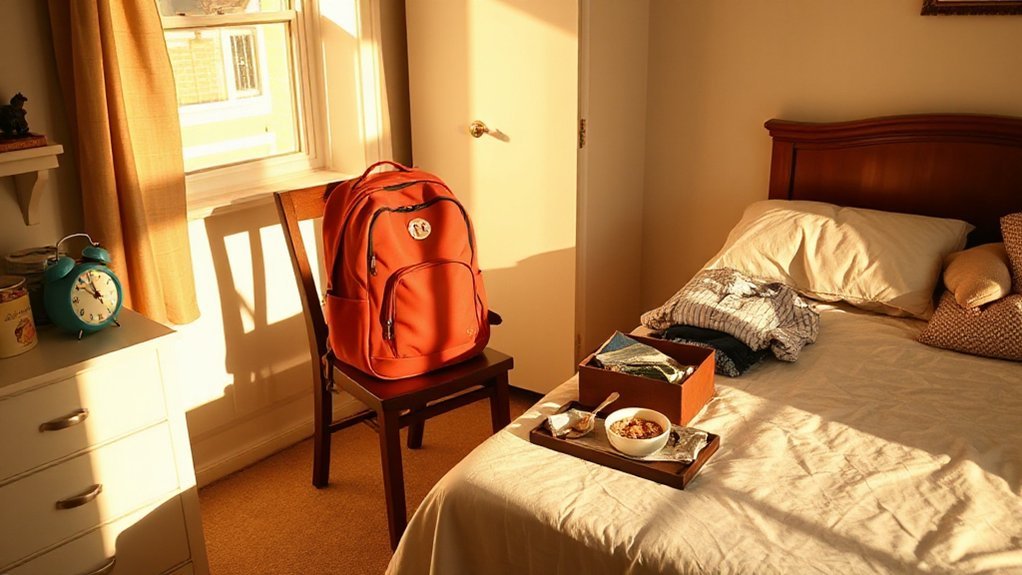
When bedtime rolls around, you’ve got a choice: spend fifteen minutes prepping tonight, or spend forty-five minutes tomorrow hunting for permission slips and matching socks.
Here’s the reality: nighttime prep stops morning chaos dead in its tracks. Pack backpacks completely—signed forms, show-and-tell items, homework, spirit-week outfits. Everything. Lay out complete outfits by the door: shirt, pants, socks, shoes. No decisions at 7 a.m. Prepare lunches and snack packs the evening before; batch-cook pancake batter or sausages on weekends so breakfast means quick reheating, not scrambling.
Pack backpacks completely tonight. Lay out outfits. Prep lunches. No morning decisions, no chaos.
Review your weekly overview each night. Tomorrow’s dentist appointment? Tournament? Project due? Set those materials out now, not when you’re already late.
Post a laminated checklist by the door—backpack, lunch, water bottle, permission slips, shoes—and let your kid check items off with dry-erase markers. Builds independence, prevents last-minute panic.
Fifteen minutes tonight. Forty-five minutes avoided tomorrow. Do the math.
Wake Your Child Calm and Early: Set the Day’s Emotional Tone

You’ve got your evening prep locked down—now comes the part that actually sets the emotional temperature for everything ahead.
Wake yourself first. Seriously. You prepping gives you five minutes to breathe, reset, and approach your child without stress radiating off you like heat. Then—gentle. A soft kiss, a favorite song, or calm music instead of blaring alarms. Skip the jolting. Your kid’s brain needs time to adjust.
Aim for an hour before departure. Sounds like a lot? It’s not. Sixty minutes means no rushing, no yelling, no panic spiraling into everyone’s day.
Use staggered wake times. One kid needs a back rub; another responds to whispering. Know your child. Customize it.
Those first 15–30 minutes after waking? Gold. That’s when their brain’s most plastic, most open. Drop in some breathwork, calm language, gentle stretches. You’re not just waking them up—you’re building their baseline for the entire day.
Build Movement and Breakfast in 20 Minutes

Within those first 30 minutes after waking, before breakfast even hits the table, you’ve got a golden window to fire up their brain and body—and it takes just 20 minutes total.
Split it this way: five to ten minutes of movement first. We’re talking gentle cardio, animal walks, or breath work paired with stretches. A quick flower-and-candle breathing exercise calms anxiety while activating their prefrontal cortex. Movement literally boosts problem-solving and attention—research shows it can improve math and reading efficiency by roughly ten percent.
Then comes the grab-and-go breakfast: Greek yogurt with fruit and granola, reheated batch pancakes, or prepped egg muffins. Ten to fifteen minutes, max.
Here’s your secret weapon: automate it. Post a weekly breakfast menu, batch-prep on Sundays, and let them choose or assemble. No decision fatigue, no delays, just fueled kids ready for the day ahead.
Create a Visual Checklist Your Kid Will Actually Use
Because mornings spiral fast—shoes missing, breakfast forgotten, backpack left behind—a visual checklist is your best defense against the chaos. You’ll laminate a chart with 6–8 simple steps: brush teeth, get dressed, pack backpack, eat breakfast, shoes on. Use large icons and short verbs. Post it at eye level by the bedroom or door.
Here’s the magic part: let your kid mark off tasks with a dry-erase marker or removable stickers. Concrete checking reinforces working memory and executive function, especially for kids with ADHD. It works because they own the process.
Stagger responsibility by age—younger kids get 3–4 steps, school-age kids 6–8. Review the chart nightly so the routine becomes predictable. Praise consistent completion. Offer small rewards if motivation dips.
As independence grows, phase it out gradually. Switch from picture-plus-word to words-only, then remove it completely. You’re building habits, not dependency.
Connect With Your Child Before Walking Out the Door
Try a family high-five and a single intention: “Today, you’ve got this.” Or a brief prayer. Maybe a special phrase you’ve always used. The consistency matters more than the content. Your child’s nervous system craves predictability, especially during changes—and drop-off? That’s peak separation stress.
This ritual provides closure. It’s your emotional bookmark before the school day splits you apart. Skip the rushed logistics talk at the door. Instead, anchor your connection with one deliberate gesture. That’s what quiets anxiety and builds separation resilience.
Frequently Asked Questions
Why Are Mornings so Hard for Kids With ADHD?
Mornings are brutal because your brain’s wired differently. You’re juggling executive-function stuff—planning, sequencing, remembering steps—while your dopamine system screams that this repetitive task is boring. Add sleep problems (yeah, about half of you struggle there), sensory overload from bright lights or scratchy clothes, and that jarring shift from sleep? You’re basically running on empty, overwhelmed, and resistant. It’s not laziness. It’s neurological.
So
You’ve got this. Those five strategies? They’re your morning game-changer, plain and simple. Start prepping tonight, wake them gently, fuel their bodies fast, keep that visual checklist handy, and connect before they bolt. Your mornings won’t transform overnight—they’re a marathon, not a sprint—but you’re building a system that actually works. Calmer kids, less stress, smoother days ahead. That’s the win you’re after.







Leave a Comment