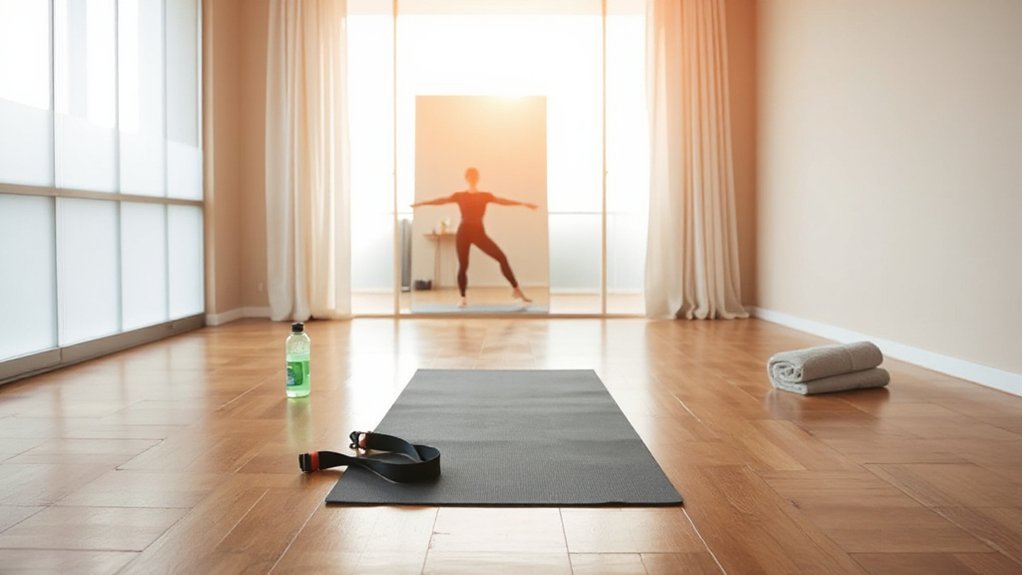

You’re trapped in that hunched desk posture, right? Stretching videos can help, but here’s the truth: you don’t need fancy productions. Simple 30-second neck rolls, shoulder shrugs, and seated spinal twists interrupt stiffness every hour. Take 1–3 minute breaks between tasks, hold static stretches for 20–30 seconds, and keep intensity low—no sweating allowed. The magic? Consistency beats perfection. Small, frequent movements compound into real relief. Keep your spine tall, breathe deeply, and stop if sharp pain hits. Want to build a custom routine that actually sticks?
Key Takeaways
- Office stretches require no equipment—neck rotations, shoulder shrugs, and spinal twists relieve desk-related tension effectively.
- Take movement breaks every 30–60 minutes with 1–3 minute stretching sessions to prevent cumulative muscle stiffness.
- Hold static stretches 20–30 seconds per side using controlled breathing to support relaxation and nervous system.
- Progress stretches by adjusting reps, range of motion, and using chair support based on current capacity.
- Dynamic warm-ups and balance drills improve mobility and postural control without sweating or high-intensity effort required.
Why Desk Sitting Causes Neck and Shoulder Pain

When you’re hunched over your desk for hours on end, your neck and shoulder muscles don’t get a break—they’re locked in a constant battle against gravity and poor posture. Here’s what’s happening: your neck muscles bear the weight of your head all day, creating sustained tension that builds up like compound interest. Your shoulders join the struggle, staying elevated and tight as you type and click. Meanwhile, your upper back muscles work overtime stabilizing everything, creating this perfect storm of stress.
All that tension? It doesn’t vanish when you clock out. Instead, it lingers, hardening into stiffness and soreness that make you wince when you turn your head. The good news: you can interrupt this cycle. Frequent breaks for stretches or movement actually reduce that muscle stress, giving your body the relief it desperately craves. Small movements matter more than you’d think.
Office Stretches That Fight Stiffness (No Equipment Needed)

You don’t need fancy equipment or a gym membership to fight that creeping stiffness—just a few minutes and your own body weight can transform how you feel at your desk. Simple moves like neck rotations, seated spinal twists, and overhead reaches work because they get your blood flowing and loosen tight muscles that’ve been locked in place all day, and you can slip them in during calls, between emails, or whenever tension starts creeping up your shoulders. The key? Break up those long sitting stretches with frequent, short movement breaks—hold each static stretch for about 30 seconds per side, stay within pain-free zones, and watch your mobility and comfort actually improve without sweating through your work clothes.
Desk Sitting Stress Relief
Stiffness creeps up on you—that tight neck, those sore shoulders, the dull ache radiating down your upper back—because hours at your desk keep your body locked in one position. You’re not stuck, though. Quick stretches throughout your day interrupt that tension and restore mobility without demanding sweat or equipment.
| Stretch Type | Duration | Benefit |
|---|---|---|
| Neck rolls | 30 seconds | Releases upper trap tightness |
| Shoulder shrugs | 30 seconds | Eases shoulder tension |
| Seated spinal twist | 10–15 seconds each side | Improves circulation, reduces stiffness |
Think of these breaks as conversation pauses—mini resets that boost circulation and increase your range of motion. Chair-supported options work for everyone. You’re not fixing problems; you’re preventing them, one stretch at a time.
Stretching Breaks During Workday
Those quick stretches we just covered? They’re game-changers when you actually do them. Here’s the thing: you don’t need fancy equipment or even to leave your desk. Throughout your workday, take frequent short breaks—your body will thank you.
Try these moves right now:
- Neck stretches – slowly tilt your head side to side
- Forearm stretches – reach one arm across your chest
- Upper-body reaches – extend both arms overhead while seated
- Spine twists – rotate gently, gripping your chair for support
Hold each stretch about 30 seconds per side, breathe deeply, and stop if pain shows up. You can stretch during conference calls or between emails. The beauty? No sweat, no special gear, no excuses. Ten minutes fixes circulation, flexibility, and range of motion. Your neck and shoulders deserve this attention.
Seated And Standing Options
Want to know the real secret to fighting desk-bound stiffness? You don’t need fancy equipment or a gym membership—just your chair and a few minutes.
Try seated hamstring reaches: lean forward gently, holding for 30 seconds per side while breathing deeply. Neck rolls? Perfect during calls. Forearm stretches, upper-body reaches, seated hip stretches—all doable right there. Standing? Use your chair for balance and add side bends, weight shifts, even single-leg toe taps.
Here’s the thing: these moves work because they interrupt stiffness before it locks in. You won’t sweat, you won’t disrupt your workday, and honestly, you’ll feel noticeably looser. The key is frequent, short breaks—not one heroic stretching session. Your neck and shoulders will thank you.
When and How Often to Stretch During Your Workday
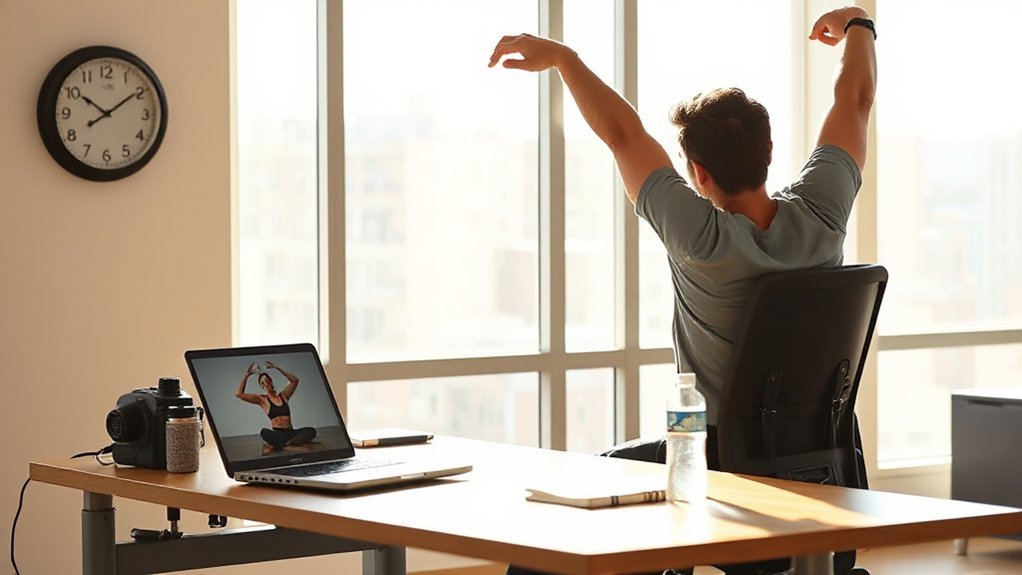
You’ve got to break up that desk time consistently—we’re talking quick 1–3 minute movement breaks every hour or so, even during calls, to shake off the stiffness that creeps into your neck and shoulders. Timing matters, too: hit those stretches when you feel tension building, right after meetings, or between tasks, rather than waiting until you’re completely locked up and uncomfortable. Then, layer in one solid 10-minute balance-and-stretch session daily (think something like the AARP Couch-to-Fit routine) where you hold each stretch for 20–30 seconds, breathe deep, and really work your flexibility—that’s your anchor point for real progress.
Break Frequency For Desk Work
Every 30 to 60 minutes—ideally once an hour, no exceptions—your body needs a movement break. Here’s the thing: your neck, shoulders, and upper back are literally screaming for relief after sustained desk time. You don’t need much—just 1 to 3 minutes of gentle stretches or mobility work restores circulation and fixes your posture.
Keep it simple with moves like these:
- Neck rolls that ease tension
- Forearm and upper-body stretches
- Hip openers for lower-body relief
- A quick march in place for energy
No equipment, no sweat required. Better yet? You can stretch during conference calls or mindless tasks using subtle seated variations. Stay productive while you’re getting comfortable. Your future self will thank you for breaking the sitting cycle before stiffness settles in.
Optimal Timing Throughout Your Day
Knowing how often to stretch matters just as much as knowing *what* to stretch—and honestly, timing is where most desk workers fall short. Here’s the real deal: every 30–60 minutes, stand up and do targeted neck, shoulder, and upper-back stretches for 1–3 minutes. That’s your baseline. Then, sprinkle in microstretches during calls—30–60 seconds of neck rolls or forearm stretches work wonders without disrupting your workflow. Once daily, carve out 5–10 minutes for a fuller routine like AARP’s balance work to boost flexibility and circulation. Finally, every hour, add brief lower-body movements—weight shifts, toe taps—to reengage your hips and legs. The key? Consistency beats intensity. Small, frequent breaks compound into real relief and better blood flow throughout your day.
Duration And Intensity Guidelines
The sweet spot for desk workers? Short, frequent breaks that actually fit your life.
Here’s what works:
- Every 30–60 minutes, take a 1–5 minute stretch break—nothing fancy, just neck rolls or seated twists
- Once or twice daily, do a longer 10-minute routine (think AARP balance videos) for deeper mobility work
- Keep it low-intensity—you shouldn’t sweat or leave your desk
- Stop immediately if sharp pain hits; use chair support and modify as needed
The magic’s in consistency, not intensity. You’re building flexibility and circulation without hijacking your productivity. Controlled breathing matters too—it grounds you, settles your nervous system. Stack these breaks into your rhythm: after coffee, mid-morning slump, post-lunch, late afternoon. Your neck and shoulders will thank you. Really.
Dynamic Stretches for Hamstrings, Hips, and Spine
Activating your hamstrings, hips, and spine with dynamic movement—rather than holding still stretches—wakes up your whole lower body and gets your blood flowing without leaving you exhausted. You’re not trying to break a sweat; you’re priming your body.
Start with hamstring work: tap your foot forward, center, side, and back while keeping your supporting leg bent. Once you’ve got the rhythm, lift your foot off the ground for real challenge. Eight to ten reps per direction does the trick.
Next, shift your weight side to side while raising your arms in sync—this opens your hip joint and engages those muscles you actually use. Finally, seated spinal twists and side reaches wake up your spine. Breathe in tall, reach over to increase rotation and lateral range.
Do these bursts throughout your day. Use a chair for balance. Stop if something hurts.
Balance Work That Improves Posture and Stability
Now that you’ve woken up your lower body with dynamic movement, it’s time to build the stability that keeps you upright and strong. Balance work isn’t just about not falling—though that matters, especially since falls are the leading cause of injury among older adults. It’s about reclaiming your confidence in your own body.
Balance work reclaims your confidence in your own body, keeping you steady and strong for life.
Start with weight-shifting drills. Plant your feet shoulder-width apart, bend your knees slightly, and shift your weight so your knee tracks directly over your ankle. This trains proper alignment and posture from the ground up.
Next, challenge yourself with single-leg work:
- Stand on one leg while tapping the other foot forward
- Tap to the side, then back, returning to center
- Progress by lifting your foot completely off the ground
- Regress by keeping your toe planted or using a chair
These sequences strengthen your hips and legs, building the postural control that keeps you steady.
Customize Every Move to Your Fitness Level and Build Your Routine
Since every body’s different—and that’s not just a saying, it’s true—you’ve got to meet yourself where you are right now. Start by choosing seated or standing versions based on what feels stable and sustainable. Sitting in a chair? Perfect for building foundational strength. Ready to challenge your balance? Try toe taps or single-leg lifts instead.
Adjust reps and holds to match your capacity. Ten weight-shift reps today might become fifteen tomorrow. A 30-second hamstring hold per side builds flexibility without forcing it.
Modify your range of motion, too. Smaller, pain-free movements beat ambitious ones that hurt. Control matters more than size. Breathe deeply, keep your spine tall, and rest whenever you need it.
Build consistency by stretching frequently throughout your workday—short sessions beat occasional marathons. Stop immediately if pain strikes, and consult your doctor before starting anything new. Your routine adapts as you do.
Frequently Asked Questions
What Will 10 Minute Daily Stretching Do to Your Body?
You’ll notice your body loosening up, honestly. Your hips, hamstrings, and spine gain flexibility—real range of motion you can feel. Balance improves too, which matters if you’re worried about falls. Stiffness melts from your neck and shoulders, especially if you’re desk-bound. You’ll move easier, stand taller, and get through daily activities with more comfort. Ten minutes daily? That’s genuinely transformative without exhausting you.
Can a 60 Year Old Regain Flexibility?
Absolutely, you can. Think of your muscles like a garden that’s gone a bit wild—they need consistent tending, not a complete overhaul. Daily 10-minute stretches targeting hamstrings, hips, and spine work genuinely. Hold each stretch 30 seconds, breathe deeply, use a chair for support, and you’ll notice real improvements within weeks. Your body’s ready to cooperate; it just needs your patient, regular attention.
So
You’ve got the tools—now you’ve got to use them. Your desk doesn’t own you; stretching does. Whether you’re loosening tight hamstrings, rolling your shoulders back, or finding your balance, these moves aren’t luxuries, they’re necessities. Start small, build steady, customize everything to fit your body. That stiffness you feel? It’s reversible. Your neck, your hips, your spine—they’re all waiting for you to stretch them free. Do it.





Leave a Comment