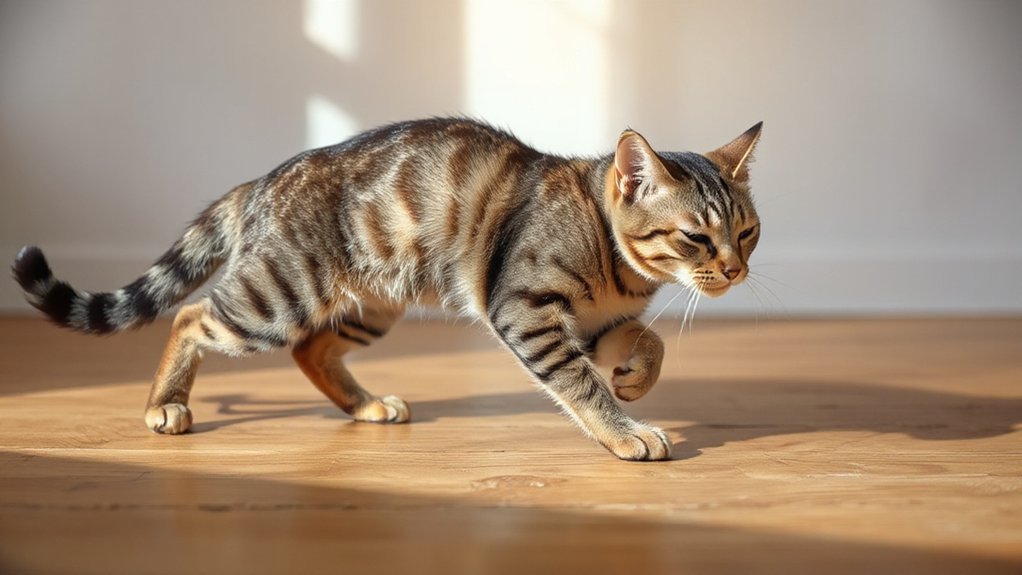

Your cat’s stretches aren’t just cute—they’re her body’s built-in maintenance system. Those dozen-plus daily stretches warm muscles for sudden sprints, lubricate joints, and keep her flexible as she ages. A slow, full-body stretch after napping signals contentment and readiness. But here’s the thing: sudden changes matter. If she’s stretching less, limping, or vocalizing while arching her back, that’s pain talking—arthritis, spinal issues, or something worse. Watch closely; changes lasting over 48 hours need a vet’s eye. Understanding what those stretches really mean reveals so much more.
Key Takeaways
- Cats stretch 12–16 hours daily to restore posture, increase blood flow, and maintain flexibility for sudden movement.
- Slow full-body stretches after waking signal contentment; vertical stretches with scratching indicate territory marking and confidence.
- Sudden changes in stretching frequency, especially constant arching, can signal pain, arthritis, or abdominal issues.
- Provide tall scratching posts (28–36 inches) and multi-level platforms in naturally frequented areas to encourage healthy stretching.
- Stretching changes combined with decreased appetite, limping, or lethargy require prompt veterinary evaluation within 48 hours.
Physical and Instinctive Reasons Cats Stretch
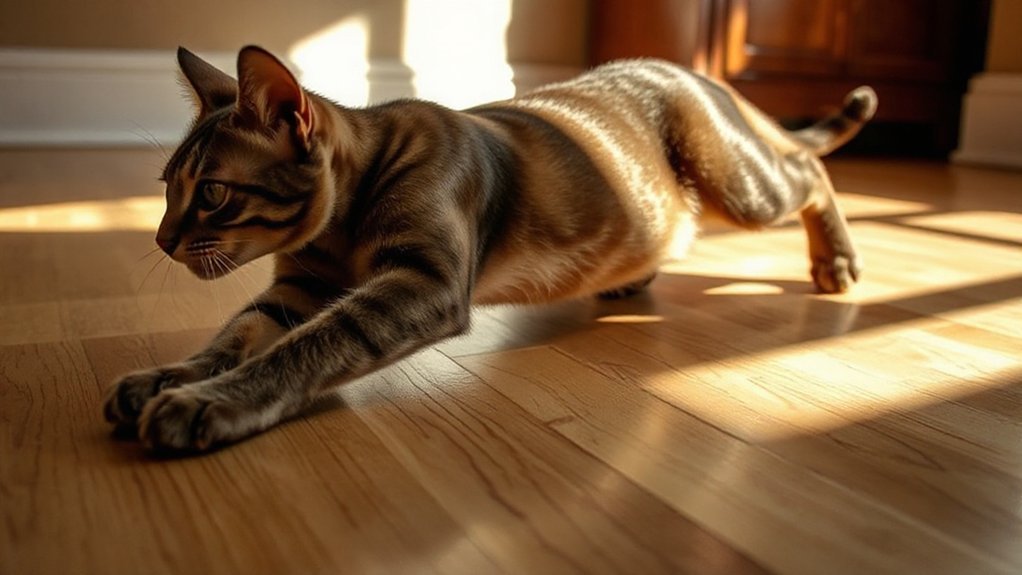
Stretching after a long snooze? Your cat’s doing exactly what evolution designed her to do. Since your cat sleeps 12–16 hours daily, those full-body stretches aren’t just habit—they’re essential maintenance. When she extends those muscles, she’s restoring posture and resetting muscle length after prolonged rest.
Here’s what’s happening: those stretches increase blood flow and warm muscles, lubricating joints for sudden bursts of pouncing or sprinting. It’s preparation, plain and simple. You’ll notice vertical stretches too—when she climbs a post or wall, she’s combining muscle extension with scent marking from her paw glands, reinforcing territory boundaries. Pretty efficient, right?
Regular stretching keeps her flexible and joint-healthy as she ages, maintaining muscle tone and range of motion. Those seemingly lazy movements? They’re actually your cat’s way of staying sharp, mobile, and ready. Every stretch counts.
What Different Stretches Mean About Your Cat’s Mood?
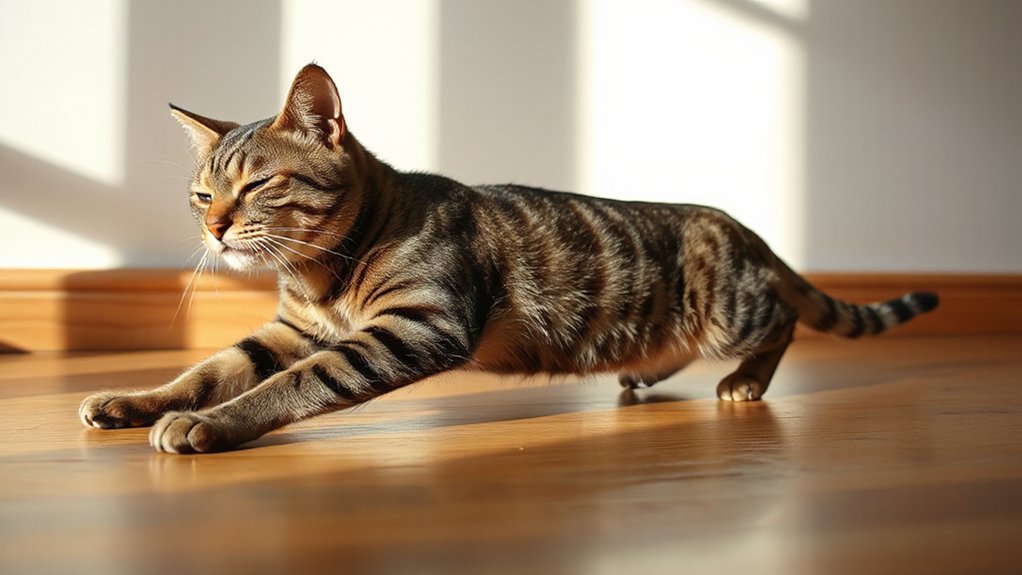
Ever wonder what your cat’s communicating when she stretches? Her body language tells you plenty about how she’s feeling.
That slow, full-body stretch right after waking? She’s content and physically ready for action. After sleeping 12–16 hours, she’s just signaling comfort and confidence, not stress.
When she rolls onto her back and exposes her belly, she’s showing serious trust. That vulnerable position means she feels safe around you—though here’s the thing: it’s not necessarily an invitation to pet her there. Respect the signal.
Vertical stretches paired with scratching on posts? She’s marking territory and feeling confident. Those paw glands deposit her scent, basically saying, “This space is mine.”
Now, pay attention: if your cat suddenly stretches less or way more frequently, something’s off. Pain from arthritis or anxiety could be lurking. When her stretching habits shift, it’s worth watching closely or calling your vet.
When Stretching Signals a Health Problem
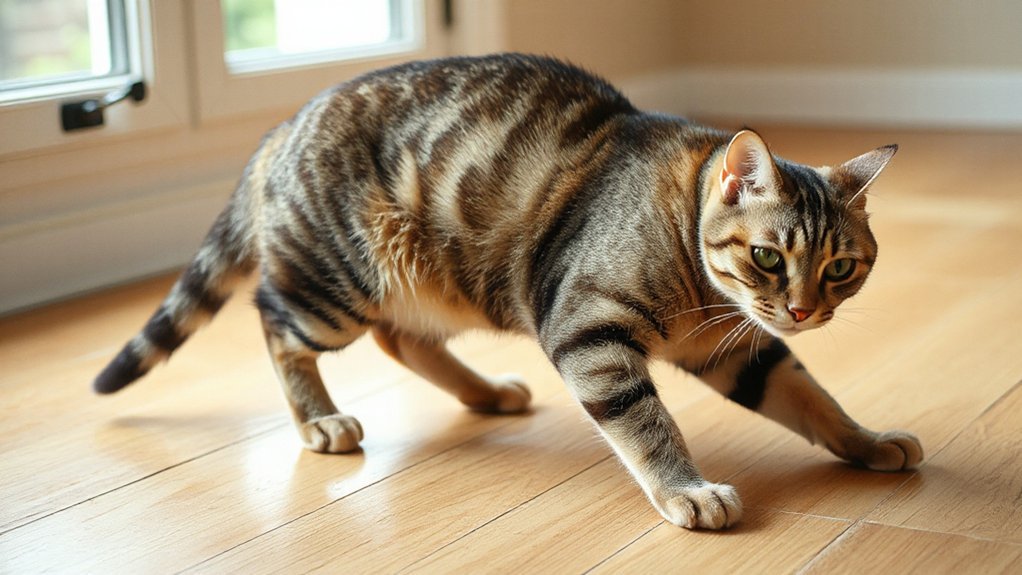
While your cat’s daily stretches are usually nothing to worry about, sudden changes in those habits? That’s your cue to pay attention. Cats can’t tell you what hurts, so you’re their detective. A marked decrease or increase in stretching—especially constant arching—often signals pain from arthritis, spinal issues, or abdominal trouble. Older cats, particularly those over seven, frequently show stiffness when rising; that’s classic early osteoarthritis.
Watch for red flags: excessive stretching with vocalization, drooling, panting, or guarding the belly suggests acute pain requiring prompt vet care. When stretching changes pair with decreased appetite, limping, or lethargy, medical problems become likely rather than possible.
| Warning Sign | Possible Cause | Action |
|---|---|---|
| Constant arching + vocalization | Pancreatitis, GI pain | Vet visit today |
| Stiffness rising (older cats) | Osteoarthritis | Schedule exam |
| Decreased stretching | Spinal disease | Assess movement |
| Combined appetite loss | Multiple issues | Urgent evaluation |
| Persists 48+ hours | Unknown origin | Get diagnostics |
If changes persist beyond 48 hours or worsen, seek assessment. Your vet may perform orthopedic exams, radiographs, or abdominal diagnostics. Trust your instincts here.
Creating an Environment Where Your Cat Can Stretch Naturally
How can you set up your home so your cat stretches freely and often?
Start with a tall scratching post—28 to 36 inches high—where your cat can fully extend those front legs and arch their spine. Place it somewhere your cat naturally hangs out, not hidden in a corner.
Next, create a stretching landscape. Install low, non-slip platforms at different heights: floor level, mid-height around 50 centimeters, and high vantage points near windows. Your cat will move between them, elongating muscles each time.
Add soft mats and rugs in sunny spots and near sleeping areas. Cats instinctively stretch after naps, so make those moments irresistible.
Here’s the key: aim for one stretching option per cat, plus one extra. This reduces competition and encourages repeated stretching throughout your home.
Keep everything stable, unobstructed, and warm—around 20 to 25 degrees Celsius. A safe, comfortable environment? That’s when your cat stretches naturally and often.
Common Stretching Behaviors: What’s Normal and What Isn’t
What’s totally normal? Your cat stretches after sleeping 12–16 hours daily—full-body arches, splayed toes, massive yawns. You’ll see vertical reaches too, scratching posts while marking territory with paw glands. Quick, dramatic stretches before crossing rooms or settling into naps? That’s priming muscles for sudden movement. All of it, completely healthy.
| Behavior | Normal | Concerning |
|---|---|---|
| Full-body stretch after sleep | Yes—daily habit | No change needed |
| Standing scratches on posts | Yes—territory marking | Only if excessive |
| Brief stretches throughout day | Yes—muscle prep | Yes, if sudden increase |
| Reluctant or stiff stretching | No—suggests pain | Seek vet evaluation |
Watch for changes though. Excessive stretching or sudden frequency spikes might signal abdominal pain, arthritis, or back discomfort. Reluctance to stretch? Joint pain or muscle injury. If stretching changes accompany reduced appetite, difficulty jumping, limping, vocalization, or obvious stiffness, get veterinary evaluation soon. Early assessment really matters.
Frequently Asked Questions
Is It Okay to Stretch Your Cat?
Yes, you can stretch your cat—gently. Support their limbs properly, work with warm muscles, and hold stretches briefly (fifteen to twenty seconds max). Your cat sets the pace; if they resist, vocalize, or seem stiff, stop immediately. Those signs mean pain or injury. Use treats, not force. Really, you’re inviting participation, not demanding it. When in doubt, consult your vet or an animal physiotherapist.
So
You’ve now got the full picture: your cat’s stretches aren’t just cute—they’re a window into their physical health and emotional state. Pay attention, stay alert, and you’ll catch problems before they snowball. Create that stretching-friendly space, understand what’s normal, and trust your instincts. Your cat’s flexibility is their lifeline, and you’re the one holding it. Keep watching, keep caring.






Leave a Comment