
You’ll improve how you feel each morning by prioritizing sleep habits that actually work. Start with a consistent sleep-wake schedule, a cool, dark bedroom, and limiting evening screens and caffeine. These steps have clinical support and are practical for most patients, but there’s more to tailoring them to your routine—so keep going to get specific, actionable changes.
Establish a Consistent Sleep Schedule

Consistently going to bed and waking at the same times helps align your circadian clock and improves sleep continuity. You should pick sleep and wake times that match your chronotype alignment while keeping them stable across weekdays and weekends to reduce social jetlag. Aim for consistent timing even if total sleep varies; that stability promotes sleep drive and daytime alertness. Track bedtime and wake time for two weeks, then adjust by 15–30 minutes if you’re off-target. Prioritize wind-down routines that cue sleep onset and schedule obligations to protect sleep opportunity. When medical or shift-work constraints disrupt timing, discuss strategies with your clinician to mitigate circadian misalignment. Small, sustained timing changes yield measurable improvements in sleep continuity and daytime function. Expect gradual, durable clinical benefits.
Optimize Bedroom Light and Temperature
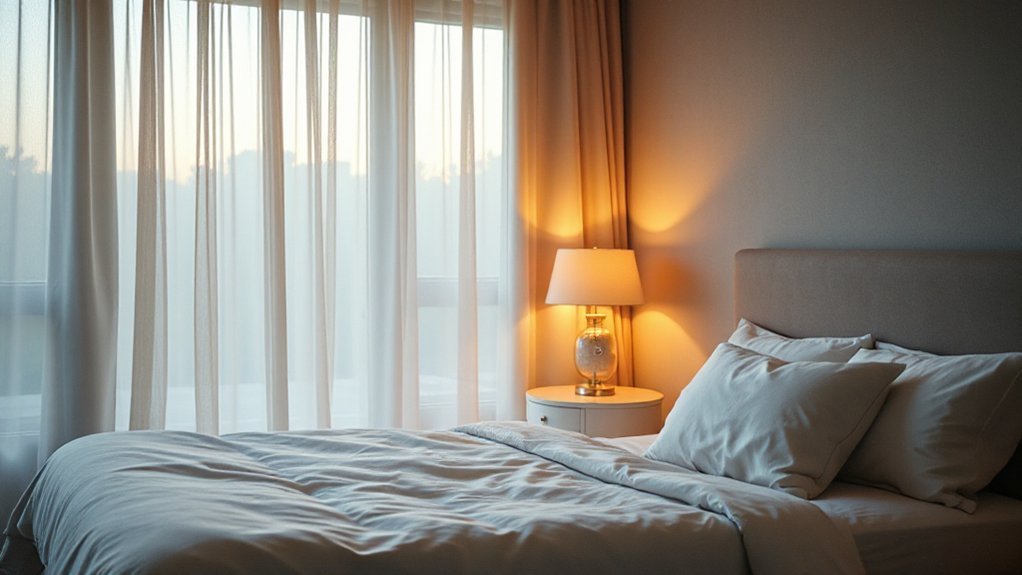
A dark, cool bedroom helps your body produce melatonin and maintain stable sleep stages, so aim to reduce evening light and keep the sleeping space around 60–67°F (15–19°C). You can install blackout curtains to eliminate external light and reduce awakenings from streetlights or early dawn. Control temperature variability with programmable or Zoned thermostats to maintain the target range through the night; reducing temperature swings improves sleep continuity. Remove nightlights and cover electronic indicator lights on devices. Choose breathable bedding and adjust clothing to match the setpoint rather than heating the room. If you have medical conditions that affect thermoregulation, discuss individualized targets with your clinician. These objective, practical strategies reduce arousals and support restorative sleep physiology. Track effects and adjust based on symptom response.
Limit Blue Light and Evening Screen Time

Evening exposure to bright screens can suppress melatonin and delay sleep onset, so you should dim screens at least an hour before bedtime. Enable night mode or install blue‑light filter apps on devices to reduce short‑wavelength light. These simple, research‑supported adjustments can improve sleep latency and overall sleep efficiency for many patients.
Dim Screens Before Bed
Because blue light suppresses melatonin, dimming screens and limiting device use before bed helps you fall asleep faster and improves sleep continuity; clinical studies show that reducing evening screen exposure—especially in the hour before bedtime—raises nocturnal melatonin and shortens sleep onset latency. You should lower display brightness manually, enable auto dimming apps where available, and set short screen timeout intervals to minimize incidental exposure. Limit active engagement with devices for 60 minutes before sleep and replace scrolling with low-arousal activities. If you must use a device, keep it at arm’s length, reduce notification volume, and use night mode sparingly (avoid discussion here). Track symptoms: note sleep latency and awakenings to assess benefit. Discuss persistent insomnia with your clinician to tailor behavioral or pharmacologic strategies.
Use Blue-Light Filters
If you reduce evening blue‑light exposure by using screen filters, night‑shift display modes, or amber glasses, you’ll help preserve nocturnal melatonin and speed sleep onset—clinical studies link lower short‑wavelength light exposure with higher melatonin levels and shorter sleep latency. Choose device settings that shift color temperature after sunset and set schedules tied to your bedtime; many platforms offer App Recommendations to simplify setup. Wear amber or orange lenses if screens remain necessary; verify Lens Compatibility with your prescription or safety standards before use. Limit screen use 60–90 minutes before bed and use dim red lighting for necessary tasks. Monitor sleep latency and daytime alertness to assess benefit. If symptoms persist, consult a clinician for tailored chronotherapy or sleep-medicine evaluation and consider cognitive behavioral therapy.
Mind Your Evening Eating and Drinking Habits
Your evening food and drink choices directly affect how quickly you fall asleep and how well you stay asleep. Limit caffeine after mid-afternoon because it can delay sleep onset and reduce deep sleep. Avoid alcohol close to bedtime since it fragments sleep and suppresses restorative REM sleep.
Limit Late Caffeine
Often, consuming caffeine late in the day raises physiological arousal and delays sleep onset by blocking adenosine receptors; clinical trials show caffeine taken as much as six hours before bedtime can cut total sleep time and reduce sleep quality. You should assess your caffeine intake timing and quantity, noting that caffeine metabolism varies widely due to genetic variability and other factors like age and medications. If you struggle to fall asleep or stay asleep, shift caffeinated drinks to morning hours and switch to decaffeinated or herbal alternatives after midday. Track symptoms and consider a trial period of reduced evening caffeine for two weeks to evaluate improvement. Discuss persistent insomnia with your clinician; they can consider pharmacologic interactions and individualized guidance. Adjust plan as needed.
Avoid Alcohol Before Bed
Because alcohol can speed sleep onset but fragments sleep later, you should avoid drinking in the hours before bedtime to protect sleep continuity and restorative stages. Alcohol initially increases GABAergic activity, which may make you fall asleep faster, but it causes REM suppression and frequent awakenings in later sleep cycles. Clinical studies link evening alcohol use to reduced slow-wave and REM sleep, impairing memory consolidation and mood regulation. You should stop drinking at least 3 to 4 hours before bed; heavier use needs longer abstinence. If you experience next day grogginess, worsen cognitive performance, or disrupted breathing, discuss screening for misuse with your clinician. Small behavioral changes—substituting nonalcoholic beverages and setting a routine—improve sleep architecture and daytime functioning and reduce long-term health risks substantially.
Incorporate Regular Daytime Movement and Exercise
Moving regularly during the day improves sleep consolidation, shortens the time it takes you to fall asleep, and increases restorative slow-wave sleep. Schedule moderate aerobic activity most days, and include resistance sessions twice weekly. Use micro workouts and desk stretches to break prolonged sitting; these lower arousal and reduce insomnia risk. Aim for morning or early afternoon exercise to avoid nocturnal stimulation. Track duration and intensity; clinical trials link 150 minutes of moderate activity per week to better sleep efficiency. If you have medical conditions, consult your clinician before starting. Start with achievable targets, progress gradually, and note sleep diaries to assess effects. Monitor symptoms. Table below summarizes practical options.
| Option | Duration | Timing |
|---|---|---|
| Walks | 10–30 min | Morning/afternoon |
| Resistance | 20–40 min | Any time before evening |
Practice Relaxation Techniques Before Bed
Practicing calm, structured relaxation before bed can lower physiological arousal and shorten the time it takes you to fall asleep; clinical trials show techniques like diaphragmatic breathing, progressive muscle relaxation, and mindfulness-based exercises reduce sleep latency and insomnia severity. You should establish a brief, consistent routine 20–30 before lights-out. Start with diaphragmatic breathing to slow heart rate, follow with a progressive body scan to release tension from head to toe, and use guided imagery to redirect intrusive thoughts. Keep sessions simple, focus on sensations, and avoid cognitive tasks that raise alertness. If you have chronic insomnia, integrate these techniques into cognitive behavioral therapy for insomnia (CBT-I) under clinician guidance. Monitor response and adjust timing or technique as needed. Track sleep metrics weekly for improvement.
Use Smart Alarms and Morning Light to Wake Gently
After calming your body before bed, use smart alarms and morning light to support a gentler, biologically aligned wake-up. You’ll benefit from gradual light ramps that mimic dawn; research shows dawn simulation reduces sleep inertia and improves mood on waking. Choose a device with adjustable intensity and timing tied to your sleep cycle, and consider scent alarms for olfactory cues that can enhance alertness without abrupt noise. Integrate data from wearable trackers to time the alarm during lighter sleep stages. When possible enable weather integration so light timing adapts to sunrise shifts and cloudy conditions. Apply consistent wake windows and avoid sudden loud tones. Discuss device selection and settings with your clinician if you have sleep disorders or circadian concerns. Adjust as needed.






Leave a Comment