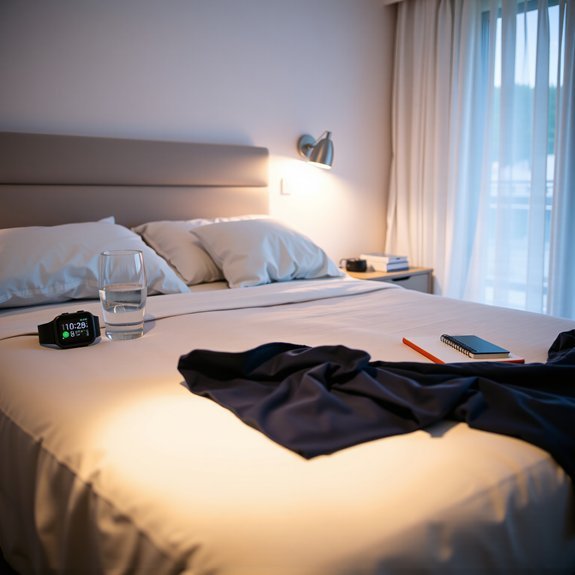

You can markedly improve sleep by addressing environment, routines, daytime habits, and medical issues; evidence supports consistent schedules, morning light, CBT‑I for chronic insomnia, and screening for sleep apnea. This concise, clinically grounded guide gives practical steps to assess and treat common problems—keep going to find specific strategies that produce measurable change.
Why Sleep Quality Matters

When you regularly get poor-quality sleep, your brain’s attention, memory consolidation, and emotional regulation suffer, increasing daytime errors and mood instability. You’ll see measurable declines in Cognitive Performance: slower reaction times, reduced working memory, and impaired decision-making, which raise accident and error risk. Poor sleep also alters metabolic and inflammatory pathways, weakening Immune Function and increasing susceptibility to infections and chronic disease. Mood disorders, impaired learning, and reduced productivity follow, while recovery from physical exertion slows. Clinical studies link short and fragmented sleep to hypertension, glucose dysregulation, and elevated inflammatory markers. You should assess sleep quality as an essential sign, monitor daytime functioning, and prioritize interventions that restore restorative, uninterrupted sleep to protect cognition, immunity, and overall health. Seek professional evaluation when problems persist.
Understanding Sleep Cycles and Stages
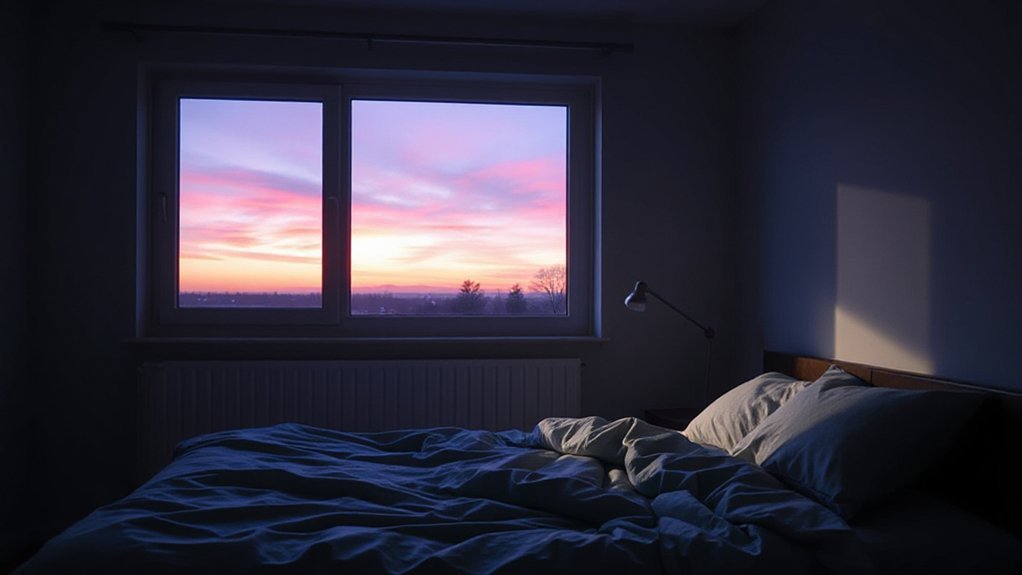
How do sleep cycles organize the brain’s restorative and memory processes? You’ll cycle actively through NREM and REM stages roughly every 90–110 minutes; NREM architecture (stages N1–N3) drives synaptic downscaling and metabolic clearance, while REM consolidation supports emotional memory and procedural learning. You need adequate total sleep and intact sequential cycling to maximize these processes. Clinical evidence links reduced slow-wave N3 with impaired glymphatic clearance and fragmented REM with memory deficits. Monitor duration and fragmentation, and address medical contributors like apnea or circadian misalignment. Below is a concise functional summary.
| Stage | Primary function | Typical proportion |
|---|---|---|
| NREM (N1–N3) | Restoration, glymphatic clearance, synaptic homeostasis | ~75% early night |
| REM | REM consolidation, emotional memory, procedural learning | ~25% later night |
Use polysomnography for diagnostic precision when abnormalities persist unresolved clinically.
Designing a Sleep-Friendly Environment
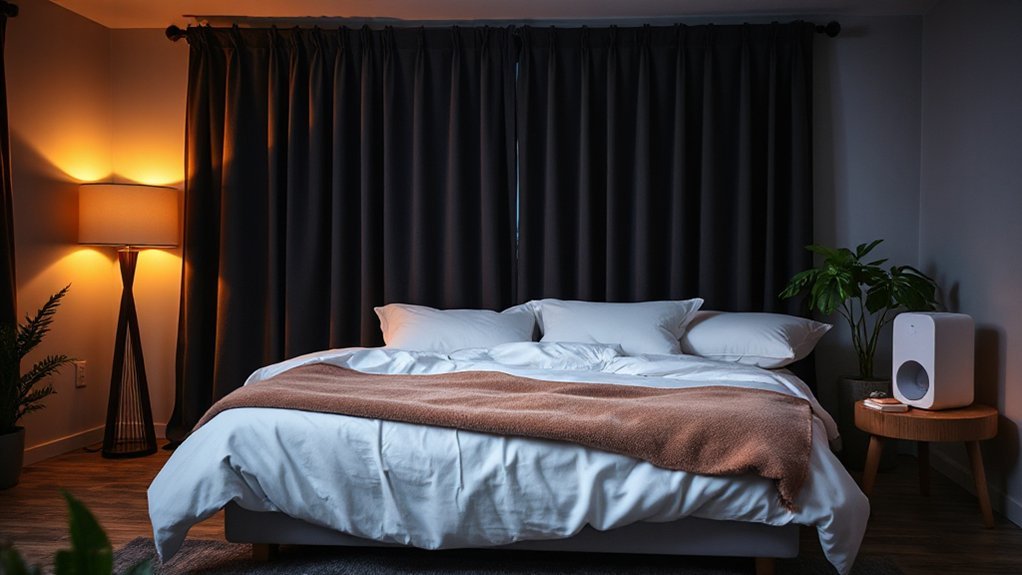
To support consolidated sleep, you’ll minimize evening light and maximize nighttime darkness because bright, blue‑rich light suppresses melatonin. Install blackout curtains and use dimmable warm lights or low‑lux bedside lamps for pre‑sleep tasks to cue circadian readiness. Keep bedroom temperature around 16–19°C (60–67°F) and choose breathable bedding, since cooler ambient temperatures help sleep onset and maintenance.
Optimize Bedroom Lighting
Why does lighting matter for sleep? You rely on circadian cues; light suppresses melatonin and shifts rhythms. Reduce evening blue-rich light by lowering color temperature and using warm bulbs. Place dimmers near entry and bedside for convenient dimmer placement; dim gradually over 30-60 minutes. Eliminate direct glare; use shaded lamps and directional fixtures. Consider blackout curtains and small night lights with <5 lux for safety. Use a consistent light–dark schedule to reinforce sleep onset. Monitor response; some need near-dark, others benefit from low, warm light. Table shows practical options for setup imagery:
| Area | Fixture | Light strategy |
|---|---|---|
| Bedside | Lamp | Warm, dimmed |
| Ceiling | Recessed | Shielded, indirect |
| Entry | Dimmer switch | Accessible, gradual |
Document your lighting changes and review sleep metrics for objective adjustment weekly with clinician.
Control Room Temperature
When your bedroom supports nocturnal cooling, you’ll fall asleep faster and maintain deeper sleep because thermoregulation drives sleep onset and maintenance. Set target 15–19°C (60–67°F) core bedroom temperature to align with published sleep physiology. Use a programmable thermostat, perform regular HVAC Maintenance to prevent airflow and humidity deviations, and remove heat sources. Monitor microclimate with Wireless Sensors placed near bed and breathing zone to detect variation and guide adjustments. Prioritize ventilation and humidity control; aim for 30–50% relative humidity. Schedule seasonal filter replacement and professional inspection annually. Implement simple behaviors: breathable bedding and timed pre-sleep cooling routines to facilitate distal vasodilation.
- Optimize thermostat and HVAC Maintenance schedule.
- Deploy Wireless Sensors for room and bed microclimate.
- Control humidity, ventilation, bedding.
Monitor regularly.
Evening Routines and Bedtime Rituals
Although individual needs vary, keeping a consistent evening routine improves sleep onset and continuity: studies show a predictable sequence of behaviors—dimming lights, limiting screen use, and engaging in calming activities—helps signal your circadian system, reduce sleep latency, and decrease nighttime awakenings. Structure the hour before bed with low-arousal tasks. Dim ambient light, use screen filters or device curfew, and perform progressive muscle relaxation or guided breathing. Use gratitude journaling five to ten minutes to lower arousal and reduce pre-sleep rumination; record three concise items and avoid problem-solving. If you share sleep, set partner rituals that align timing and cues without stimulating conversation. Keep these rituals consistent nightly when possible. Track sleep latency, awakenings, and sleep efficiency, adjust components based on objective and subjective measures.
Daytime Habits That Improve Nighttime Sleep
Optimizing daytime behaviors can substantially strengthen nighttime sleep by aligning your circadian rhythms and lowering physiological arousal: get bright light exposure soon after waking to anchor your clock, schedule regular physical activity (preferably earlier in the day or finishing at least a few hours before bed), limit caffeine intake after mid-afternoon given its multi-hour half-life, keep naps short (20–30 minutes) and before mid‑afternoon, avoid heavy or late meals, and minimize alcohol in the evening because it fragments sleep. Prioritize morning exercise and sunlight exposure.
- Morning exercise and sunlight exposure within 30 minutes of waking.
- Keep naps ≤30 minutes and before mid-afternoon.
- Maintain consistent wake–sleep timing; limit late caffeine.
If insomnia persists, seek clinical assessment and behavioral treatment such as CBT-I today.
Nutrition, Alcohol, and Sleep
How you time and compose meals — and whether you drink alcohol — directly affects sleep physiology and subjective sleep quality. You should prioritize dinner two to three hours before bed, using macronutrient timing to favor complex carbohydrates and protein while limiting heavy fats to reduce nocturnal reflux and delayed gastric emptying. Evening carbohydrate intake can increase tryptophan availability and support sleep onset, whereas late high-fat meals may fragment sleep. Limit caffeine late afternoon. If you consume alcohol, remember alcohol metabolism initially sedates but later disrupts REM and causes awakenings; avoid drinking within three to four hours of bedtime. Hydration and a balanced micronutrient intake support circadian-regulated processes. Make incremental dietary adjustments, monitor sleep changes, and consult a clinician for persistent disturbances as needed.
Troubleshooting Common Sleep Problems
Dietary and alcohol factors are one common contributor to poor sleep, but most patients present with a handful of identifiable problems that require targeted evaluation and management. You should systematically assess insomnia triggers, sleep hygiene, comorbid medical or psychiatric conditions, medication effects, and circadian factors. Implement brief evidence-based interventions: cognitive behavioral therapy for insomnia (CBT-I), medication review, and targeted treatment for sleep-disordered breathing. When obstructive sleep apnea is suspected, arrange polysomnography and discuss snoring solutions including CPAP and mandibular advancement devices. Use objective measurement when possible, track sleep diaries, and reassess. Refer to sleep medicine when symptoms persist despite first-line measures or when diagnostic uncertainty exists.
- Evaluate causes, medication contributors
- Start CBT-I and behavioral measures
- Test for apnea; apply snoring solutions






Leave a Comment