
You’re probably dealing with sleep apnea if you’re gasping awake, snoring like a chainsaw, or waking exhausted after a full night’s sleep. Roughly one billion people worldwide have it—you’re genuinely not alone. Basically, your breathing stops repeatedly during sleep, starving your brain and heart of oxygen. Men get hit three times harder than women, especially if you’re overweight, smoke, or have a thick neck. The good news? You’ve got solid treatment options, from CPAP machines to lifestyle tweaks that actually work.
Key Takeaways
- Sleep apnea is a condition where breathing repeatedly stops and restarts during sleep, often with gasping sounds.
- Obstructive sleep apnea occurs when airways collapse; central sleep apnea happens when the brain fails to signal breathing.
- Risk factors include excess weight, smoking, male sex, family history, and certain anatomical features like thick necks.
- CPAP therapy is the gold-standard treatment; oral appliances and lifestyle changes work for milder cases.
- Untreated sleep apnea increases risks of heart disease, stroke, diabetes, accidents, and poor quality of life.
Understanding Sleep Apnea: What It Is and Why It Matters
When you’re sleeping soundly—or so you think—your body might actually be staging a nightly crisis: your breathing stops, sometimes dozens of times an hour, then restarts with a gasp or snort. That’s sleep apnea, and it’s happening to roughly a billion people worldwide right now.
Here’s what’s really going on: either your airway collapses (obstructive sleep apnea), or your brain forgets to signal your lungs to breathe (central sleep apnea). Men face it two to three times more than women, though anyone can develop it.
You might not notice it yourself. But your bed partner definitely will—the snoring’s often loud enough to wake them. You’ll catch yourself gasping awake, choking mid-sleep, feeling exhausted all day despite being in bed eight hours. That’s the telltale combo: witnessed breathing pauses plus daytime fog, irritability, concentration problems, and morning headaches that won’t quit. This matters because untreated sleep apnea risks your heart, your metabolism, and your safety on the road.
Sleep Apnea Symptoms: What to Watch For
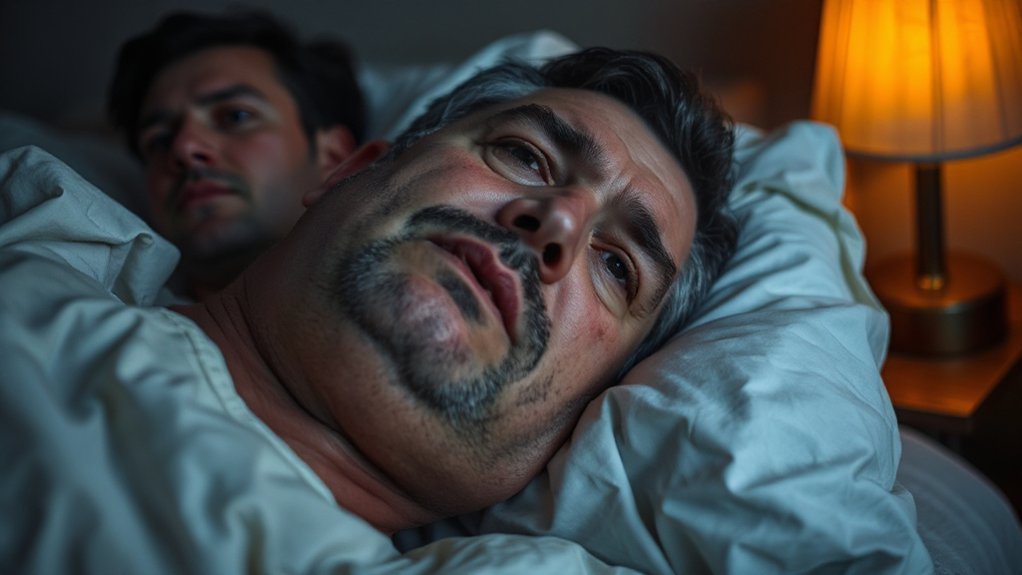
Most nights, you’re probably not aware of what’s actually happening in your body while you sleep—but your bed partner sure is. They might notice things you’d never catch alone: the loud snoring punctuated by gasping, the breathing pauses followed by sudden snorts. These aren’t just annoying sounds; they’re your body’s way of signaling trouble.
Your bed partner notices what you miss: loud snoring, gasping, breathing pauses. These sounds signal trouble your body’s trying to tell you.
Here’s what to watch for:
- Loud, habitual snoring with gasping or choking sounds during sleep
- Breathing pauses reported by your bed partner, often followed by sudden gasps
- Excessive daytime sleepiness or falling asleep unintentionally throughout the day
- Frequent nighttime awakenings, dry mouth upon waking, and morning headaches
- Waking short of breath or struggling to initiate sleep (especially with central sleep apnea)
If you’re experiencing several of these symptoms, don’t brush them off. Your body’s trying to tell you something important. Getting evaluated matters more than you might think.
Sleep Apnea Risk Factors: Who Gets It
So you’ve recognized the symptoms—the snoring, the gasping, the exhaustion that won’t quit. Now comes the harder question: why you? Sleep apnea doesn’t discriminate, but certain factors stack the deck against you.
| Risk Factor | Impact | What You Can Do |
|---|---|---|
| Weight | Excess pounds narrow airways | Work toward gradual loss |
| Smoking | Triples your risk | Quit—seriously, talk to your doctor |
| Family history | Genetic predisposition runs deep | Monitor yourself closely |
You’re more vulnerable if you’re male, middle-aged, or past menopause. A thicker neck, large tonsils, or a deviated septum? Those anatomical quirks matter. Heart problems or opioid medications? They bump your risk higher. Even that family history you can’t change whispers a warning.
The truth: you might carry multiple risk factors, or just one. Either way, recognizing where you stand helps you act. Understanding your personal risk isn’t about blame—it’s about clarity.
How to Treat Sleep Apnea: CPAP, Surgery, and Lifestyle Changes
Now that you know you’ve got sleep apnea, what’s next? Your treatment path depends on severity and what you’ll actually stick with. Here’s the real talk: you’ve got solid options, and combining them often works best.
- CPAP therapy keeps your airway open all night—it’s the gold standard for moderate-to-severe cases, dramatically cutting apnea events and daytime fog when you use it nightly
- Oral appliances (mandibular advancement devices) advance your jaw to enlarge your airway—perfect if CPAP feels claustrophobic or your sleep apnea is mild-to-moderate
- Lifestyle shifts matter hugely: lose 5–10% of body weight, skip alcohol before bed, avoid sedatives, and sleep on your side instead of your back
- Surgery (tonsillectomy, uvulopalatopharyngoplasty, or hypoglossal nerve stimulation) tackles underlying anatomy when conservative approaches fall short
- Ongoing adjustments keep you winning—mask fit tweaks, pressure settings, combined strategies, and follow-ups promote long-term success
Untreated Sleep Apnea: Health Risks You Should Know
Choosing treatment is half the battle—actually using it is where the real win happens. Here’s what untreated sleep apnea does to your body: repeated oxygen drops spike your blood pressure, ramping up your risk for heart attack and stroke. Your heart can develop dangerous rhythm problems like atrial fibrillation, even sudden cardiac death if you’ve got underlying heart disease.
That’s not all. Untreated apnea wrecks your metabolism, pushing you toward type 2 diabetes and metabolic syndrome. Meanwhile, daytime sleepiness isn’t just annoying—it’s dangerous. You’re at serious risk for car accidents and workplace injuries from microsleeps and fuzzy thinking.
Chronically poor sleep also hammers your mood and brain function, leaving you fatigued, irritable, depressed. Your quality of life tanks. Surgery becomes riskier too. The stakes here are real. Getting treatment isn’t optional—it’s preventive medicine you can actually control.
Frequently Asked Questions
How Much Does Sleep Apnea Diagnosis and Treatment Typically Cost Without Insurance?
You’re looking at roughly $1,000–$3,000 for a sleep study, depending on where you live and which facility you use. Then treatment kicks in—CPAP machines run $500–$3,000 upfront. Follow-up appointments? Add another $200–$500 each. Yeah, it stings without insurance. But here’s the thing: untreated sleep apnea costs you way more in health complications down the road. Many clinics offer payment plans, so you’ve got options.
Can Children Outgrow Sleep Apnea, or Is It a Lifelong Condition?
Your child might outgrow sleep apnea—especially if it’s caused by enlarged adenoids or tonsils. Once you remove those, boom, problem solved. But here’s the thing: if your kid’s got structural issues or obesity-related apnea, they’ll likely need ongoing management. The good news? Early treatment prevents serious complications. So don’t assume they’ll just naturally kick it. Get them evaluated, stay consistent with treatment, and reassess as they grow.
What Should I Expect During My First Night Using a CPAP Machine?
Your first night feels weird—maybe uncomfortable, even claustrophobic. You’ll adjust the mask, fidget with straps, wonder if you’re doing this right. Here’s the truth: most people need two weeks before they sleep soundly. Expect dry mouth, slight pressure sensations, maybe some mask leaks. Stick with it. Your body adapts faster than you think, and soon you’ll wake actually rested—genuinely rested—for the first time in years.
Are There Alternative Treatments to CPAP That Are More Comfortable or Portable?
You’ve got solid options beyond CPAP. Oral appliances reposition your jaw, shrinking airway collapse—way more portable, though they take adjustment. BiPAP machines offer gentler pressure if you’re claustrophobic. Positional therapy works if you sleep on your back; special pillows help. Surgery’s available for structural issues. Inspire—an implanted nerve stimulator—is pricey but game-changing for some folks. Talk with your doctor about what fits your lifestyle, because comfort matters when you’re actually using it nightly.
How Long Does It Take to Notice Improvements After Starting Sleep Apnea Treatment?
You’ll notice shifts within days—better morning alertness, less grogginess. Real improvements? Give it two to four weeks. Your body’s recalibrating sleep cycles, oxygen levels stabilizing. Some folks feel it immediately; others need patience. Energy kicks in around week three, usually. Daytime sleepiness drops noticeably. Brain fog lifts. You’re effectively rewiring years of disrupted rest, so yeah, it takes time, but you’re genuinely getting better nightly.
So
You’ve got the map now—symptoms, risks, treatments, consequences. The real question? You’re gonna take action, right? Because ignoring sleep apnea‘s like ignoring a warning light on your dashboard; eventually, the engine fails. Talk to your doctor, get tested, explore CPAP or surgery. Your heart, brain, and tomorrow-self are counting on you. You’ve got this.





Leave a Comment