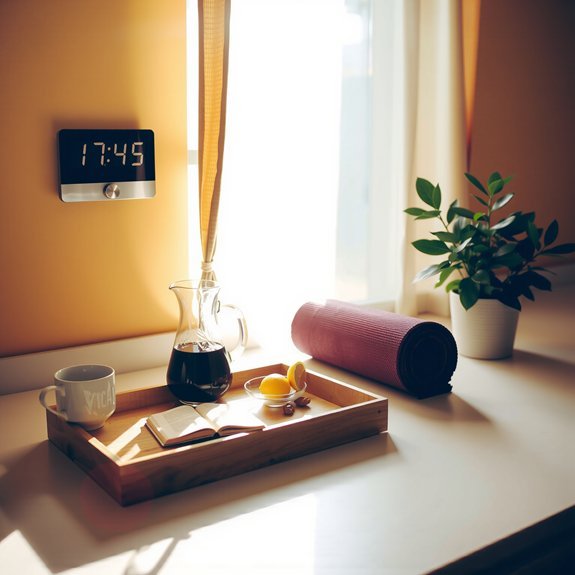

You can wake up more alert by stabilizing your schedule, getting bright morning light, moving gently, and optimizing your sleep environment. These steps are supported by sleep science and are simple to apply. I’ll outline practical, evidence-based actions you can try tomorrow to raise your morning energy—start with one small change and build from there.
Optimize Your Bedtime Routine

Establishing a brief, consistent pre-sleep routine helps your body and brain shift into restorative sleep more reliably. You’ll reduce arousal by sequencing low-stimulation activities: dim lights, remove screens, and perform targeted oral care to signal winding down. A five- to twenty-minute relaxation practice—diaphragmatic breathing or progressive muscle relaxation—lowers sympathetic tone and shortens sleep latency. If you have pets, set a predictable pet routine so animal care doesn’t trigger late-night alertness; delegate feeding or walk timing earlier in the evening. Avoid caffeine, heavy meals, and intense exercise within several hours of bedtime. Keep bedroom conditions cool, dark, and quiet; consider white noise or eye masks if needed. These evidence-based adjustments will enhance sleep continuity and morning alertness. Track effects for two weeks to optimize strategies.
Keep a Consistent Sleep Schedule

You should set a fixed bedtime to stabilize your circadian rhythm and improve sleep quality. You should also wake at the same time each day—even on weekends—to consolidate sleep drive and reduce morning grogginess. Clinical trials show that when you maintain both habits you’ll get more restorative sleep and greater daytime alertness.
Fixed Bedtime
At night, keeping a fixed bedtime helps align your circadian rhythm and makes falling asleep easier, staying asleep more likely, and daytime alertness better. You should pick a nightly target and maintain it within 15–30 minutes to reinforce habit formation and provide sleep accountability.
| Goal | Routine | Metric |
|---|---|---|
| Fixed bedtime | Wind-down | Sleep latency |
| Consistency | Reminder | Sleep efficiency |
Clinical studies show regular bedtimes improve sleep efficiency and reduce latency. Create a pre-sleep routine, record adherence, and adjust gradually by 15-minute increments. Monitor outcomes with sleep diaries or actigraphy when possible. Expect gains in alertness and mood. Resistance is normal; use reminders and environmental controls to support consistency.
Consistent Wake Time
Regularly waking at the same time each morning anchors your circadian rhythm, reduces social jet lag, and reliably improves sleep efficiency and daytime alertness; clinical trials show that keeping wake time within about 15–30 minutes across days strengthens sleep timing and makes falling asleep at your target bedtime easier. You should choose a wake time that fits work and social obligations, then prioritize it even on weekends to sustain sleep pressure and daytime cortisol rhythm. Use alarm planning, light exposure, and gradual shifts (10–15 minutes per day) to adjust. Coordinate with family coordination for shared schedules and apply commute optimization to reduce morning stressors that fragment sleep. Track adherence for two weeks, assess daytime sleepiness objectively, and refine timing based on performance and mood.
Create a Sleep-Friendly Environment

You should keep your bedroom cool—about 16–19°C (60–67°F)—to support sleep onset and maintenance. You’ll also minimize light exposure with blackout curtains, dimmed screens, and covered LEDs to preserve melatonin secretion. Reduce nighttime noise by addressing external sources or using earplugs/white-noise devices, since quieter environments improve sleep continuity and next‑morning alertness.
Optimize Bedroom Temperature
How cool should your bedroom be for ideal sleep? Aim for 60–67°F (15–19°C); core body temperature needs to drop for restorative sleep. You’ll reduce wakefulness by maintaining steady conditions with a smart thermostat and active humidity control. Measure temperature and relative humidity; target 40–60% RH. Use breathable bedding and evaporative or humidifying devices only if metrics deviate. Clinical trials link cooler, stable environments with improved sleep efficiency and morning alertness. If you share a bed, prioritize individualized controls or zoning. Track data for several nights, then adjust setpoints. Table:
| Parameter | Target |
|---|---|
| Temperature | 60–67°F (15–19°C) |
| Humidity | 40–60% RH |
Implement changes incrementally, document subjective alertness each morning, and consult sleep specialist if symptoms persist despite environmental optimization for medical evaluation and treatment as needed.
Minimize Light Exposure
Because evening light—particularly blue‑enriched wavelengths—suppresses melatonin and delays circadian timing, minimize ambient and device light in the hour before bed to improve sleep onset and morning alertness. Dim overhead and task lights, use warm low‑CCT bulbs, and set screens to night mode or use blue‑light filters; these actions reduce retinal sensitivity and lower melatonin suppression risk. Close blackout curtains to prevent streetlight intrusion and consider a sleep mask if gaps remain. Avoid bright bedside lamps and use low‑lux, amber nightlights for necessary tasks. Keep digital notifications dark and schedule device power‑downs or flight mode to prevent intermittent illumination. These measures preserve endogenous circadian signaling, promote timely melatonin rise, and increase probability of restorative sleep and higher morning alertness. You’ll feel more refreshed within weeks.
Reduce Nighttime Noise
After reducing evening light, tackle nighttime noise to protect sleep continuity and morning alertness. You should assess noise sources, apply acoustic strategies, and use earplug options when appropriate. Behavioral changes and appliance quieting reduce sleep fragmentation. Seal gaps, add soft furnishings, and schedule noisy tasks outside sleep periods. Choose high‑SNR earplugs or validated white noise at safe volumes. Clinical data link reduced nocturnal awakenings to lower daytime sleepiness.
| Source | Intervention | Expected effect |
|---|---|---|
| Traffic | Double glazing | Lower peak noise |
| HVAC | Appliance quieting | Fewer microarousals |
| Roommates | Curfew & white noise | Improved continuity |
| Electronics | Unplug or mute | Reduced disturbances |
Measure bedroom dB levels, aiming below 30–40 dB for consolidated sleep. Consult a clinician for persistent disturbance; targeted interventions improve objective sleep metrics and functional outcomes, daily resilience.
Manage Light Exposure Before Bed
When evening light is bright or rich in short-wavelength (blue) frequencies, it suppresses melatonin and shifts your internal clock later, making it harder to fall asleep and wake refreshed. You should dim lights and limit screen use at least 60–90 minutes before bed to reduce melatonin suppression; use warm, low-intensity bulbs and enable night modes on devices. Consider blackout curtains to block outdoor sources and minimize brief exposures that trigger retinal sensitivity. If you must use light, wear orange-tinted glasses or employ low-blue night lights to maintain circadian alignment. For rotating shifts or travel, plan progressive light exposure changes and consult chronotherapy guidance. These targeted, evidence-based steps will improve sleep onset timing and increase morning alertness. You’ll notice steadier energy consistently across the day.
Wind Down With Relaxing Activities
If you reduce physiological and cognitive arousal in the hour before bed, you’ll fall asleep faster and get more restorative sleep: low-intensity, non-stimulating activities such as reading a paper book, gentle stretching or yoga, progressive muscle relaxation, diaphragmatic breathing, or a brief mindfulness exercise reliably lower heart rate and sympathetic activity and shorten sleep latency in clinical studies. You should build a 30–60 minute wind-down routine that prioritizes habituated, calming behaviors. Listen to Soothing music at low volume, practice diaphragmatic breathing, and perform gentle mobility work to dissipate tension. Engage in Mindful coloring or brief guided imagery to shift attention away from stressors. Keep lighting dim and avoid screens; consistency strengthens circadian signals and improves sleep architecture. Track effects for optimization with subjective measures.
Watch What You Eat and Drink in the Evening
Because what you eat and drink in the evening directly alters sleep physiology, you should time and choose meals to minimize stimulation, reflux, and nocturia. Choose a light, protein-focused snack if hungry: moderate protein intake supports satiety without heavy digestion, while carbohydrates late can provoke awakenings. Limit caffeine and recent vigorous exercise to reduce arousal. Avoid alcohol close to bedtime because alcohol metabolism fragments sleep and increases nocturnal awakenings. Also avoid large, fatty meals that trigger reflux.
- Have 20–30 g of lean protein 60–90 minutes before bed.
- Stop alcohol at least 3–4 hours pre-sleep to allow metabolism.
- Avoid spicy or fatty foods and limit fluids before bedtime.
These targeted choices improve sleep continuity and morning alertness through reduced nocturnal disturbances measurably.
Use Morning Light to Reset Your Clock
Within the first hour after waking, expose your eyes to bright, natural light to shift your circadian clock earlier and improve morning alertness. Light delivery of sufficient intensity and containing blue wavelengths suppresses melatonin and advances circadian phase; aim for 20–30 minutes near a window or outdoors when feasible. If outdoor exposure isn’t practical, use a clinical-grade light box or controlled dawn simulation that gradually raises illuminance before you get up. Consistent morning timing is critical: daily exposure at roughly same clock time strengthens phase shifts and stabilizes sleep–wake timing. Monitor effects on sleep onset and daytime alertness, and adjust timing or duration under clinician guidance if you have mood disorders, bipolar disorder, or ocular sensitivities. Avoid excessive evening light that counteracts morning benefits.
Incorporate Movement Into Your Morning
Moving in the morning reliably boosts alertness, raises core body temperature, and reinforces circadian timing, so you should aim to include 10–30 minutes of purposeful activity—walking, brisk aerobic exercise, or light resistance work—soon after waking. Begin with progressive dosing: start at 10 minutes and increase as tolerated. Prioritize moderate intensity to elevate heart rate and cognitive function; evidence links morning activity to improved daytime vigilance and metabolic regulation. Use practical formats that fit routines and promote adherence:
- Short neighborhood walks or walking meetings to combine movement with light cognitive load.
- Stair sprints or timed stair climbs for efficient, high-intensity stimulus.
- Bodyweight circuits (squats, lunges, push-ups) for strength maintenance and morning readiness.
Monitor perceived exertion and sleep timing to preserve circadian benefits. Track outcomes and adjust accordingly.
Try Simple Breathing and Stretching Exercises
You can increase alertness and reduce stiffness by doing a few gentle morning stretches that target major muscle groups. Pair 1–2 minutes of simple breathing techniques — like diaphragmatic breathing or 4–4 counts — with each stretch to improve oxygenation and autonomic balance. Clinically, combining breath with movement enhances circulation and helps regulate the stress response, so start with short, focused sets you can repeat daily.
Gentle Morning Stretches
Starting the day with two to five minutes of diaphragmatic breathing paired with gentle spinal and shoulder stretches helps you wake more alert and reduces morning stiffness; randomized trials and physiological studies show this combination enhances parasympathetic regulation, moderates cortisol response, and improves range of motion.
- Chin tucks, gentle hold.
- Neck rolls to release tension.
- Shoulder shrugs and wrist circles.
Progress gradually without pain. Hold each position 10–20 seconds, repeat 2–4 times, and maintain comfortable amplitude. Monitor pain and stop if symptoms worsen; consult a clinician for persistent stiffness. These brief, reproducible routines optimize morning function and complement broader sleep and activity interventions. They’re appropriate across ages when adapted safely progressively. You should progress intensity based on tolerance and clinical guidance as needed safely.
Quick Breathing Techniques
How much can two to five minutes of paced breathing change your morning alertness? You can reliably increase arousal and reduce cortisol spikes by practicing Diaphragmatic Breathing: inhale slowly through your nose for four seconds, feel the abdomen expand, then exhale for six to eight seconds. Evidence shows diaphragmatic patterns improve oxygenation and vagal tone, supporting cognitive clarity. Alternatively, use Box Breathing for structured regulation: inhale four seconds, hold four, exhale four, hold four; repeat three to five cycles. Both techniques are low-risk, require no equipment, and fit bedside routines. Start seated with upright posture, focus on rhythm, and monitor perceived alertness. If you have respiratory or cardiac conditions, check with a clinician before beginning. Document effects over a week to assess objective benefit.
Combine Breath With Stretches
When coordinated with diaphragmatic breathing, gentle stretches amplify autonomic regulation and reduce morning muscle stiffness. You’ll perform slow inhalations as you reach, exhalations as you fold, and maintain 4–6 breaths per movement to optimize vagal tone. Pair basic neck, shoulder, and hip-openers with a brief vocal warmup to mobilize airway musculature and enhance alertness. Engage core activation throughout to stabilize the spine and protect tissue. Use measured tempo, avoid ballistic movements, and stop if you feel sharp pain. Maintain sessions of 3–5 minutes to produce measurable effects on circulation and perceived energy. Clinically, this routine reduces stiffness and improves readiness for tasks. Repeat daily for consistent benefit each morning.
- Neck tilts with diaphragmatic inhale/exhale
- Supine knee hugs with core activation
- Seated shoulder rolls plus vocal warmup
Limit Naps and Time in Bed Awake
Because daytime napping and long periods awake in bed reduce sleep drive and fragment nocturnal sleep, you should limit naps and minimize time spent awake in bed to improve sleep efficiency. Restrict naps to 20–30 minutes earlier in the afternoon, and avoid napping within six hours of bedtime. Keep nap logs to identify patterns and to decide whether naps undermine nighttime sleep. If you find yourself awake in bed more than 20 minutes, get up and perform a quiet, non-stimulating activity until you feel sleepy again; this preserves bed cues that reinforce sleepiness. Consistently practicing these strategies re-establishes consolidated nighttime sleep, increases homeostatic sleep pressure, and improves morning alertness. If insomnia persists, assess medical causes or consult a sleep specialist for evaluation now today.






Leave a Comment