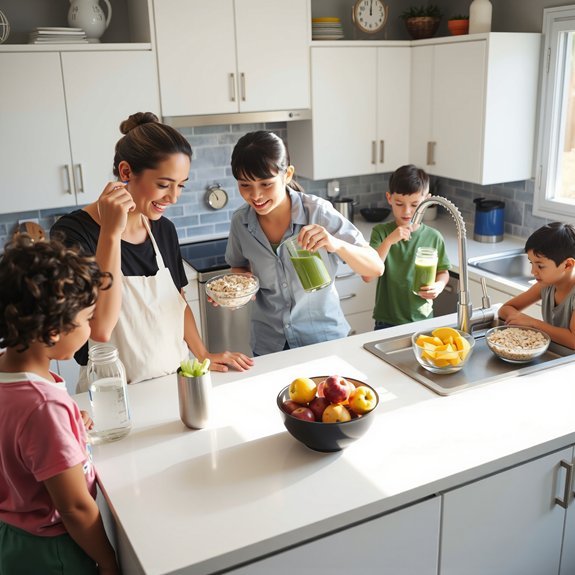

You know mornings can be chaotic, and you don’t need a major overhaul to make them healthier. Small habits—quick stretches, a glass of water soon after waking, and a higher-protein breakfast—cut stress and boost focus, backed by practical research. You can fit these into even the busiest schedule. Stick with me for simple, doable steps you can try tomorrow.
Wake Up With a Simple Stretch Routine

Starting your day with a two- to five-minute stretch routine can ease morning stiffness, boost circulation, and sharpen alertness—benefits supported by research on Gentle mobility sessions. You can begin standing or seated: inhale to reach arms overhead, exhale to interlace fingers and bend side to side for lateral length. Move into neck rolls, then do a Shoulder opener by clasping hands behind your back and gently lifting the chest to counter rounded posture. Keep movements slow, breathe evenly, and stop if you feel pain. These practices give consistent gains in flexibility and reduced discomfort when done daily. If mornings are chaotic, schedule the routine after teeth brushing so it becomes manageable and reliable. You’ll notice small improvements in mood and energy within weeks soon.
Quick, Balanced Breakfast Swaps
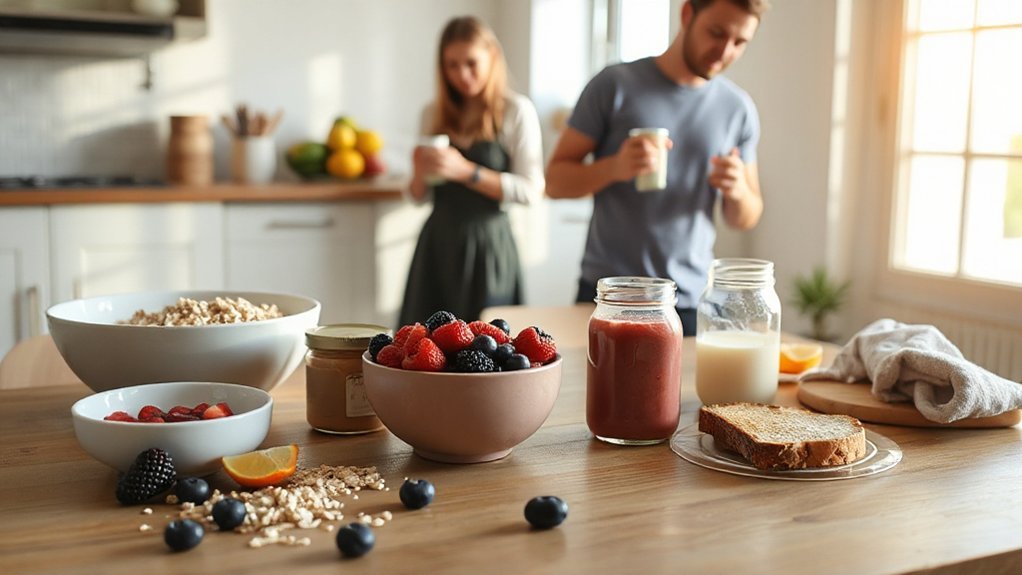
When mornings are rushed, small swaps can give your family steady energy and better nutrition without extra prep time. Swap processed cereal for protein pancakes prepped ahead, choose savory smoothies with spinach and protein, or pick Greek yogurt with fruit instead of sugary cups. Evidence shows higher protein and fiber steady blood sugar and focus. Prep components at night and have kids assemble. These practical swaps are evidence-based and kid-friendly. They cut sugar and improve focus on busy mornings. Repeat weekly for habits.
| Swap | Why | Tip |
|---|---|---|
| Sugary cereal to protein pancakes | More protein less sugar | Make batter night before |
| Fruit yogurt to savory smoothies | Adds veggies and protein | Blend spinach with protein |
| Jam toast to nut-butter wrap | More fiber and fat | Roll with banana |
Smart Hydration Habits for the Whole Family
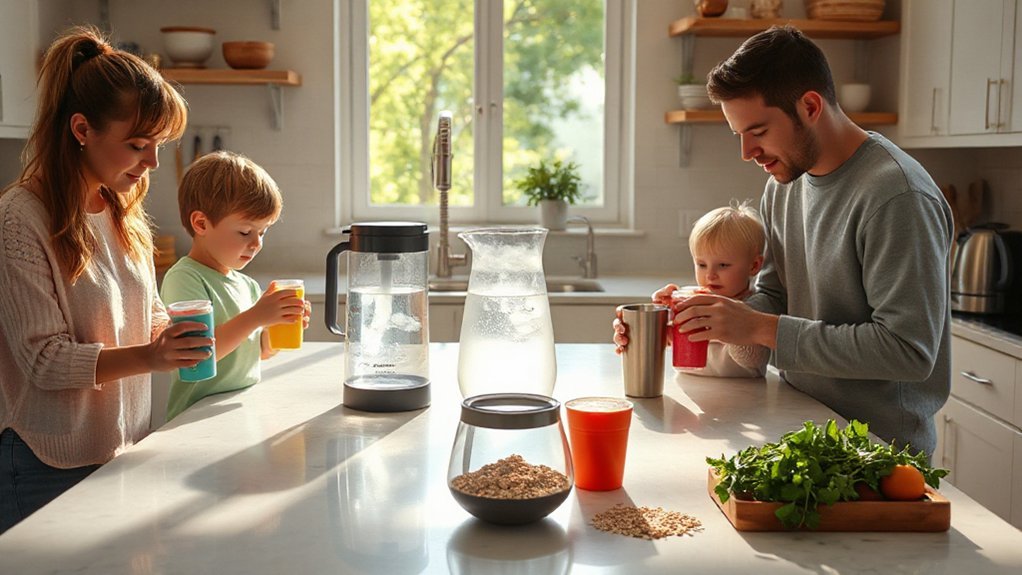
You can set a simple morning water routine—have everyone drink a glass within 30 minutes of waking—to jumpstart hydration and cognition. For busy kids, pack spill‑proof bottles and use a slice of fruit or a splash of juice if plain water’s tough, since even mild dehydration can affect attention. Keep steps small and consistent and you’ll build a habit without adding morning stress.
Morning Water Routine
Making a simple family water routine—everyone drinking a glass within 30 minutes of waking—boosts alertness and supports digestion, benefits backed by hydration studies. Keep it doable: place filled pitchers or chilled bottles by the sink so your First Sips happen without thinking. Encourage a short Bottle Ritual—cheers, a shared timer, or a wall chart—so habits stick and mornings feel cooperative, not rushed. Aim for plain water first, then caffeine or juice after, to optimize hydration and reduce stomach irritation. Track consistency rather than perfection; even modest, regular intake improves mood and concentration. If someone prefers flavored water, add fruit or a splash of juice. You’ll reduce morning stress and set a predictable, healthful tone for the day. Celebrate small wins to strengthen the routine.
Hydration for Busy Kids
How much water your child needs varies by age, activity and climate, but you can build simple habits that keep them hydrated without nagging. Offer a full cup at breakfast and encourage sips between activities; kids often miss thirst cues, so routine refills help. Pack a spill-proof bottle for school and label it; younger children benefit from five or six small drinks rather than one large gulp. Teach that juice and milk count partially, but plain water is best for regular hydration—this counters common hydration myths. Watch urine color and energy levels as practical indicators, and don’t force fluids; prompt with gentle reminders tied to changes. Consistent, simple routines make hydration automatic for your family. Celebrate small wins and praise their growing independence daily.
Five-Minute Morning Movement Games
Why not turn five spare minutes into a quick, playful routine that wakes up bodies and minds? You can lead short, research-backed bursts of movement that boost alertness and mood. Try a 60-second round of Freeze Dance to raise heart rate and smiles, then pause for deep breaths. Follow with two-minute Animal Walks—bear crawls, crab walks or frog hops—to build strength and coordination without equipment. Keep directions simple, set a visible timer, and rotate activities so kids stay engaged. If attention dips, switch to gentle stretching or breath-counting for thirty seconds. These brief, consistent routines fit tight mornings, reduce morning grumpiness, and prepare kids to focus at school without adding stress. You’ll model healthy habits and make mornings calmer for everyone every single day.
Pack the Night Before to Cut Stress
After those five-minute movement bursts, settle the rest of the morning by packing the night before. You’ll reduce decision fatigue and lower stress when you stage essentials ahead. Try simple, evidence-backed routines that save minutes and calm kids. Use outfit staging: lay out clothes for each child, include socks and shoes, and check weather quickly. Prepare meals and place lunch containers in the fridge. Complete a backpack checklist so nothing gets forgotten: homework, permission slips, water bottle, charger.
- Lay out outfits and shoes for each family member.
- Pack lunches and set containers in fridge.
- Do a quick backpack checklist before bed.
- Place shoes and coats by the door.
In research, predictable preparation cuts morning cortisol and improves punctuality. Small, consistent steps make busy mornings gentler and more reliable. Revisit routines weekly to adjust for changing needs.
Create a Calm, Predictable Morning Rhythm
In the morning, keep the start simple and repeatable so everyone knows what comes next; predictable routines lower stress and improve punctuality, and you’ll see calmer behavior when expectations are clear. Use visual routines—charts or pictures—so kids follow steps independently. Set brief family checkpoints: quick huddles at key moments to confirm shoes, backpacks, and departures. Evidence shows consistent structure reduces tantrums and improves on-time rates. You can pilot a two-week plan, tweak timing, and praise success. Be practical: limit decisions, assign tasks, and keep tone neutral. Track progress with a simple chart and celebrate small wins; that builds habit strength and lowers morning friction.
| Calm | Check | Go |
|---|---|---|
| Smile | Shoes | Wave |
| Breathe | Pack | Exit |
Small, consistent steps produce calmer, faster mornings for everyone now.
Healthy Snack Prep for Busy Days
Prepping a few healthy snacks each week makes it far easier to grab something nourishing when mornings and afternoons get hectic, and studies show that ready-to-eat options reduce reliance on sugary convenience foods. You can assemble simple portions—cut veggies, fruit, nuts, yogurt—and use Batch Freezing for items like muffins or smoothie packs. Create a Labeling System with date and contents so you rotate stock and avoid waste. Follow these quick steps:
- Portion into single serves.
- Freeze extras with clear labels.
- Keep grab-and-go shelf at eye level.
- Schedule one prep session weekly.
This approach is supported by behavior research: convenience increases healthy choices. You’ll save time, reduce stress, and keep everyone fed with minimal morning friction and improve family nutrition daily.
Gentle Mindfulness Moments Before Leaving
Having snacks ready takes one source of morning stress off your plate, so you can add a brief mindfulness habit that steadies everyone before you head out. Ask everyone to pause for thirty seconds: model Breath counting, inhaling for four, exhaling for four, and silently noting each number. Research shows short focused breaths reduce stress and improve attention, so this fits tight schedules. Follow with a quick Gratitude glance—each person names one small thing they’re grateful for today. Keep it optional and gentle; don’t force long reflections. Over time you’ll notice calmer departures and better mood regulation. If time’s tight, try a single breath counting round and one gratitude word. Make it a family habit, not a chore daily.






Leave a Comment