

You can start each day with small, evidence-backed rituals that lift mood, sharpen focus, and build resilience. Try hydrating, a brief mindful-breathing or body scan, gentle mobility or a short walk, and a protein-rich breakfast. These steps take minutes yet change stress responses and energy—keep reading to see practical sequences and timing that fit your busy mornings…
Mindful Breathing Practice
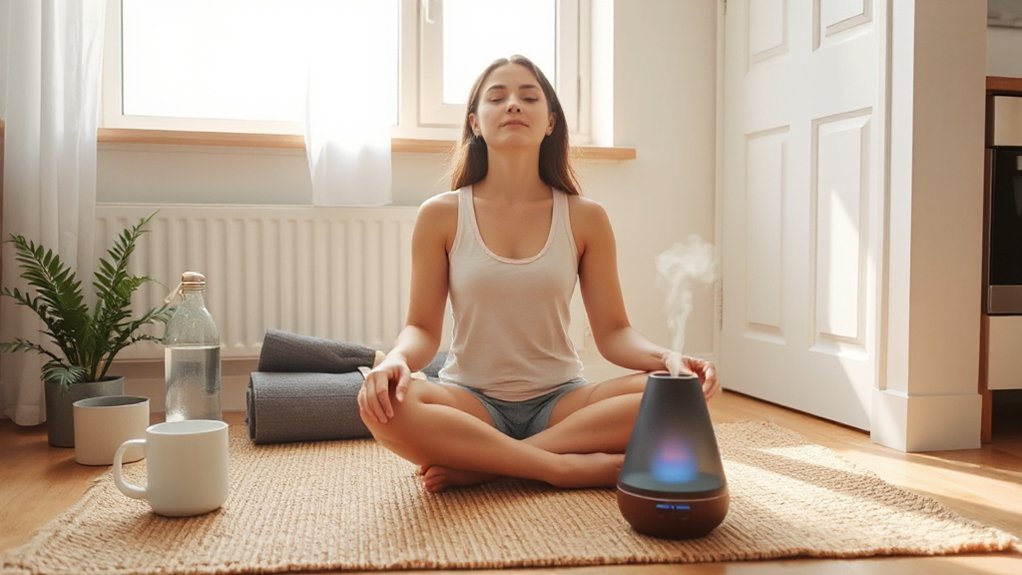
Although mornings can feel rushed, practicing mindful breathing for just two to five minutes can lower heart rate, reduce cortisol, and improve attention—effects shown in randomized and physiological studies. You’ll sit upright, place a hand on your abdomen, and focus on diaphragmatic breathing to engage the parasympathetic system. Inhale gently through your nose for a comfortable count, then use paced exhalations to extend vagal activation and reduce sympathetic arousal. Notice sensations without judgment; if your mind wanders, return attention to breath. Clinical trials show brief sessions yield measurable autonomic shifts and cognitive benefits, so you can integrate this practice before tasks. Keep sessions simple, consistent, and nonjudgmental to build resilience across your day. Start with three minutes and adjust based on tolerability and outcomes.
Gentle Morning Stretch Sequence

Start with gentle neck and shoulder releases to reduce tension and improve circulation, since controlled, slow movements have been shown to decrease musculoskeletal stiffness. Then move into a spine mobility flow to restore segmental movement and support upright posture, using slow flexion, extension, and rotation that are safe for most adults. Finish with hip-opening gentle stretches to promote pelvic alignment and ease into weight-bearing, adjusting intensity to your pain levels and breath.
Neck and Shoulder Releases
When you wake, a brief sequence of gentle neck and shoulder releases can reduce morning stiffness and ease tension that accumulates overnight; research shows slow, controlled stretching improves range of motion and can lower perceived pain when done regularly.
Start with chin tucks, lateral flexion, and shoulder rolls. Hold 15–30 seconds, breathe, and stop if sharp pain occurs. Palpate for trigger point tenderness and apply sustained pressure, then stretch. Integrate desk ergonomics checks, adjust height and chair support. Perform seated or standing daily. If symptoms persist or neurologic signs appear, consult a clinician. This routine helps you regain comfort without aggressive manipulation.
| Focus | Action |
|---|---|
| Neck | Chin tucks, lateral flexion |
| Shoulder | Rolls, pressure |
Spine Mobility Flow
After loosening your neck and shoulders, move into a gentle spine mobility flow to sequentially awaken your thoracic and lumbar segments and restore safe, pain-free range of motion. Begin on hands and knees and progress through controlled cat–cow cycles, emphasizing segmental vertebral articulation from cervical base to sacrum. Slow, diaphragmatic breaths coordinate movement and improve neural regulation. Add seated thoracic rotations with hands behind head to target mid-back stiffness while maintaining neutral pelvis and conscious core integration to protect lumbar tissues. Perform 8–10 reps each direction, stopping if sharp pain occurs. Clinical studies support gradual, repetitive spinal movement for morning stiffness reduction and function. You’ll feel increased ease and readiness for activity when you respect pace and symptom limits while building lasting mobility gains.
Hip-Opening Gentle Stretches
Often you’ll begin hip-opening stretches while still warm from gentle spine work, using slow, controlled movements to safely restore hip range of motion and reduce morning stiffness. Start with dynamic leg circles and low lunge holds to assess comfort, then progress to supported pigeon variations—keep the front knee aligned and use a bolster to modulate intensity. If you feel sharp pain, back off and choose gentler alternatives. Incorporate frog pose for bilateral external rotation, maintaining pelvic neutrality and diaphragmatic breathing for 30–60 seconds to facilitate tissue relaxation. Aim for symmetry, repeat 2–3 times per side, and prioritize pain-free range. Clinical evidence supports gradual loading and proprioceptive feedback to improve mobility; you’ll notice reduced stiffness and improved functional movement over weeks with consistent practice.
Hydration Ritual to Wake Your Body

Because your body loses about 1–2% of its water overnight, drinking a glass of water first thing helps restore plasma volume, supports cognitive function, and kick-starts metabolic processes. Begin with room-temperature water to minimize gastric stress; if you prefer flavor, add a splash of lemon infusion for vitamin C and palatability. Aim for 250–350 ml over five to ten minutes using timed sips to avoid bloating and optimize absorption. Hydration improves mood, concentration, and orthostatic tolerance; clinical studies link adequate morning fluid intake to better task performance. If you have heart or kidney conditions, check with your clinician about volume and timing. Listen to your body: hydrate steadily, adjust volume, and make this ritual predictable to reinforce morning homeostasis. Consistency yields measurable physiologic benefits.
Nourishing Breakfast Ideas
Choosing a balanced breakfast that pairs lean protein, fiber-rich carbohydrates, and healthy fats helps stabilize blood glucose, supports morning cognition, and reduces mid-morning hunger—effects seen in randomized and metabolic studies. You can choose options that are simple and evidence-based: Overnight Oats with Greek yogurt and chia seeds deliver sustained glucose release and omega-3s; a vegetable omelet with a slice of whole-grain toast supplies protein and fiber. If you prefer a warm option, Savory Pancakes made from chickpea flour and spinach offer higher protein and lower glycemic load than traditional versions. Aim for portion control, include at least 15–25 grams of protein, and pair carbohydrates with fat or fiber. These practical choices support mood, energy, and appetite regulation without complexity and fit your daily preferences.
Quick Five-Minute Meditation
You can use a five-minute breathing anchor technique to steady your heart rate and reduce morning cortisol, since evidence shows paced breathing affects autonomic balance. Then run a brief mini body scan from toes to crown to note where you’re holding tension and prompt targeted relaxation without needing extra time. These two short practices are practical, accessible ways to start your day calmer and more focused.
Breathing Anchor Technique
Anchoring your breath for five minutes helps reduce stress and sharpen attention; controlled diaphragmatic breathing stimulates the vagus nerve, promotes parasympathetic activity, and is associated with measurable decreases in heart rate and cortisol. You’ll sit upright, place one hand on your abdomen, and inhale slowly through your nose for a count of four, pause one, exhale for six. Repeat cycles while returning your focus to the breath whenever the mind wanders. Clinicians recommend brief, replicable scripts and clinical adaptations for patients with respiratory issues; offer slower counts or shorter sessions. For workplace integration, use a seated five-minute pause before meetings to reset cognitive focus. Track subjective stress and brief physiological measures to confirm benefit. Be patient—consistency yields measurable improvement. Adjust tempo to your comfort.
Mini Body Scan
Scanning your body for five minutes can quickly reduce tension and reorient attention, and clinical studies show brief body‑scan practices lower perceived stress and markers of physiological arousal. Sit or lie comfortably, close your eyes, and direct gentle attention from toes to head. Use tension mapping: note tight spots without judgment, breathe into each area, and allow progressive release. Observe sensations, including temperature awareness — coolness, warmth, or tingling — as objective data about autonomic shifts. If your mind wanders, label thoughts and return to the scan. This short, repeatable routine trains interoception, improves emotion regulation, and lowers sympathetic activation over time. Practice daily to consolidate benefits; even five minutes yields measurable calming effects. Track progress with brief notes to reinforce emerging self-awareness consistently.
Tech-Free Wake-Up Window
Why not give yourself a 30–60 minute tech-free window after waking to let your brain shift from sleep to alertness? A brief Device Detox reduces morning cortisol spikes and helps circadian stabilization; try Alarm Alternatives like gentle light or a bedside clock to avoid immediate screen exposure. You’ll feel calmer, clearer, and more focused as your prefrontal cortex fully engages.
- Start with movement: light stretching or a short walk to increase cerebral blood flow.
- Hydrate and breathe: drink water and practice paced breathing for autonomic regulation.
- Plan one priority: jot a single realistic task on paper to guide your morning without digital distraction.
Clinical studies support reduced screen time on awakening for improved mood and cognitive performance in adults and adolescents.
Gratitude Journaling Exercise
After your tech-free wake-up window, spend 5–10 minutes on a gratitude journaling exercise to gently steer your attention toward positive, concrete aspects of your life. Sit comfortably, breathe, and note three specific items you appreciate; research links this practice to improved mood and resilience. Use Prompt Variations—specific people, small pleasures, recent successes—to prevent vagueness and sustain practice. When emotions are complex, write a brief Gratitude Letters draft to someone (you don’t have to send it) to clarify meaning and strengthen social connectedness. Be precise: date entries, record one sensory detail per item, and rate its impact 1–5. Aim for consistency rather than volume; even short, structured entries shift cognitive bias over time. If you’re struggling, reduce to one item to rebuild habit each morning.
Energizing Movement or Short Walk
You can start with quick wake-up stretches—5 minutes of gentle neck, shoulder, and hamstring movements—to increase blood flow and reduce morning stiffness. A 10–20 minute neighborhood power walk raises heart rate, improves mood, and helps entrain circadian rhythms, as supported by brief-exercise studies. Combine them into a short, adjustable routine you can scale to fitness level and time constraints to gain consistent physiological and mental benefits.
Quick Wake-Up Stretches
Often, a brief series of stretches or a short walk will quickly increase circulation, reduce morning stiffness, and raise alertness. Set a minimal space setup near your bed and select breathable clothing choices; aim for five minutes of mobility. Clinical evidence supports gradual progression and diaphragmatic breathing to reduce injury risk. You’ll do three simple moves, performed slowly and mindfully:
- Neck rolls — move gently, five each direction, exhale on motion.
- Hip circles — hands on hips, slow circles to loosen hips, eight repetitions.
- Calf raises — rise onto toes, pause, lower slowly, ten repetitions.
Monitor discomfort, stop if pain spikes, and consult a clinician for persistent symptoms. Consistent practice improves circulation and alertness. It supports mood, focus, and functional capacity.
Neighborhood Power Walk
Following the short mobility set, a brisk neighborhood power walk will amplify circulation, raise alertness, and engage large muscle groups with low impact. You’ll benefit from moderate-intensity aerobic activity that improves mood, cognitive function, and cardiovascular markers when done 20–30 most days. Plan a route that balances efficiency and comfort: use well-lit streets, observe community safety recommendations, and vary direction to reduce monotony. Scan your environment for local landmarks to orient yourself and track progress without checking a device constantly. Maintain brisk pace, upright posture, and rhythmic breathing; stop if you experience chest pain, dizziness, or undue shortness of breath. This practical, evidence-aligned routine supports metabolic health and stress reduction while respecting personal limits. Track duration and intensity, and consult clinicians if concerns arise.
Simple Skin and Self-Care Routine
Typically, a short morning skin and self-care routine lowers stress and helps preserve the skin barrier when you keep it consistent. You’ll start with a gentle cleanse to remove overnight oils without stripping lipids; studies show mild surfactants maintain barrier integrity. Next, apply targeted serums (antioxidant in AM) and avoid excessive product rotation to reduce irritation risk. Finish with broad-spectrum SPF application every morning; it’s the most effective preventive measure against photoaging.
- Gentle cleanser, pat dry, lightweight antioxidant serum.
- Minimal product rotation; monitor tolerance, simplify if irritated.
- Broad-spectrum SPF application, reapply as needed during prolonged sun exposure.
Keep steps minimal, repeatable, and evidence-aligned; consult a clinician for tailored changes. Small, measurable improvements accumulate; track reactions weekly and adjust based on objective signs and symptoms.
Intent-Setting and Daily Priorities
When you set one to three clear intentions each morning, you lower cognitive load and make it easier to allocate attention to high-impact tasks; studies link focused goal-setting to improved task completion and reduced stress. Use a brief Purpose Statement — one sentence about why today matters — to anchor choices. Then apply Priority Mapping: list tasks, rate urgency and impact, and select top three actionable items. You’ll reduce indecision, preserve willpower, and create measurable checkpoints. Clinically, small, specific goals increase adherence and lower anxiety. Be compassionate: if you miss an item, reassess rather than criticize. Review your Purpose Statement midday and adjust priorities based on outcomes and energy. Repeat consistently to build predictable, restorative mornings. Track progress weekly to refine your approach strategically.






Leave a Comment