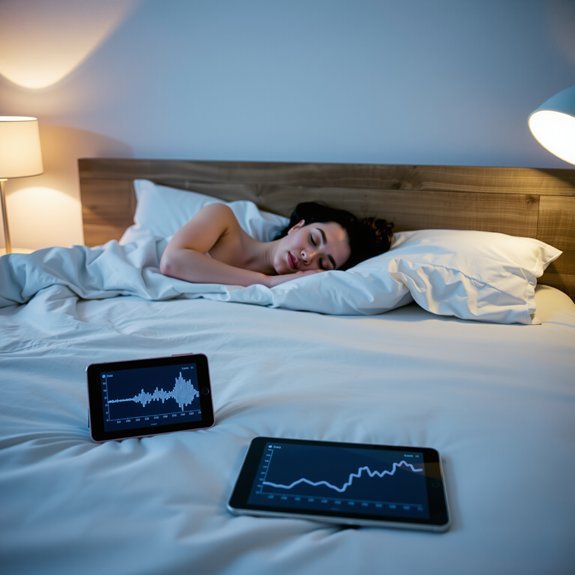

You can measurably improve sleep by aligning your sleep–wake timing, daylight exposure, bedroom environment, and pre-sleep behaviors. Small, evidence-based changes—consistent timing within 30–60 minutes, morning bright light, cooler room temps, short relaxation routines—shift circadian rhythms and sleep architecture. Here’s what to change first.
Consistent Sleep Timing and Circadian Regularity

Maintaining consistent sleep and wake times each day stabilizes your circadian rhythm, improves sleep efficiency, and reduces daytime sleepiness. You should schedule sleep timing within a narrow window—ideally within 30–60 minutes—across weekdays and weekends to minimize variability. Reducing Social Jetlag by aligning social schedules with biological timing lowers metabolic and cognitive risks documented in cohort studies. Consider individual Chronotype Genetics when setting targets: genetically determined morningness or eveningness predicts preferred phase and response to interventions. Use sleep diaries and actigraphy to quantify regularity and monitor outcomes such as sleep onset latency, wake after sleep onset, and sleep efficiency. If misalignment persists, coordinate with a clinician for personalized chronotherapy or behavioral adjustments aimed at restoring circadian regularity and improving objective sleep metrics and daytime function.
Morning and Evening Light to Align Your Internal Clock
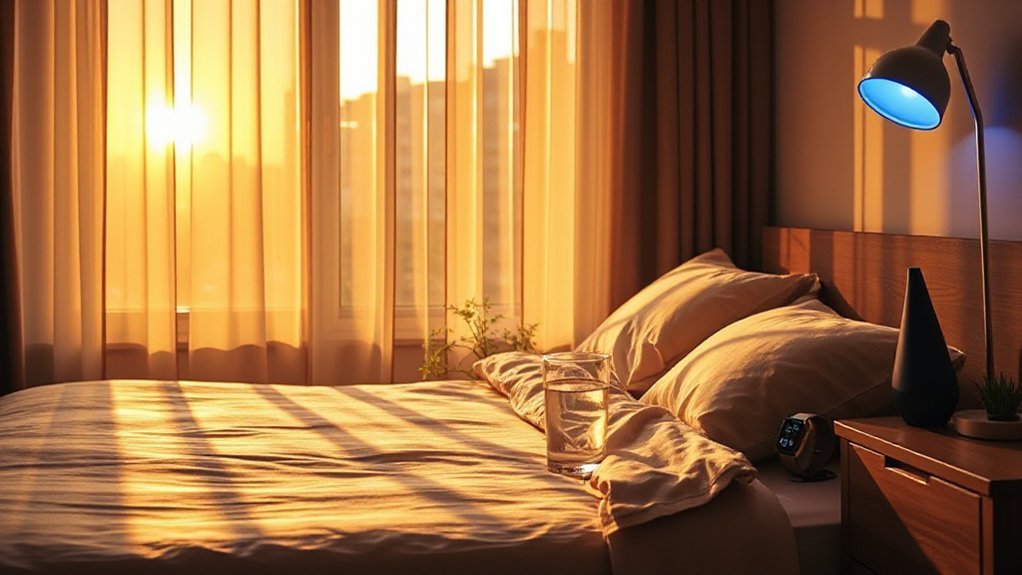
Consistent sleep timing improves circadian stability, but timed light exposure is the primary external cue you can use to shift or reinforce your internal clock. You should get bright morning light soon after waking to advance your phase; this engages melanopsin sensitivity in retinal ganglion cells and suppresses melatonin. In the evening, reduce intensity and shift spectra toward longer wavelengths to avoid phase delays.
- Expose yourself to 10–30 minutes of natural light within 30 minutes of waking.
- Dim artificial lighting and use warm lamps after dusk to minimize short-wavelength exposure.
- Consider timed light therapy for persistent misalignment under clinical guidance.
Apply spectral shifts strategically; they’re a precise, evidence-based tool to align your circadian timing. Consult a clinician before initiating bright light protocols if needed.
Optimizing Bedroom Environment for Deeper Sleep
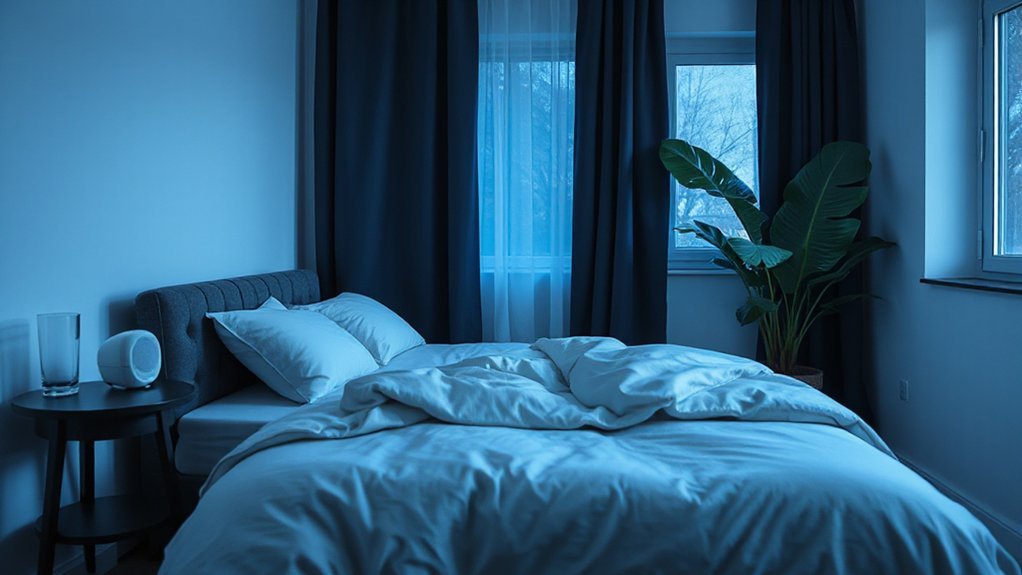
How you set up your bedroom directly shapes sleep depth and continuity; you should aim for a cool (about 15–19°C/59–66°F), quiet, dark, and well-ventilated space because temperature, noise, and light each have measurable effects on sleep architecture and arousal thresholds. Assess thermal insulation, bedding materials, and ventilation to maintain target temperature and reduce night-time awakenings. For mattress selection, prioritize pressure redistribution, spinal alignment, and durability—use objective firmness scales and trial periods. Control ambient light with blackout curtains and minimize electronic light sources to support melatonin onset. Implement noise control via sealing gaps, using sound-absorbing materials, or introducing stable low-level masking noise when unpredictable sounds occur. Monitor objective sleep metrics after environmental changes and adjust to optimize sleep continuity and slow-wave sleep proportion and efficiency.
Evidence-Based Pre-Sleep Routines and Relaxation Practices
If you want to reliably shorten sleep latency and reduce nocturnal arousals, adopt a structured pre-sleep routine that combines stimulus control, sleep-conducive behaviors, and brief relaxation techniques proven in randomized trials. You will limit bed use to sleep and sex, set a consistent lights-out schedule, and perform 15 to 20 minutes of evidence-based relaxation before bed. Consider diaphragmatic breathing, progressive muscle relaxation, or Guided Imagery to reduce arousal and pre-sleep cognitive rumination. Aromatherapy Efficacy appears modest; use low-concentration lavender oil adjunctively rather than as primary therapy. Monitor response and maintain consistency for at least two weeks. Practical components include:
- 15 to 20 minutes of relaxation (breathing, progressive muscle)
- Quiet, dim environment and regular schedule
- Short guided imagery session with minimal stimulation
Track outcomes objectively.
How Exercise Timing and Type Affect Sleep Quality
While regular physical activity improves sleep quality overall, the timing and type of exercise can shift sleep onset, continuity, and slow-wave sleep in clinically meaningful ways. If you exercise vigorously within two hours of bedtime you may delay sleep onset and reduce sleep efficiency due to elevated core temperature, sympathetic activity, and circulating catecholamines. Scheduling Cardio Sessions earlier in the day or late afternoon preserves sleep initiation and can increase total sleep time. Strength Workouts in the evening are less consistently disruptive and may increase slow-wave sleep through metabolic and neuromuscular recovery at moderate intensity. For patients with insomnia or fragmented sleep, recommend exercising at least three hours before bed and favor morning or afternoon training; monitor (actigraphy) and adjust based on individual response.
Nutrition, Caffeine, Alcohol, and Their Effects on Sleep Architecture
You should assess how macronutrient composition — proportions of carbohydrates, protein, and fat — influences sleep onset and architecture, with higher carbohydrate intake sometimes shortening latency and protein or fat affecting slow-wave and REM proportions. Caffeine produces dose- and timing-dependent effects on sleep: it prolongs sleep latency and reduces slow-wave sleep when consumed within several hours of bedtime due to its long half-life. Alcohol may shorten time to sleep but fragments sleep and suppresses REM early in the night with rebound later, so consuming it close to bedtime degrades overall sleep architecture.
Macronutrients and Sleep
Because macronutrient composition and stimulant intake directly alter metabolic, hormonal, and neurotransmitter pathways, they measurably change sleep onset, continuity, and stage distribution. You should choose Protein Sources and Carb Types to modulate satiety, glycemia, and tryptophan availability, affecting slow wave and REM proportions. Evidence shows high-carbohydrate meals can shorten sleep latency but fragment later sleep; higher protein promotes sustained satiety and preserves slow wave sleep in older adults.
- Emphasize lean Protein Sources for amino acid profiles.
- Prefer low-glycemic Carb Types to reduce nocturnal arousals.
- Balance fat to avoid dyspepsia and thermogenic awakenings.
Apply individualized adjustments, monitor objective sleep metrics, and consult clinicians for metabolic or sleep disorders. Small dietary shifts yield measurable polysomnographic improvements; replicate changes during several weeks to confirm benefit and safety.
Caffeine, Alcohol Timing
How you time caffeine and alcohol has predictable, dose-dependent effects on sleep architecture: caffeine—having a typical half-life of ~3–7 hours—prolongs sleep latency, reduces total sleep time and slow-wave sleep at higher doses, and can fragment sleep continuity even when consumed 6–8 hours before bedtime; alcohol shortens sleep latency and increases slow-wave activity early in the night but suppresses REM sleep initially and produces REM rebound and increased awakenings in the second half of the sleep period. You should limit caffeine at least 6–8 hours before bedtime, longer if you have genetic sensitivity or medication interactions. Avoid alcohol as a sleep aid. Discuss combined sedatives/CYP inhibitors with clinicians.
| Substance | Timing | Effect |
|---|---|---|
| Caffeine | Avoid 6–8 h | Latency↑; SWS↓ |
| Alcohol | Avoid 3–4 h | Early SWS↑; later REM↓/fragmentation |
Using Sleep Tracking and Behavioral Adjustments to Improve Rest
Use objective sleep tracking (actigraphy, validated wearable apps, or sleep diaries) to quantify your sleep patterns and identify consistent deficits in duration, timing, or fragmentation. Then adjust your bedtime routine—standardize lights-out timing, pre-sleep activities, and stimulus control—so you’ll consolidate sleep and reduce sleep latency. Also optimize daytime habits by keeping a consistent wake time, timing light exposure and exercise, and limiting late caffeine so you’re strengthening circadian alignment and improving sleep efficiency.
Track Sleep Patterns
When you systematically track sleep—combining objective measures (actigraphy or reliable wearable sensors) with a daily sleep diary—you get the quantitative and contextual data needed to target specific problems. You’ll monitor sleep onset latency, awakenings, and sleep efficiency to identify patterns and interventions. Verify Device Calibration for sensor accuracy and review app Privacy Policies before data collection. Analyze trends weekly and correlate with daytime functioning. Use validated metrics and standardized scoring to guide changes.
- Record nightly sleep timing, perceived sleep quality, and daytime symptoms.
- Compare objective sleep stages and movement with self-reported sleep diaries.
- Flag consistent deviations from normative ranges for clinical follow-up.
This structured approach yields actionable metrics for behavioral adjustments and clinician-informed treatment. Maintain longitudinal records to assess treatment effects and relapse prevention.
Adjust Bedtime Routine
Because your tracked sleep patterns show what actually affects your sleep, you can tailor a brief, consistent bedtime routine to address the specific deficits—late sleep onset, frequent awakenings, or low sleep efficiency—identified in your data. Use timed cues (light, temperature, device off) and short behavioral steps to shift circadian timing and reduce awakenings. Coordinate with bed partner through clear Partner coordination protocols and set pet boundaries via Pet management to limit nocturnal disruptions. Monitor changes with nightly tracking and adjust minutes gradually. Clinical evidence supports consistency and stimulus control for improved sleep consolidation.
| Component | Action | Measure |
|---|---|---|
| Light | Dim 30–60 min | Sleep latency |
| Noise | Reduce | Wake after sleep onset |
| Devices | Off 45 min | Sleep efficiency |
Reassess weekly and document quantitative changes for clinical review carefully.
Optimize Daytime Habits
Daytime behaviors strongly shape nighttime sleep, and your tracking data can guide targeted adjustments to improve circadian alignment and sleep consolidation. Use objective measures—actigraphy, sleep logs—to identify daytime patterns that fragment sleep. Prioritize light exposure, activity timing, hydration, and meal scheduling; adjust based on recorded sleep latency and fragmentation.
- Schedule morning light exposure and daily exercise windows.
- Implement structured breaks and posture checks; optimize workplace ergonomics to reduce nocturnal pain and arousal.
- Time caffeine and alcohol to minimize half-life overlap with sleep opportunity.
You’ll iterate: change one variable, monitor for 7–14 days, and assess effect size on sleep efficiency and REM continuity. Clinical data support small, consistent daytime shifts yielding measurable nocturnal benefit. Consult clinicians for complex sleep disorders or persistent impairment.





Leave a Comment