

You can make mornings easier with a few small, science-backed habits. Set a steady wake time, do two minutes of full-body stretches with slow breaths, sip water, and tuck your phone away for the first ten minutes. Pick three simple priorities and prep your outfit or snack the night before. Try a 30-second mirror pep talk — if you want practical steps, keep going…
Set a Realistic Wake-Up Time

Why fight your biology by picking a wake-up time you can’t stick to? You’re still shifting toward later sleep during adolescence, so set a wake time that respects your sleep cycles and gives you enough hours for learning and mood regulation. Start with small adjustments—15–30 minutes earlier each few days—so your body adapts without piling on sleep debt. Match that wake time with a consistent bedtime routine, dimming screens and calming activities to help you fall asleep faster. Evidence shows gradual changes and regularity improve alertness and academic performance. Be patient: consistency matters more than an idealized schedule. If needed, talk with caregivers or a clinician to tailor a plan that fits your school demands and wellbeing. You’ll notice steadier energy within weeks usually.
Start With a Two-Minute Stretch

When you first get up, spend two minutes doing a simple full-body stretch—reach your arms overhead, roll your shoulders, and bend to touch your toes or knees. This gentle routine helps wake up your muscles and increases blood flow, which can improve alertness and mood. Breathe slowly and deeply as you move, matching inhales and exhales to each motion to calm your nervous system and make the stretch more effective.
Simple Full-Body Stretch
Starting your day with a two-minute full-body stretch can wake up stiff muscles, boost circulation, and sharpen your focus without taking time from your morning routine. Stand tall, inhale as you reach arms overhead, lengthen through your spine, then exhale as you hinge at the hips for a gentle forward fold. Roll slowly vertebra by vertebra until you stand again. Add shoulder circles and ankle rolls to cover upper and lower body. This routine teaches mobility basics and helps debunk flexibility myths by showing progress comes from consistent practice, not extreme effort. You’ll increase range of motion safely, lower tension, and feel calmer. Do this before breakfast or study time to prime your body and mind for the day. Make it a daily habit.
Wake up Your Muscles
Wake your body with a two-minute stretch that gently increases blood flow, loosens tight muscles, and signals your brain to switch into alert mode. You’ll use simple, developmentally appropriate moves that focus on dynamic activation and small posture checks to reduce stiffness and improve coordination. Start slow, listen to discomfort, and keep movements controlled.
- Neck rolls to release tension.
- Shoulder circles for upper-back mobility.
- Hip swings to wake core stabilizers.
- Ankle pumps to improve balance.
This brief routine is evidence-informed: short, regular activation primes your nervous system, supports mood, and helps you move into the day with more energy and safer mechanics. If you have chronic pain or an injury, check with a coach or healthcare provider before changing routine. Start small and progress.
Stretch With Deep Breaths
Breathing deeply as you stretch helps calm your nervous system and lets muscles relax so you can move farther with less tension, and two minutes of slow, paced inhales and exhales is enough to gain those benefits each morning. Start standing or seated, reach arms overhead on an inhale, then hinge at the hips to feel a hamstring stretch on the exhale; repeat with side bends and chest openers. Focus on full diaphragmatic breaths — that oxygen boost wakes your brain and supports steady energy. Keep movements gentle; teens’ bodies are still changing, so avoid pushing past mild discomfort. Use stretches that encourage posture alignment, like shoulder rolls and gentle spinal twists. This routine reduces stiffness, calms anxiety, and readies you for the day.
Drink Water Right Away
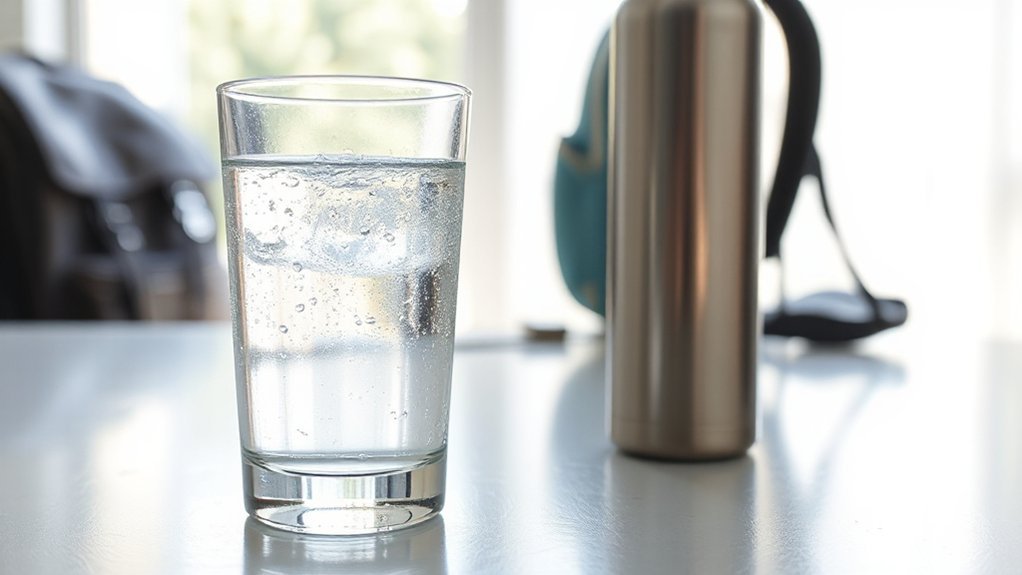
Because you lose water overnight, having a glass first thing can quickly lift your energy and focus without extra effort — and that’s helpful when mornings feel rushed. When you drink right away, you’ll notice clearer thinking and steadier mood; these Hydration Benefits are backed by research showing even mild dehydration affects cognition. Pay attention to Thirst Signals, but don’t wait until you’re parched. Keep a bottle by your bed so sipping’s automatic. Start with a medium-sized glass, then sip throughout the morning to support concentration at school and activities. Small habits add up and help you.
- Glass beside your bed
- Aim for a steady pace, not gulping
- Add a slice of lemon if it helps
- Refill before leaving home
Use a Short, Upbeat Playlist
After a quick glass of water, cue up a short, upbeat playlist to keep that alertness going and help you get into action. Pick three to six songs that match your morning goal: moderate-to-fast tempos boost heart rate and focus, so prioritize tempo selection that lifts you without overwhelming you. Choose tracks with clear, safe messages—lyric positivity helps mood and motivation, especially during adolescent brain development when emotion and reward are sensitive. Keep it short so you don’t get distracted; research shows brief routines build habit. Use familiar songs to reduce decision fatigue and avoid heavy emotional content that can derail mood. Adjust volume and timing to fit your routine, so music supports a calm, energized start to the day and feel more capable.
Plan Three Priorities for the Day
Pick three clear priorities for today—one must-do, one that pushes your growth, and one that cares for your well-being—so you’re not trying to juggle everything at once. Start by energy mapping: notice when you focus best and put your must-do there. Choose a growth task that’s challenging but doable, and link it to a simple reward system to boost motivation. Your well-being priority should be brief and restorative. Keep items specific, realistic, and developmentally appropriate; teens do better with structure and predictable wins. Check them in the morning and at midday, adjusting if your energy dips. This routine lowers overwhelm and supports steady progress toward bigger goals.
- Must-do: core task
- Growth: small step
- Well-being: reset
- Reward: quick
Eat a Quick Protein-Rich Breakfast
You’ll focus on quick protein-rich options to fuel your brain and keep energy steadier through morning classes. Think Greek yogurt or a protein shake, peanut-butter toast, hard-boiled eggs, or portable choices like nuts, string cheese, or protein bars you can grab on the way out. Research shows morning protein helps attention and mood, so prep a few portable items the night before to make it easy.
Fast Protein Breakfasts
How can a few minutes and the right ingredients set you up for focus and steady energy all morning? You can choose simple, protein-forward breakfasts that match teen schedules and growing brains. Lean eggs, Greek yogurt, canned tuna or cottage cheese provide sustained satiety; pick budget options like dried beans or peanut butter and use taste hacks — citrus, herbs, or a sprinkle of cheese — to make them appealing. Aim for 15–25 grams of protein to support concentration and mood without slowing you down. Prep the night before when possible. Quick combinations work:
- Scrambled eggs + whole-grain toast
- Greek yogurt with fruit + nuts
- Peanut butter banana on toast
- Cottage cheese with cherry tomatoes
Small steps build habits; celebrate progress and adjust as needed.
Portable Protein Choices
Where can you grab a protein-rich breakfast when mornings are rushed? Think portable, nutrient-dense options you can eat on the go: Greek yogurt cups, hard-boiled eggs, a small container of cottage cheese, or a whole-grain toast with peanut butter. Pack pre-portioned snacks like beef jerky or roasted chickpeas for shelf-stable, high-protein bites that support sustained attention and muscle repair. Smoothies with protein powder and frozen fruit fit in a bottle you sip on the way out. Aim for 15–25 grams of protein early; research links morning protein to better appetite control and mood stability in teens. Prepare portions the night before, keep choices familiar, and pick options you enjoy so you actually eat breakfast consistently. If you have allergies, adapt choices with dietitian help.
Limit Phone Scrolling for 10 Minutes
Starting your morning without your phone for just 10 minutes can reduce stress and sharpen your focus, and that small habit is surprisingly doable. You’ll notice anxiety dips when you delay social feeds; adolescent brains benefit from brief tech-free windows that improve attention. Try app blockers to remove temptation and use habit pairing — place your journal or water by your bed so you reach for them first. Be realistic: ten minutes builds self-control without pressure.
- Set an app blocker for wake-up hour.
- Pair the phone-free minute with a concrete action.
- Use a gentle alarm, not notifications.
- Reflect briefly: notice mood and focus.
Small wins stack; repeat this consistently. This tiny routine supports better learning, mood, and decision-making. Try daily.
Do a Tiny Confidence Boost (Mirror Pep Talk)
After those ten quiet minutes, stand in front of a mirror and give yourself a one-sentence pep talk—look yourself in the eyes and say something specific and true (for example, “I can handle this” or “I worked hard for today”). Keep it brief: research shows short, specific Affirmation Phrases reduce stress and boost focus in teens. Use clear language about something you actually achieved or can do today. As you speak, lift your chin, open shoulders, and notice your breathing—this Posture Power signals confidence to your brain and calms nerves. Practice this for thirty seconds to strengthen the habit. If a phrase feels false, tweak it to something believable. You’re building emotional skills; small, consistent steps change how you respond to challenges all day.
Prep Outfits and Bags the Night Before
Because mornings are harder when your brain’s already tired, pick your outfit and pack your bag the night before so you wake up with fewer choices and less stress. You’ll save decision energy, which research links to better focus; this helps if sleep was short. Try this quick system:
- Plan an outfit rotation for the week to simplify choices.
- Pack school essentials and snacks in the bag you’ll use.
- Use an accessory checklist for small items like hair ties and earbuds.
- Charge devices and stash chargers so nothing’s forgotten.
Use a small bin or hook by the door for ready-to-go bags. The goal isn’t perfection—it’s predictable routines that reduce anxiety and boost confidence so you leave home calm and prepared daily.
Try a Brief Breathing or Mindfulness Exercise
You can start your morning with a simple two-minute breath practice to calm your nervous system and sharpen your focus. Try inhaling for four counts and exhaling for six, repeating for two minutes—studies show paced breathing helps regulate emotions and attention. If you’re short on time or feeling scattered, a quick grounding exercise (name five things you see, four you can touch, three you hear) brings you into the present and steadies you.
Two-Minute Breath Practice
Taking two minutes to focus on your breath can quickly calm your nervous system and sharpen attention, especially when your brain’s still forming strong emotion- and impulse-control networks. You can sit or stand, inhale slowly for four counts, hold one, exhale for six — repeat twice. This brief routine promotes Heart Coherence and supports Stress Recovery by lowering heart rate and cortisol, which helps concentration before school. Be gentle with yourself; it’s normal if your mind wanders. Use this simple script:
- Breathe in 4 counts.
- Hold 1 count.
- Breathe out 6 counts.
- Repeat twice, eyes open or closed.
Do it daily to build self-regulation and confidence in small, evidence-based steps. You’ll notice steady benefits over weeks and months.
Quick Grounding Exercise
Try a quick grounding exercise when your mind feels scattered or your nerves are buzzing — a 30–60 second breathing or sensory pause can steady your heart rate and sharpen focus because it engages your parasympathetic system and shifts attention away from stress. Sit or stand comfortably, breathe in for four, out for six, and notice your body. Use object anchoring: hold a small item, name its color, weight, and edges to pull attention to now. Use texture focus: run fingers over the surface, describing cool, rough, or smooth sensations. This brief routine is backed by research showing short mindfulness moments reduce anxiety and improve concentration. Practice daily so grounding becomes an automatic, calming tool. You’ll feel steadier and more ready for your day ahead, consistently.






Leave a Comment