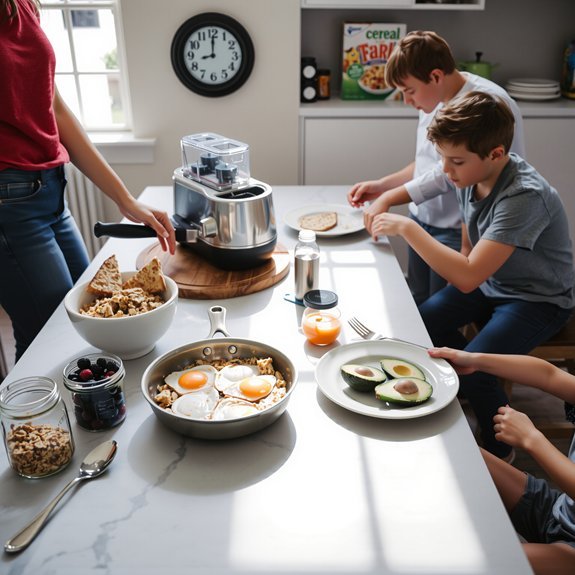

You need breakfasts that fit tight mornings without sacrificing nutrition, and small changes can cut prep time while boosting energy for the whole family. Evidence shows protein and fiber support satiety, so you’ll rely on make‑ahead egg muffins, overnight oats, and freezer pancakes to simplify mornings. Here’s how to set up a few fast, reliable routines that actually save time and reduce stress.
5-Minute Smoothie Bowls
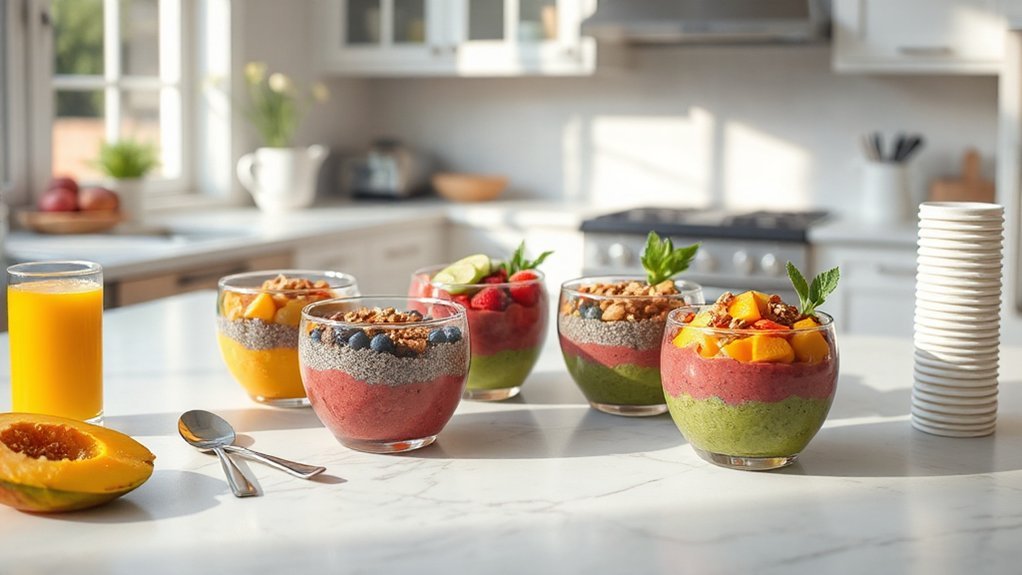
How about a nutritious breakfast you can make in under five minutes? You’ll grab frozen fruit, a scoop of protein or yogurt, a splash of milk, and a handful of spinach. Use blender shortcuts like frozen packets and measured portions to speed prep and reduce cleanup. Start pulsing to break solids, then blend on high for 20–30 seconds to reach smoothness; this preserves nutrients while preventing overheating. Pour into bowls, add quick toppings—nuts, seeds, or sliced banana—for fiber and texture. Practice texture control by adjusting liquid: more for pourable, less for spoonable. Portion for kids in small bowls so they eat easily. These steps are evidence-based, practical, and repeatable on hectic mornings. Rotate flavors weekly to maintain interest without extra shopping each morning.
Overnight Oats Variations
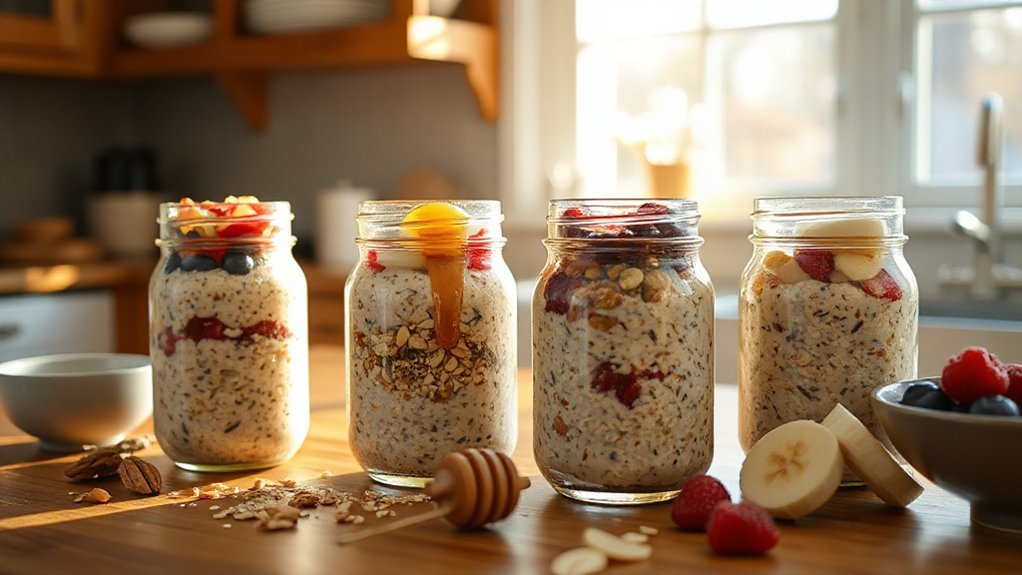
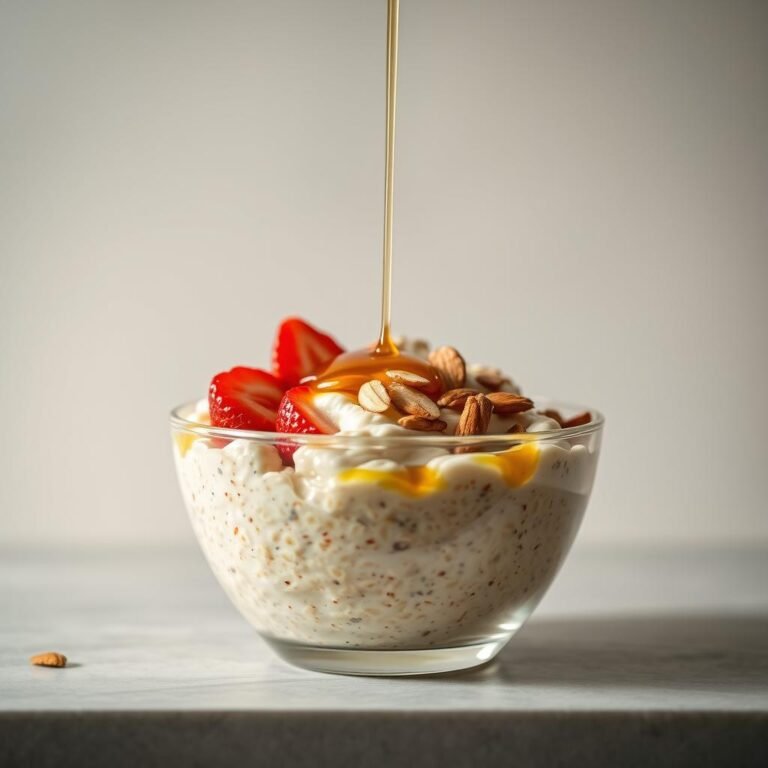
Want a ready-to-eat breakfast that adapts to tastes and nutritional needs? Overnight oats let you prep portions, boost protein, and control sugar. You’ll use a 2:1 liquid-to-oats ratio, add yogurt or milk for creaminess, and chill at least 6 hours. For variety, rotate toppings: berries and chopped nuts for antioxidants and healthy fats; sliced banana with a scoop of nut butter for potassium and satiety. Experiment with spice pairings—cinnamon with apple, cardamom with pear, or ginger with mango—to enhance flavor without added sugar. Try grain swaps like quinoa or buckwheat to increase protein and fiber while keeping the soak method. Label jars with dates, and store up to four days to keep quality and safety. You can customize portions for kids and adults easily.
Make-Ahead Egg Muffins
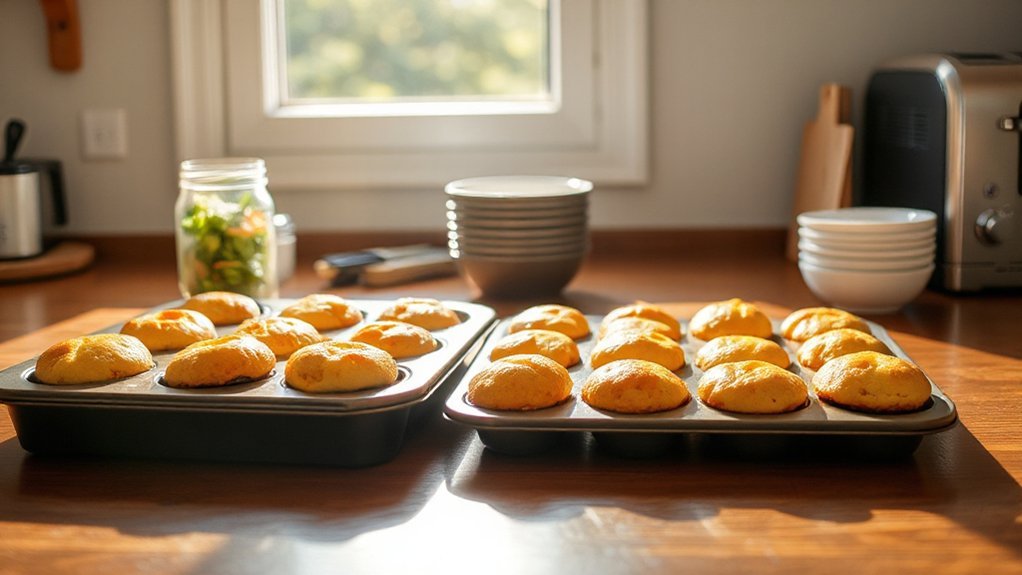
Batching egg muffins saves mornings: you can whisk eggs with a splash of milk, fold in vegetables, cooked meat or cheese, pour into a greased muffin tin, and bake at 350°F for about 18–22 minutes to get portable, protein-rich servings you can grab on the go. You’ll portion calories and protein reliably; refrigerate up to four days or freeze for three months. Test Flavor Pairings like spinach–feta or tomato–basil for family acceptance. Use silicone tins or cookie cutters for Fun Shapes to boost picky eaters’ interest. Label batches with date and contents. Reheat from frozen at 350°F for 10–15 minutes. The table below links small wins to mood.
| Feeling | Moment |
|---|---|
| Relief | Grab-and-go breakfast |
| Joy | Kids smile at shapes |
You’ll feel calmer through mornings daily.
Quick Whole-Grain Pancake Mix Hacks
You’ll boost protein by stirring in a scoop of plain protein powder or Greek yogurt, which studies show increases satiety and supports muscle maintenance. Fold in mashed or chopped fruit like bananas or berries for vitamins and natural sweetness. Cook or pour extra batter into pancake discs, freeze on a tray, and reheat for grab-and-go breakfasts that save time.
Boost Protein Quickly
If you need to boost protein without extra prep, these quick hacks turn whole-grain pancake mix into a higher-protein meal you can make in minutes. Mix one serving of mix with water and a scoop of unflavored protein powder or mashed silken tofu to raise protein by ten to twenty grams; adjust liquid per package directions. Stir in chopped, firm cooked chicken or crumbled Protein bars for savory or sweet options—Protein bars add texture and calories, so pick lower-sugar varieties. For a nontraditional savory boost, top a warm pancake with drained tuna from Tuna pouches and a light yogurt-dill spread; this adds omega-3s and about fifteen to twenty grams protein. These swaps keep prep under five minutes. You’ll serve a satisfying, balanced breakfast quickly.
Stir In Fruit
Adding fruit to whole-grain pancake mix boosts fiber, vitamins, and natural sweetness with minimal extra work, and you can do it in ways that keep texture and cooking time consistent. You’ll preserve batter consistency by folding in diced apples or mashed banana sparingly; use about half cup per two cups of mix. For berries, toss them in a tablespoon of flour to reduce sinking. Consider seasonal selection for peak flavor and cost. Use simple anti browning techniques like a splash of lemon on cut apples or pears. Quick tips you can use:
- Dice fruit fine to avoid soggy centers
- Mash ripe bananas for moisture and binding
- Toss berries in flour before stirring
- Pat excess juice from thawed fruit
- Thin batter with milk if dense
Freeze Pancake Discs
Freezing pancake discs turns extra whole-grain batter into grab-and-go breakfasts that save time and cut waste. You portion batter onto a baking sheet, freeze until solid, then transfer discs to labeled airtight bags; that method prevents sticking and preserves texture. For reheating, use thawing methods like brief room-temperature defrost or microwave on low power, then warm on a skillet to restore surface crispness. You can also reheat from frozen in a toaster oven—10–12 minutes at 180°C (350°F). Label bags with date to track storage durations; whole-grain discs keep quality for about 1–3 months in the freezer. Test one batch for preferred reheating times; small adjustments maintain flavor and nutrient retention. You’ll cut morning prep to minutes and reduce food waste reliably with minimal effort.
Yogurt Parfait Assembly Station
You’ll set up a yogurt parfait assembly station by choosing base yogurts—Greek for higher protein, plain or vanilla to limit added sugar, and dairy-free options for intolerance. Arrange toppings and mix-ins like fresh fruit, nuts, granola, seeds, and a small jar of honey or nut butter so everyone can customize quickly. Assemble in jars for grab-and-go, and store components separately in the fridge to keep textures fresh for up to three days.
Choose Base Yogurts
A good base yogurt sets the tone for your parfait station, so pick options that balance texture, protein, and taste. You’ll want yogurts with reliable Live cultures for digestion and immunity benefits, and consider Fat content to match energy needs and satiety. Choose plain Greek for high protein, stirred whole-milk for creaminess, or low-fat for lower calories. Offer a dairy-free cultured option if someone’s allergic or prefers plants.
- Plain Greek yogurt (high protein, thick)
- Whole-milk strained yogurt (rich mouthfeel)
- Low-fat stirred yogurt (lighter calories)
- Unsweetened plant-based yogurt (dairy-free cultures)
- Kefir or drinking yogurt (pourable, probiotic-rich)
Label jars with nutrition facts so everyone makes informed choices. Rotate varieties weekly to keep diets varied and to monitor tolerances and preferences regularly.
Toppings & Mix-Ins
After choosing a base yogurt, pick toppings and mix-ins that balance texture, flavor, and nutrients so each parfait is satisfying and portable. You’ll layer fresh or frozen fruit for vitamins and fiber, and add a small portion of nuts or seeds for protein and healthy fats; research shows this combination supports satiety. Whole-grain granola or toasted oats give crunch and slow-release carbohydrates—measure servings to control added sugars. For savory options, offer savory garnishes like chopped olives, roasted tomatoes, or a sprinkle of feta alongside herb blends such as dill, chives, or za’atar to expand flavor profiles without excess calories. Include a neutral sweetener (honey, maple) and a citrus zest to brighten flavors. Label choices so family members customize quickly. Rotate options weekly for variety.
Assembly and Storage
When setting up a parfait station, arrange components in the order you’ll layer them so assembly is faster and cross-contamination is minimized. Set out cups, yogurt, granola, fruit, and sweeteners with clear labels and measured portions. Use airtight containers and a simple container organization system—older items front, newer back—to reduce waste. Implement expiration tracking with visible dates and rotate stock weekly. Encourage kids to assemble their own portions to save time; keep spoons and napkins nearby.
- Label containers with contents and use-by dates
- Provide pre-portioned servings for quick grabs
- Store wet ingredients separately until serving
- Keep a small cooler for perishable toppings
- Wipe spills immediately to maintain hygiene
These steps improve speed, safety, and consistency. You’ll save money, reduce waste, and lower foodborne risk.
Grab-and-Go Breakfast Burritos
Wrapping breakfast burritos ahead saves you time and boosts morning nutrition, since you can pack protein, vegetables, and whole grains into portions that reheat quickly. You’ll assemble balanced fillings—eggs or tofu, beans, peppers—and freeze individually wrapped burritos using tested packaging options like foil, parchment, or freezer bags to prevent freezer burn. Reheat from frozen in a microwave or oven for 90–120 seconds or 15–20 minutes, respectively; this preserves texture and safety. Track portions and rotate batches to maintain quality. Try simple flavor variations—cheddar and salsa, spinach and feta—to keep mornings interesting while controlling sodium and added fats. Below is a quick visual guide:
| Fillings | Storage |
|---|---|
| Eggs, beans | Foil or parchment |
| Veggies | Freezer bag |
| Cheese | Label and date |
| Sauces | Reheat instructions |
Serve hot confidently.
Nut Butter Banana Toast Upgrades
If you liked the make-ahead convenience of breakfast burritos, nut butter and banana toast gives you the same speed with even less prep and more flexibility for picky eaters. You can use simple Toasting Techniques to crisp bread while preserving creamy nut butter; research shows slight toasting improves taste and shelf life. Aim for Texture Contrasts by pairing smooth almond butter with sliced banana and crunchy seeds for satiety. Quick, evidence-based variations:
- Classic peanut butter, banana, sprinkle of chia seeds
- Almond butter, sliced apple, cinnamon dust
- Sunflower seed butter, raspberries, lemon zest
- Cashew butter, sliced strawberry, crushed granola
- Tahini, banana, drizzle of honey
These options keep mornings efficient and nutritious for the whole family. Rotate toppings weekly to maintain variety and ease morning decisions.
Sheet-Pan Breakfast for the Family
Because sheet-pan breakfasts let you roast proteins, vegetables, and breads together, you’ll feed the whole family with minimal hands-on time and just one pan to wash — a proven time-saver for busy households that promotes consistent breakfasts. You can spread seasoned Hash Browns, sausage links, and halved tomatoes; add pre-wrapped Cinnamon Rolls at the edges to warm without overbaking. Roast at 400°F for predictable results; flip dense items once. Portion visually for kids; label servings if needed. Use parchment and a thermometer to verify safety. Simple variations keep mornings sustainable.
| Item | Time | Tip |
|---|---|---|
| Hash Browns | 20–25 min | Flip once |
| Egg Muffins | 12–15 min | Use cups |
| Sausage Links | 18–22 min | Space evenly |
| Cinnamon Rolls | 10–12 min | Warm at edge |
Repeat weekly for less morning stress.
Healthy Cereal Swaps and Toppings
After a sheet-pan breakfast gets everyone fed with minimal fuss, you can keep mornings fast and healthier by choosing smarter cereals and toppings. Pick whole-grain, low-sugar cereals and check labels for fiber and protein; these improve satiety and steady blood sugar. Use sugar alternatives like fruit purée or a sprinkle of cinnamon instead of honey for younger kids. Watch portion sizes—measure servings to avoid hidden calories. Top bowls with protein and texture: Greek yogurt dollop, chopped nuts, seeds, fresh berries, or sliced banana.
- Choose whole-grain flakes or oat-based options
- Add a protein boost: yogurt or nut butter
- Swap sugar with fruit purée or spices
- Measure portions with a scoop or cup
- Use nuts/seeds for crunch and healthy fats daily
Time-Saving Meal Prep and Storage Tips
Prepping breakfasts in batches saves time and reduces morning decision fatigue, so plan two to three make-ahead components (like cooked grains, egg muffins, and chopped fruit) that store well and reheat quickly. You’ll get consistent nutrition and cut weekday prep by using batch cooking for staples: cook oats, quinoa, or roasted vegetables once and portion them for four days. Use airtight containers and clear labels with dates; food safety guidance supports refrigeration for three to four days. For longer storage, use portion freezing—freeze cooked pancakes, breakfast sandwiches, or smoothie packs in single-serve bags, then thaw overnight or reheat from frozen. Keep a visible rotation system so older items get eaten first, and schedule one weekly session to reset supplies. You’ll save time and stress.
Leave a Comment