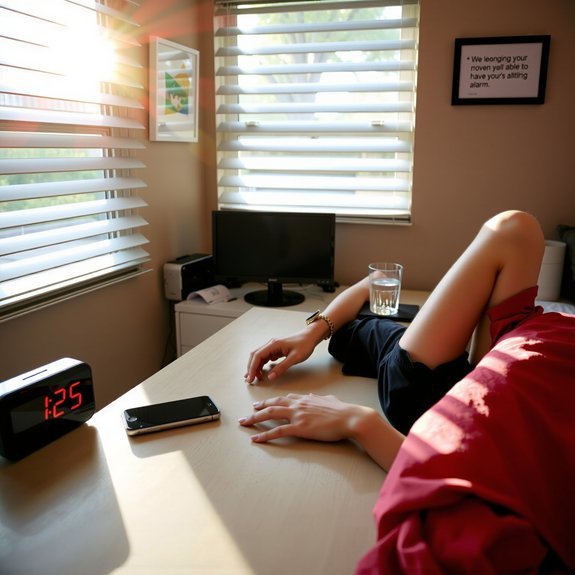

You’re not lazy — your body’s rhythms matter, and small, consistent habits can change how mornings feel. Research shows timed light, consistent wake times, and staggered alarms reduce grogginess and snoozing. You’ll get practical, low-effort tweaks that respect teen circadian needs and actually stick. Keep going to see straightforward steps you can try tonight.
Place Your Alarm Across the Room

Putting your alarm across the room forces you to get up and decreases the chance you’ll hit snooze, a simple habit-shift backed by research on sleep inertia and behavioral cues. You’ll use strategic placement to convert a physical step into a behavioral commitment: the distance interrupts drowsy automaticity and makes turning the alarm off an intentional action. Treat this as an Obstacle method—design one small friction that breaks the cycle of bed-bound reflexes. Start with realistic distances so you actually comply, and pair the placement with a consistent bedtime and phone-free wind-down to strengthen the cue. Expect some resistance early; it fades as the action becomes routine. This method is low-effort, evidence-aligned, and practical for teens who need a dependable wake-up every school day.
Use Gradual Wake-Up Sounds
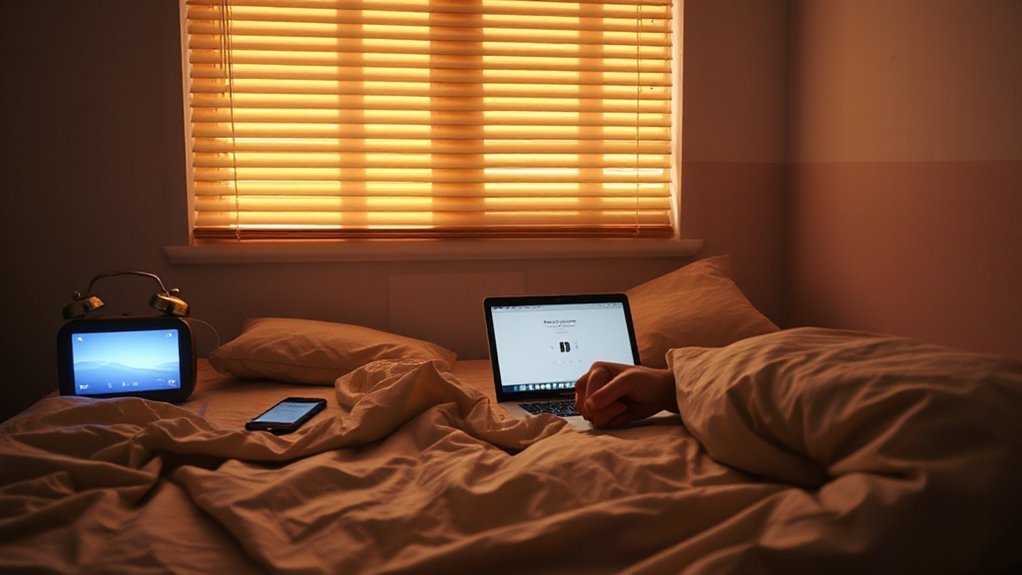
If sudden blares leave you groggy, use a gradual wake-up sound that starts soft and increases in volume over 10–15 minutes so your brain can move out of deep sleep more gently. It’s backed by sleep science: gradual sounds limit sleep inertia and respect dream sensitivity, easing you into wakefulness. Choose tones that mimic nature or soft music, set 10–15 minute ramps. Test and adjust. Use phone apps or smart alarms; consistent practice trains your brain to expect gentler cues, improving inertia reduction. If you still feel stuck, tweak frequency or add light cues. Be patient—small changes stack.
| Sound Type | Benefit | Ramp (min) |
|---|---|---|
| Nature (birds, waves) | Calming, lowers arousal | 10 |
| Soft music | Familiar, reduces grogginess | 12 |
| Ambient tones | Nonintrusive, supports dream sensitivity | 15 |
Adjust as needed.
Keep a Consistent Wake Time Every Day
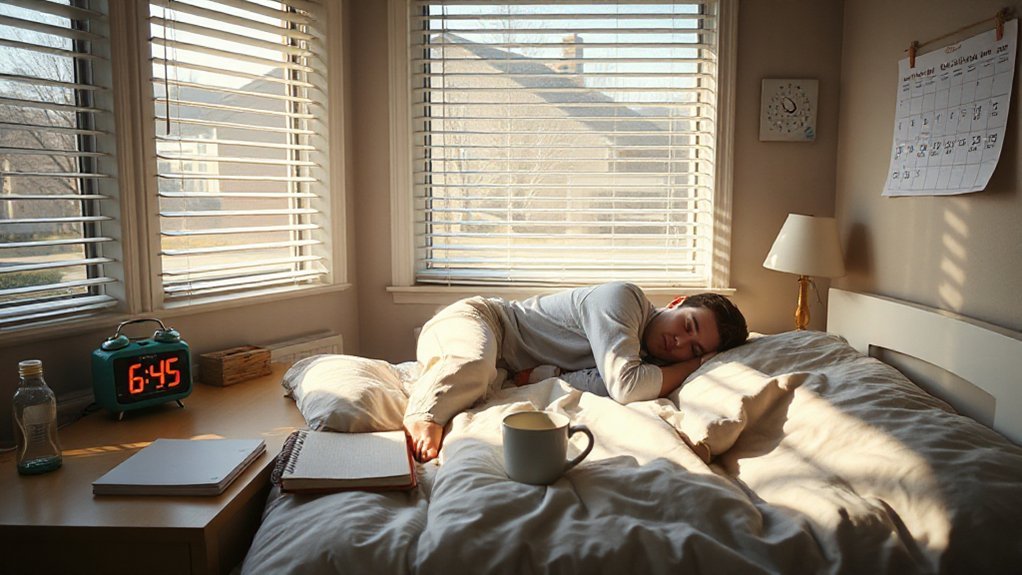
When you wake at the same time every day, your circadian clock syncs up and makes mornings feel more natural, not like a fight against grogginess. Stick to a wake time within about 30–60 minutes even on weekends: research links weekend consistency to better sleep quality and reduced social jet lag. You’ll reduce sleep debt by preventing large swings in sleep timing, so mornings become easier without relying on stimulants. Be realistic—choose a time that fits school and allows enough sleep. Use gradual adjustments of 15 minutes if needed, and track how you feel for two weeks. If you still struggle, examine bedtime habits and light exposure before blaming the alarm. Small, consistent changes yield measurable benefits. Your body will thank you for consistency.
Use Multiple Alarms Strategically
Keeping a steady wake time helps your body, but alarms still play a role on rough mornings—used right, they support habit-building instead of breaking it.
- Set two to three alarms with staggered intervals to nudge waking without disrupting sleep cycles.
- Use Alarm labeling with brief action cues like sit up or brush teeth to link sound to behavior.
- Pick tones that rise in volume and aren’t too pleasant to prevent auto-snoozing.
- Place your device across the room to force movement and protect circadian rhythm by avoiding big weekend shifts.
Research shows consistent, small cues aid habit formation; be practical and kind while testing spacing and labels that reliably get you up. Adjust timing based on sleep needs and school schedule.
Pair Alarms With Immediate Light Exposure
Often, pairing your alarm with immediate bright light will speed alertness and help shift your internal clock, so get light on your eyes as soon as you wake. When your alarm goes off, sit upright and aim a lamp or a sunrise simulator toward your face for 15 to 30 minutes; proper light placement matters for effectiveness. Choose devices with adjustable intensity and blue-enriched daytime spectrum selection to suppress melatonin quickly, but don’t stare directly—keep relaxed gaze. Studies show timed morning light advances circadian phase and improves waking mood and attention. Start with consistent timing, increase exposure gradually, and pair with the same alarm time for several weeks to retrain your rhythm. If you have sensitivity, lower intensity or consult a clinician for safety.
Build a Simple Pre-Bed Wind-Down Routine
Because your brain needs consistent cues to shift into sleep mode, build a short, predictable wind-down you can follow every night so falling asleep and waking up get easier. Keep it 20–45 minutes, repeatable, and focused on calming activities proven to lower arousal. Small actions add up: a quick bedroom tidying clears visual clutter, dim lights signal rest, and a warm cup of caffeine-free herbal tea can reduce tension. Use gentle stretching or breathing to slow your heart rate. Avoid stimulating tasks.
- Straighten sheets, put clothes away, and clear surfaces.
- Sip herbal tea quietly while sitting.
- Do 5–10 minutes of breathing or light stretches.
- Set a consistent bedtime and prepare alarm.
Repeat nightly; small changes improve sleep and mornings noticeably.
Limit Evening Screen Time and Blue Light
After your wind-down, cut back on screens and bright, blue-rich light so your brain can follow through on the calm signals you just gave it — research shows evening screen exposure suppresses melatonin and shifts your internal clock later, making it harder to fall asleep and wake up refreshed. Dim screens to lower screen contrast, turn on night mode or blue-light filters an hour before bed, move devices out of reach so you won’t check them. Use warm lamps for reading and give your eyes breaks to reduce ocular strain. If you need screens for homework, set a firm stop time and use apps that schedule breaks and reduce blue wavelengths. Consistent limits help your sleep timing and make waking to alarms less painful.
Create a Small Morning Reward or Ritual
Pick one tiny treat you actually look forward to—like a favorite song, a small snack, or a quick stretch—because keeping it simple helps it stick. Use a two-minute calming ritual—deep breaths, light stretches, or a short mindfulness prompt—since research shows brief practices reduce morning stress and improve focus. Link the reward to your alarm by using the sound as the cue to start the ritual, so waking up reliably triggers the habit.
Pick One Tiny Treat
What if you gave yourself one small thing to look forward to each morning? Pick a tiny treat that cues reward centers and makes getting up less painful. Try one of these:
- favorite trinket to touch
- pocket snack to savor
- thirty-second song clip you hum
- quick five-breath stretch
Small, consistent rewards boost habit formation by pairing action and pleasure. Keep treats realistic, portable, and routine-linked so they reliably trigger motivation. Track what feels enjoyable for a week and keep what works. If a treat loses its pull, swap to a different small pleasure. Share results with a friend to increase accountability and fun every day. Evidence shows micro-rewards strengthen routines; start small, be consistent, and adjust as needed each morning.
Two-Minute Calming Ritual
Because you’re more likely to stick with something tiny than a big ritual, build a two-minute calming routine that gives your brain a quick, reliable reward and lowers morning stress. Sit up, place feet on floor, inhale for four counts and exhale for six—repeat three times to use deep breathing to reduce heart rate and sharpen attention. Then spend thirty to sixty seconds on a guided visualization: picture a simple, positive scene (sunlight, a smiling friend, or finishing one task) to cue motivation without pressure. Keep it consistent, practice for a week, and tweak details that feel natural. This short, evidence-informed ritual makes mornings gentler and primes focus so you can move into the day with less friction and improve mood quickly each morning.
Link Reward to Alarm
After you’ve practiced the two-minute calming ritual, attach a tiny, reliable reward to the alarm to create a clear cue–action–reward loop that your brain learns quickly. Choose a small sensory or achievement reward—favorite song snippet, a five-minute game, or one extra habit points credit—to make mornings appealing. Keep rewards immediate and predictable; research on reinforcement shows short delays weaken habit formation. Track consistency and gradually swap rewards for intrinsic cues as sleep stabilizes. Use an openables list to plan which rewards fade and which stick. This small system reduces resistance, uses positive reinforcement, and builds reliable morning momentum fast.
- Immediate sensory reward (song, scent)
- Micro-achievement (checklist tick + habit points)
- Short pleasant activity (five-minute game)
- Openables list for phased rewards
Customize Alarm Volume, Tone, and Patterns
Choose a tone that’s noticeable but not jarring; research shows pleasant yet distinct sounds can reduce snoozing and morning stress. Set your alarm to start quietly and ramp up over 30–60 seconds so you wake more naturally and avoid the shock of a sudden blast. Combine sound with gentle vibration for a multisensory cue that’s more effective—especially if you sleep with your phone nearby or wear a smartwatch.
Pick the Right Tone
How do you want to wake up: jolted or nudged? You can choose tones that match sleep inertia research—softer timbres reduce stress. Try instrumental tracks with steady rhythms; studies link lower emotional valence at awakening to smoother shifts. Pick tones you associate with safety, not alarm.
- Choose familiar melodies that feel safe.
- Favor mid-range frequencies; they penetrate ambient noise without startling.
- Test varied rhythms at different times to find what reduces grogginess.
- Keep a small playlist and rotate tracks weekly to prevent habituation.
Be pragmatic: experiment for a week, note mood and alertness, then adjust. Small changes yield measurable improvement. You’ll sleep better when your waking tone aligns with preferences and reduces cortisol spikes linked to stress responses each morning.
Use Progressive Volume Increase
While it’s tempting to blast an alarm and hope for the best, a progressive volume increase better eases you out of sleep without spiking stress hormones. Start with a gentle tone at a low, comfortable level and ramp up over 30–90 seconds so you wake more naturally; studies link gradual arousal to lower cortisol spikes and clearer cognition. Change the level and ramp duration to prevent habituation prevention and keep responses reliable. Use app settings or smart alarms to set personalized thresholds based on how deeply you sleep: quieter starts if you wake easily, louder ramps if you sleep through soft sounds. Test settings on weekends, note how you feel on waking, and adjust. This method’s practical, evidence-aligned, and kind to your nervous system.
Combine Sound and Vibration
Because your brain responds to multiple cues more reliably than to one, combine sound and vibration so you get consistent, less jarring wake-up that still breaks through deep sleep when needed. Use gentle tones synced with brief vibration bursts to leverage crossmodal cues; studies show synchronized inputs improve detection and reduce startle. Pick a tone you can tolerate, set progressive volume, and adjust haptic timing so pulses begin slightly before sound to ease the shift. Test settings on weekends and tweak daily until you wake without panicking. If you share a room, favor vibration-forward patterns. Keep short snooze limit to avoid fragmented sleep.
- Sync gentle tone + vibration
- Start vibration 0.5–1s before sound
- Use progressive volume rise
- Limit snoozes to one
Choose Tech That Respects Teen Circadian Rhythms
If your teen’s biology shifts later, pick alarm tech that works with — not against — their circadian rhythm: dawn-simulating lights, gentle progressive sounds, and apps that minimize blue-light exposure before bed. You can use sleep tracking and chronotype apps to identify natural sleep timing, then choose alarms that phase in gradually and avoid abrupt, jarring tones. Favor devices with adjustable light temperature and volume curves, and enable “do not disturb” windows so notifications don’t fragment sleep. Explain choices to your teen, involve them in settings, and set realistic wake goals based on school demands. Evidence shows gradual cues reduce sleep inertia and improve mood; practical implementation and respectful technology make mornings less confrontational and more sustainable for long-term healthy sleep habits and resilience.





Leave a Comment