

You can reliably boost morning alertness by aligning sleep timing, light exposure, movement, hydration, nutrition and caffeine with your circadian biology. Evidence shows small, timed changes produce big gains in daytime energy and sleep quality. I’ll lay out practical, stepwise strategies you can test and adapt to your chronotype—starting with the most impactful, low‑effort tweaks.
Know Your Chronotype and Wake Window

How you time sleep and wakefulness matters: your chronotype (morning, intermediate, or evening preference) and your wake window (hours of sustained wakefulness before sleep) determine alertness, cognitive performance, and physiological readiness. You should assess chronotype with validated questionnaires or actigraphy; genetic variants in circadian genes influence timing but don’t fully fix it. Quantify your typical wake window to predict when vigilance will drop and plan demanding tasks accordingly. Monitor social jetlag—the mismatch between workdays and free days—to identify chronic circadian misalignment linked to impaired cognition and metabolic risk. When you see consistent shifts, adjust schedules gradually, prioritize consistent light exposure, and use objective data to guide interventions. Clinical decisions should weigh individual variability and occupational constraints. Document outcomes and reassess every two weeks periodically.
Optimize Sleep Quality and Timing
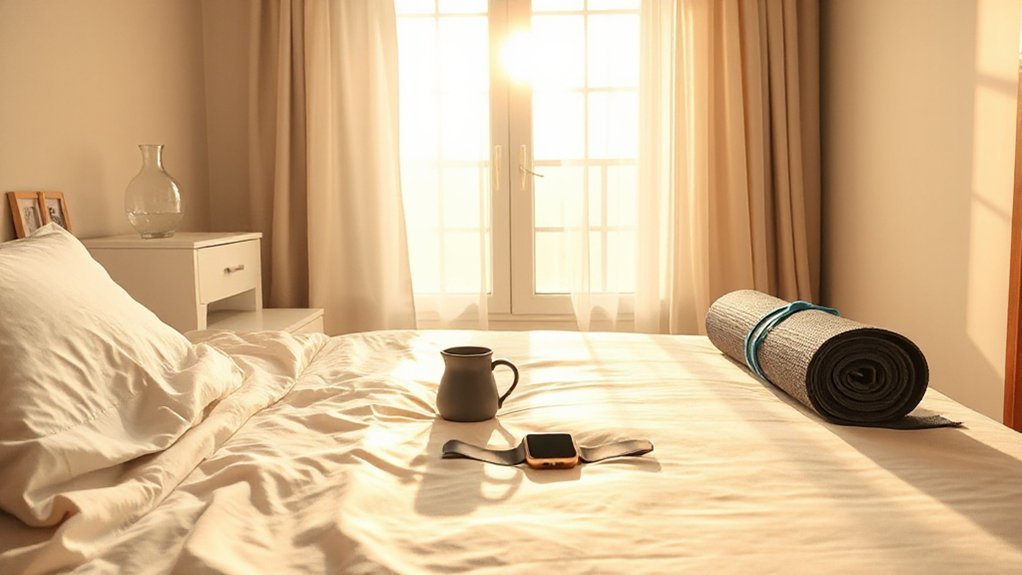
You should keep a consistent sleep–wake schedule to stabilize circadian rhythms and improve morning alertness. Stick to regular bed and wake times, even on weekends, since reduced timing variability improves sleep efficiency. You’re best served by a cool, dark, quiet bedroom with minimal screens to boost sleep quality and early-morning energy.
Consistent Sleep Schedule
When you keep a consistent sleep schedule, your circadian rhythm stabilizes and sleep quality and daytime alertness improve. You should set fixed sleep and wake times, minimizing Social Jetlag by aligning weekend behavior with weekdays. Establish Bedtime Boundaries: dim lights, limit screens 30 to 60 minutes before bed, and avoid variable late-night activities. Consistency reduces sleep latency and improves REM distribution, backed by chronobiology studies. Monitor timing, duration, and daytime functioning; adjust by 15 to 30 minutes per week. Use behavioral cues rather than napping to manage sleep debt.
- Maintain identical wake time daily.
- Shift sleep timing gradually (≤30 min/week).
- Limit late-night social engagements that cause Social Jetlag.
- Enforce Bedtime Boundaries and pre-sleep routines.
Track outcomes for two to four weeks to evaluate effects.
Optimize Sleep Environment
Improving your sleep environment reinforces a regular schedule and enhances both sleep quality and timing. You’ll control light, temperature, noise, Air Quality and Mattress Choice to reduce awakenings and speed sleep onset. Aim for 15–19°C, blackout curtains, and low-noise sources. Use HEPA or activated carbon filtration if allergens or pollution affect sleep. Select a mattress that matches your pressure points and promotes spinal alignment; replace after 7–10 years. Maintain humidity 40–60% and remove electronic devices that emit blue light or heat. Monitor outcomes with sleep diaries or actigraphy to refine conditions based on objective data. Adjust iteratively using objective measures and patient-reported outcomes weekly thereafter consistently.
| Intervention | Practical action |
|---|---|
| Light | Blackout curtains; dim evenings |
| Temperature | 15–19°C; breathable bedding |
| Air Quality | HEPA filter; reduce VOCs |
Design an Energizing Wake-Up Routine

You’ll set a consistent wake time to stabilize circadian rhythms and improve daytime alertness. Within 30–60 minutes of waking, expose yourself to bright natural light for at least 20–30 minutes to suppress melatonin and shift the circadian phase. Combining fixed wake times with controlled morning light produces measurable gains in mood and cognitive performance.
Consistent Wake Time
Regularly rising at the same time each day stabilizes circadian rhythms and improves alertness, mood, and metabolic regulation. You should set a fixed wake time within your sleep opportunity and keep it within 15–30 minutes on weekends to preserve phase stability. Use Calendar Alignment for appointments and alarms so social demands don’t shift your schedule. Practice Partner Coordination to synchronize household wake patterns and reduce morning variability. Monitor outcomes objectively—sleep logs, actigraphy, daytime sleepiness scales—and adjust slowly when needed. Expect circadian adaptation over 1–3 weeks. Consult a clinician if sleep variability persists despite behavioral adjustments.
- Set a target wake time and document it.
- Link alarms to calendar events.
- Coordinate wake windows with partners.
- Track sleep metrics and daytime function.
Morning Light Exposure
Often within the first 30–60 minutes after waking, expose yourself to bright, primarily blue-enriched light to boost alertness, advance circadian phase, and improve mood. Aim for 10,000 lux at eye level when feasible, or maximize outdoor exposure for 20–30 minutes. Prioritize light sources with known spectral composition favoring short wavelengths; check device specifications or choose daylight-mimicking fixtures. Position yourself so light reaches your eyes indirectly; avoid glare. If natural daylight is limited, use calibrated light therapy devices and time them relative to habitual wake time. Consider interior design: architectural glazing that increases morning illuminance can enhance efficacy without discomfort. Monitor subjective alertness and sleep onset timing; adjust intensity and timing based on response. Consult a clinician if you have ocular or bipolar disorder concerns.
Use Light Strategically to Reset Your Clock
How you get morning light matters: exposing yourself to bright (ideally natural, blue‑enriched) light within 30–60 minutes of waking for about 20–60 minutes reliably advances your circadian phase, suppresses residual melatonin, and increases morning alertness and mood. Use light strategically to reset your clock: seek outdoor exposure or a light box for illuminance and spectral tuning. Consistent timing produces predictable phase shifting; variability blunts effects. Keep your eyes open, skip sunglasses, and align timing with wake time. Track sleep and daytime alertness to refine timing; adjust by 15–30 minutes if markers shift.
- Use outdoor morning walks for broad spectrum light.
- Choose light boxes with measured spectral output.
- Aim for 10,000 lux at eye level.
- Avoid bright screens late at night to protect phase shifting.
Hydration and Morning Nutrition for Steady Energy
Light exposure helps set the clock; next, rehydration and targeted morning intake consolidate that alertness and support stable glucose and cognitive performance. You should rehydrate with 300–500 mL water on waking, adding electrolytes if prolonged fasting or exercise occurred; this electrolyte timing preserves plasma volume and supports cognition.
| Component | Recommendation |
|---|---|
| Water | 300–500 mL on waking |
| Protein | 20–30 g at breakfast |
Follow within 60–90 minutes with a mixed meal emphasizing low-glycemic carbs, 20–30 g protein, and fiber. Protein distribution matters: place higher protein at breakfast to blunt glycemic excursions and support neurotransmitter synthesis. If you use caffeine, take it after rehydration and a light protein-containing snack to reduce jitter and optimize uptake. Measure urine color and adjust electrolyte intake based on symptoms and lab guidance.
Movement and Breathwork to Boost Alertness
Combining brief movement with targeted breathwork will increase cerebral blood flow, raise heart rate variability appropriately, and sharpen vigilance, so you’ll feel more alert without overstimulating stress responses. Begin with five to ten minutes of dynamic stretching to mobilize joints and increase sympathetic-parasympathetic balance. Pair with box breathing cycles (four-four-four-four) for two to five minutes to modulate autonomic tone and reduce anxiety. Keep intensity low to moderate; aim for perceived exertion three to five of ten to avoid cortisol spikes. Monitor effects: improved reaction time, clearer cognition, steadier heart rate variability.
- Technique: slow control movements and diaphragmatic breaths.
- Duration: five to fifteen minutes total, split movement then breathing.
- Intensity: low to moderate; avoid maximal exertion early.
- Precautions: consult clinician for cardiovascular instability and monitoring.
Smart Caffeine and Stimulant Strategies
When used strategically, caffeine and short-acting stimulants can reliably improve wakefulness and cognitive performance while limiting jitter, sleep disruption, and cardiovascular strain. You should time doses to align with circadian troughs, typically 30–60 minutes after rising, and favor lower effective doses to reduce side effects. Rotate stimulant types and include Caffeine Alternatives such as L-theanine combinations, guarana, or low-dose methylxanthines to diversify mechanisms. Monitor blood pressure and heart rate, and avoid evening dosing to protect sleep. Implement Tolerance Management by scheduling stimulant-free days, reducing daily dose, or cycling use to preserve efficacy. Consult a clinician for prescription stimulants, assess contraindications, and individualize plans based on comorbidities, medications, and occupational demands. Track subjective alertness and objective performance metrics to guide ongoing adjustments and safety monitoring.
Quick Fixes for Rough or Groggy Mornings
How quickly you act in the first 10–30 minutes can determine whether a groggy morning derails your day. You’ll use immediate, evidence-based interventions to restore alertness: light exposure, modest movement, hydration, and focused breathing. Begin with a Cold Splash to increase sympathetic tone and improve vigilance. Chewing Gum can raise arousal and reduce sleepiness in short tasks. Follow an ordered 5–10 routine that’s simple, repeatable, and measurable.
- Expose eyes to bright light for 2–5 minutes
- Perform 60–90 seconds of dynamic movement (marching, squats)
- Drink 200–300 mL water with a small salt pinch
- Use chewing gum during low-stimulation tasks
Measure subjective sleepiness and task accuracy to evaluate effectiveness. If morning grogginess persists despite these fixes, consult a clinician to assess sleep disorders, medication effects, or circadian misalignment and treatment.
Habit Stacking to Make Energy Routines Stick
You’ll get more consistent morning alertness by anchoring the quick fixes to existing cues and routines: habit stacking uses context-dependent cues and implementation intentions to make behaviors automatic, reduce decision fatigue, and improve adherence. Choose anchors based on stability and proximity to desired behavior; anchor selection should prioritize morning cues you already perform.
| Cue | Stacked action |
|---|---|
| Toothbrushing | Deep breaths |
| Kettle on | Light stretch |
Use habit bundling to pair low-effort energy practices with established rituals (e.g., toothbrush, kettle). Define implementation intentions: when X happens, I will do Y. Monitor adherence for two weeks, adjust anchor strength, and limit new elements to one at a time. Expect incremental gains; randomized trials support stacking for habit formation. Stay pragmatic, measure outcomes, and iterate. Track sleep and caffeine.





Leave a Comment