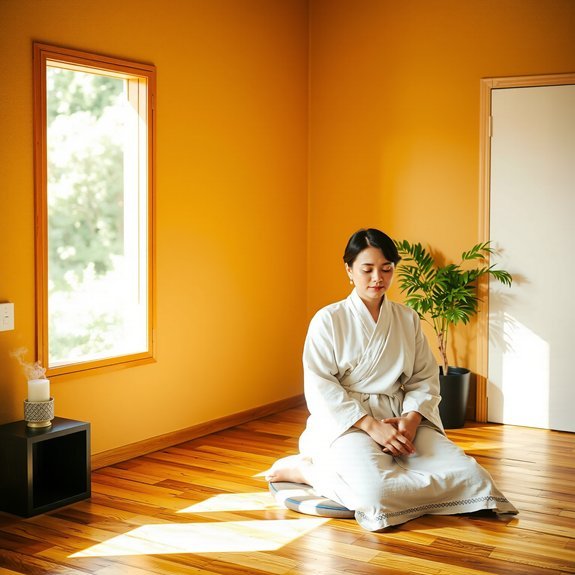

You can start your day with short, practical mindfulness practices that sharpen attention, reduce stress, and help you set clearer priorities. Keep exercises brief—three to five minutes of breath work, a quick body scan, and gentle movement—and be kind when your mind wanders; research shows consistency matters more than length. You’ll find simple, research-backed steps to try next.
Benefits of Morning Mindfulness

Many people find that a short morning mindfulness practice sharpens attention and calms the nervous system, and research supports those effects: studies link brief daily mindfulness to improved focus, reduced cortisol, and less emotional reactivity. When you practice briefly each morning, you create conditions for enhanced focus throughout the day and support mood regulation in challenging moments. You’ll likely notice clearer priorities, reduced reactivity to stressors, and steadying of emotional responses. Evidence shows even five to ten minutes can shift cognitive control and lower physiological arousal. Be gentle with expectations; start small, observe changes, and adapt the routine to your life. These benefits build cumulatively, so consistency—more than duration—often predicts meaningful improvement. You’ll also find better sleep quality and improved interpersonal interactions over time.
Breath-Focused Techniques
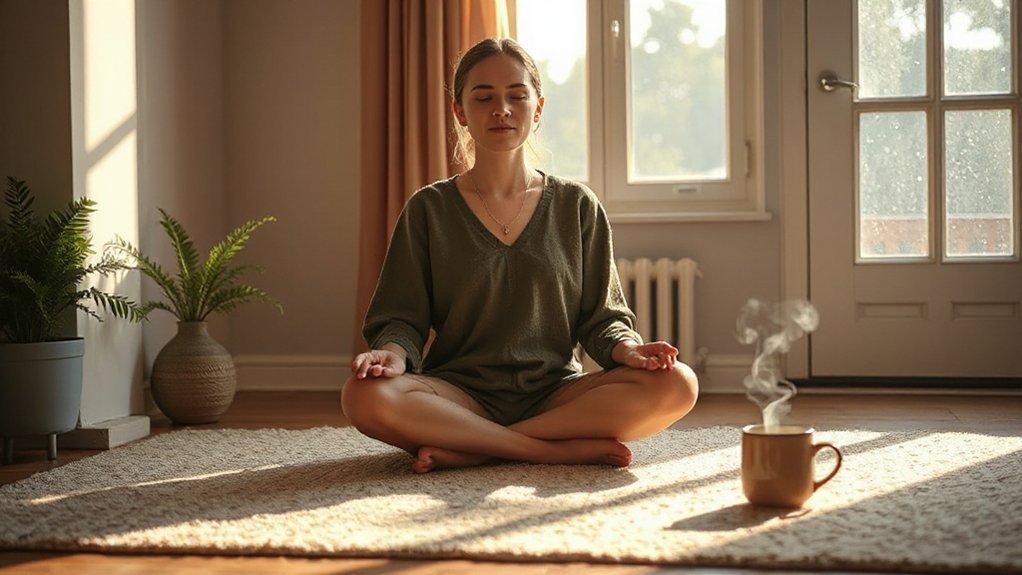
In the morning, you can use simple breath-focused techniques to anchor attention and calm your nervous system. Try counted breath meditation to steady your rhythm, diaphragmatic deep breaths to engage the belly and improve oxygenation, and box breathing (inhale-hold-exhale-hold) to regulate heart rate. Research shows these brief practices can reduce stress and sharpen focus, so you can pick the one that feels most comfortable.
Counted Breath Meditation
Often, counted breath meditation helps you anchor attention by linking each inhale and exhale to a simple numerical pattern; studies show that counting can reduce mind-wandering and lower physiological arousal. You can sit comfortably, close your eyes, and gently count silently — one on the inhale, two on the exhale — returning to one whenever your mind wanders without judgment. Research supports brief regular practice for improved focus and reduced stress. Respect personal pace; start with short sessions and build gradually. Notice sensations and the rhythm without forcing it. Be aware this method draws on Historical Origins in contemplative traditions and reflects Cultural Variations in how counting and pacing are taught. Practice kindly, adjust to your needs, and observe changes over time. Daily too.
Diaphragmatic Deep Breaths
Drawing breath deeply into your diaphragm engages your parasympathetic nervous system and can lower heart rate and stress markers, supported by studies on slow, deep breathing. You place one hand on your chest, one on your belly, and inhale so the belly rises while the chest stays relatively still. Learning diaphragm anatomy helps you locate that inward motion and breathe efficiently. Exhale slowly, feeling release. This practice calms your nervous system and supports voice projection when you speak, improving posture and control. Be gentle with yourself; start with a few minutes each morning. Notice sensations without judgment. The table below offers simple cues and timing to guide your practice.
| Cue | Timing |
|---|---|
| Belly rise — inhale | 4–6 seconds |
| Exhale — release | 6–8 seconds |
Practice with kind patience.
Box Breathing Technique
Box breathing takes the calm you get from diaphragmatic breaths and adds a simple, structured rhythm—inhale, hold, exhale, hold—to help regulate your nervous system. You’ll use equal counts, often four seconds, to slow heart rate, steady attention, and lessen stress. Start seated, breathe from your diaphragm, and use Visual cueing—a square traced with your finger or on-screen—to guide timing. Practice three cycles, noticing sensations without judgment. Try these steps:
- Inhale for four counts
- Hold for four counts
- Exhale for four counts
At work, adopt Workplace adaptation by taking desk pauses before meetings to reset focus. Research links this technique to reduced anxiety and better concentration. Be gentle; shorten counts if holding feels uncomfortable. Try morning and midday sessions to build a steady, calming habit.
Short Body Scan Practice
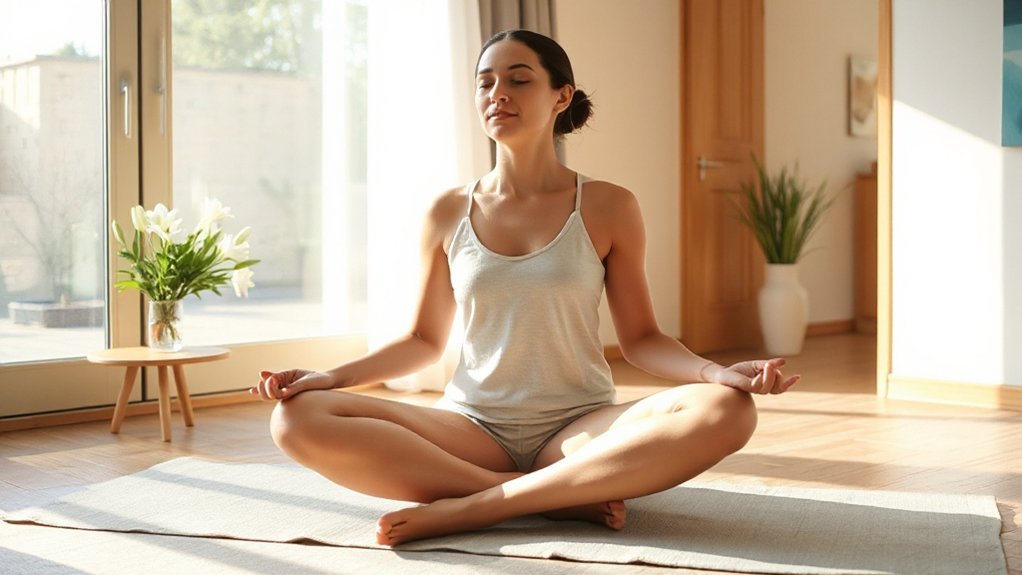
Noticing sensations from head to toe for just a few minutes helps you settle into your body and start the day with calm focus. Use sensory awareness and a quick posture check: close your eyes, breathe naturally, and scan from scalp to feet, naming sensations without judging them. Notice tension, warmth, or ease; let each area soften on the out-breath. If your mind wanders, gently return attention to physical feeling. Research shows brief body scans reduce stress and improve present-moment focus. Finish by taking three slow breaths and opening your eyes. Use this short practice anytime you need grounding.
| Area | What to notice | Soft prompt |
|---|---|---|
| Head | temperature, tension | “release” |
| Chest | breath, tightness | “soften” |
| Feet | contact, warmth | “ground” |
You can repeat this daily for steady benefits.
Gentle Movement and Stretching
Waking the body with gentle movement and stretching helps ease morning stiffness, improve circulation, and prime your nervous system for calmer focus; brief, mindful motion has been shown to reduce tension and boost mood. You can move slowly, noticing sensations and breath. Focus on joint mobility with small rotations at ankles, wrists, shoulders, and hips. Use chair stretches if standing is uncomfortable, linking movement to steady inhales and exhales. Modify each action to suit pain levels and ability; even short sequences help. Aim for two to five minutes, increasing slowly as you feel comfortable and stay present.
- Neck rolls and shoulder circles to release upper tension.
- Seated spinal twists and hip openers as chair stretches.
- Ankle pumps and wrist bends to support joint mobility.
Setting an Intention for the Day
After a few minutes of gentle movement, take a moment to set a simple intention for your day—one clear phrase or short sentence that reflects how you want to show up. State it aloud or silently; empirical studies link brief intention-setting to improved focus and well-being. Use Gratitude framing to begin—notice one small thing you’re thankful for—then add Purpose anchoring by naming what matters most today. This practice isn’t about perfection; it’s a gentle cue. You can revisit the phrase when distracted. Keep intentions specific and kind. Examples below can help you get started.
| Intention | Example |
|---|---|
| Calm focus | “Breathe, stay present” |
| Compassion | “Listen without judgment” |
| Productivity | “One task at a time” |
Repeat it gently; research suggests repetition strengthens memory and intentional behavior over time.
Tips for Building a Consistent Practice
You’ll build consistency by setting a realistic schedule that fits your life—regular timing helps habit formation. Start with short sessions (even 3–5 minutes) and increase gradually, which research shows reduces dropout. Create a simple, comfortable space for practice so your environment cues the habit and lowers friction.
Set a Realistic Schedule
If you set a morning mindfulness practice that fits your life, you’re far more likely to keep it. Choose realistic timing by doing simple energy mapping: note when you feel alert and calm. Use time blocking to reserve those windows, then protect them gently; consistency matters more than length. Plan for small disruptions and adjust gracefully rather than abandon. Track what works for a week, then tweak start times or environment based on evidence from your experience. Be kind to yourself if days vary—rigidity kills habit formation. Practical steps you can try include:
- Block a specific start time and treat it like an appointment.
- Map your energy across the morning and align sessions to highs.
- Prepare your space the night before to reduce friction.
Start With Short Sessions
Because brief, regular practice builds habit faster than occasional long sits, start with just a few minutes each morning and prioritize showing up over duration. Short, consistent micro sessions create neural pathways for mindfulness; studies show repetition outweighs length for habit formation. You don’t need perfection—aim for tiny wins that fit your routine. Use guided snippets when you need structure: apps, timers, or brief recordings can anchor attention and reduce decision fatigue. If your mind wanders, acknowledge it kindly and return to breath without judgment. Gradually increase time when it feels natural, not forced. By honoring consistency and compassion, you’ll build a reliable practice that supports focus and well-being without adding stress to your morning. Small, sustained efforts yield meaningful, lasting change over time.
Create a Dedicated Space
When you set aside a small, consistent spot for morning practice, your brain learns to associate that place with calm and focus, lowering resistance to sitting down. Choose a corner with reliable lighting choices — soft natural light or a warm lamp — and keep the area uncluttered so cues stay simple. Consider your privacy setup: a curtain, screen, or door can signal safety and reduce interruptions. Keep a cushion, timer, and a meaningful object to anchor attention. Small, stable adjustments create habit through repetition and reduce decision fatigue, which improves adherence. Be gentle if the perfect setup isn’t possible; consistency matters more.
- Soft natural light or a warm lamp
- Simple privacy setup: curtain, screen, or closed door
- Cushion, timer, and a meaningful object






Leave a Comment