

You can reclaim a small, practical habit that helps rehydrate after sleep, supports gentle digestion, and supplies vitamin C for skin and immune support. Research suggests it’s modestly beneficial when done consistently, and it’s easy to fit into a busy morning. You’ll also want to avoid enamel issues and timing pitfalls—here’s how to do it safely and simply.
Why Start Your Day With Lemon Water

Why not make your first sip count? You can turn a simple lemon water ritual into intentional habit formation that supports consistent self-care. Research links regular intake of vitamin C-rich foods with improved immune markers; adding lemon provides a measurable, low-effort source. Start small: squeeze a quarter lemon into warm water, place a pitcher by the kettle, or set a morning reminder. Those practical steps reduce decision fatigue and make the routine stick. Involve kids: letting them help slice lemons fosters family bonding and models healthy choices without lecturing. You’ll feel steadier when habits are predictable, and you’ll build a sustainable morning pattern that respects limited time and energy. Track progress modestly and celebrate small wins to reinforce change without adding unnecessary pressure daily.
Hydration and Natural Energy Boost

Keeping that morning lemon-water habit makes it easier to meet your fluid needs, and staying hydrated is one of the simplest ways to boost natural energy. You’ll notice small but measurable improvements in alertness because mild dehydration reduces cognitive performance; sipping lemon water helps replace lost fluids and supports electrolyte balance when paired with a balanced diet. For busy moms, this is a low-effort strategy for sustained focus and fewer energy slumps. Use these practical tips to leverage hydration for midday revitalization:
- Start with a glass each morning to rehydrate after sleep.
- Add a pinch of sea salt occasionally to support electrolytes.
- Carry a refillable bottle to drink regularly.
- Match intake to activity and climate for consistent energy.
Stay consistent.
Digestive Support and Gentle Detox
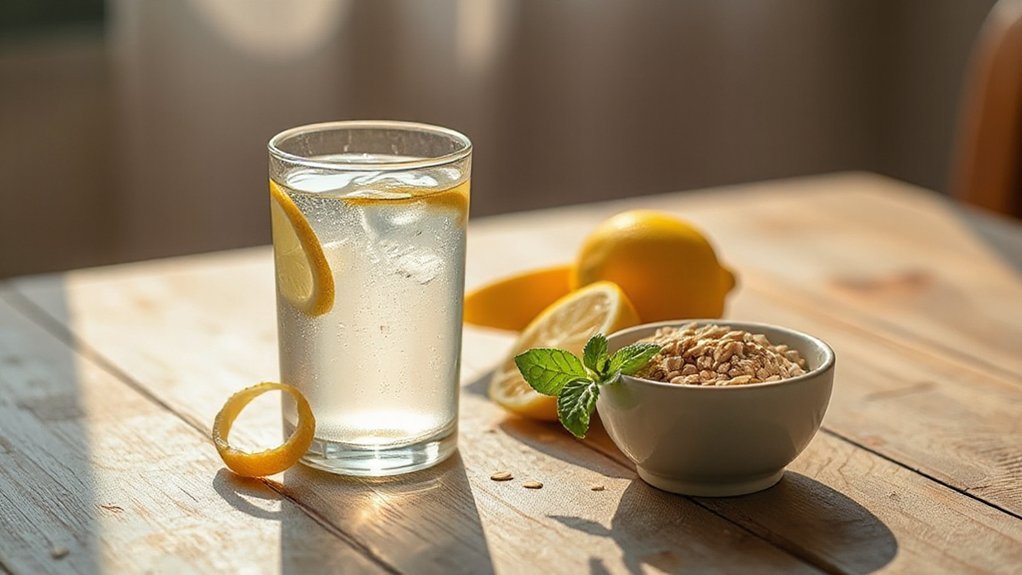
You can use warm lemon water before meals to help stimulate digestion, as acidity and citrus compounds may support stomach acid balance and bile flow. This gentle routine can also aid your body’s natural detox pathways by promoting hydration and providing antioxidants like vitamin C that support liver function. If you have reflux or citrus sensitivity, try small amounts and check with your clinician to make it safe for you.
Aids Digestion Naturally
When you sip warm lemon water before meals, it can gently stimulate saliva and gastric acid production, helping break down food and reducing bloating or indigestion. You’ll often notice milder cramps and faster digestion when you make this a habit; studies suggest mild acidity can promote bile flow and a Peristalsis Boost, improving transit time. Start with half a lemon in warm water, sip slowly, and observe tolerance. If you have reflux or ulcers, check with your clinician. Keep portions moderate and note any changes over a two-week period; track weekly.
- Improves enzyme activity for better nutrient breakdown.
- Encourages Bile Secretion to aid fat digestion.
- Supports gentle intestinal motility and Peristalsis Boost.
- Simple, low-risk step you can test and track.
Supports Gentle Detoxification
Because staying well-hydrated and getting small amounts of vitamin C and citrate can support your body’s natural detox pathways, sipping lemon water may help gentle digestive and renal clearance by aiding urine production and providing antioxidant support for liver enzymes. When you make this a habit, you’ll support liver health without overpromising results: modest vitamin C aids phase II detox reactions while hydration promotes toxin excretion. Gentle warm lemon water can also encourage bowel motility and subtle lymphatic drainage through improved circulation and movement. Use it as a complement to balanced eating, regular activity, and medical advice — not a cure-all. If you have kidney conditions or take medications, check with your clinician to stay safe. Your clinician can tailor guidance to your needs.
Skin Health and Radiance Benefits
A glass of lemon water can support healthier-looking skin by delivering vitamin C and antioxidants while boosting hydration, and it’s worth trying if you’re aiming for gradual, evidence-backed improvements. You’ll notice softer texture and more even tone when you stay hydrated and get vitamin C that aids collagen synthesis; small, consistent habits matter. Lemon also supplies antioxidant protection that helps limit oxidative stress from daily exposures, complementing topical care. Be realistic: lemon water isn’t a miracle, but it’s an accessible addition to a skin-friendly routine.
- Consistency: daily intake supports steady nutrient supply.
- Timing: drink in morning to encourage hydration.
- Complement: pair with sunscreen and moisturizer.
- Caution: dilute to protect tooth enamel.
If you have sensitivities, check with your dermatologist first.
Immune Support: Vitamin C and Beyond
Though it’s not a cure, sipping lemon water can modestly support your immune system by supplying vitamin C and keeping you well hydrated—both help immune cell function and maintain mucosal barriers. You get a reliable dose of vitamin C that supports collagen and antioxidant defenses; clinical data link adequate vitamin C to shorter cold duration. Lemon’s bioflavonoids may offer Antioxidant Synergy, helping vitamin C recycle and reduce oxidative stress. Remember hydration aids lymph flow and mucus clearance, practical benefits for daily resilience. Consider dietary Zinc Interaction: zinc and vitamin C work differently but complement each other in immune responses, so aim for balanced intake rather than megadoses. If you’re pregnant, nursing, or on meds, check with your clinician before changing supplements for personalized guidance.
How to Make the Perfect Lemon Water
You can boost flavor and nutrient availability by choosing ripe, fragrant lemons—look for weight and thin skin. Use filtered or cold water to avoid off-tastes and contaminants so your drink stays clean and invigorating. Start with juice from about half a lemon per 8–12 ounces of water and adjust to taste and acidity tolerance.
Pick Ripe Lemons
How do you tell a ripe lemon? Trust visual cues and season timing: ripe fruit looks bright yellow, smooth, and firm but gives slightly to pressure. You’ll pick lemons that juice well and taste balanced. Handle them; heavier lemons usually contain more juice, a simple, evidence-based trick used by chefs.
- Squeeze gently — slight give signals ripeness.
- Check weight — heavier means juicier.
- Inspect skin — avoid green patches or shriveling.
- Smell blossom aroma at stem end for freshness.
You’ll save time and avoid sour, underripe lemons when you follow these practical tips. I know you’re busy; these quick checks fit into grocery runs and backyard harvesting. Consistent selection improves your lemon water’s flavor, nutrient yield, and satisfaction over time.
Use Filtered Water
Because tap water often contains chlorine, dissolved minerals, and trace microplastics that can dull flavor and, in some cases, contribute unwanted contaminants, using a simple filter (pitcher, under-sink carbon, or certified countertop unit) will give your lemon water a cleaner taste and help reduce those exposures—so you get the intended fresh, bright flavor and better peace of mind. When you choose a filter, look for Filter Certification (NSF/ANSI) to confirm reductions in chlorine, lead, and organics. Carbon filters improve taste; reverse osmosis and specialty cartridges support Microplastic Removal. Change cartridges on schedule, rinse new filters, and store water in glass to avoid recontamination. If you’ve pregnancy or child-health concerns, check your utility’s water report or ask your clinician for testing so you’re reassured now.
Adjust Lemon-To-Water Ratio
After choosing clean, filtered water, focus next on dialing in the lemon-to-water ratio so the drink meets your taste and oral-health needs. Balance flavor with enamel safety.
- Mild: half lemon per 12 oz.
- Moderate: one lemon per 8–10 oz.
- Strong: one lemon per 6–8 oz; rinse after.
- Pair: use Citrus pairing with mint or ginger.
Track mouthfeel and sensitivity; adjust downward if enamel aches. Use simple Ratio charting to note what works. Stay consistent; moderation preserves benefits without harm. Consult your dentist if sensitivity or concerns persist regularly. Many studies link lower acidity and exposure to reduced enamel erosion, so you’ll want to sip slowly, avoid brushing immediately after, and choose ratios that let you enjoy flavor without compromising dental health; consistent choices matter.
Practical Tips and Precautions for Moms
While a glass of warm lemon water can be an easy, invigorating way to boost hydration, you should follow a few practical precautions to protect your teeth and stomach and to fit it safely into pregnancy, postpartum, or breastfeeding routines. Rinse with water after sipping, use a straw to limit enamel contact, and wait 30 minutes before brushing to avoid abrasion. Start with small amounts if you have reflux or a sensitive stomach, check with your clinician specifically about Medication Interactions—citrus can affect some drugs. Store lemons out of reach to safeguard Child Safety, dilute juice for infant caregivers. If you notice irritation or unusual symptoms, pause intake and seek medical advice; your provider can help tailor safe habits for you and your family.






Leave a Comment