

Many of us are shocked awake by an alarm clock. This harsh sound interrupts our sleep, making us feel rushed all day. But what if you could wake up on your own? By using natural methods, you can teach your body’s clock to follow its natural patterns. This change can make you feel happier, less stressed, and think more clearly. Studies show that waking up with our body’s clock helps us feel refreshed, starting the day right.
Key Takeaways
- Waking up naturally can enhance overall mood and clarity.
- Training our internal body clock promotes gentler mornings.
- Avoiding alarms reduces stress during the waking process.
- Aligning with circadian rhythms leads to better sleep quality.
- Natural wake-up methods help us start the day feeling refreshed.
Understanding our Internal Body Clock
Our internal body clock, known as circadian rhythms, is key in managing our daily bodily functions. It controls our sleep-wake cycles, hormone release, and body temperature. Understanding these rhythms helps us wake up naturally without an alarm.
Research shows that sticking to a steady routine boosts our biological clock’s performance. Light and darkness play big roles in how our body reacts. For example, being in natural light during the day improves our nighttime sleep.
Meanwhile, reducing exposure to artificial light at night helps signal our body it’s time to sleep.
Keeping a consistent sleep schedule strengthens our body clock. This leads to better sleep and easier wake-ups. Our bodies love routine, showing that natural rhythms help us wake up feeling refreshed at the perfect time.
The Benefits of Waking Up Without an Alarm
Waking up without an alarm brings many benefits of waking up naturally. It can change our daily lives for the better. The harsh sound of an alarm can make us feel stressed and confused. But waking up on our own often makes us feel more awake and happy. This leads to feeling more energetic all day.
Research shows that natural wake-ups are good for our minds. When alarms don’t shock us awake, our brains finish their sleep cycles better. This helps improve our memory, focus, and creativity. Waking up naturally makes moving from sleep to being awake smoother.
Getting up this way also helps us feel emotionally better. It gives us a gentle start, letting us handle our thoughts slowly. This can make us less anxious and grumpy. A calm morning makes facing the day easier.
| Benefits | Description |
|---|---|
| Reduced Stress | Natural wake-ups contribute to lower stress levels by avoiding the shock of alarms. |
| Improved Mood | Gentle mornings foster a positive mindset, setting the tone for the day. |
| Heightened Energy Levels | Restorative sleep leads to increased energy, enhancing productivity. |
| Enhanced Cognitive Function | Natural transitions from sleep improve focus, memory, and creativity. |
| Emotional Well-Being | A calmer start to the day can reduce anxiety and irritability. |
Understanding the benefits of waking up naturally helps us improve our sleep patterns. With this knowledge, we can move towards a more peaceful and refreshing way to start our days.
How to Wake Up Without an Alarm: Natural Wake-Up Methods
Seeking peaceful mornings means looking at natural ways to wake up. A key method is to match our sleep with our body’s clock. When we follow this clock, waking up becomes smoother and more refreshing.
Embracing the Circadian Rhythm
Our bodies follow a cycle influenced by light and darkness. Adjusting our sleep to these patterns helps our body wake us up naturally. This way, we wake up feeling rested and alert, at the right times.
Listening to Our Body’s Signals
It’s critical to listen to what our body tells us about sleep. Everyone’s sleep needs are different, so we must notice when we’re in a lighter sleep. By understanding our sleep better, we can set our nights up for better rest. This makes waking up naturally easier.
Creating a Restful Sleep Environment
A good environment is key to restful sleep. Making your room perfect can really help you sleep better. This includes how much light is in the room and the room’s temperature. All of these play a part in getting deeper and more refreshing sleep.
Optimal Room Conditions
To get the best sleep, we need to look at what affects it. Think about these things:
- Temperature: A cooler room, around 60°F to 67°F, is best for sleeping well.
- Lighting: A dark room tells our body it’s time to sleep. Blackout curtains help keep out unwanted light.
- Noise Control: Keeping outside noise down is important. White noise machines can keep sounds steady and soothing.
The Role of Sleep Hygiene
Good sleep hygiene is super important for restful sleep. Doing simple things every day can help us relax and get ready for bed. Here are some top tips:
- Try to avoid looking at screens for at least an hour before bed.
- Keep your sleeping area tidy for a peaceful setting.
- Stay away from caffeine and other stimulants before going to bed.

Developing a Relaxing Bedtime Routine
Creating a calming bedtime routine tells our bodies it’s time to rest after a long day. We can improve how easily we fall asleep by having a set sleep schedule. This schedule might include activities like reading or gentle yoga to relax our minds.
Establishing Consistent Sleep Times
For better sleep, regular bedtimes are key. Sleeping and waking up at the same times every day help our body clocks run smoothly. This habit strengthens our night routine, aiding in quicker sleep and more refreshing mornings.
- Create a sleep schedule that fits our lifestyle and stick to it, even on weekends.
- Avoid caffeine and heavy meals close to bedtime.
- Incorporate calming activities in the hour before sleep, such as reading a book or practicing gentle stretches.
- Turn off electronic devices an hour before bed to reduce distractions and improve our sleeping environment.
Utilizing Natural Light to Wake Up
Natural light plays a big part in waking up without an alarm. It’s good for our bodies, especially in the morning. It helps set our internal clock, making waking up easier. Letting morning light into our routines can improve how we wake up.
Importance of Morning Sunlight
The morning sun tells our brains it’s time to start the day. It makes cortisol, which helps us feel alert. Exposing ourselves to morning light makes us more awake and sets a positive day tone. If you want to wake up naturally, try getting near a window first thing in the morning.
Light-Blocking Curtains: A Double-Edged Sword
We need darkness to sleep well, but we also need light during the day. Light-blocking curtains help us sleep but can make waking up hard. They block morning light, messing with our body’s clock. To wake up naturally, balance dark sleep spaces and morning light.
The Role of Diet in Sleep Quality
Making better choices for restful nights starts with understanding our diet and sleep quality. Foods that are good for sleep are very important for how well we rest at night. Some foods full of nutrients help us relax, while others can mess up our sleep.
Eating foods like almonds, fatty fish, and leafy greens can help us sleep better. These foods have lots of magnesium and omega-3s, which help our sleep. But, eating too much, drinking caffeinated drinks, or eating sugary snacks before bed can make it hard to sleep well.
How much we drink also affects our sleep. Drinking enough is good, but too much before bed means we might wake up often. Finding a good balance can make our sleep better.
A balanced diet with different vitamins and minerals helps us sleep better at night. By careful with what we eat, we can sleep better every night.
Mindfulness and Meditation Techniques for Better Sleep
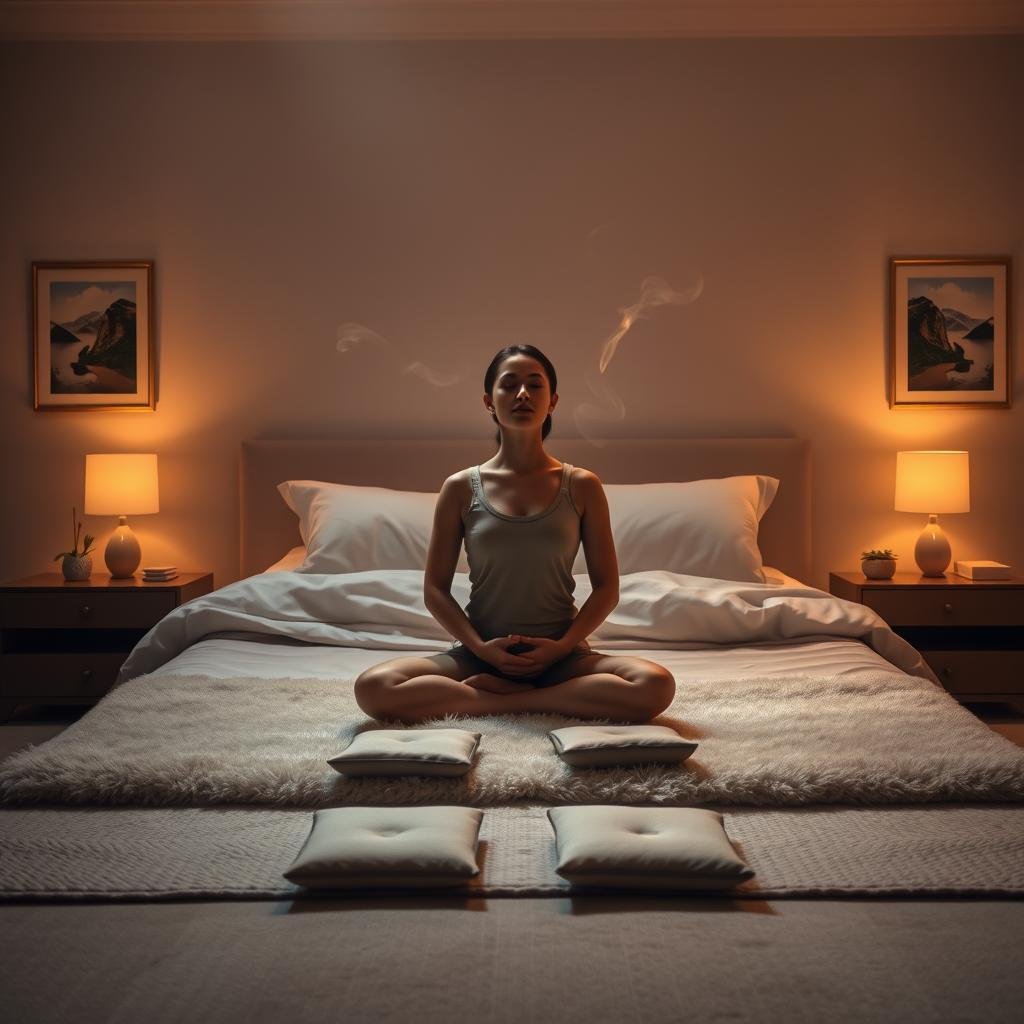
Using mindfulness before bed improves our health greatly. As night comes, meditating helps us relax and get ready to sleep. This guide offers tips on how to meditate in the evening to calm our minds and get a good night’s rest.
Evening Meditation Practices
Mindfulness at night has many benefits. It relaxes us and helps us connect with our inner selves. Here are some techniques to add to our bedtime routine:
- Deep Breathing: Slow, deep breaths can calm our mind and relax our body.
- Guided Visualization: Picturing a calm place can make us feel peaceful and lower stress.
- Body Scan: Paying attention to each body part helps release stress.
- Mindful Journaling: Writing our thoughts down can clear our mind, helping us forget daily stress.
By doing these activities, we can sleep better. Making a habit of mindfulness and meditation before bed leads to better sleep and easier wake-ups.
Gradual Adjustment of Wake-Up Time
Adapting to a natural wake-up routine is about planning and patience. Starting gradually helps our bodies get used to new wake times. We can do this by setting our alarm clock 15 to 30 minutes earlier or later than usual, aiming for our target time.
Here are easy sleep transition tips:
- Incremental Changes: Small weekly adjustments let our bodies adapt without too much stress.
- Consistent Weekends: Keeping a similar wake-up time on weekends helps stick to the new schedule.
- Bedtime Rituals: Having calming bedtime rituals makes it easier to wake up in the morning.
- Limit Stimulants: Cut down on caffeine and other stimulants in the evening for better sleep.
- Morning Exposure: Getting natural light in the morning helps reset our internal clock.
Sticking to these strategies can improve our mornings. Over time, we’ll see benefits in our well-being and daily energy.
Exercise and Its Impact on Sleep Patterns
Doing regular exercise is key to getting good sleep. Studies show that daily exercise boosts our health and improves our sleep. It’s important to know when to exercise to sleep better.
Best Times for Physical Activity
We need to think about when we exercise to sleep well. Here are some tips on how the time of day affects our sleep:
- Morning Workouts: Morning exercise gives us energy all day. It helps set a good rhythm, leading to better sleep at night.
- Afternoon Sessions: Exercising in the afternoon reduces stress and increases focus. It makes it easier to relax at night.
- Evening Exercises: Exercising in the evening should be low-intensity, like yoga. This can help us relax and get ready for sleep.
Knowing how exercise affects sleep helps us use it to improve our sleep quality. By planning our exercise times, we can enjoy deeper sleep and wake up feeling refreshed.
User Experiences: Success Stories of Waking Up Naturally
Many people have changed their lives by waking up naturally. They’ve found that listening to their body’s natural clock makes mornings peaceful. These success stories inspire us.
A busy professional tried to wake up without an alarm. At first, they struggled with waking up at different times. They missed their alarm clock. But, they didn’t give up. They changed their sleep setting and routine. Soon, they woke up feeling fresh each morning.
A story from a stay-at-home parent tells us another success. They let morning light in and practiced mindfulness at night. These small steps greatly improved their sleep and energy. Waking up without an alarm brought peace to their whole family.
The stories teach us something important. With the right sleep setting, a regular bedtime, and willingness to change, great results are possible. Even though each person’s journey is different, everyone can enjoy waking up naturally. It takes determination, but the rewards are worth it.
Conclusion
Waking up naturally has great benefits, as we’ve seen. It changes how we start our day for the better. By syncing with our body’s clock, mornings become smoother. This improves both our mood and health. Using natural light and a calm sleep space helps our sleep and mornings.
Adopting these methods makes waking up easier. It leads to a life that’s good for us and the planet. By following these steps, mornings are refreshing and full of energy. We’re set to face our day’s challenges. Making these changes helps us enjoy life more, with better work performance and happiness.
Leave a Comment