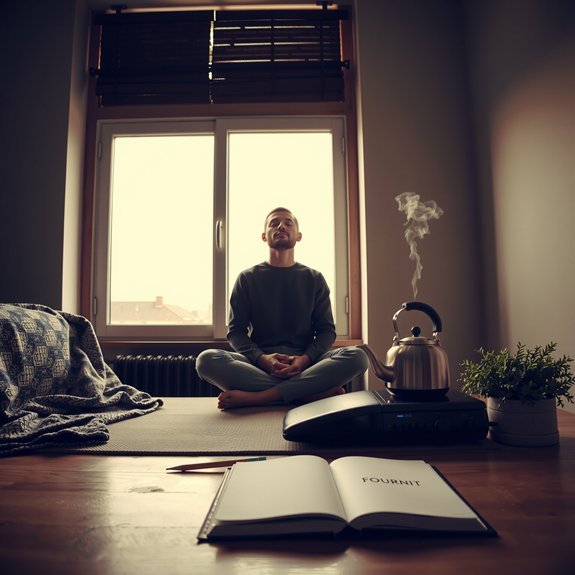

You can build morning calm in five minutes with small, proven steps. Start by waking gently, placing fingers on your chest, and taking two grounding breaths. Set a one-word intention, spend one minute on a breathing anchor, scan your body, then finish with two mindful sips. I’ll give a clear, practical step‑by‑step you can use tomorrow—so stay with me.
Wake With Intention

When you wake, pause for a moment before diving into your day. Let a gentle alarm ease you out of sleep rather than jolt you; research shows softer sounds reduce stress hormones and improve mood. Sit up, press fingertips to your chest, and scan your body for tension—this simple cue increases interoceptive awareness and calms the nervous system. Set an intention: a single, achievable word or phrase that guides actions. Jot a brief gratitude note—one line about something reliable that grounds you—to shift attention toward positive appraisal. Keep it short: two to three breaths between steps, eyes open, posture relaxed. You’ll create a predictable, low-effort ritual that primes attention, reduces reactivity, and supports a calmer start. Practice this daily and notice small changes soon.
One-Minute Breathing Anchor

You can build on that gentle start with a one-minute breathing anchor that steadies attention and lowers stress hormones. Sit or stand comfortably, soften your gaze, and set a timer for 60 seconds. Breathe naturally, then shift to counted inhales—inhale for four, exhale for four—only if that feels okay. If numbers distract, simply notice the in-breath and out-breath. Use a tactile focus: rest a hand on your belly or feel air at your nostrils to ground awareness. When thoughts pull you away, label them briefly (“thinking”) and return to the breath without judgment. Clinical studies show short paced breathing reduces anxiety markers; do this daily to create a reliable morning reset that’s simple, quick, and kind to yourself. It only takes sixty seconds more.
Simple Body Scan

Because the body often stores stress, a short, systematic scan helps you notice tension and settle into the present without needing to fix anything. Sit or lie comfortably, close your eyes, and take two steady breaths. Bring attention to your feet, ankles, calves, knees, thighs, hips, belly, chest, hands, arms, shoulders, neck, and face, pausing briefly at each spot. Notice sensations—warmth, tightness, tingling—without judgment. Use gentle progressive relaxation by inviting release on the exhale, but don’t force it. Think of the practice as quick sensation mapping: chart where energy or burden sits today. Ten breath-sized moments can reduce reactivity and increase clarity. Finish by widening awareness to the whole body, carrying calm into your morning. You’ll return to tasks with steadier focus and compassion.
Mindful Sipping: Coffee or Tea
Savoring your morning cup can turn a routine into a short mindfulness practice that steadies attention and lowers stress. When you lift your mug, pause for a breath and notice aroma, weight, and warmth—this small savoring ritual anchors you to the present. Take slow sips, noting how the liquid moves, the taste shifts, and how temperature awareness informs comfort and alertness. Research shows brief mindful moments can reduce anxiety and improve focus, so keep each sip deliberate rather than hurried. If your mind wanders, gently bring attention back to sensory details without judgment. Aim for two to five mindful sips as a compact practice you can repeat daily; it’s accessible, calming, and supports clearer mornings. You’ll notice steadier breathing and a softer start today.
Set a Single-Point Intention
After those mindful sips, pick one clear intention for your morning—one concise aim that anchors your attention and shapes your behavior. Choose a single-point intention that reflects what matters most; research shows focused goals reduce decision fatigue and improve follow-through. Ask yourself: what will clarify values for me today? It might be listening fully, approaching work calmly, or moving your body. State it simply—“I’ll prioritize presence” or “I’ll focus on one task.” Repeat it quietly as you breathe. Keep it realistic and linked to a daily priority so it’s actionable. When distractions come, return to that compact phrase to reorient. Over time this habit strengthens self-regulation, making mornings steadier and more purpose-driven. Do this consistently, and you’ll notice calmer mornings, clearer decision-making, and overall benefits.






Leave a Comment