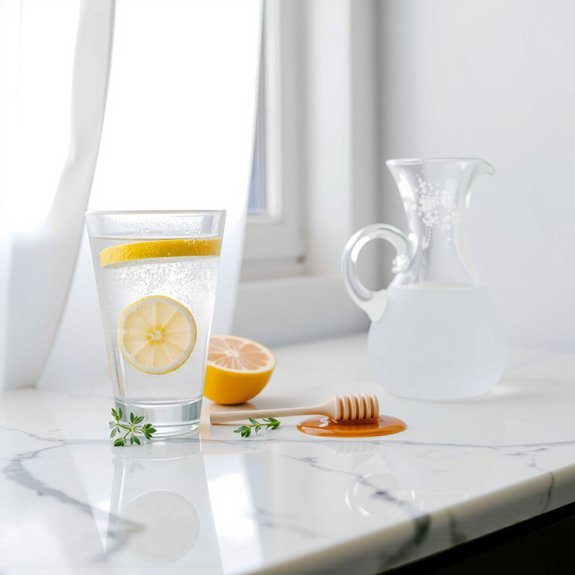

You can use lemon water to support hydration, digestion, and vitamin C intake, and small, practical habits make it easy to keep up. Use about half a lemon per 12–16 oz of water, sip warm in the morning or before activity, and protect your teeth—there are a few tweaks that boost benefits…
Why Lemon Water Can Support Your Health

Adding lemon to water can support your health by boosting hydration and delivering a small, concentrated dose of vitamin C and antioxidants that help immune function and combat oxidative stress. You’ll get modest immune support from vitamin C’s role in white blood cell function and skin barrier integrity, which complements—not replaces—vaccination and medical care. The citric acid can aid taste and increase fluid intake, helping daily hydration goals. Polyphenols in lemon provide an antioxidant boost that may reduce cellular damage when combined with a balanced diet rich in fruits and vegetables. Practical steps: squeeze half a lemon per glass, avoid excess sugar, rinse your mouth afterward to protect enamel, and discuss any supplements or medications with your clinician. Monitor symptoms and adjust intake accordingly.
Best Time of Day to Drink Lemon Water

You might prefer drinking lemon water at specific times to boost hydration, support digestion, or avoid discomfort, since timing can affect how you experience its benefits and risks. For most people, the best window is morning rituals: a glass after waking helps rehydrate after sleep and can gently stimulate gastric activity, improving tolerance to a meal. If you have reflux or sensitive teeth, wait until after breakfast or dilute more to reduce irritation. During work schedule peaks, sip regularly to maintain hydration and mental focus without relying on caffeine. Before exercise it’s useful for hydration; avoid large amounts right before lying down. Tailor timing to how your body responds, monitor symptoms, and adjust based on personal routines and clinical advice and your health goals.
How Much Lemon to Use and Serving Sizes
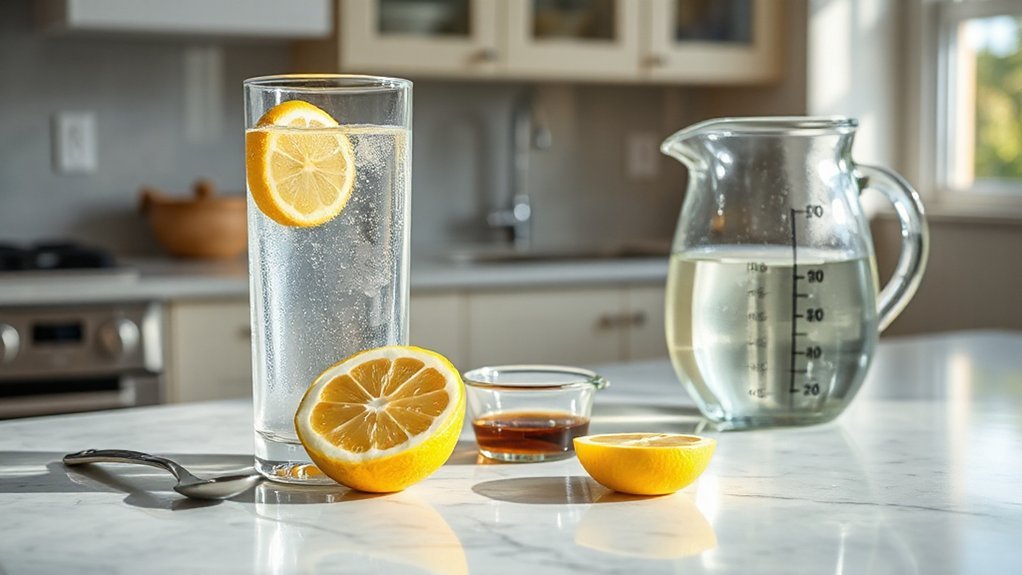
One to two tablespoons (15–30 mL) of fresh lemon juice per 8 ounces (240 mL) of water is a practical starting point. You can scale up using simple juice ratios: for a 16-ounce bottle, use 2–4 tablespoons (30–60 mL); for 32-ounce pitchers, use 4–8 tablespoons (60–120 mL). Tracking ounce equivalents helps you maintain consistent acidity and flavor. If you have dental sensitivity or acid reflux, reduce citrus and sip through a straw or dilute further. Aim for total daily servings of one to three glasses, depending on tolerance and fluid goals. Measure juice with a spoon or small cup to keep portions precise. Adjust to taste and clinical needs, and check with your healthcare provider if you have medical concerns. Always seek personalized guidance.
Hot, Warm, or Cold: Temperature Effects
Temperature alters the effects of lemon water, so pick the temperature that matches your goals. If you want alertness or a slight metabolic boost, cold lemon water can help, especially before a workout. If you prefer comfort and easier digestion, go warm; very hot water can enhance perceived hydration but you should avoid temperatures that risk scalding.
Cold: Metabolism and Alertness
Although cold lemon water won’t produce meaningful long-term weight loss, it does trigger a small, short-lived rise in energy expenditure and sympathetic activity that can make you feel more awake. Sipping cold citrus engages neural activation and can briefly stimulate brown fat thermogenesis, so you may notice a mild alertness and slight metabolic uptick. Use it strategically: drink 200–300 ml in the morning or before light activity to get a perceptible boost without discomfort. Stay mindful if you have Raynaud’s or cardiovascular issues; cold exposure raises heart rate and blood pressure transiently. Don’t expect dramatic calorie burn — treat cold lemon water as a practical wake-up tool that complements sleep, movement, and a balanced diet. Keep servings modest and consistent to avoid throat sensitivity.
Warm: Digestion and Comfort
Sipping warm lemon water can help settle your stomach and support comfortable digestion by promoting gentle gastric motility and easing oesophageal comfort when you drink it slowly. You’ll often notice reduced bloating and cramping after a small cup pre-meal; research suggests warmth aids gastric emptying and smooth muscle relaxation. Aim for 1 cup at a temperature you find soothing, and practise Mindful sipping to avoid swallowing air and to tune into fullness cues. Pair with light breathing or a brief postural pause to enhance vagal tone. Consider an Aromatherapy pairing—mild citrus or ginger scent—to reinforce relaxation and nausea relief. If you have reflux or severe symptoms, check with your clinician before making it routine. Start gently and adjust based on how your body responds.
Hot: Hydration and Safety
Keeping hot lemon water at a safe, drinkable temperature protects hydration goals and prevents injury: very hot beverages can cause burns, reduce how much you’ll drink, and—at sustained temperatures above about 65°C—have been linked by IARC to increased esophageal cancer risk. You should let boiled water cool for several minutes, test a few drops on your wrist, and aim for comfortably warm rather than scalding.
For Scald Prevention, use a thermometer or wait until steam subsides; pour slowly and avoid overfilling. Prioritize Container Safety: choose insulated mugs with secure lids, avoid cracked glass, and don’t sip from thin-walled cups. These steps help you stay hydrated, protect mucosa, and maintain a sustainable lemon-water habit without unnecessary risk. Adjust temperature to personal tolerance and medical advice.
How to Protect Your Teeth and Stomach
If you drink lemon water regularly, take concrete steps to protect your enamel and stomach lining. Sip through a Use Straw to limit acid contact with teeth, and avoid swishing. Drink it at room temperature rather than hot to reduce enamel stress and reflux risk. Don’t brush immediately after drinking; wait 30–60 minutes, then brush gently with a soft brush and fluoride toothpaste. After drinking, Rinse Mouth with plain water to dilute acid and encourage saliva buffering. If you have frequent heartburn or gastric sensitivity, cut back or consult a clinician; chronic acid exposure can aggravate gastritis. Maintain routine dental checkups and tell your dentist about regular lemon-water habits so you get personalized preventive advice. Small changes preserve benefits while minimizing dental and gastric.
Ingredients and Tweaks to Boost Absorption
To improve nutrient uptake from lemon water, you can add a small amount of healthy fat like olive oil or a few crushed nuts—fat helps absorption of fat‑soluble compounds. Add a pinch of black pepper, since piperine has been shown to enhance uptake of certain phytochemicals. Use warm (not hot) water to help release more soluble compounds and support digestion while protecting your teeth.
Add Healthy Fats
Because some bioactive compounds in lemon (like certain polyphenols and oil-soluble compounds in the zest) are better absorbed when consumed with fat, add a small amount of healthy fat to your lemon water to boost uptake without overdoing calories. You’ll get subtle texture enhancement and mouthfeel improvement while aiding fat-soluble nutrient uptake. Try practical, low-calorie options and adjust to taste. Keep portions small — a teaspoon — and choose unsaturated, unrefined sources.
- 1 tsp extra-virgin olive oil for antioxidants and smoothness
- 1 tsp MCT or coconut oil for quick energy and mild flavor
- A few drops of avocado oil for neutral taste and creaminess
- A spoonful of yogurt or kefir for probiotics and body
- A sprinkle of ground chia for omega-3s and gelled texture
Add Black Pepper
When you add a tiny pinch of freshly ground black pepper to your lemon water, piperine—the active component—can boost absorption of certain plant compounds by slowing metabolic breakdown and enhancing intestinal uptake, so you get more benefit from oil‑soluble polyphenols in the zest and any fat‑paired ingredients. Use freshly ground pepper and start very small to avoid irritation. Evidence supports piperine increasing bioavailability of oil‑soluble polyphenols; pairing with a tiny fat can further help. Honor cultural traditions that blend pepper and citrus—it’s practical and boosts enjoyment. The aroma profile increases palatability and adherence. If you take medications, check with your clinician because piperine can alter drug metabolism. Start at a pinch per cup daily.
| Benefit | Tip |
|---|---|
| Absorption | Pinch per cup |
| Flavor | Enhances aroma profile |
Use Warm Water
How warm should your lemon water be to get the most from it? Aim for warm, not hot—about 100–110°F (38–43°C). That temperature helps dissolve juice, eases digestion, and preserves vitamin C better than boiling water, according to food chemistry. You’ll want to keep in mind container choice: glass or stainless steel keeps flavor and avoids leaching.
Practical tips:
- Start with lukewarm filtered water, then squeeze fresh lemon.
- Avoid boiling water that degrades nutrients and burns the zest.
- Use a glass or stainless-steel bottle to maintain purity.
- Follow gentle cultural rituals like sipping slowly to aid digestion.
- Adjust temperature to comfort, especially if you have reflux or sensitivity.
Measure with a thermometer for consistency. Consult a clinician for personalized advice if needed.
Simple Recipes and Prep for a Daily Habit
Starting a simple lemon-water routine can make it easier for you to stay hydrated and get a small, regular dose of vitamin C without extra calories. Keep proportions simple: juice half a lemon per 12 to 16 ounces of water, adjust to taste. For mornings, make a batch prep by juicing several lemons and storing the juice in an airtight container in the fridge for up to three days; mix with water when ready. Add optional flavors like a few mint leaves or thin ginger slices for variety without sugar. Use insulated, portable bottles to maintain temperature and protect enamel by drinking through a straw if you’re sensitive. Track intake—one to two servings daily is practical—and integrate into routines like morning or post-workout hydration.
Who Should Be Cautious or Consult a Doctor
If you have reflux, frequent heartburn, or a history of erosive tooth wear, be cautious and talk with your clinician before making lemon water a daily habit: acidic beverages can worsen GERD symptoms and contribute to enamel erosion over time, and your dentist or doctor can advise on strategies (like diluting more, using a straw, or timing intake). Also consult if you have pregnancy concerns, take regular medications, or have kidney stone risk; your clinician can assess medication interactions and safety. Use practical prompts to guide discussion and protect oral health:
- Pregnant or planning pregnancy: check safe acidity and hydration.
- On regular meds: ask about medication interactions.
- Frequent heartburn or GERD.
- History of enamel erosion or sensitive teeth.
- Recurrent kidney stones or concerns.





Leave a Comment