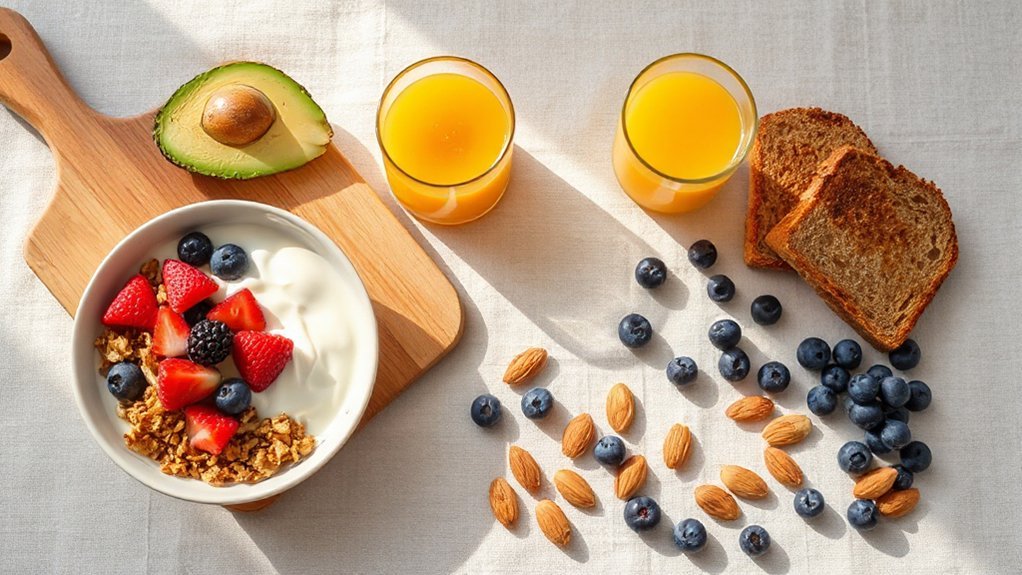

Build your breakfast around three powerhouses: protein (15–25g keeps you full), fiber (whole grains like oats), and healthy fats (nuts, avocado, seeds). Try scrambled eggs with whole-wheat toast and avocado, Greek yogurt oatmeal with nut butter, or batch-cooked egg muffins you’ll grab all week. Freezer-friendly burritos, pancakes, and casseroles mean you’re never stuck choosing between hungry and late. Even five-minute overnight oats or avocado toast with a hard-boiled egg prevents that brutal mid-morning crash. The real magic? Mixing and matching these combos keeps breakfast interesting while your energy stays steady.
Key Takeaways
- Include 15–25 g protein at breakfast using eggs, Greek yogurt, or nut butter for sustained energy and fullness.
- Combine whole grains with produce and healthy fats to balance blood sugar, fiber intake, and nutrient absorption.
- Prep egg muffins, frittatas, or burritos in batches to create freezer-friendly breakfasts ready in minutes.
- Mix overnight oats or smoothies the night before with protein powder or Greek yogurt for quick mornings.
- Pair protein with whole grain and produce—such as eggs with toast and avocado—to prevent mid-morning crashes.
Building a Balanced Breakfast: Protein, Fiber & Healthy Fats
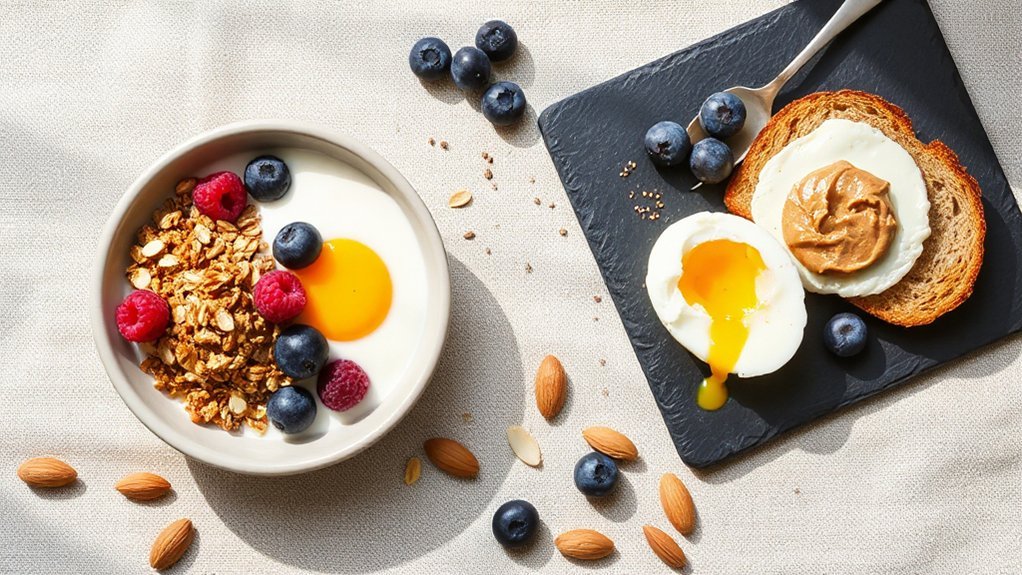
Nailing a truly satisfying breakfast comes down to three non-negotiable players: protein, fiber, and healthy fats. You’ve got this.
Aim for 15–25 g of protein at breakfast—think scrambled eggs, Greek yogurt, or cottage cheese. Why? Protein keeps you fuller longer and stabilizes your energy. Next, grab a fiber-rich whole grain like oats or whole-wheat toast. Soluble fiber controls blood sugar and crushes cravings. Then add produce: spinach, berries, avocado. A spinach-avocado smoothie alone delivers ~8 g of fiber plus micronutrients your body craves.
Don’t forget healthy fats—nuts, nut butter, seeds, avocado. They extend satisfaction and help absorb fat-soluble vitamins. Build every breakfast with all three components working together. Scrambled eggs with whole-grain toast and avocado? Perfect. Greek yogurt oatmeal topped with nut butter? Also perfect. Stack these elements, and you’ll feel genuinely nourished, not hungry an hour later.
High-Protein Breakfasts: Eggs, Egg Muffins & Casseroles

When you’re serious about morning protein, egg-based breakfasts—whether fluffy muffins, hearty casseroles, or one-pan frittatas—deliver 16–25 grams per serving and actually taste great. You’ll love that these dishes work double duty: they’re freezer-friendly make-aheads that pop straight from the pan to your plate, and they adapt to whatever proteins and veggies you’ve got on hand. The real win here’s the flexibility and convenience—bake them once, eat them all week, and skip the scrambled-egg routine entirely.
Protein-Packed Egg Muffins
If you’re tired of scrambled eggs every morning, egg muffins are your new best friend—and they’re ridiculously simple to make. You just whisk eggs with cottage cheese, pour into a silicone muffin pan, add savory mix-ins like cooked sausage or shredded chicken, then bake. Three muffins deliver roughly 18–22 grams of protein, making them genuinely filling without the fuss.
Want more flavor? Toss in smoked salmon, cooked veggies, or whatever sounds good. They’re naturally gluten-free and grain-free, too. The real magic? Batch them on Sunday, refrigerate up to five days, or freeze for weeks. Grab three, microwave for 60 seconds, and you’re out the door with a legitimate breakfast that actually sticks with you.
Baked Casserole Options
Here’s the beauty: you prep once, eat all week. Cover, refrigerate up to five days, freeze longer. Reheat in the microwave or oven whenever hunger hits. Want to customize? Swap dairy for almond milk, use turkey sausage, add shredded chicken. These casseroles adapt to whatever your body needs, making weekday mornings genuinely easier and actually delicious.
Make-Ahead Meal Prep
Batch-cooking egg muffins, frittatas, and casseroles takes the guesswork—and the morning panic—right out of breakfast. You’ll store prepped portions refrigerated up to five days, or freeze them for months of grab-and-reheat convenience. The beauty? They’re adaptable. Fold in cottage cheese, Greek yogurt, shredded chicken, or turkey sausage to boost protein. Swap dairy for dairy-free milk if you’re dodging lactose or going Whole30. Most varieties thaw quickly in the microwave or warm in a 350°F oven—add a couple minutes if you prefer jammy yolks fully set. Silicone muffin pans make removal effortless, so you’re actually sticking with this habit. Once you’ve made your first batch, you’ll wonder why you ever stressed about Monday morning breakfast.
Freezer-Friendly Make-Aheads: Burritos, Pancakes & Egg Bakes
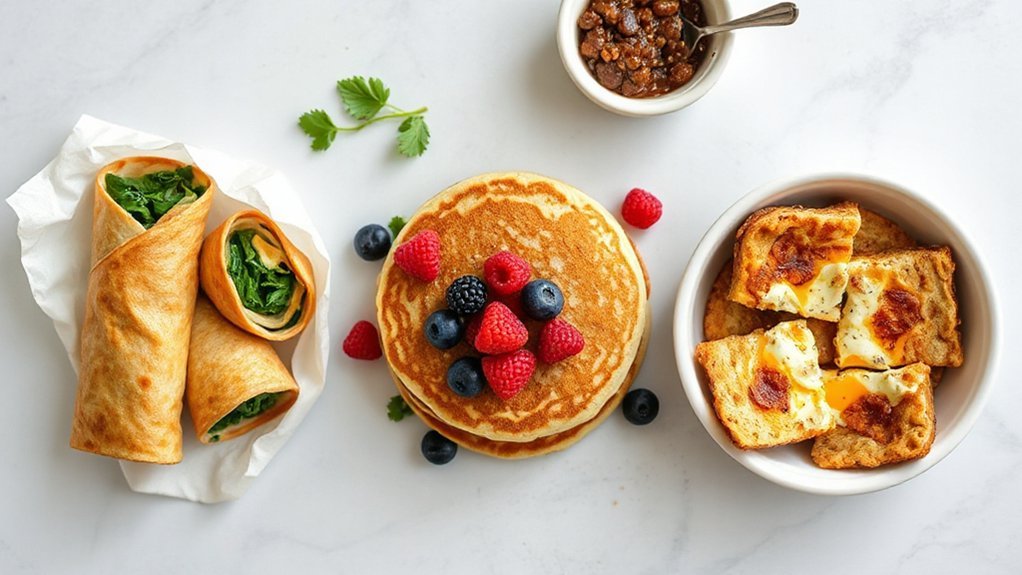
Making breakfast ahead and stashing it in your freezer is one of the smartest moves you can pull during a hectic week—honestly, it’s the difference between grabbing a nutritious 21-gram-protein burrito and defaulting to whatever’s quickest at 6 a.m.
Prep breakfast ahead and freeze it—the difference between a 21-gram protein burrito and whatever’s fastest at 6 a.m.
Start with breakfast burritos: wrap eggs, sausage or beans, veggies, and cheese in foil. They’ll last months frozen and reheat in one to two minutes flat. Next, batch-cook pancakes or waffles, stack them with parchment between layers. Grab straight from frozen and toast for 30 to 90 seconds. Want protein? Mix in powder or Greek yogurt for 17 to 18 grams per serving.
Then there’s egg muffins—cottage cheese, sausage, eggs crammed into a tin. Three pieces? That’s 18 to 22 grams of protein, ready in under two minutes.
Here’s the real move: dedicate one hour, assemble 6 to 12 portions, label everything with dates. Your future self will thank you when mornings aren’t a scramble.
5-Minute Breakfasts: Overnight Oats, Smoothies & Toast
Skipping the cook-and-wait routine? You’ve got options. Overnight oats are your secret weapon—mix oats with milk or yogurt the night before, add peanut butter, banana, or collagen powder, and grab it cold in the morning. Craving savory? Top chilled oats with a hard-boiled egg, avocado, and sriracha for a protein-packed, non-sweet start that actually satisfies.
Smoothies pack serious nutrition fast. Prep frozen smoothie packs by portioning fruit, greens, and add-ins ahead—blend when you’re ready. A spinach-avocado smoothie delivers roughly 18 grams of protein and 8 grams of fiber; toss in Greek yogurt, protein powder, or hemp seeds to boost staying power without extra effort.
Toast? Minute-friendly and underrated. Whole-grain bread topped with mashed avocado, a prepped hard-boiled egg, cottage cheese, or nut butter creates a balanced bite you’ll actually look forward to. Real fuel, real quick.
Seasonal Quick Breads & Waffles: Pumpkin to Blueberry
When you’re ready to level up beyond grab-and-go breakfasts, seasonal quick breads and waffles step in—they’re still fast, but they feel like you actually cooked something. Here’s the beauty: you can make them with whole wheat or oat flour for extra fiber, then freeze double batches for those hectic mornings. Pumpkin and banana varieties shine with pecans, dried cranberries, or pepitas mixed in for satisfying crunch. Blueberry breads? Use frozen wild berries so you’re never without peak-summer flavor.
The real staying power comes when you top these with protein-rich additions—Greek yogurt, nut butter, or go straight for protein waffles packing 17 grams per serving. Toast frozen slices in seconds, grab your toppings, and you’ve got breakfast that tastes intentional without the stress. That’s the sweet spot: convenient but nourishing.
Best Breakfast Combinations: What Works Together
The magic of a satisfying breakfast comes down to three simple components working together—protein, whole grain, and produce—and honestly, once you nail this formula, you’ll stop feeling hungry an hour later. Pair eggs with whole-wheat toast and fruit? You’ve got yourself a powerhouse meal with steady blood sugar and serious staying power. Try Greek yogurt bowls topped with granola and berries, or blend up a smoothie with yogurt and hemp seeds, then grab toast alongside. For hectic mornings, grab an egg muffin (packed with 18–22 grams of protein) and a portable fruit or whole-grain bar. The key? Don’t skip the protein—it’s your secret weapon against mid-morning crashes. Mix and match these combos based on your schedule, but always hit all three categories. You’ll feel fuller, sharper, and genuinely satisfied until lunch.
Frequently Asked Questions
What Is the Healthiest Thing to Make for Breakfast?
You’ll want to combine three things: lean protein (eggs, Greek yogurt, cottage cheese), whole grains (oats, whole-wheat toast), and produce (berries, spinach, tomatoes). Aim for roughly 20–30g protein and 5–10g fiber. Try scrambled eggs with whole-grain toast and avocado, or overnight oats with chia seeds and fruit. Make batches ahead on Sundays—egg muffins, frozen burritos—so you’re actually eating healthy when mornings get hectic.
What Are the Top 5 Healthiest Breakfasts?
You’ve got five powerhouses to choose from. First, whole-grain oats—fill you up with fiber. Second, egg dishes like frittatas or cottage-cheese bites pack 18–25g protein. Third, Greek yogurt bowls with granola and fruit nail calcium and satiety. Fourth, green smoothies blend spinach, avocado, yogurt for 18g protein in seconds. Fifth, savory sweet potatoes topped with eggs or nut butter deliver sustained energy through complex carbs and protein together.
So
You’ve got the blueprint now—so why not start tomorrow? Whether you’re prepping egg muffins Sunday or grabbing overnight oats Wednesday, you’re not just eating breakfast, you’re building momentum for your whole day. Pick one strategy, nail it, then layer in another. Your future self, well-fed and energized, will thank you. Breakfast isn’t boring when you’re in control.







Leave a Comment