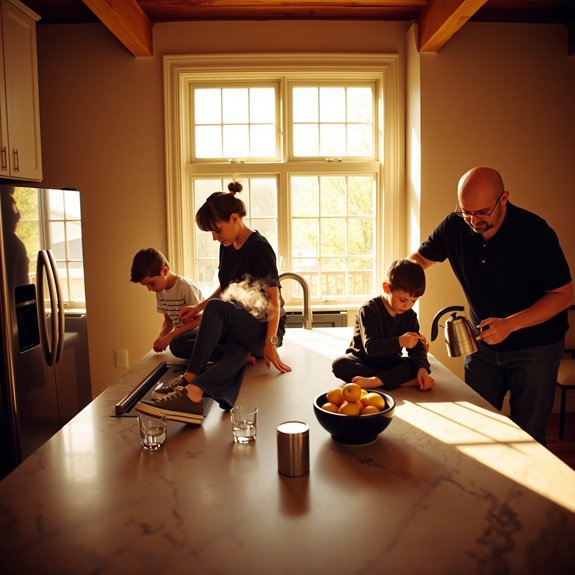

You know mornings can feel chaotic, and small, consistent rituals really do reduce stress. Start with two simple anchors—hydration and a brief device-free check-in—then prep outfits and breakfasts the night before. These evidence-backed steps cut friction and boost calm. Keep going and you’ll get practical, easy-to-apply strategies to transform your family’s mornings starting tonight.
Why a Morning Routine Matters

Because your morning sets the tone for the day, a simple, consistent routine can cut stress, sharpen focus, and improve mood—research links predictable habits to better sleep, lower cortisol, and higher productivity. When you set clear, repeatable steps, you protect cognitive performance by reducing decision fatigue and freeing mental bandwidth for tasks that matter. You also facilitate stress reduction for everyone at home: kids mirror calm, adults stay grounded, and conflicts drop. Start with two reliable anchors—like hydration and a brief check-in—to build momentum; keep expectations realistic and communicate roles so shifts stay smooth. Track what helps for a week, then tweak one element at a time. Small, evidence-based adjustments sustain benefits without overwhelming your family. You’ll notice clearer mornings and steadier days soon.
Designing Realistic Wake-Up Plans

When you set a wake-up plan, match it to real sleep needs and daily demands so mornings feel doable, not punishing. Start by evaluating family chronotypes: note who’s a morning lark or evening owl, then stagger wake times so school and work prep overlap without chaos. Aim for consistency—small shifts (15 minutes) reduce resistance and preserve sleep debt recovery. Use gentle cues: open curtains, schedule 10–20 minutes of bright light exposure or targeted light therapy for teens who resist early rising. Prepare the night before—clothes, backpacks, quick checklists, to shorten decision fatigue. Monitor outcomes for two weeks and adjust. If kids consistently struggle despite changes, consult a pediatric sleep specialist to rule out sleep disorders and tailor the plan and include gradual rewards weekly.
Quick and Nutritious Breakfast Ideas

How can you give your family fast breakfasts that actually fuel their morning? Start by prepping nutrient-dense options the night before: Overnight oats with milk or yogurt, chia, fruit and a sprinkle of nuts deliver fiber, protein and satiety. Batch-cook egg muffins or whole-grain pancakes to reheat. Keep a smoothie station: pre-washed spinach, frozen fruit, protein powder and milk let you blend balanced Smoothie bowls in minutes—add granola and seeds for texture and extra nutrients. Prioritize protein and fiber to stabilize energy; aim for 15–20 grams protein per serving when possible. Use simple hacks—portion containers, labeled jars, quick-to-grab fruit—to reduce decision fatigue. These small routines make mornings calmer and help kids and adults start fueled and focused. Adjust portions and flavors to suit preferences.
Age-Appropriate Morning Responsibilities
After you’ve simplified morning meals, assigning age-appropriate responsibilities helps kids gain independence and keeps your routine steady. Start by matching tasks to developmental stages: toddlers tidy toys and pull on socks, preschoolers make simple beds and pack backpacks, school-age kids handle teeth brushing, breakfast dishes, and selecting outfits. Use chore charts with clear icons, time limits, and small rewards to build consistency; studies show visual routines increase compliance. Teach personal hygiene step-by-step—demonstrate, practice, and praise progress. Rotate responsibilities weekly so skills generalize and avoid burnout. If a child struggles, break tasks into 2–3 steps and offer gentle prompts rather than doing it for them. Track successes and adjust expectations as skills improve; you’ll foster competence and calmer mornings. Celebrate small wins to reinforce habits.
Time-Saving Prep the Night Before
Because a few deliberate steps the night before cut morning chaos, spend 15–20 minutes prepping to save much more time and stress tomorrow: lay out outfits and shoes, pack lunches and snacks (or at least prep components), double-check backpacks and permission slips, set out breakfast items like cereal or pre-portioned oats, charge devices, and place keys and bags by the door. Then create a short checklist on your phone or a sticky note so you and older kids follow the same routine; research shows checklists reduce errors and stress. Tackle document gathering now—forms, sign-ups, or receipts in a labeled folder. Make battery charging a habit: plug chargers nightly and stash spares. Review the list briefly before bed to make sure nothing is missed and prioritize sleep.
Strategies for Calmer Transitions
When mornings feel rushed, use brief, consistent cues and small rituals to signal upcoming changes so your kids know what to expect. Start by naming shifts with predictable phrases — “five-minute clean-up,” “teeth time” — and set a timer so kids see concrete progress. Use calm modeling: speak softly, move deliberately, and show the sequence once before asking them to follow. Offer one simple choice to increase cooperation, like choosing socks or breakfast, and praise attempts rather than perfection. If a tantrum escalates, stay steady, use a short grounding phrase, and return to the routine when everyone’s calm. Track what works for a week, adjust cues, and keep rituals under two minutes to build reliable, less stressful shifts. Celebrate small wins to reinforce the new habit.
Getting Everyone Out the Door on Time
Shifting those short, predictable cues into a focused exit plan makes mornings less frantic and more reliable. You can create a concise exit checklist that everyone follows: time to dress, backpacks packed, shoes on, and a single spot for keys and devices. Assign roles so tasks overlap and nobody repeats steps. Test one week and adjust timing; research shows routine practice reduces stress and lateness. Prepare clothes, lunches, and permission slips the night before to shave minutes off your schedule. Use simple traffic planning—check routes and leave buffer time for delays or school drop-off, but avoid over-scheduling. Communicate the plan clearly each evening and reinforce it with gentle reminders in the morning so departures become consistent and calm. Celebrate small wins to build momentum.
Building Connection in the Morning
Even on rushed mornings, you can build connection with a brief check-in where each person shares one feeling or one plan for the day. Research shows small, consistent rituals boost family cohesion, so keep the check-in to a minute or two to make it sustainable. Pair that with a shared quiet moment—a sip of tea together or a two-minute stretch—and you’ll create calm that carries everyone into the day.
Morning Check-In
Regularly spending two to five focused minutes each morning to check in with your child builds connection and lowers anxiety, and research shows predictable, brief routines support emotional regulation and readiness for the day. Use a simple mood meter—ask them to point to happy, sad, worried, or energized—so you can mirror feelings and name emotions. Follow with a quick goal check: what’s one thing they want to do well today? Offer a concise validation, a calming breath, and one practical strategy (pack lunch together, set a reminder) tailored to that goal. If they’re upset, prioritize listening and offer a small coping plan. Consistency matters: short, predictable check-ins reinforce trust and help your child enter the day grounded. Do it daily for measurable emotional benefits.
Shared Quiet Moments
After a quick morning check-in, carve out a two- to five-minute shared quiet moment to strengthen connection and lower stress. Sit together, keep devices away, and set an intention: calm, presence, or a simple breath rhythm. Try a sunrise reading—one short poem or a paragraph—to give everyone a gentle focus. Follow with a gratitude pause where each person names one small thing they’re thankful for; research links brief gratitude practices to improved mood and family cohesion. If kids are young, offer prompts: “Who made you smile?” or “What are you curious about today?” Keep it consistent by adding it to your routine chart or alarm. You don’t need perfection—regularity matters more than length. Over weeks you’ll notice calmer mornings and more connected family interactions.
Handling Special Circumstances and Setbacks
When unexpected events—like illness, travel, or a missed bus—disrupt your usual morning, stay calm and focus on a few high-impact actions: prioritize safety and nourishment, communicate changes to kids and caregivers, and switch to a simplified checklist that covers essentials (clothing, breakfast, meds, important items). Use pre-made Emergency Plans so you can act quickly—note contact numbers, alternative transportation, and backup childcare. Teach kids simple roles (grab bag, shoes) to reduce decision fatigue. Validate emotions; modeling Emotional Resilience helps kids recover faster. Adjust expectations for the day and record what worked for future tweaks. Keep a concise toolkit: basic supplies, quick breakfasts, medication list. Review plans monthly and practice one short drill so responses become routine rather than stressful. You’ll feel more confident and ready.
Customizing Routines for Different Family Schedules
If your household juggles shift work, staggered school start times, or irregular weekend plans, you can design flexible routines that fit each person’s rhythm without chaos. Start by mapping everyone’s wake, commute, and work or school windows; research shows visual schedules reduce missed tasks. Create core shared anchors—breakfast, 10-minute check-ins—and flexible modules people plug into when they’re available. For shift workers, prioritize sleep-friendly lighting and prepped meals to shorten prep time. In blended families, agree on one consistent handoff routine for mornings when household members rotate. Use simple tools: shared calendar, color-coded checklist, and a five-minute morning debrief. Review weekly, collect feedback, and adjust. Small, evidence-based tweaks will keep mornings calmer and more predictable. Track outcomes daily to see what truly improves family well-being.





Leave a Comment