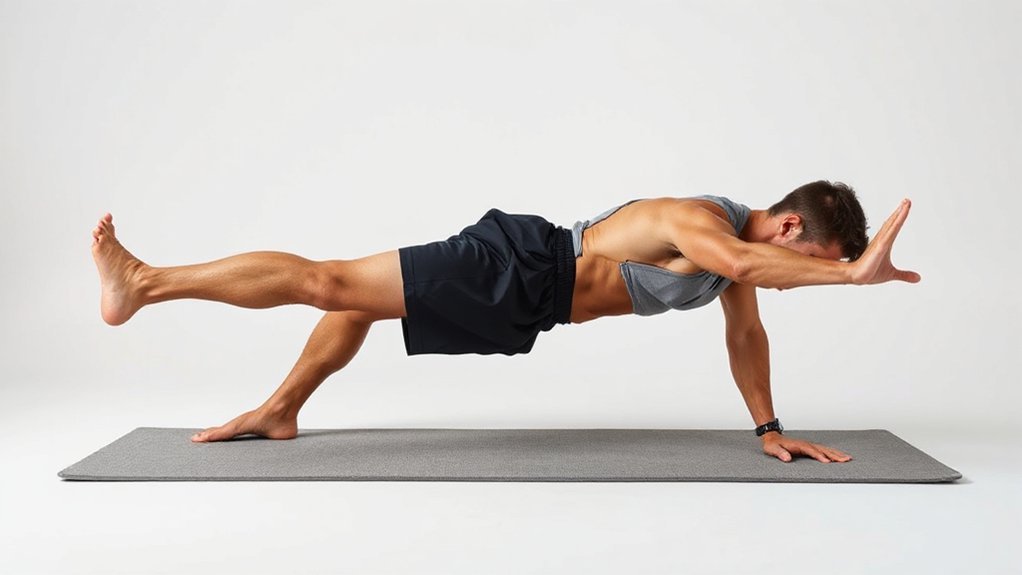

Planks are your secret weapon for building spinal stability and deep core strength—without fancy equipment or long workouts. You’ll engage your transverse abdominis, obliques, and lower-back stabilizers by holding a straight line from head to heels, elbows under shoulders, core braced tight. Start with three sets of 60-second holds, two to four times weekly, and you’ll notice better posture, injury prevention, and endurance. Progress gradually by extending hold time or trying variations like side planks and shoulder taps. The real magic happens when you understand how to access each progression.
Key Takeaways
- Planks build deep core stability and spinal support essential for protecting your back during daily movements and exercise.
- Proper form requires elbows under shoulders, neutral spine alignment, and steady breathing to maximize effectiveness and prevent injury.
- Forearm planks create relatively low lumbar stress (~1600–1800 N) while clinically proven for low-back pain prevention.
- Begin with three sets of 60-second holds, performed 2–4 times weekly after compound lifts for optimal progression.
- Progress gradually by increasing hold time by 5–10 seconds or adding dynamic variations like shoulder taps and side planks.
What Muscles Do Planks Target
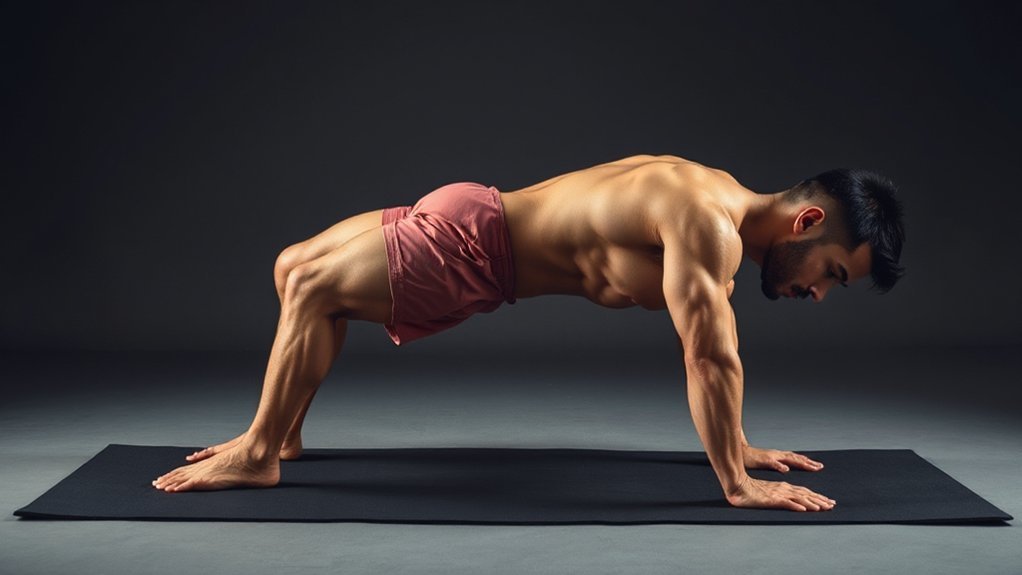
Holding yourself rigid in that horizontal line? You’re activating way more than you’d think. Your deep transverse abdominis fires up first, creating that vital spinal stiffness—your body’s internal corset, basically. Then your rectus abdominis (yes, the six-pack muscle) and obliques kick in hard, resisting your trunk from collapsing or twisting. Your lower back? The erector spinae and stabilizers work isometrically to keep your spine neutral and safe. Meanwhile, your glutes and hamstrings lock your hips down, maintaining that straight body line—they’re not just along for the ride. Don’t forget your shoulders, chest, and arms either. Your deltoids, pecs, and triceps stabilize everything up top, especially when you’re pushing toward a push-up variation. Side planks? They hammer your obliques and gluteus medius differently. Basically, planks demand full-body engagement, making them ridiculously efficient.
How to Perform a Plank With Proper Form
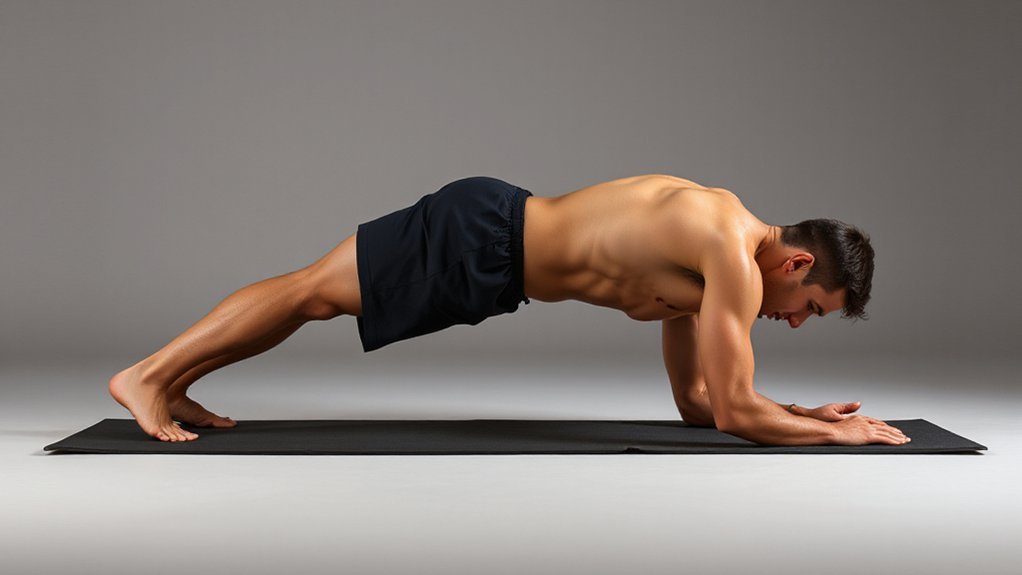
Now that you know what muscles you’re firing up, let’s nail the actual execution—because good intentions don’t build strength, proper form does.
Start in a forearm plank: elbows directly under your shoulders, forearms parallel. Push onto your toes and create one straight line from head to heels. That’s your foundation.
Next, brace hard. Draw your belly button toward your spine—really engage that deep core—and tilt your pelvis slightly back to stop your lower back from sagging. Squeeze your glutes and thighs next; keep those hips level, no drooping or hiking.
Your neck stays neutral. Look down at the floor a few inches ahead, keeping your head aligned with your spine. Breathe steady and regular throughout—don’t hold your breath.
Here’s the real talk: if your back sags, hips rise excessively, or tension fades, stop. Drop to your knees or rest. Quality beats duration every time.
5 Proven Plank Benefits
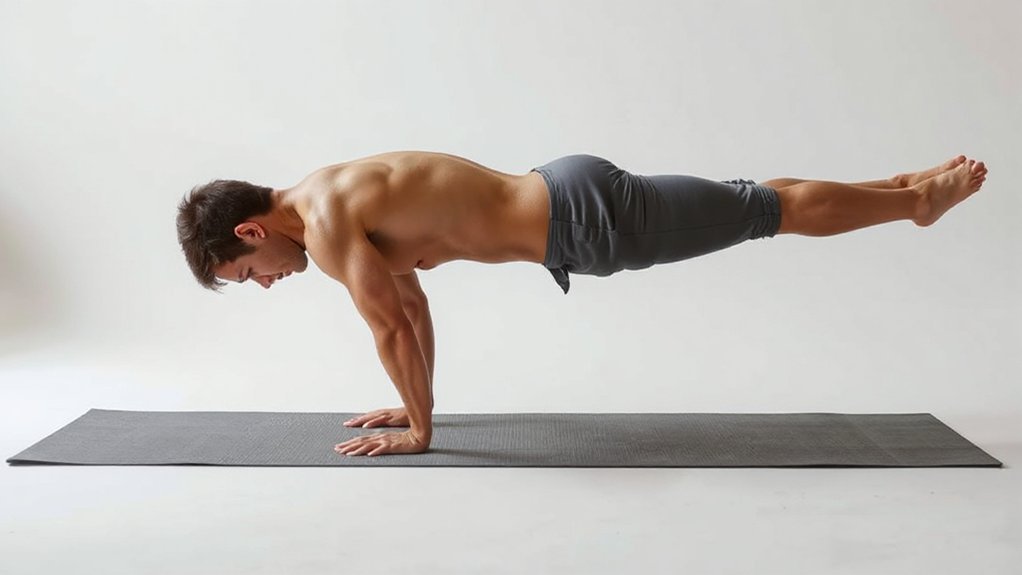
Planks deliver real, measurable benefits—and that’s not hype. You’re building genuine spinal stability that protects your back during everyday movements: bending, lifting, carrying groceries. The exercise trains your transverse abdominis and rectus abdominis to brace and support your spine, reducing injury risk substantially. Clinically proven for low-back pain prevention, planks produce relatively low lumbar stress (around 1600–1800 N), making them safer than many loaded lifts.
Here’s what matters: stick with planks 2–4 times weekly, gradually working toward one-minute holds. You’ll develop deep core endurance that improves posture and balance naturally. Beyond the physical wins, controlled breathing during planks actually reduces stress and boosts mood—a genuine mental-health bonus alongside the strength gains.
You’re not just holding a position; you’re investing in functional fitness that serves you everywhere.
Plank Variations to Challenge Your Core
Once you’ve nailed the standard plank and can hold it steady for a minute, your core’s ready for the real challenge—and that’s where variations come in.
Here’s what’ll transform your plank routine:
- Side planks with hip dips: Rotate your hips down to touch the floor, alternating sides. This targets your obliques hard and builds rotational control you didn’t know you needed.
- Shoulder taps: Tap opposite shoulders while staying level. Your anti-rotation muscles fire up, stabilizing everything.
- Plank marches: Lift one foot, then the other, keeping your torso locked. Single-leg stability gets serious here.
- Elevated planks: Pop your feet on a bench or ball. Your whole posterior chain wakes up.
- Unilateral reaches: Extend one arm or leg forward while bracing. This demands real stability.
Start with 40-second holds before adding dynamic movements. Progress gradually—bump hold time by 5–10 seconds. You’ll feel the difference quickly.
When and How Often to Do Planks
To build real core strength without burning out, you’ll want to hit planks about 2–4 times per week—enough frequency to drive adaptation, not so much that you’re hammering the same muscles into the ground.
Here’s the thing: timing matters. Do planks at the end of your training session, after you’ve crushed compound lifts like squats, deadlifts, or presses. Why? Your fresh core’s already been working hard, and planks finish the job without stealing energy from your main lifts. You’re not sacrificing strength gains for core work—you’re stacking them smartly.
Start with modified planks if you’re beginning, aiming for three sets of roughly 60 seconds each. Once you’re comfortable there, progress gradually—add 5–10 seconds every week or two, then explore harder variations. Don’t rush. That steady pace? It’s how you actually build lasting endurance without injury.
Frequently Asked Questions
Can Planks Help With Back Pain?
Yeah, planks can genuinely help with back pain. They strengthen your transversus abdominis—that deep core muscle protecting your spine—without crushing it with heavy loads. You’re looking at building trunk stability that shields your lower back during everyday stuff: lifting, bending, reaching. Start with three sets of one-minute holds, twice weekly, and progress gradually. Keep your spine neutral, core braced, glutes engaged. Bad form? Regress to your knees. Consistency wins here.
So
You’ve got this—honestly, planks are your secret weapon for core strength that’ll literally transform how you move. Start where you’re comfortable, progress gradually, mix up variations, and stick with it. That’s it. Your body’ll thank you when stairs feel easier, your posture improves, and you’re not huffing after small efforts. Consistency beats perfection every single time. You’re stronger than you think.






Leave a Comment