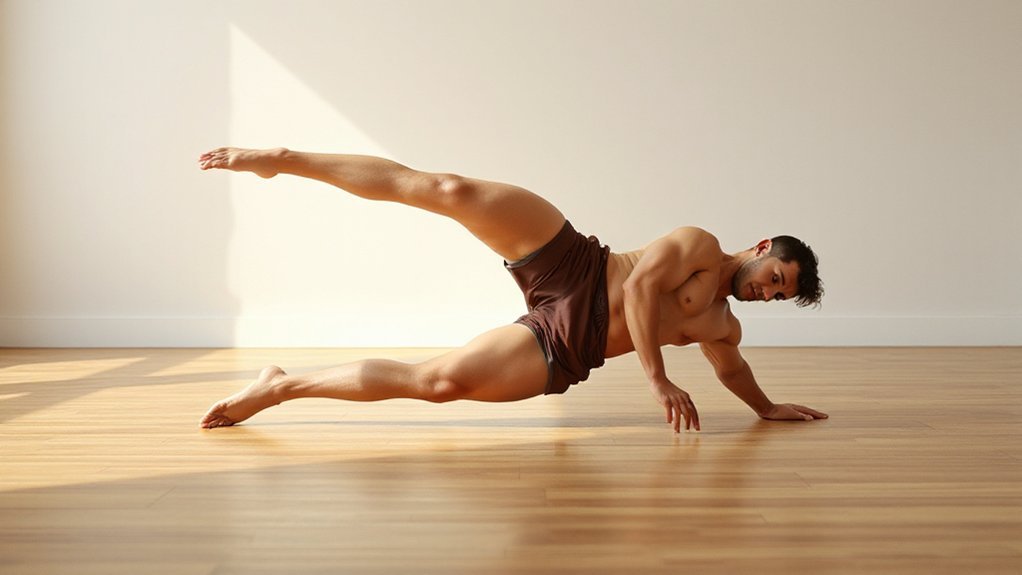

The bird dog’s your secret weapon for a bulletproof lower back. Kneel with hands under shoulders, then lift opposite arm and leg to hip height—keeping your spine locked and hips level. Hold 2–6 seconds, breathing steady; don’t rush it. Start with five controlled reps per side, and nail your form before advancing. The magic happens when your core braces tight and your whole body creates one solid line. Stick with this, and you’ll discover what makes real stability happen.
Key Takeaways
- Bird dog strengthens core stability and spinal alignment by lifting opposite arm and leg while maintaining neutral spine position.
- Proper setup requires kneeling with shoulders over wrists, core braced, and neutral neck to prevent injury and maximize effectiveness.
- Hold extended position for 2–6 seconds with hips level to prevent pelvic rotation and reduce lower-back stress significantly.
- Progress from legs-only variations to traditional bird dogs to weighted versions as core control and alignment improve consistently.
- Common mistakes include hyperextending the lower back, rotating hips, and rushing movements instead of prioritizing slow, controlled execution.
Set Up the Bird Dog: Step-by-Step

Before you ever lift a limb off the ground, you’ve got to nail your foundation—because a shaky setup means a shaky exercise.
Start by kneeling on your mat, feet dorsiflex (toes toward your shins), with knees hip-width apart. Place your hands directly under your shoulders, fingers pointing forward. This alignment matters: you’re creating a vertical line through shoulder, hip, and knee. Check yourself. Does it feel balanced?
Now lengthen the back of your neck and gaze downward—neutral spine, always. Pull your shoulders down and back; pack those scapulae. Here’s the critical part: brace your core by drawing your belly button toward your spine without hollowing out. Keep your ribs down. No arching that low back.
Pull shoulders down and back, brace your core without hollowing, keep ribs down—neutral spine, always.
Spend 2–3 seconds in this braced position before you move anything. Feel stable? You should. That’s your bird dog ready to launch.
Build Core Stability and Spinal Alignment
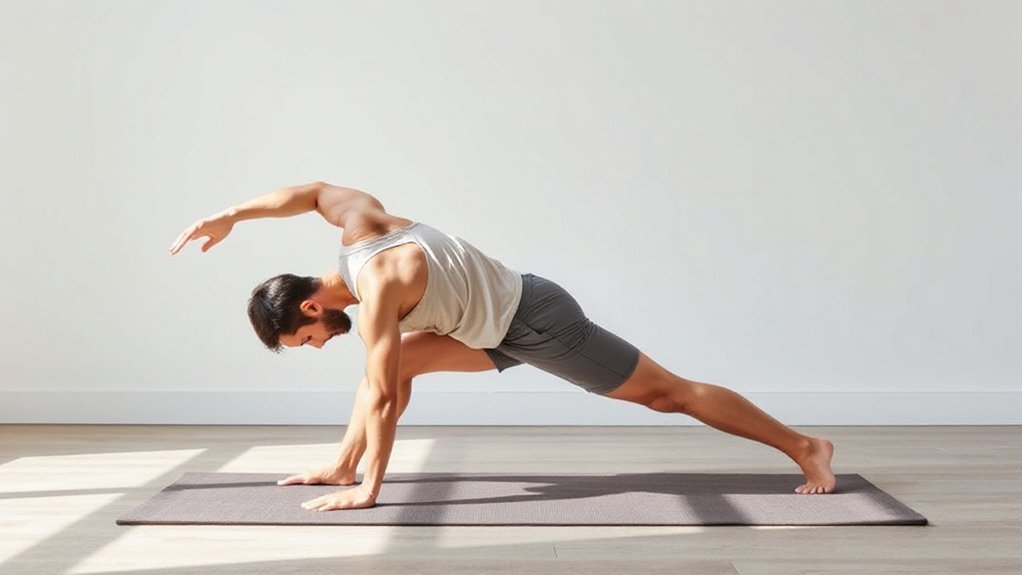
Now comes the real work—lifting opposite limbs while keeping your spine locked in place. You’re training your abs and back muscles to work together, creating a natural corset around your midsection. Here’s what matters: raise your arm and opposite leg only to about parallel with the floor. No higher. Keep your hips level—seriously, this prevents pelvic rotation that’ll wreck your lower back. Hold that extended position for 2–6 seconds, creating one continuous line of energy from your fingertips through your toes. Breathe steadily. You’re not holding your breath; you’re reinforcing motor control. Start with 2–3 sets of 8–12 reps, one rep equaling both sides. Move slowly, deliberately. Control beats speed every time. Your core stays engaged, shoulders stay down, head stays neutral. That’s spinal alignment working for you, not against you.
Which Bird Dog Variation Is Right for You?

Where do you actually stand right now—beginner, intermediate, or ready to push hard?
Your honest answer matters because picking the wrong variation wastes time and courts injury. Here’s the thing: you’ve got to match the exercise to where your body truly is, not where you wish it were.
| Your Level | Best Variation | Reps & Hold | Why It Works |
|---|---|---|---|
| New or sensitive back | Legs-Only Bird Dog | 5 per side, 6–8 seconds | Builds control, protects your spine |
| Isolating one side | Arms-Only or Alternating | 8–12 slow reps per side | Fixes weak shoulders or glutes |
| Solid foundation | Traditional Bird Dog | 8–12 reps, 3–5 seconds hold | Tests full-body coordination |
| Advanced control | Knee Hover or Weighted | 12+ reps or light load | Cranks up difficulty and strength |
Start conservative. Progress when you nail perfect alignment—no pelvic rotation, no wavering. You’ll feel the difference instantly.
Fix Common Mistakes That Sabotage Your Form
You’ve picked your variation and you’re ready to move—but here’s where most people stumble. Your leg shoots up past hip level, your pelvis twists, your spine arches. Sound familiar?
First: keep that working leg at or just below parallel to the floor. Higher isn’t harder—it’s just risky. Your lower back isn’t meant to hyperextend, and pushing past parallel invites injury.
Keep your working leg at or just below parallel—higher isn’t harder, just risky and injury-prone.
Next, picture your hips as headlights. Both should face straight down. If one hip lifts or tilts, stop and reset. That rotation kills your gains and compromises stability.
Then there’s the core. You’ve gotta brace it—draw your belly button toward your spine and hold that tension through every rep. No bracing means your low back takes over.
Finally, stack your shoulder over your wrist, shoulder blade down and back. Collapse here and you’ve lost control entirely. Move slow, breathe steady, and you’ll nail it.
Progress Your Bird Dog Safely: Timing and Advancement Cues
So, when’s it time to level up? You’re ready when you nail 2–3 sets of 5 controlled reps per side, holding each rep 6–8 seconds with zero low-back sag. That’s your baseline. Once you’re there, keep pushing until you hit 8–12 reps per side while maintaining a neutral spine and level hips—then you’ve earned your next challenge.
Here’s what progression looks like: add arm extension if you’re doing legs-only, or combine both limbs together, keeping that same slow tempo. Lift over 2 seconds, hold for 3–6 seconds while breathing steadily, lower for 2 seconds. No rushing.
When form’s flawless, introduce progressive load: light ankle or wrist weights (1–3 pounds), try planks, or reduce your base of support. Use a mirror, light bar, or cup on your pelvis for feedback. Stop immediately if you detect pelvic rotation or pain.
Frequently Asked Questions
How Often Should I Do Bird Dog Exercise?
You’ve got options here. Standard bird dogs? Aim for 2–3 times weekly as part of your core routine. Starting out with just legs? You can actually do that daily—5 reps per side, holding 6–8 seconds—until it feels easy. The key’s listening to your body. Once you nail the form, gradually bump up reps or sets. But don’t rush; perfect control beats everything. Give yourself 24–48 hours between tougher sessions so your lumbar stabilizers recover properly.
So
You’ve got the bird dog exercise down—you’re basically building a steel spine, one rep at a time. Don’t rush progression; your body’ll tell you when you’re ready. Master your form first, then challenge yourself. Consistency beats intensity every single time. You’re planting seeds now that’ll grow into serious core strength, better posture, and a back that actually cooperates with you. Keep going.







Leave a Comment