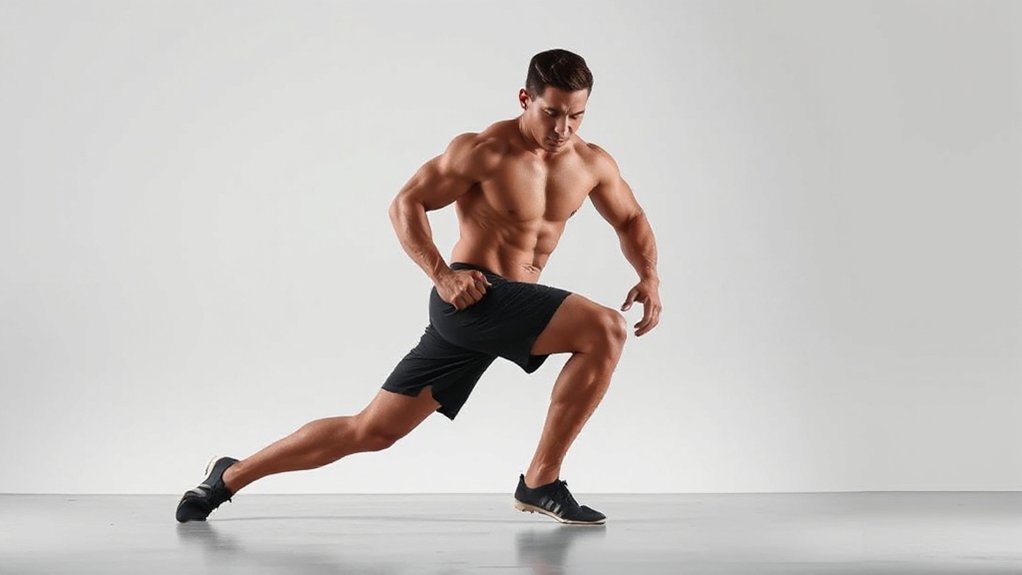

You step forward, lower until your front thigh’s parallel to the ground, and press back up—that’s a lunge, and you can’t skip it if you want powerful legs. Your quadriceps, glutes, and hamstrings do the heavy lifting while your core keeps you stable. The real magic? It fixes strength imbalances between legs and enhances hip mobility for everyday movement. Master bodyweight form first, then progress with tempo or load. There’s plenty more technique, variations, and programming strategies waiting to amplify your results.
Key Takeaways
- Lunges build lower-body strength in quadriceps, glutes, and hamstrings while improving unilateral power between legs.
- Proper form requires hip-width stance, front knee tracking over mid-foot, and neutral spine throughout descent.
- Master bodyweight lunges for 8–12 reps before adding weight to reduce joint pain and injury risk.
- Progress via reverse lunges, walking lunges, split squats, or Bulgarian variations to target different movement patterns.
- Perform 2–4 sets of 6–12 reps per leg with controlled tempo; increase load or reps weekly when ready.
How to Do a Lunge With Proper Form
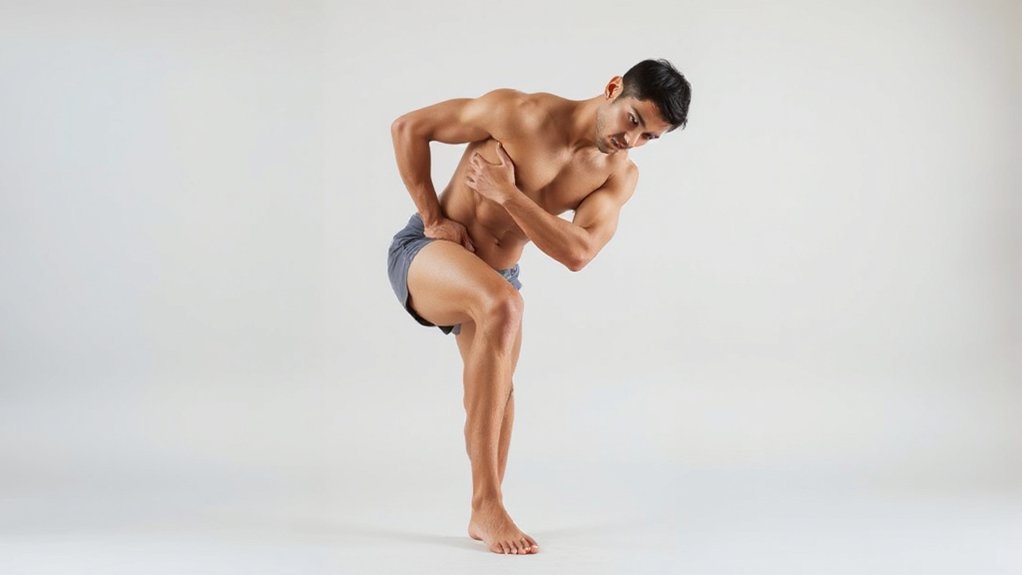
Master the lunge—it’s deceptively simple, yet so easy to mess up. Here’s how you nail it.
Start standing with feet hip-width apart, core engaged. Step one foot forward about 2–3 feet, keeping your hips square. Lower yourself until your front thigh’s parallel to the floor, front knee at roughly 90°, back knee hovering inches above ground. Your front shin? Keep it vertical.
Now, here’s where most people slip up: maintain a neutral spine, chest up, eyes forward. Don’t bend at the waist or arch that lower back. Your front knee should track over your mid-foot—aligned with your fourth or fifth toe—not caving inward or shooting way past your toes.
Press through your front heel to stand back up. Smooth, controlled movement matters more than speed. Aim for 2–4 sets of 6–12 reps per leg, and you’re golden.
Fix These Form Mistakes Before They Hurt
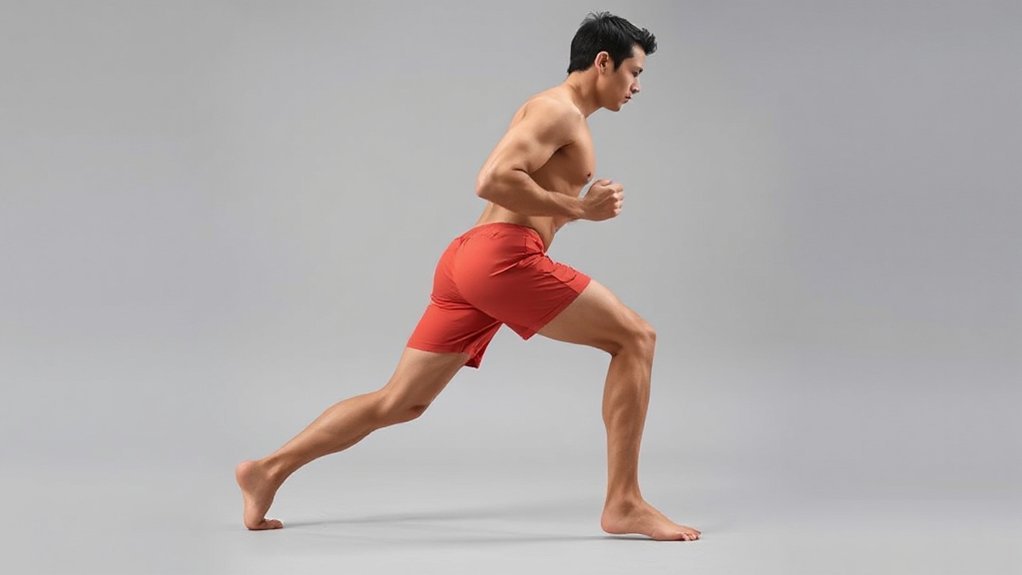
You’ve got the basic movement down—nice work—but here’s the thing: even small form breakdowns can turn a stellar exercise into a joint-wrecking one.
Your knees need to stay honest. Watch that front knee—it shouldn’t cave inward or drift past your toes. Keep it tracking over your second-to-fourth toe, and stop descending the moment it wanders. Your spine matters too. No excessive forward lean, no arching your lower back like you’re showing off. Stay upright, chest proud, and let your legs do the heavy lifting.
| Mistake | What Happens | Fix It |
|---|---|---|
| Narrow stance | Knee collapses inward | Use hip-width feet |
| Too-long stride | Hip stress increases | Front shin stays near vertical |
| Heavy weight too soon | Joint pain develops | Master 8–12 reps first |
Listen: stride length matters. Too short overloads the knee. Too long stresses the hip. Aim for that sweet spot—about 2–3 feet, keeping your front shin nearly vertical at the bottom. And here’s non-negotiable: stop immediately if you feel joint pain.
Which Muscles Lunges Target (and What You’ll Gain)?
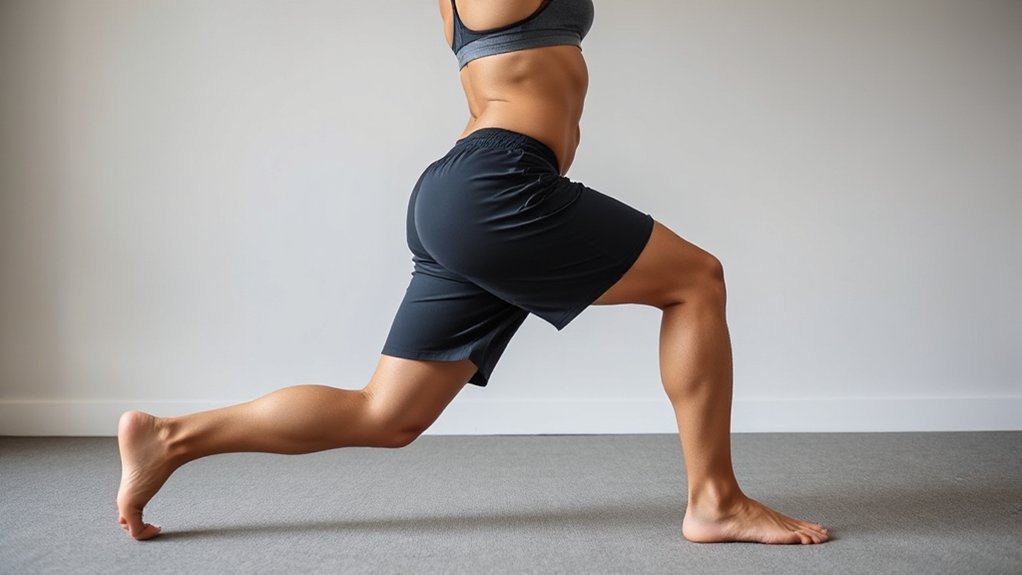
While your legs are doing the heavy lifting during a lunge, you’re actually waking up way more muscle than you might think. Your quadriceps, glutes, and hamstrings take center stage, building serious strength through both pushing and lowering phases. But here’s the thing—your core, calves, and hip muscles all pitch in too, working hard to keep you stable and balanced.
Here’s what you’ll really gain: since lunges force each leg to work independently, you’ll catch and fix strength imbalances between sides. That matters more than you’d expect. You’re also stretching your hip flexors deep, which means better mobility for stairs, walking, even running. Your balance improves noticeably. Single-leg power translates directly to sport, jumping, cutting movements—basically anything requiring one leg to handle business.
This exercise doesn’t just build muscle. It rewires how your body moves through space.
Lunge Variations for Every Fitness Level
Not all lunges are created equal—and that’s actually great news for you. You’ve got options that match where you’re starting from.
If you’re brand new, reverse lunges are your friend. Step back, lower down, and you’ll notice your knees stay happy while your quads and glutes still work hard. Split squats level up the stability piece—feet planted, no stepping—so you can nail your depth and balance before moving forward.
Reverse lunges keep your knees happy while building quads and glutes. Split squats nail depth and balance before progressing forward.
Ready for more? Walking lunges demand coordination and serious cardiovascular punch. String together 2–4 sets of 6–12 reps per leg, and you’re building genuine strength-endurance.
Feeling ambitious? Lateral lunges hit your hip muscles differently, training side-to-side strength perfect for tennis and basketball. They’re trickier though—balance and mobility matter here.
Finally, Bulgarian split squats—rear foot elevated—pack serious single-leg load onto your quads and glutes. Save these for when you’ve mastered standard lunges and split squats with solid form for 2–3 sets of 8–12 reps.
When to Add Weight and Progress Your Lunges
But here’s the thing—weight isn’t your only lever. You can also level up difficulty through tougher variations: reverse lunges into walking ones, lateral work, or Bulgarian split squats. Slow your eccentric phase to 3–4 seconds. That burns differently.
Track everything: sets, reps, weight. Stop immediately if your knee caves, your torso collapses forward, or pain shows up. That’s non-negotiable. Progress gradually—one extra set or session weekly—only after your body’s handled the current load comfortably.
Frequently Asked Questions
How Often Should I Perform Lunges Each Week for Optimal Results?
You’ll want to perform lunges two to three times weekly for ideal results. Space them out—say, Monday, Wednesday, Friday—so your muscles recover properly. Start with bodyweight lunges, then progress to weighted versions once you’ve nailed the form. Rest days matter just as much as workout days. Listen to your body; if you’re sore or fatigued, take an extra day off. Consistency beats intensity every time.
Can Lunges Help Reduce Knee Pain or Should I Avoid Them?
You can actually reduce knee pain with lunges—but here’s the catch: you’ve gotta do them right. Weak glutes and quads? That’s your real culprit. Lunges strengthen those muscles, taking pressure off your knees. Start shallow, focus on form, and skip them if you’re experiencing sharp pain. Work with a physical therapist first, honestly. Proper technique transforms lunges from painful to powerful.
What’s the Ideal Lunge Depth for Maximum Muscle Activation and Safety?
You’ll want your front knee bent to roughly 90 degrees, back knee hovering just above the floor—that sweet spot activates your quads, glutes, and hamstrings without crushing your joints. Go shallower if you’re protecting knees; deeper if you’re after serious strength. Keep your torso upright, weight distributed evenly. Listen to your body; discomfort means dial it back. Consistency beats depth every time.
Are Lunges Suitable for People With Limited Mobility or Flexibility?
Can’t touch your toes? You’re not alone—and you can still lunge. You’ll modify, that’s all. Start with shorter steps, hold onto something stable, or try wall-supported lunges. Your range doesn’t matter; controlled movement does. You’ll gradually build flexibility and strength together. Listen to your body, skip the ego, progress slowly. Lunges adapt to you, not the other way around.
How Do Lunges Compare to Squats for Overall Leg Development?
Lunges and squats both build leg strength, but they’re not identical twins. You’ll hit your quads hard with squats, sure, but lunges demand more from your glutes and hamstrings—plus they challenge your balance and work one leg at a time. Squats let you lift heavier; lunges build functional, single-leg power. Honestly? You’ll get best results combining both, mixing heavy squat days with explosive lunge variations.
So
You’ve got this—lunges aren’t as complicated as they seem. Yeah, they’re tough, but you’re building real strength, not just going through motions. Start with bodyweight, nail your form, then progress when you’re ready. You don’t need fancy equipment or extreme variations. Consistency beats perfection every time. Stick with lunges, and you’ll notice stronger legs, better balance, and genuine confidence. That’s worth the effort.





Leave a Comment