

You can get more done without longer hours by prioritizing, protecting focus, and automating small tasks. Use the Eisenhower lens to sort work, time‑block deep sessions, and clear quick items immediately. Keep meetings lean and batch similar tasks to stop context switching. Start with one 10‑minute change that creates visible impact—here’s which one to try next.
Prioritize With the Eisenhower Matrix
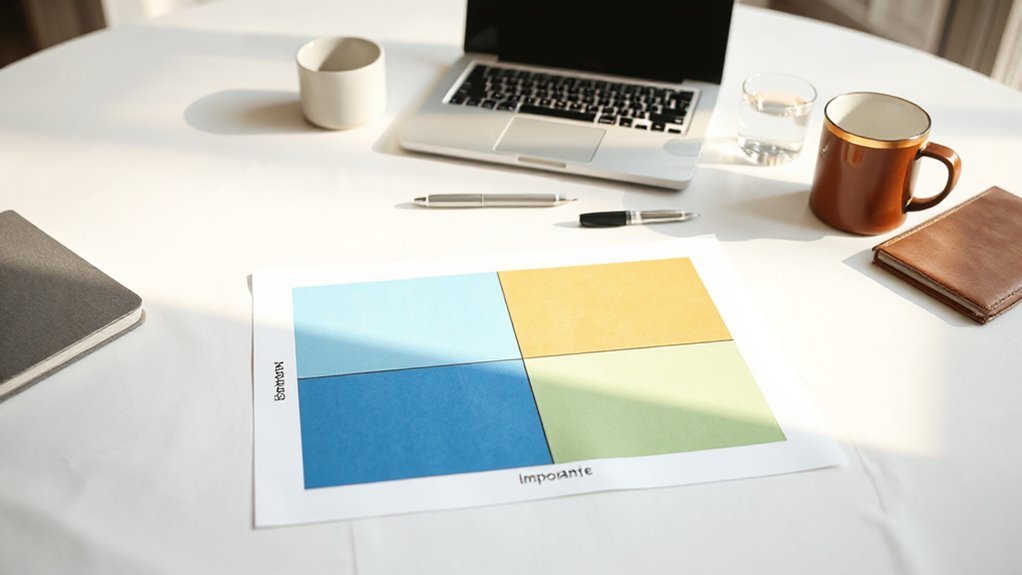
How do you decide what deserves your attention right now? Use the Eisenhower Matrix: map tasks into four Quadrant Labels—Urgent/Important, Not Urgent/Important, Urgent/Not Important, Not Urgent/Not Important. Tackle Urgent/Important immediately. Schedule Not Urgent/Important for focused work later. Delegate Urgent/Not Important using a clear Delegation Framework: assign, set deadlines, state desired outcome, and follow up. Drop or batch Not Urgent/Not Important to minimize distraction. Each morning, list tasks, assign quadrant labels in under five minutes, then act. Review at day’s end: did delegated items progress? Adjust assignees or instructions. This routine keeps you focused on impact, reduces reactive firefighting, and you’ll sustain daily momentum.
Master Time Blocking for Deep Work

When you block time deliberately, you turn vague intentions into guaranteed focus: pick 60–90 minute deep-work chunks on your calendar, give each block a single outcome, silence notifications, and treat the slot as nonnegotiable. Use Temporal Anchors to fix start times to existing routines — morning coffee or post-lunch walk — so you rely on cues, not willpower. Schedule Shift Buffers of 5–10 minutes between blocks to recap results and prep the next task; they prevent spillover and decision fatigue. Protect these slots: mark them busy, set expectations with colleagues, and remove open tabs or distracting apps. Track outcomes weekly, adjust block length to match task complexity, and iterate. You’ll steadily build sustained focus and deliver higher-quality work with predictable rhythms. Measure your progress.
Use the Two-Minute Rule to Beat Procrastination

After you carve out deep-work blocks, use the Two-Minute Rule to stop small tasks from piling up: if a task will take two minutes or less, do it right away — reply to that quick email, file a doc, or clear a desktop item. Treat those actions as Micro Tasks and handle them immediately to reduce cognitive load. Set Habit Triggers: link a cue (end of a meeting, timer chime) to scanning your inbox for two-minute items. Use visible checklist or “quick tasks” folder to avoid decision friction. Don’t let it slide: if it exceeds two minutes, defer it with a clear next action and time block it. Practicing this daily trims your list and maintains momentum. Start today and watch efficiency compound steadily
Optimize Your Morning Routine for Momentum
Set a consistent wake-up time to stabilize your energy and cut morning decision fatigue. Pair it with a brief pre-work planning ritual—spend 5 minutes listing your top three tasks and the first step for each. Do both for a week and you’ll build reliable momentum into your workday.
Consistent Wake-up Time
Consistently waking at the same time each day builds momentum and stabilizes your energy, so pick a realistic wake time you’ll keep every day—including weekends—and move toward it in 15-minute steps if needed. You’ll reinforce circadian alignment by exposing yourself to natural light within 30 minutes and keeping sleep duration steady; aim for the same bedtime to support that. Start with small adjustments, shift 15 minutes earlier until you hit your target, and track progress for two weeks. Use one alarm, place it across the room, and avoid snooze to train consistency. When setbacks happen, reset immediately without guilt. Consistent wake times make mornings predictable, reduce decision fatigue, and give you reliable blocks for focused work later in the day. You’ll notice steady clarity.
Pre-work Planning Ritual
When you spend 10 minutes on a focused pre-work planning ritual, you’ll start the day with momentum and clarity. Use three steps: Mindset Priming, prioritize, and an Energy Check in. First, Mindset Priming—sit quietly, breathe, state your top outcome aloud, and visualize completion. Second, prioritize—list three must-do tasks, estimate time blocks, and assign the highest-impact item to your peak energy window. Third, Energy Check in—note how you feel, adjust task order, and schedule a short movement or water break if energy’s low. End by setting a single intention and a visible timer for your first work block. Repeat daily to make this ritual automatic and protect your early momentum. Over weeks you’ll build consistency, feel sharper, and complete meaningful work before distractions arrive daily.
Batch Similar Tasks to Reduce Context Switching
Group similar tasks—emails, calls, and quick edits—so you handle related work in one run instead of switching gears. Block focused time on your calendar for each batch and turn off notifications so you can finish without interruptions. You’ll get more done with less mental friction and clearer momentum between blocks.
Group Similar Tasks
Batching similar tasks cuts the mental overhead of switching gears, so you get more done in less time. Start by listing repeating actions and group them by tool and context. Use Label Systems to tag emails, documents and tickets so you’ll pull a focused set once. Apply Sequence Mapping: decide the best order — prep, execute, review — and stick to it. Limit each group to tasks that demand similar cognitive modes; mix of creative and analytical work defeats batching. Set clear end criteria for each batch: number completed, time cap, or outcome achieved. Use simple templates and checklists to speed recurring batches. Review weekly to regroup tasks and refine labels so your batches stay efficient still and aligned with priorities and company goals.
Schedule Focused Time Blocks
Because you’ll make fewer context switches and get deeper work done, carve recurring focused time blocks into your calendar and treat them like nonnegotiable meetings. Decide what task types belong in each block — creative writing, emails, meetings, admin — and batch them consistently. Set clear start/end times and a purpose for every block. Use Notification Discipline: silence or limit alerts, set auto-replies, and check messages only during designated blocks. Apply Environment Design: tidy your workspace, remove distracting tabs, and use headphones or ambient sound to cue focus. Review and adjust weekly: move blocks where energy is higher, shorten or combine blocks when necessary. Protect these blocks with colleagues and tools so you can complete deep work predictably. Track outcomes to measure improvement weekly.
Leverage Technology: Automation and Smart Tools
When you automate routine steps and plug smart tools into your workflows, you’ll stop wasting time on repetitive tasks and focus on work that needs judgment. Start by mapping repeatable processes, then pick simple automations (scripts, zap-like connectors, scheduled reports). Test end-to-end before rolling out to avoid integration pitfalls and verify data flows correctly. Prefer tools with open standards and exportable data to reduce vendor lock in risk. Automate low-risk tasks first, measure time saved, iterate. Use notifications sparingly and centralize alerts to avoid context switching. Document triggers and runbooks so teammates can maintain automations. Regularly review automations for relevance; disable ones that no longer deliver value. Small, maintained automations compound into significant productivity gains. Start small, measure impact, iterate, and expand with confidence.
Protect Focus With Strategic Meeting Practices
If you’re serious about protecting deep work, treat meetings as a scarce resource and design them to earn their place on calendars. Start by questioning every invite; decline or propose async alternatives when outcomes don’t justify interruption. Set clear objectives and timeboxes on invites so participants know what success looks like. Enforce Agenda Enforcement: circulate a bullet agenda and stick to it; assign a timekeeper. Use Participant Limits to keep conversations focused — smaller groups decide faster. Require pre-reads and decisions in advance so meetings solve only unresolved items. End with explicit next steps and owners to avoid follow-ups. Regularly audit meeting frequency and cancel repeating sessions that no longer deliver value. Train leaders to model discipline and reward concise, outcome-driven gatherings consistently publicly.
Apply Pomodoro Intervals for Sustainable Energy
Pick 25/5 Pomodoro cycles (or adjust to your rhythm) and set a single, measurable goal for each interval so you’ll know when a session succeeds. Choose break activities that actually restore — stand, stretch, drink water, or do a two-minute breathing reset — and avoid screens that pull you back into deep focus. Log completed Pomodoros and tweak interval length or break types to keep your energy steady all day.
Set Clear Pomodoro Goals
Because short, focused bursts preserve energy, define one concrete outcome for every Pomodoro—finish a draft section, clear five inbox messages, or complete a coding test case. Write that outcome as a Success Criteria statement so you know when to stop. Pick Progress Metrics you can record quickly: pages revised, tasks completed, bugs resolved. Limit scope so a single Pomodoro is achievable; if it risks overrunning, split it into smaller steps. Set a visible timer and note the metric at the end. Review three Pomodoros at midday to adjust goals and estimate remaining work. Use consistent labels for tasks so you can track patterns. Repeat what’s working and drop tactics that don’t hit your metrics. Keep goals simple and measurable. Refine goals after each session.
Optimize Break Activities
Why not treat breaks as deliberate mini-routines that recharge you instead of random distractions? Use Pomodoro intervals to structure work and breaks: after 25 minutes of focused work, take a 5-minute active pause; after four cycles, take 15–30 minutes. During short breaks, do a quick Sensory Reset — close your eyes, stretch, breathe, or sip water. For longer breaks, choose Nature Breaks when possible: step outside, walk mindfully, or tend a plant to lower stress. Avoid screen scrolling; it undermines recovery. Schedule break intentions before each session so you won’t decide impulsively. Track how different activities affect your energy and adjust timings. You’ll sustain focus longer and finish days with steadier energy without burning out, preserving creativity and consistent output for long-term results.
Declutter Your Workspace and Digital Life
When you clear your physical desk and streamline your digital files, you’ll cut distractions and speed decision-making: remove everything you don’t use daily, put essentials within reach, archive or delete old documents, unsubscribe and filter incoming email, and set a simple folder and naming system so you can find what you need in seconds. Tackle Cable Management to reduce visual clutter and prevent tangles; label power strips and hide excess cords. Do a Password Cleanup: use a manager, remove unused accounts, and enable two factor authentication. Schedule a 20 minute declutter weekly and stick to it. Use this quick checklist table to guide action.
| Area | Action | Time |
|---|---|---|
| Desk | Remove nonessentials | 10m |
| Cables | Bundle and label | 10m |
| Files | Archive/delete | 15m |
| Accounts | Password Cleanup | 10m |
Done.
Build Micro-Habits for Long-Term Consistency
If you want lasting change, start with micro-habits—tiny, specific actions you can do consistently without friction. Pick one Keystone Habits you can repeat daily, like two minutes of email triage or a single 5-minute focus session. Tie that action to an existing cue—after coffee, after calendar open—and make it irreversible: prepare the tools so you just do it. Track progress visually and celebrate small wins with Tiny Rewards, like a short break or a checkmark. Increase load only after the routine feels automatic. Use habit stacking and timeboxing to prevent drift. Review weekly, adjust context, and protect the cue. Over months these micro-steps compound into reliable routines that boost productivity with minimal willpower. Stay patient; consistency matters more than intensity in habit formation daily.




Leave a Comment