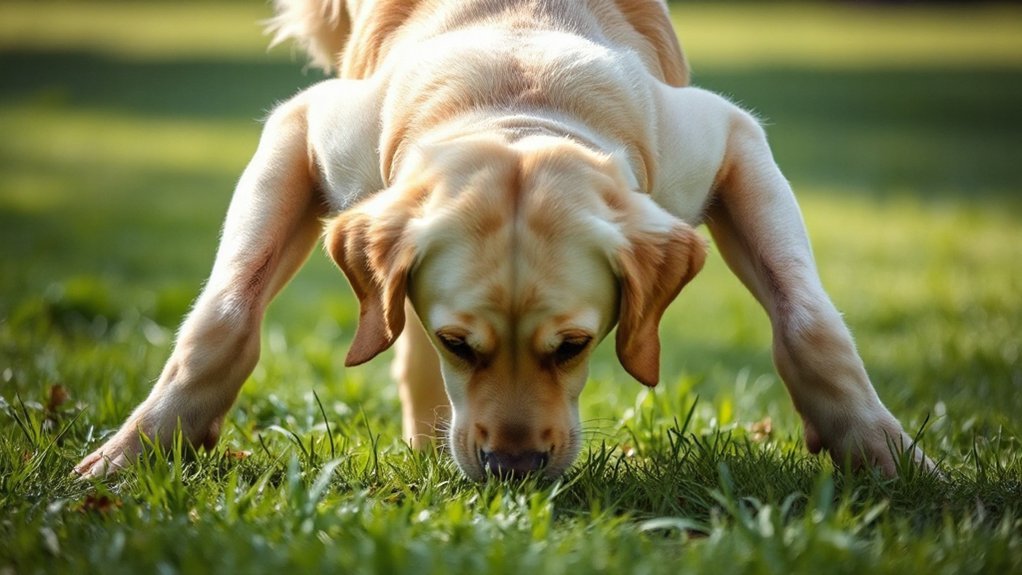

Your dog stretches for legit reasons—loosening muscles after naps, greeting you with a play-bow, or prepping for action. It’s totally normal paired with a wagging tail and relaxed body language. But here’s the thing: repetitive stretching, stiffness, whining, or reluctance to fully extend? That’s your signal something hurts. Watch for limping, excessive back arching, or a hard belly—those warrant vet attention fast. Understanding what’s routine versus what’s a red flag keeps your pup comfortable and healthy, so let’s break down exactly what you’re seeing.
Key Takeaways
- Dogs naturally stretch after waking or before play; the play-bow greeting signals non-threat and loosens muscles.
- Repetitive stretching, stiffness, limping, whining, or loss of appetite indicate pain requiring veterinary evaluation.
- Frantic forward-leg stretching with drooling, retching, or hard belly signals bloat—seek emergency veterinary care immediately.
- Safe stretching requires veterinary clearance, warm muscles first, 15–30 second holds, and immediate cessation if pain occurs.
- Daily 3–10 minute routines using treats and praise build flexibility; never force stretches or ignore resistance signals.
Why Your Dog Stretches: Behavior, Comfort, and Warning Signs
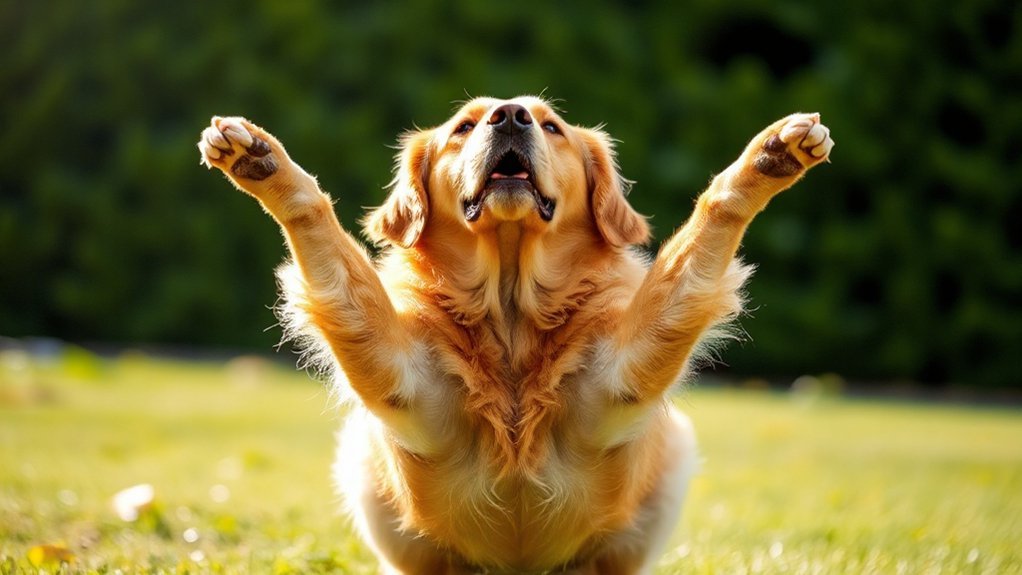
When your dog stretches—that characteristic forward lean with their front legs extended and rear end up in the air—you’re watching a behavior that’s part greeting, part maintenance work, and sometimes, part warning system.
Most often, you’ll see this “play bow” after your dog wakes up or when you come home. It’s how they loosen muscles and signal they’re relaxed, non-threatening. You’ve probably noticed it becomes routine—reinforced by your praise or your arrival patterns until it transforms into a ritualized hello.
But here’s where attention matters: watch *how* your dog stretches. Repetitive, stiff movements? Whining? Reluctance to fully extend? These signal musculoskeletal pain—shoulder, hip, or abdominal discomfort—and warrant closer observation.
The real red flags? Frantic forward-leg stretching paired with drooling, failed retching, a distended belly, or restlessness. These suggest life-threatening emergencies like bloat or acute pancreatitis. Don’t hesitate. Get to your vet immediately.
Stretching vs. Pain: How to Tell What Your Dog Needs
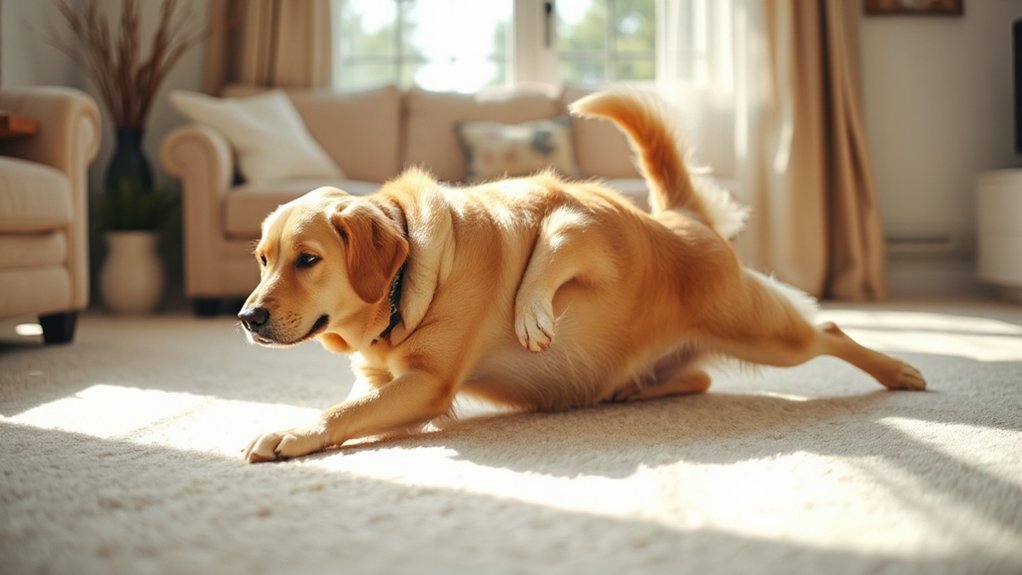
How do you know if your dog’s stretching is just a normal, healthy habit or if it’s actually a cry for help? Here’s the truth: context matters enormously.
When your pup does that classic play-bow—front legs extended, chest lowered, tail wagging—right after a nap or before playtime, you’re watching normal, happy stretching. That’s your green light.
But if your dog favors one limb repeatedly, arches their back excessively, or stretches their belly over and over, pay attention. These targeted stretches signal localized pain: a sore shoulder, hip, or stomach trouble.
Watch for red flags: whining, stiffness, loss of appetite, restlessness, or joint noises. Any of these accompanying unusual stretching? That’s your cue to call the vet.
Really concerning: sudden repetitive forward-leg stretching plus drooling, retching attempts, a bloated belly, or rapid breathing. That’s an emergency. Trust your gut—you know your dog best.
The Must-Know Stretches for Better Flexibility
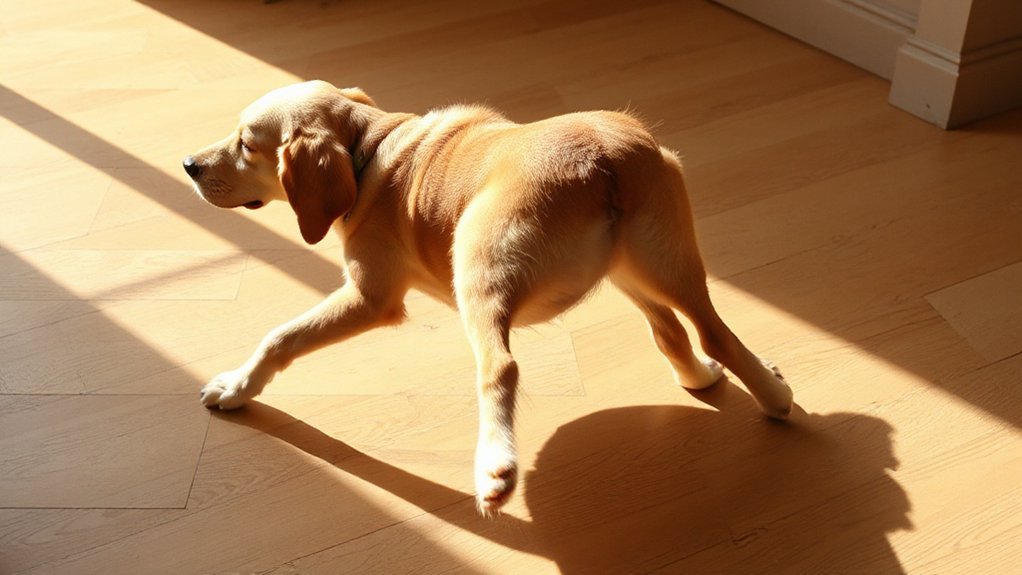
Stretching your dog’s muscles—really doing it right—builds flexibility, eases stiffness, and keeps those joints mobile for years to come. You’ve got several key stretches that’ll transform your pup’s range of motion.
Stretching your dog’s muscles builds flexibility, eases stiffness, and keeps those joints mobile for years to come.
Start with these essentials:
- Shoulder flexor stretch: grasp the forearm just in front of the elbow, extend the limb forward parallel to the ground, hold 15–30 seconds per side—your dog’ll feel that gentle opening
- Hip flexor and hind-limb stretch: extend the hind limb straight backward while keeping pelvis level, same timing—this one’s vital for rear-end mobility
- Chest opener: move a front limb away from the chest toward the side to stretch those pectoral muscles, 15–30 seconds each side
Add the cookie stretch—lure your dog’s nose toward its tail with a high-value treat to create that gentle C-shaped bend for spinal mobility.
Here’s what matters: warm muscles first, go slow, and stop immediately if your dog flinches or vocalizes. Get veterinary clearance before you start. Your dog’s flexibility is worth this attention.
When Stretching Becomes a Health Emergency
What starts as a normal stretch can flip into something serious—and fast. Watch for red flags: frantic forward-leg stretching paired with a hard belly, drooling, pacing, or rapid breathing. These signal bloat (GDV), a life-threatening emergency requiring immediate veterinary care.
New or persistent stretching accompanied by whining, lethargy, loss of appetite, or fever? That’s acute pancreatitis or other abdominal problems talking. Don’t wait—get your dog checked.
Deep-chested breeds like Great Danes, German Shepherds, and Labs face higher bloat risk, so frequent abdominal stretching in these dogs demands emergency attention.
Notice stretching that causes vocalization, visible stiffness, reluctance to stand fully, or only one limb repeatedly stretched? That’s likely limb, hip, shoulder, or spinal pain.
Here’s the bottom line: if your dog’s stretching looks out of character and comes with pale gums, weakness, or a racing heart, transport them to emergency care immediately. Trust your gut.
Your Dog’s Daily Stretch Routine: Simple and Effective
Once your vet gives the all-clear, you’re ready to build a routine that’ll keep your dog loose, mobile, and genuinely happy—and honestly, it’s easier than you’d think.
Aim for just 3–10 minutes daily. Start with a short walk or gentle play to warm those muscles up; cold tissues invite injury, period. Then hit your key stretches:
- Shoulder and forelimb stretch: Gently pull the forearm forward, holding 15–30 seconds
- Hip-flexor and hindlimb stretch: Extend the hind leg backward with care and patience
- “Cookie” back-bend: Lure your dog’s nose toward the tail to mobilize the spine
Perform each stretch 1–3 times. Use treats and praise—make this *their* choice, not yours. Watch for pain, vocalizing, or resistance; stop immediately if anything feels off. You’re building flexibility and trust simultaneously here. That’s the sweet spot.
Frequently Asked Questions
What Does It Mean When a Dog Stretches?
Your dog stretches for reasons both simple and serious. Most times? You’re watching routine muscle-loosening—totally normal stuff. But here’s where it gets important: if stretching becomes frequent, exaggerated, paired with whining or reluctance to move, you’ve got a potential pain situation. Abdominal stretching especially warrants immediate vet attention; think bloat or pancreatitis. Pay attention. Your dog’s telling you something.
Why Does My Dog Keep Downward Dog Stretching?
Your dog’s probably doing downward dog repeatedly because she’s anticipating something—your arrival, a walk, playtime. Dogs also stretch this way to loosen muscles before activity or simply because you’ve reinforced it through praise and attention. Watch for context: is her tail wagging? Relaxed face? That’s comfort and routine. But if stretching looks frantic, accompanied by whining or stiffness, check with your vet. Pain or bloat needs addressing fast.
Is It Normal for Dogs to Keep Stretching?
Like a cat testing its limbs before a hunt, your dog’s stretching is totally normal—it’s how they loosen muscles, signal relaxation, or gear up for action. Frequent play-bows after naps? That’s just routine comfort. But here’s the thing: if your pup’s stretching constantly, holding stretches weirdly, or doing it alongside drooling, pacing, or loss of appetite, that’s different. That warrants a vet visit. Context matters, friend.
So
Your dog’s stretching routine isn’t just cute—it’s absolutely essential for their wellbeing. You’ve now got the toolkit to spot normal stretches, catch warning signs before they explode into emergencies, and keep your pup limber as a gymnast. Start today, really start, and watch your dog move with renewed vigor. That’s not exaggeration; that’s transformation. Your dog’s flexibility, comfort, and longevity depend on you taking action now.







Leave a Comment