

You can build tiny gratitude rituals that fit the chaos of motherhood and still improve mood, sleep, and stress regulation—research backs brief, consistent practice. Try a mirror mantra, a two‑minute breath naming one gratitude, or a single-sentence evening note. These micro-habits are doable and model emotional skills for your kids. Keep going to find simple, kid-friendly options that actually stick…
Quick Morning Gratitude Rituals for Busy Moms

Even when mornings feel chaotic, carving out one to three minutes for a simple gratitude ritual can boost your mood and resilience—research ties brief gratitude practices to better well-being and sleep. You can stand before the mirror, breathe, and use Mirror Mantras: state two specific appreciations aloud (one for yourself, one for someone else) to shift attention from stress to values. Pair this with a Sunrise Stretch sequence—reach arms overhead, inhale for calm, exhale to release tension—so your body cues your mind. Evidence shows brief embodied practices improve emotional regulation; make them consistent by placing a sticky note by the sink or setting a phone reminder. Small, repeatable acts help you start the day grounded and capable. They compound into greater calm over time.
Five-Minute Gratitude Practices for Chaotic Afternoons

When afternoons spiral and your to-do list feels like it’s winning, you can reset in five minutes with targeted gratitude practices that research links to improved mood, stress reduction, and better focus. Pause for a Snack Pause: sit, savor a healthy bite, and name three small things you’re grateful for — sensory detail anchors attention and reduces rumination. Try a Power Reset: inhale for four, exhale for six while recalling one thing that went right today; breathing plus positive recall calms the nervous system. If kids interrupt, involve them—ask them what brightened their moment. Repeat these micro-practices twice daily as needed. They’re brief, evidence-informed tools that restore perspective so you can return to tasks calmer and more focused. You deserve these small, powerful pauses.
Simple Gratitude Prompts to Start Your Day

After those five-minute afternoon pauses, mornings offer a different window to set your tone: a brief gratitude prompt practice can boost positive affect, lower stress markers, and help you approach the day with clearer priorities. Start small: sit for one minute, breathe, and use affirmation prompts to anchor intention. Combine quick journaling with sensory noticing — note three things you see, hear, or feel that stir appreciation. Keep it simple and repeatable so it fits busy mornings and supports mood regulation.
- I’m grateful for one thing that brings me calm today.
- I notice the warmth, light, or sound that grounds me.
- I commit to one small act of care for myself.
Do this five days a week to see measurable emotional shifts.
Gratitude Habits to Model for Your Children
Modeling gratitude helps your child learn to notice positives and regulate emotions—studies show parents’ expressed gratitude predicts greater empathy and prosocial behavior in kids. You can speak gratitude aloud: name what you appreciate, using an Appreciation Vocabulary that’s simple and specific (thankful for the warm meal, the helpful neighbor). Show generosity through actions — Generosity Modeling matters; let your child watch you donate time, share resources, or offer help. Use brief routines: thank someone at dinner, acknowledge efforts after school, reflect together before bedtime. When you slip, apologize and restart; kids learn resilience from honest moments. Consistent, small demonstrations and clear language teach children practical skills to notice good things and act kindly toward others. Celebrate progress and praise attempts to reinforce the habit.
Gratitude Journaling Ideas That Take Less Than Five Minutes
Writing gratitude entries for under five minutes fits into even the busiest days and still boosts well‑being: brief gratitude exercises have been shown to increase positive affect and lower stress. Choose a quick method you’ll sustain; evidence shows specificity and consistency matter. You’ll notice even brief practice shifts attention away from stress toward appreciation, improving sleep and mood in controlled studies. If you miss a day, be kind to yourself and resume—consistency, not perfection, predicts benefit.
- Single Sentence: name one sensory detail.
- Photo Journal: snap, caption, feel shift.
- Three micro-wins: note small achievements nightly.
Start with a timer, stay consistent, and adjust prompts to what feels nourishing; small daily entries build measurable resilience. Start small; results accumulate. You’ll feel calmer and more capable soon.
Integrating Gratitude Into Parenting Moments
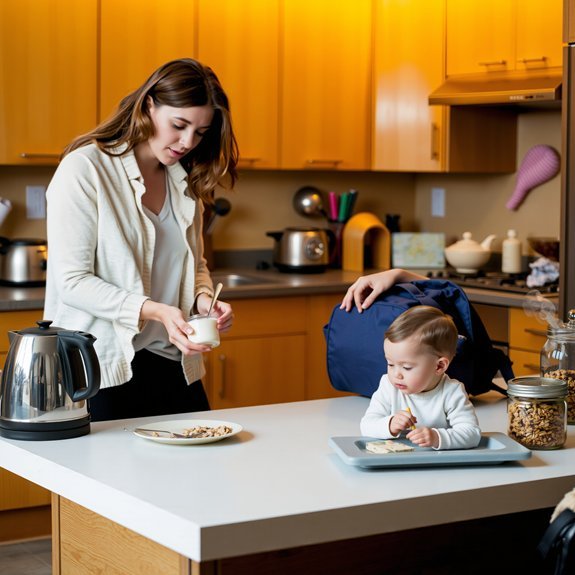
You can build quick morning gratitude rituals—like naming one thing you’re thankful for while making breakfast—to set a calm tone supported by research on routine and mood. When tantrums hit, pausing to model a brief, validating gratitude statement helps regulate emotions for both you and your child. And at bedtime, simple traditions like sharing the day’s best moment create consistent opportunities to reinforce connection and positive memory before sleep.
Morning Gratitude Rituals
In the morning, small gratitude rituals woven into everyday parenting moments can boost both your mood and your child’s emotional resilience—research links regular gratitude practices to increased well-being and prosocial behavior. You can begin with a brief sunrise visualization together, naming what you notice and feel, then use mirror appreciation—encourage your child to say one thing they like about themselves while you model self-kindness. Keep it one to three minutes, consistent, and grounded in daily observation; evidence shows short, repeated acts build habit and connection. Practical prompts reduce pressure and increase follow-through, so choose ones that fit your routine and energy.
- Share one small wonder you saw during sunrise visualization.
- Offer a calm mirror appreciation prompt for self-kindness.
- Name a thing you’re grateful for.
Gratitude During Tantrums
Morning gratitude rituals can make it easier to bring small thankful moments into harder parenting scenes, like tantrums, because habits lower the effort needed when emotions run high. When your child melts down, use brief pauses: breathe, touch an Anchor Object (a bracelet or stuffed toy), and model calm. Research supports quick gratitude cues to shift focus and reduce stress; you can pair them with Emotion Naming to validate feelings and redirect. Try a simple script: “I see anger — I’m here.” Over time these micro-practices build neural pathways for regulation without long lectures. Visual reminders help:
| Cue | Object | Phrase |
|---|---|---|
| Pause | Bracelet | “I see sadness” |
| Breathe | Teddy | “You’re safe” |
Stay patient; consistency matters. Keep practices short and repeat often to strengthen your response daily.
Bedtime Gratitude Traditions
At bedtime, you can turn the nightly routine into a low-pressure gratitude practice that calms kids and strengthens connection: brief, predictable rituals—like sharing one small thing you each appreciated that day, naming a helpful feeling, or squeezing hands for three breaths—reduce arousal and promote sleep by shifting attention to safety and positive memory consolidation. Use simple scripts, timing, and a calm tone; research shows these cues improve emotion regulation. You can weave Heritage Rituals or adapt Seasonal Ceremonies to honor family stories. Keep it short, repeatable, and flexible so it fits tired evenings. If a child resists, model gratitude briefly and try again another night. Suggestions that evoke warmth:
- A whispered thanks for courage.
- A shared laugh remembered.
- A soft wish for sleep tonight.
Micro-Gratitude Practices During Errands and Commutes
When you’re juggling kids, schedules, and to-do lists, short gratitude moments can reduce stress and boost mood in as little as 30 seconds—research shows brief mindful practices have measurable benefits for well-being. Use commutes and errands as micro-practice spaces: during stoplights try Traffic Gratitude by naming one safe arrival, one breath, one small comfort. In line at the store use Checkout Blessings—silently note one thing you appreciate about food, service, or warmth. These tiny rituals fit into routines, require no extra time, and activate neural pathways linked to positive affect and resilience. Be realistic: start with one micro-moment per trip, notice mood shifts, and gradually build habit. Consistency matters more than duration; short, regular pauses accumulate benefits. Share ideas with friends for accountability support.
Evening Gratitude Wind-Downs for Better Sleep
You can use a five-minute gratitude ritual before bed to signal to your brain that the day is winding down and reduce nighttime rumination. A short bedtime gratitude journaling habit—note three specific moments you appreciated—shifts attention from worries to positives and is associated with better sleep. Finish with calming gratitude breaths, inhaling appreciation and exhaling tension for a few minutes to lower arousal and prepare your body for rest.
Five-Minute Gratitude Ritual
Each evening, try a five-minute gratitude ritual to signal to your brain that it’s time to wind down—research shows brief, regular gratitude practices can reduce pre-sleep arousal and improve sleep quality. Sit quietly, take a Scented Pause with a calming inhale, and use an Object Focus like a small token to anchor attention. Evidence shows short sensory rituals lower arousal; name three quiet gratitudes, breathe slowly, and let tension ease. Start with a gentle timer, inhale for four counts, exhale for six, repeat, and notice how your body softens. If sleep’s elusive, repeat nightly for two weeks to gauge benefit and adjust. Be kind to yourself. Always.
- Warmth of being seen
- Tiny comforts that sustained you
- Quiet pride in small wins
Bedtime Gratitude Journaling
At night, a brief gratitude journaling routine can lower pre-sleep arousal and help you settle faster: research shows writing about positive experiences for even 5–15 minutes reduces rumination and improves sleep quality. Sit with a simple prompt—three things you appreciated today—and write them by hand. The handwriting benefits go beyond nostalgia: forming letters slows you, strengthens focus, and links emotion to experience. Aim for specific details—who, what, why—to harness memory consolidation and let positive traces strengthen before sleep. If kids or chores interrupted your day, note small wins so gratitude feels doable. Keep a dedicated notebook and a pen by your bed. Consistency matters more than length; a short nightly practice can shift mood and improve restorative rest over time. With measurable benefits consistently.
Calming Gratitude Breaths
Breathing slowly while naming a few specific gratitudes before bed engages your parasympathetic nervous system and lowers physiological arousal, making it easier to settle into sleep. Use short cycles—inhale four, exhale six—naming one gratitude on each exhale.
- the warmth of a child’s forehead
- the aroma of evening tea
- a quiet moment of acceptance
Anchor attention with Breath Anchors (fingertip on wrist or counting) and brief Sensory Pauses noting texture or scent. This reduces rumination and improves sleep onset in many studies. Keep it two to five minutes nightly. If your mind wanders, return gently; curiosity beats judgment. You deserve these restorative, evidence-informed minutes each evening. Regular nightly practice strengthens emotional regulation, reduces stress hormone levels, and supports healthier overall sleep patterns over time consistently.
Self-Compassion and Gratitude for Overwhelmed Moms
When you’re overwhelmed, practicing self-compassion alongside gratitude can reduce stress and protect against burnout: research links self-kindness and grateful reflection to lower cortisol and improved mood. You can pair short gratitude checks with inner forgiveness—acknowledge mistakes, tell yourself it’s okay, and note one thing you did well today. Use concrete prompts: “What helped me today?” and “What do I forgive myself for?” This combination gives emotional validation and shifts attention from criticism to workable appreciation. Try a two-minute routine: breathe, name one gratitude, offer one forgiving phrase, and notice bodily easing. Over time, these brief, evidence-based steps recalibrate your stress response and build resilience without adding hours to your day. If it feels hard, start with tiny moments and track small changes each day.
Keeping Your Gratitude Practice Sustainable Over Time
Regularly sticking with a gratitude practice means treating it like a small habit you can reliably do, not a perfect performance you’ll beat yourself up over. Start with 1–2 minute rituals after routines — Habit Stacking (after brushing teeth or during breakfast) makes consistency likely. Use simple prompts, set realistic frequency; studies link regular gratitude to mood benefits. Invite an Accountability Partner for gentle reminders and check-ins; social support increases adherence. When you miss days, note barriers and adjust timing rather than quit. Reflect monthly on what felt nourishing and what didn’t. Small, evidence-based tweaks keep the practice sustainable and compassionate, fitting your life instead of adding pressure.
- Relief
- Connection
- Pride
You’ll likely notice steady benefits soon.



Leave a Comment