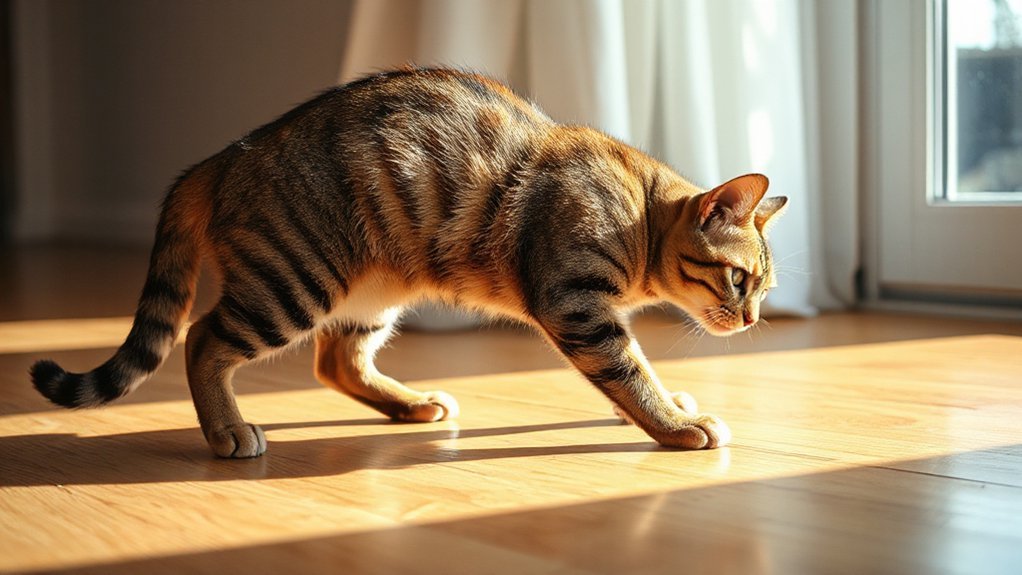

Your cat’s stretches aren’t just adorable—they’re essential maintenance. When your cat extends those limbs, she’s building flexibility, loosening tight muscles, and keeping joints mobile for everything from pouncing to napping. Stretches also release endorphins that ease tension and boost mood, making them genuine self-care. Plus, when she stretches vertically or scratches, she’s depositing scent from her paw glands, claiming territory and communicating comfort. But here’s the thing: sudden changes in stretching habits can signal health issues worth investigating further.
Key Takeaways
- Stretching builds flexibility, maintains joint mobility, and warms muscles while releasing endorphins that ease tension and improve mood.
- Cats mark territory through scent glands in their paws during stretches and scratches, reinforcing location ownership through pheromone deposition.
- Belly-up and open stretches signal deep trust and contentment; greeting stretches show happiness and positive social associations.
- Provide multiple tall scratching posts (60–90 cm) near sleeping spots and doorways with textured surfaces to encourage daily stretching.
- Sudden stretching changes, stiffness, limping, or excessive stretching with lethargy warrant veterinary evaluation to rule out arthritis or pain.
Why Cats Stretch: Physical and Emotional Reasons
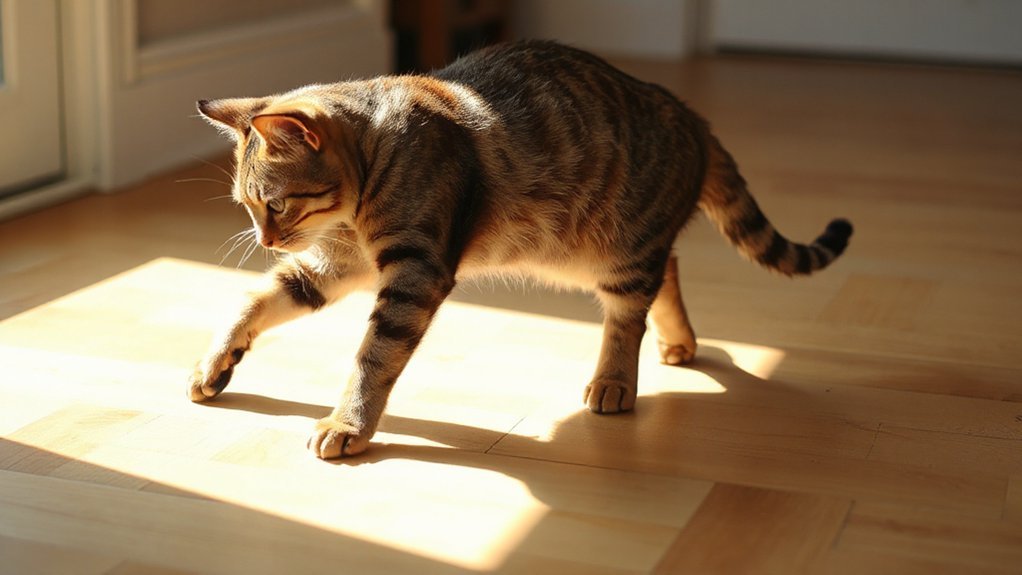
When your cat wakes from a nap and extends into that iconic full-body stretch—front paws reaching forward, rear end lifted, maybe a little yawn thrown in—there’s actually a lot happening beneath that graceful motion.
Your cat’s stretching flushes out metabolic waste and boosts blood circulation, warming muscles and joints for sudden bursts of activity. Think of it as their built-in warm-up routine. But it’s not just physical. Those slow, prolonged stretches release endorphins that genuinely ease muscle tension and lift their mood. You’re witnessing real relief and relaxation happening in real time.
When your cat stretches vertically or scratches nearby, they’re also marking territory—depositing scent from paw glands onto furniture, doorways, or even you. It’s how they claim spaces and build familiarity. Those open, relaxed stretches? They signal comfort and trust. Your cat’s telling you they feel safe enough to be vulnerable, especially when they stretch near you or belly-up. That’s intimacy, feline-style.
Stretch Types Explained
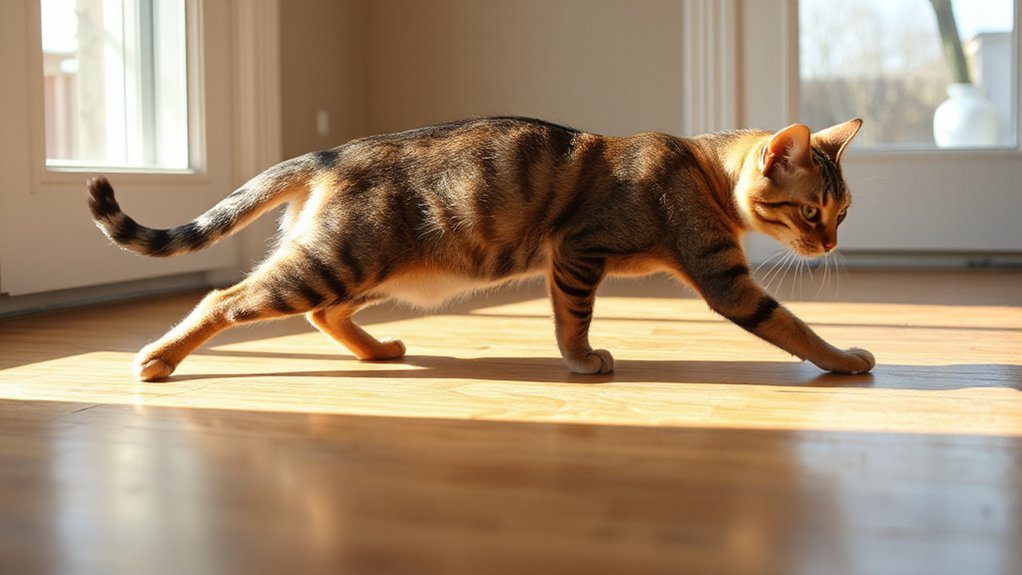
Categorizing your cat’s stretches isn’t just about naming what you’re seeing—it’s about understanding the specific work each move accomplishes. Your cat’s body speaks a precise language through movement, and you’ll catch onto it quick.
Your cat’s body speaks a precise language through movement—learn to read it, and you’ll understand them better.
Here’s what you’re really looking at:
- Full-body stretches realign the spine, loosen hips and back muscles, and typically show up before your cat moves or naps—think of it as their reset button.
- Vertical stretches combine shoulder and spinal extension with scent-marking from paw glands, hitting those forelimbs and latissimus muscles hard while your cat claims territory.
- Belly-up stretches work abdominal and flank muscles, signaling deep trust rather than an invitation to touch—respect that boundary.
Forelimb-focused moves lengthen shoulders and elbows. Hindlimb stretches? They’re building the explosive power your cat needs for pouncing and jumping. Each stretch targets something specific. Pay attention, and you’ll understand your cat better.
Spotting Health Problems
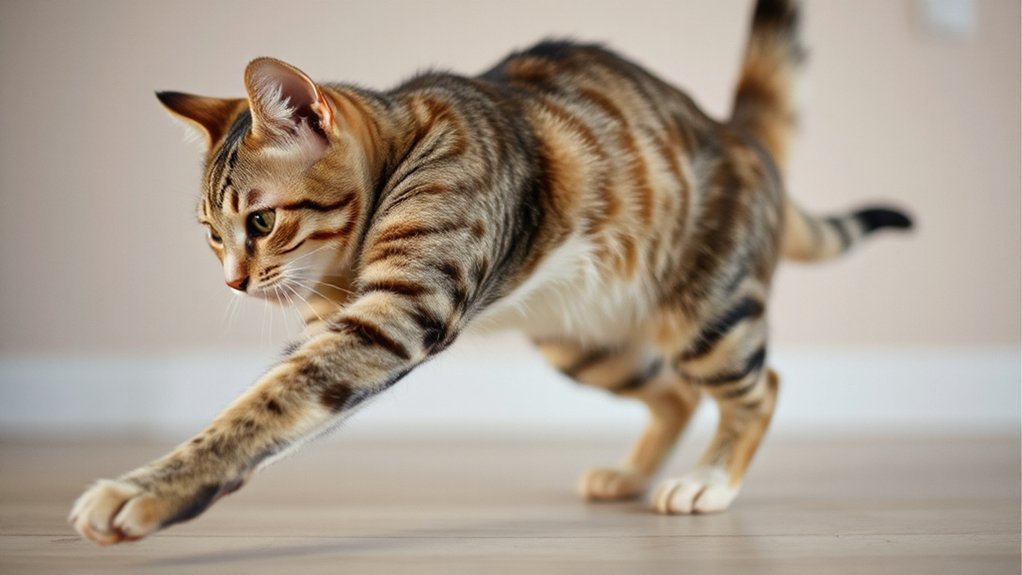
Your cat’s stretching habits tell you plenty—and when they shift, you’ve got to pay attention. If your senior kitty suddenly stops stretching, avoids full extensions, or pairs new stretching with hunching, vocalization, or rapid breathing, that’s your signal to contact your vet, because these changes often signal arthritis, joint pain, or abdominal discomfort that won’t resolve on its own. Beyond watching for pain signals, you’ll also want to support their musculoskeletal health by monitoring appetite changes, limping, litter-box shifts, and weight loss alongside stretching patterns—these clues work together to paint a complete picture of what’s actually going on.
Pain And Behavioral Changes
How’s your cat’s stretching routine been looking lately? Changes in how your cat stretches often signal pain or discomfort you shouldn’t ignore.
Watch for these key shifts:
- Decreased stretching—especially in older cats—suggests arthritis, joint issues, or pain that makes movement uncomfortable
- Excessive stretching—more frequent than usual—points to abdominal discomfort, back pain, or underlying problems needing attention
- Reluctance to full-body stretches—avoiding belly-up positions or flinching when touched indicates musculoskeletal pain
Pay attention to what accompanies these changes. Reduced appetite, increased vocalization, difficulty jumping, stiffness, or limping paint a clearer picture. Open-mouth panting’s another red flag. These behavioral shifts, combined with altered stretching, tell you your cat’s hurting. Don’t wait—contact your vet promptly. Early assessment catches arthritis, injuries, and other conditions before they worsen.
When To Consult A Veterinarian
When should you actually pick up the phone and call your vet about your cat’s stretching? Here’s the truth: most stretching is totally normal, but context matters. If your older cat (7+) suddenly stops stretching or moves stiffly after waking, that’s arthritis knocking. Pay attention if reluctance pairs with limping, jumping difficulties, or reduced activity—pain’s speaking loud. Acute signs demand urgent calls: vocalizing during movement, guarding the abdomen, repeated stretching with retching. Don’t wait on those. Excessive stretching beyond 48 hours, especially with lethargy, appetite loss, or weird bathroom habits? Schedule an exam. Neurological weirdness—uncoordinated gait, dragging limbs, sudden weakness—requires immediate assessment. Your cat can’t tell you what hurts, so you’re her voice.
Supporting Joint And Muscle Health
Because cats are masters of hiding discomfort, the real detective work happens in noticing what *changes*—and those changes often start small. You’re effectively your cat’s health advocate, so watch for these specific shifts:
- Stretching patterns: Shorter stretches, front paws not fully extended, or back legs barely pushing out signal early stiffness or pain.
- Mobility shifts: Reluctance to jump, reduced climbing, or declined play over weeks indicates worsening joint issues worth monitoring closely.
- Physical changes: Look for muscle wasting along the spine or asymmetric hindlimb atrophy—objective signs of chronic disuse or joint disease.
When you spot clustered signs—limping, stiffness after rest lasting over two minutes, decreased grooming, or vocalizing during movement—that’s your cue. Early veterinary assessment with diagnostics enables multimodal treatment: weight management, NSAIDs, physical therapy, and joint supplements. You’re preserving muscle and joint health by acting promptly.
Why Stretching Powers Hunting Instincts
Your cat’s post-nap stretch isn’t just adorable—it’s actually a physiological reset button that transforms her from sleepy couch potato into a hunting machine. Here’s what’s happening: those full-body stretches rapidly increase blood flow and muscle temperature, priming her fast-twitch fibers for explosive acceleration during a pounce.
When she stretches, she’s restoring ideal muscle length-tension relationships and joint range of motion. This means longer strides, better accuracy, sharper paw placement. Her spine flexes and extends, maintaining the core flexibility she needs for tight turns and sudden springs.
That brief post-stretch arousal? It’s endorphins and circulation working together, sharpening her alertness and reaction time. She’s converting dormancy into hunting-ready focus in seconds.
Loosened shoulders, mobilized hips, flexible joints—your cat’s literally preparing her body for precision work. The stretch isn’t just maintenance; it’s her secret weapon.
Scratching Posts and Flexibility: Encouraging Daily Stretches
You’ve got the perfect tool sitting right there—a vertical scratching post does double duty, letting your cat stretch their entire body while marking territory with scent glands in their paws, all in one satisfying motion. Strategic placement matters hugely: position posts near sleeping spots and doorways so your cat naturally reaches for a full-body stretch after napping or when they first come home, turning that instinctive move into routine flexibility work. Mix things up with varied heights and textures, add some interactive play nearby, and watch your cat’s daily stretching routine transform into the mobility maintenance that keeps them quick, agile, and ready to hunt.
Vertical Stretching And Marking
Stretching vertically—those full-body reaches where your cat stands on hind legs with front paws reaching skyward—isn’t just about flexibility, though it absolutely builds that. Your cat’s doing something equally important: marking territory and communicating through scent. Those interdigital glands in her paw pads? They’re depositing pheromones with every stretch and scratch, claiming space as unmistakably hers.
To maximize these dual benefits:
- Position posts strategically near beds, windows, and doorways where she naturally stretches after waking or arriving home
- Choose tall, sturdy posts—aim for 60–90 cm to accommodate her full body length when extended
- Prioritize textured surfaces like sisal rope that grip better than smooth materials, engaging her shoulders, forelimbs, and back
This setup reduces unwanted furniture scratching while keeping her muscles supple and joints mobile. You’re fundamentally giving her a designated stage for essential self-care.
Enriching Environments For Flexibility
Strategic placement matters, but here’s the thing: one scratching post, even the perfect one, won’t cut it. You’ll want multiple stations throughout your home—near sleeping spots, in different rooms, wherever your cat naturally gravitates. Why? Because cats stretch instinctively after naps and throughout the day, and they’re more likely to use what’s convenient.
Vary your textures too. Mix sisal rope, carpet, and cardboard to keep things interesting and target different stretching preferences. Tall, sturdy posts—at least as long as your cat standing fully extended—let them achieve those full-body reaches that maintain flexibility and joint health.
Add incentives. A sprinkle of catnip, a favorite toy, treats nearby? You’re building a stretching habit. Watch how quickly your cat transforms those posts into daily flexibility rituals, keeping their muscles supple and movements fluid.
Trust Signals in Stretches
Have you ever noticed how your cat’s entire body language shifts when they’re truly comfortable around you?
Your cat’s stretches tell a story about trust. When they stretch openly in your presence—slow, deliberate, full-body extensions—they’re saying something profound: *I feel safe here*. This isn’t random flexibility work; it’s vulnerability wrapped in muscle relaxation.
Pay attention to these trust markers:
- Belly-up stretches reveal your cat’s most exposed side, signaling they’ve lowered their guard completely
- Greeting stretches signal positive association—that friendly greeting stretch means your cat’s genuinely happy to see you
- Shared-space stretching in multi-cat homes demonstrates peaceful coexistence and relaxed social hierarchy
When your cat stretches deliberately near you, they’re releasing endorphins while communicating contentment. That calm, extended movement? Pure trust. Your cat’s basically saying, “You’re my safe space.” That’s the language of a cat who genuinely believes nothing threatens them in your company.
Frequently Asked Questions
Is It Normal for My Cat to Stretch a Lot?
Absolutely—your cat’s stretching habit is totally normal. Cats stretch multiple times daily, especially after naps (they’re sleeping 12–16 hours anyway). Those full-body stretches with extended front paws, arched backs, and splayed toes? That’s your cat keeping muscles supple, joints mobile, and circulation flowing. Plus, stretching signals comfort and marks territory through paw glands. Now, if your cat suddenly stops stretching or stretches reluctantly—that’s your cue to call the vet. Pain or arthritis might be lurking, particularly in older cats.
So
You’ve now got the tools to understand your cat’s stretching—why she’s doing it, what it means, and how you can support it. You’ll recognize when she’s hunting, when she’s trusting you, when she’s staying flexible. You’ll spot potential problems before they worsen. And here’s the thing: by providing scratching posts and watching her movements, you’re not just keeping her healthy—you’re deepening your bond. Your cat’s stretches? They’re telling her story.






Leave a Comment