

Pick your mat based on what you’re actually doing. Hot yoga? Grab the JadeYoga Harmony Mat—its natural rubber grip won’t betray you mid-downward dog when you’re sweating buckets. Beginners need cushioning, so that thick PVC option around thirty bucks delivers comfort without emptying your wallet. Travel light with Manduka’s ultralight folds. The real trick? Match material to practice, then layer a microfiber towel if grip’s your nemesis. Your joints—and budget—will thank you once you understand what thickness and texture actually do.
Key Takeaways
- Natural rubber mats like JadeYoga Harmony offer superior grip for sweaty yoga, though initial smell and lint attraction require consideration.
- Thickness ranges from 1.5 mm for travel to 6 mm for joint support; choose based on practice style and portability needs.
- Polyurethane-rubber mats absorb sweat effectively, providing stable traction during hot yoga without slipping or beading moisture.
- Budget-friendly PVC options deliver durability and lightweight construction, though eco-conscious practitioners may prefer natural rubber or TPE alternatives.
- Layer a microfiber hot-yoga towel over any mat for cost-effective grip enhancement and absorbency during sweaty sessions.
Best Yoga Mats: Hot Yoga, Beginners, and Budget Picks
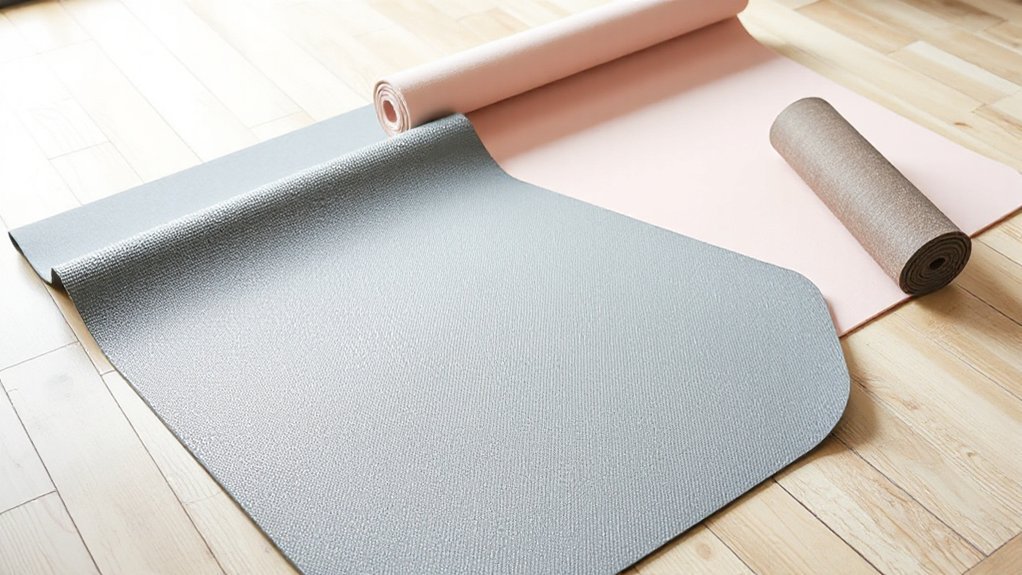
Finding the right yoga mat isn’t just about rolling it out—it’s about matching your practice to what’ll actually work for your body, your budget, and yeah, how much you’re willing to carry around.
For hot yoga, you need grip that won’t quit. The JadeYoga Harmony Mat grips like it means business—natural rubber, 4.75 mm thick, rated 10/10 for sweaty sessions. Fair warning: it smells strongly at first and catches lint.
If your knees and wrists need cushioning without losing traction, Lululemon The Mat delivers. That 5 mm dual-sided polyurethane-rubber construction absorbs sweat instead of letting it pool up. It’s hefty though—both the mat and the price tag.
Tight budget? Grab the Yoga Accessories 1/4″ Extra Thick Deluxe Mat. Around $30, this PVC option gives you serious padding for beginners, lasts forever, and weighs less than premium alternatives. Trade-off: less eco-friendly, but genuinely practical.
Yoga Mat Thickness and Material: What to Know Before Buying
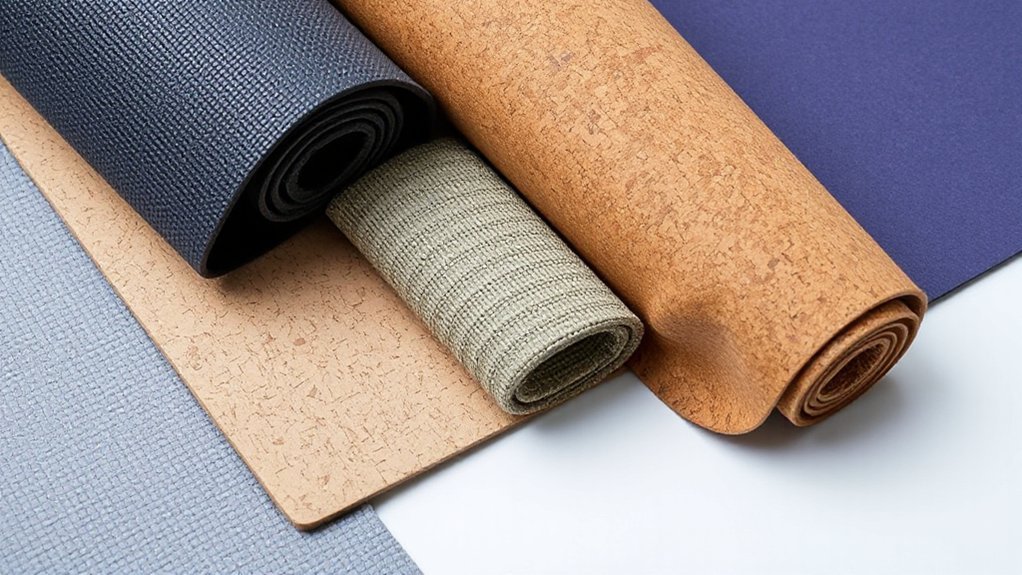
Before you drop cash on a mat, here’s the truth: thickness and material are the two biggest players in how your practice actually feels.
Thickness and material are the two biggest players in how your yoga practice actually feels.
Here’s what you’re actually choosing between:
- Natural rubber — grippy and eco-friendly, but that latex smell? Yeah, it’s real, and it’s not for everyone.
- PVC — cheap, durable, and forgiving, though not exactly Mother Earth’s favorite.
- TPE — lightweight, latex-free, and way less stinky than rubber.
- Cork — naturally gorgeous grip that actually *improves* when wet, perfect for sweaty flows.
Thickness matters too. Travel mats sit around 1.5 mm (portable but minimal cushioning), while studio standards hover at 4.75–6 mm. That Manduka PRO at 6 mm? Superior joint support for floor work. But thinner means better balance for standing poses.
Your sweat game changes everything. Cork and natural rubber handle moisture beautifully. Smooth polyurethane? It gets sticky and weird. Choose wisely.
Best Yoga Mats for Hot Yoga, Sweat, and Grip
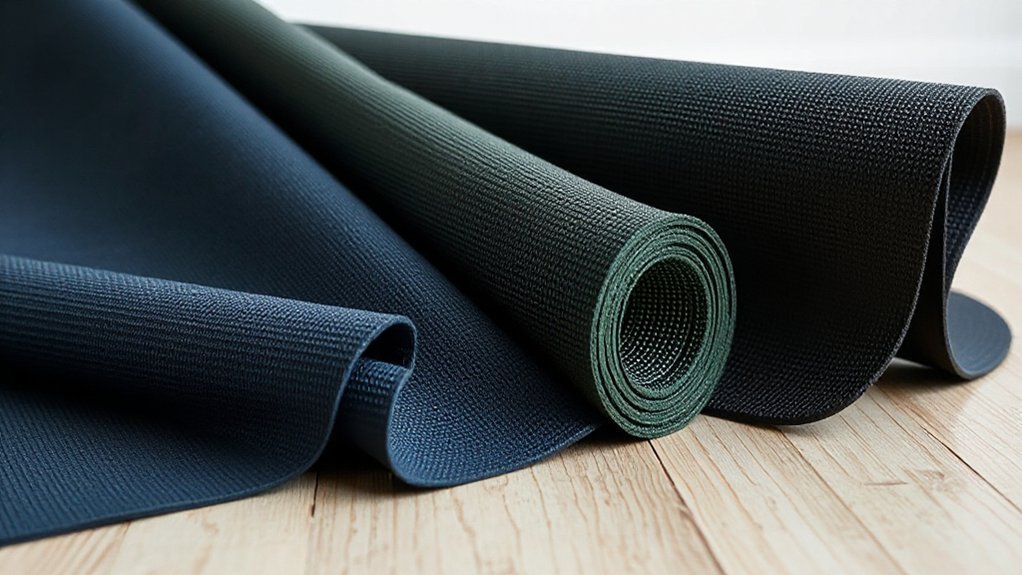
Now here’s where theory meets sweat: you’ve picked your material and thickness, but if you’re rolling out for hot yoga, everything changes. Grip becomes everything.
Cork and rubber mats win here—they *grip harder* as they get damp, not slicker. The JadeYoga Harmony Mat delivers exceptional suction (10/10 for fingers and toes), though expect initial rubber smell and lint attraction. If you want cushioning plus sweat-absorption, Lululemon The Mat’s polyurethane side prevents beading and locks you down during flowing sequences. It’s heavier to carry, but stability counts.
Short on budget? Layer a microfiber hot-yoga towel with corner pockets over your existing mat. Transforms most surfaces into high-traction, absorbent powerhouses. Or try this anecdotal hack: sprinkle coarse sea salt across your mat, let it sit 24 hours, rinse, then dry. Test small first—it restores grip surprisingly well.
How to Clean and Store Your Yoga Mat (and Make It Last)
Keep your mat fresh with these straightforward steps:
Keep your yoga mat fresh and extend its lifespan to 5+ years with consistent, straightforward maintenance practices.
- Wipe after every few uses with a damp cloth and diluted vinegar or manufacturer wash, then air-dry completely before rolling
- Follow brand guidelines—some makers like JadeYoga restrict certain cleaners that’ll void your warranty
- Deep clean occasionally by gently scrubbing with mild soap and water, rinsing thoroughly, then drying flat or hung
- Store smartly: roll most mats tightly for transport, but keep cork mats flat or hung to prevent cracking
Avoid soaking natural rubber or leaving mats in direct sun—both damage the material fast. With consistent maintenance, you’re looking at 3+ years easily, sometimes 5+. That’s solid value when you actually take care of what you’ve got.
Best Travel and Eco-Friendly Yoga Mats
Once you’ve mastered the basics of mat care, you’re ready to tackle a different challenge: finding the right mat for life outside the studio.
Travel mats like the Manduka eKO Superlite and Yogo Ultralight fold flat and weigh almost nothing—perfect for your suitcase. They’re thin (1.5–2 mm), though, so you’ll trade cushioning for portability. That’s the deal: less joint support, more convenience.
If sustainability matters to you, eco-friendly options deliver real impact. Jade Yoga’s Harmony uses natural rubber and plants a tree with each purchase. SUGA Premium recycles wetsuits into mats. Manduka’s eKO emphasizes renewable materials. These choices biodegrade better than PVC alternatives.
For hot yoga while traveling? Grab a thin rubber or cork mat with grip, or pair any travel mat with a hot-yoga towel to prevent slipping.
You’re choosing based on your values and lifestyle now—that’s progress.
Frequently Asked Questions
What Size Yoga Mat Should I Choose for Different Body Types and Heights?
You’ll want a standard 68-inch mat if you’re under 5’8″—it’s your sweet spot. Taller? Go 71-72 inches; you’re not cramped at either end. Broader builds need extra width, so hunt for mats around 26-27 inches instead of standard 24. Length matters more than width though. Test it: lie down lengthwise, leave a few inches at your head and feet. That’s your mat talking, telling you you’ve found the one.
How Often Should I Replace My Yoga Mat for Safety and Hygiene Reasons?
Sure, your mat’s basically immortal—if you ignore the bacteria. Replace yours every six to twelve months, depending on use. Heavy practitioners? Swap it sooner. Notice cracks, worn spots, or that funk no amount of washing kills? Time’s up. Clean weekly with mild soap, air-dry completely. Your skin’ll thank you, and honestly, your practice deserves a mat that actually supports you.
Can Yoga Mats Be Used on Different Floor Surfaces Without Slipping or Damage?
Your yoga mat handles most surfaces, yeah—but here’s the thing: hardwood and tile can get slippery without proper grip. You’ve got solid options though. Use a mat with textured rubber or PVC; they anchor well. On carpet, you’re golden. Laminate? Totally fine. Just wipe your mat’s bottom occasionally, keep it dry, and you’ll avoid sliding around like you’re on ice skates.
Are There Yoga Mats Specifically Designed for People With Joint Pain or Injuries?
Research shows 80% of Americans experience back pain—you’re not alone. Therapeutic yoga mats feature extra cushioning, typically 6-10mm thick, absorbing impact on knees, hips, and shoulders. Look for closed-cell foam construction; it’s denser, more supportive. Brands like Liforme and Manduka offer specialized versions with targeted zones. You’ll find alignment markers helpful too, keeping joints properly positioned during poses.
What’s the Difference Between Alignment Marks and How Do They Improve Practice?
Alignment marks guide your hands, feet, and body into proper positioning—you’ve got visual cues right there on your mat. They’ll help you maintain consistent distance between poses, prevent you from drifting sideways during downward dog, and honestly, they’re game-changers when you’re building muscle memory. Your practice becomes more intentional, your joints safer, your form sharper. That’s precision you can see.
So
You’ve got the knowledge now—thickness matters, grip wins workouts, and your mat’s lifespan depends on care. Whether you’re sweating through hot yoga, traveling light, or protecting the planet, there’s a mat waiting for you. The right one isn’t just equipment; it’s your foundation, your anchor. So choose wisely, roll it out, and commit. Your practice deserves nothing less than a mat that’s got your back, literally.







Leave a Comment