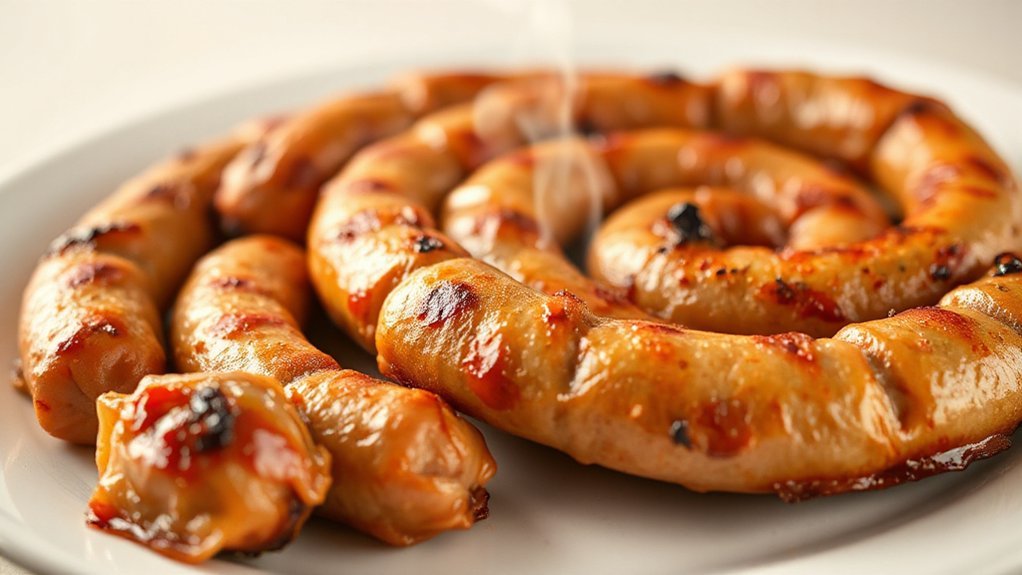

Homemade breakfast sausage beats store-bought every time—you’re mixing ground pork with sage, thyme, and a touch of brown sugar, then pan-frying patties until they’re golden. Here’s the thing: it takes maybe an hour to prep, costs half the price, and you control the salt, heat, and sweetness. Chill your mix overnight, form twelve compact patties, and fry them at medium-high heat for that restaurant-quality crust. Freeze ’em raw or cooked; they’ll keep three months. Want to master the technique, nail the seasoning, and discover all the ways you can use this beyond breakfast?
Key Takeaways
- Breakfast sausage features herb-forward seasoning with sage, thyme, and poultry seasoning, plus subtle sweetness from brown sugar or maple.
- Form 1½ lb ground pork (85/15 ratio) into 12 compact 3–4 inch patties; refrigerate at least one hour before cooking.
- Pan-fry patties 4–5 minutes per side over medium-high heat until browned and internal temperature reaches 165°F using an instant-read thermometer.
- Serve immediately hot alongside eggs, pancakes, biscuits, or crumble into gravies, casseroles, and breakfast sandwiches for savory protein and richness.
- Store cooked patties refrigerated 3–4 days or freeze up to 3 months individually wrapped; reheat in skillet, microwave, or air fryer.
What Sets Breakfast Sausage Apart From Other Sausages
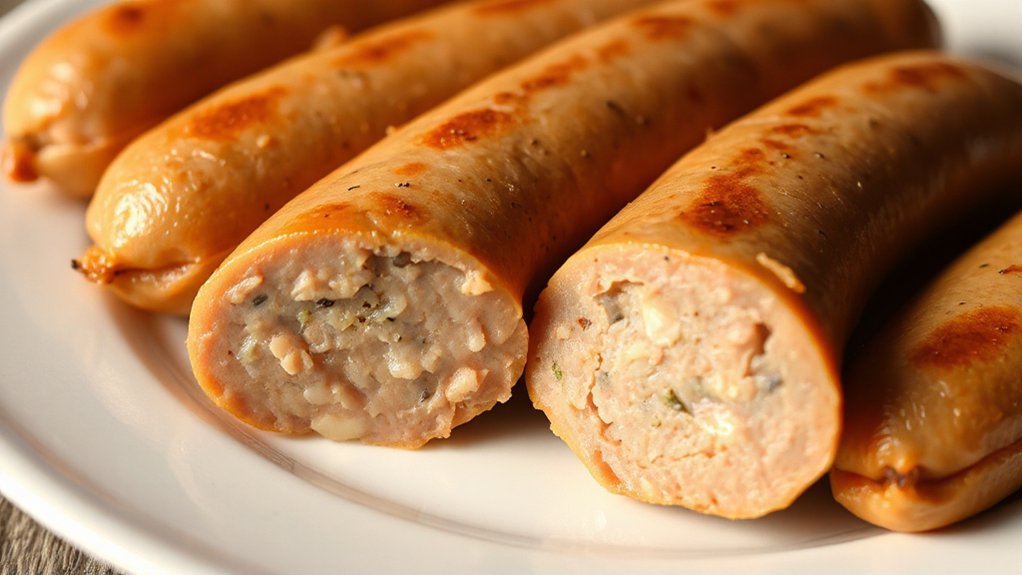
While you might think all sausages are basically the same—just meat stuffed in casings or formed into patties—breakfast sausage actually occupies its own delicious corner of the sausage world. Here’s what makes it distinctly yours.
Breakfast sausage occupies its own delicious corner of the sausage world, distinctly different from all the rest.
Unlike Italian sausages with their bold fennel and garlic punch, or chorizo’s fiery chili heat, breakfast sausage leans into herb-forward flavors. You’ll find sage, thyme, and poultry seasoning creating that warm, savory foundation. Add a touch of brown sugar, maybe smoked paprika or cloves, and suddenly you’ve got something subtly sweet—not spicy or intensely garlicky.
The meat itself matters too. You’re working with ground pork at roughly 85/15 lean-to-fat, which keeps things flavorful without being greasy. Those small patties or links cook quickly, reaching safe 165°F doneness fast.
The real difference? Breakfast sausage exists specifically for breakfast tables. It pairs naturally with eggs, pancakes, biscuits, gravies. Other sausages dominate differently. This one’s built for morning comfort.
Essential Ingredients for Homemade Breakfast Sausage
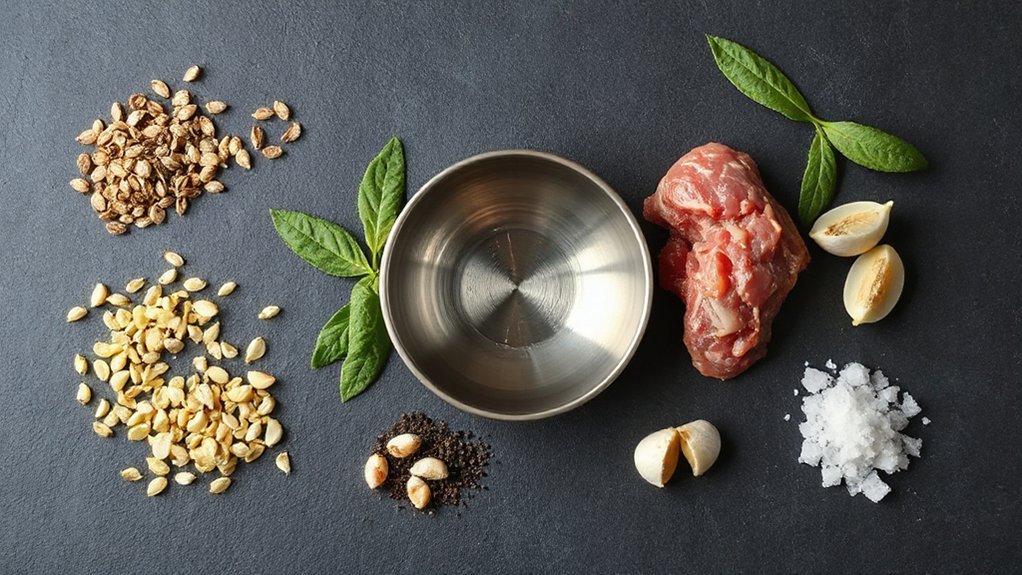
Making breakfast sausage at home comes down to nailing a few key players—nothing fancy, nothing you can’t find at any grocery store. You’re building layers of flavor here, and each ingredient pulls its weight.
| Ingredient | Amount (1½ lb batch) | Purpose |
|---|---|---|
| Ground pork (15% fat) | 1–1.5 lb | Juicy base, structural foundation |
| Fresh aromatics (sage, thyme, garlic) | 1 tbsp each + 4 cloves | Savory depth, brightness |
| Kosher salt & black pepper | 1½ tsp + 1 tsp | Core seasoning, balance |
| Brown sugar | 1 tbsp (optional) | Subtle sweetness, breakfast appeal |
| Spice blend (red pepper, poultry seasoning, smoked paprika) | ½ tsp each | Heat, complexity, visual appeal |
The fat content matters—too lean and you’ve got dry, disappointing patties. Fresh herbs beat dried ones hands down, though dried work if you halve the quantity. Pro tip: dried herbs pack more punch, so respect that concentrated flavor. Mix everything gently, keeping your pork cold. You’re creating breakfast magic here.
How to Make Breakfast Sausage at Home
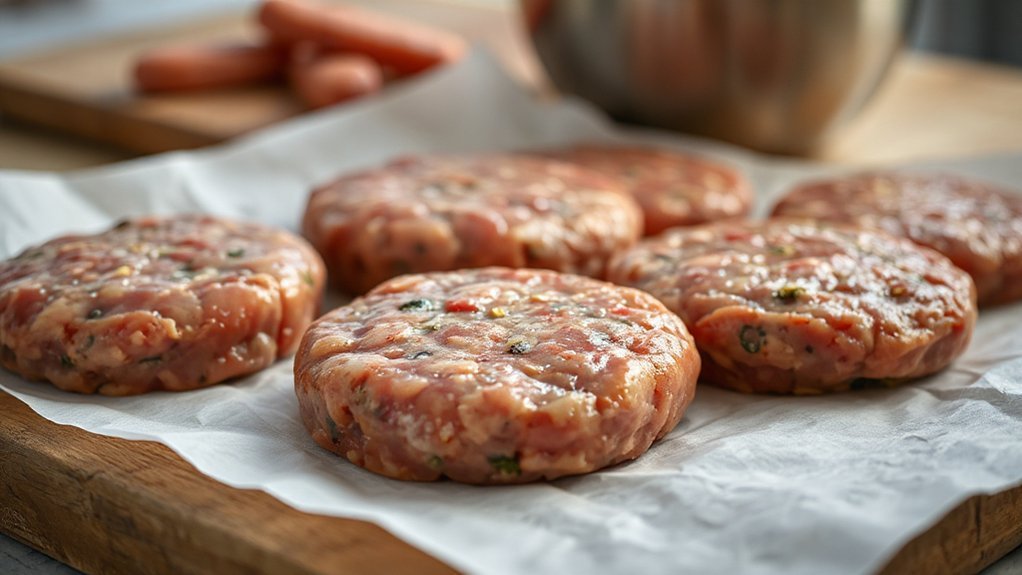
Now you’ll mix your pork and seasonings thoroughly, refrigerate the blend for at least an hour (overnight’s better), then form it into roughly twelve equal patties—and here’s the pro move: fry a tiny test piece first to catch any seasoning gaps before you commit to the whole batch. You can dial in the heat with extra red pepper flakes or cayenne, balance sweetness with brown sugar, or swap dried herbs for fresh using that ½ tsp dried-to-1 tbsp fresh conversion, so you’re really in control of the flavor. Once you’ve cooked them through—about four to five minutes per side until they hit 165°F—you can stash them in the fridge for three days, freeze them wrapped for three months, and reheat from frozen whenever breakfast calls.
Mixing And Forming Patties
Getting those seasonings to meld together is where the magic happens—combine your 1½ pounds of ground pork with all your seasonings (that’s 1 tbsp brown sugar if you’re going for it, 1 tbsp each of fresh sage and thyme, 1½ tsp kosher salt, 1 tsp black pepper, ½ tsp red pepper flakes, ½ tsp poultry seasoning, and ½ tsp smoked paprika) in a large bowl and mix by hand until everything’s evenly incorporated.
Now here’s where patience pays off:
- Refrigerate at least one hour—overnight’s even better—so herbs and spices truly meld together
- Divide into 12 equal portions and gently form each into a compact 3–4 inch patty, avoiding overworking the meat
- Chill patties another hour before cooking to help them hold their shape when browning
Before you cook or freeze a batch, fry a pinch-size piece to test seasoning and adjust as needed.
Seasoning Adjustments And Variations
Once you’ve nailed that baseline recipe, the real fun starts—because breakfast sausage isn’t one-size-fits-all, and you shouldn’t treat it like it is. Want something sweeter? Swap in maple syrup or bump up that brown sugar for genuine breakfast-link vibes. Craving Italian notes? Fennel seed, cloves, or extra paprika’ll get you there. Heat-seeker? Add cayenne, chipotle powder, or more red pepper flakes. Prefer mild? Dial back the spice entirely. Here’s the smart move: fry a small pinch of your seasoned mix first. Taste it. Adjust salt, herbs, and heat before committing your entire batch. It’s the difference between good sausage and sausage you’ll actually crave next Sunday morning.
Storage And Make-Ahead Tips
If you’ve gone to the effort of making fresh sausage, you’ll want it to stick around—and that’s where smart storage becomes your best friend.
Here’s your game plan:
- Refrigerate cooked patties in an airtight container for 3–4 days, keeping them fresh and ready for quick breakfasts
- Freeze both cooked and uncooked patties by wrapping individually or flash-freezing on a tray first, then bag them for up to 3 months
- Test before batch-freezing by frying a small portion, checking seasoning, and adjusting salt or herbs before committing everything to the freezer
Thawing’s straightforward: overnight in the fridge or straight from frozen in a skillet, microwave, or air fryer until you hit 165°F internally. Make-ahead sausage? That’s just smart breakfast planning.
Storage and Freezing Tips for Homemade Batches
Since you’ve put in the effort to make your own breakfast sausage, you’ll want to keep it fresh and ready to cook—and that’s where smart storage comes in. In your refrigerator, cooked or raw patties’ll last 3–4 days in an airtight container. That’s your quick-win window.
For longer hauls, freezing’s your friend. Wrap patties individually in plastic wrap, lay them flat on a tray to flash-freeze, then transfer to a labeled freezer bag or container. You’ll get up to three months this way. Here’s the essential part: separate pieces with parchment or freezer paper so they don’t clump together—nobody wants a sausage brick.
Before you freeze a big batch, fry up a small test portion. Check your seasoning, adjust salt or heat if needed, then proceed confidently. When you’re ready to cook, thaw overnight in the refrigerator or reheat straight from frozen. Always hit that 165°F internal temperature before serving.
Best Ways to Cook and Serve Breakfast Sausage
You’ve got solid options here—pan-fry your patties over medium heat for about 4–5 minutes per side until they hit that perfect 165°F internal temp, or crumble bulk sausage over medium-high heat if you’re building a breakfast casserole or topping scrambled eggs. Once you’ve nailed the cooking method, you’re ready to serve: stack those golden patties on biscuits with cheese and a fried egg, pair them alongside eggs and potatoes for a classic breakfast plate, or crumble them straight into your favorite morning dishes. The beauty of homemade breakfast sausage is its flexibility, so whether you’re keeping it simple or getting creative with maple glazes and sweet variations, you’ll have a delicious, protein-packed foundation for breakfast, lunch, or even dinner.
Cooking Methods And Temperatures
Getting breakfast sausage to that perfect golden-brown exterior while keeping the inside juicy requires nailing two things: heat level and internal temperature. Here’s what you need to know:
- Pan-frying: Cook patties 4–5 minutes per side over medium heat, or bump it to medium-high for crispier edges in about 5 minutes per side
- Temperature target: Always hit 160–165°F internally—use an instant-read thermometer, don’t guess
- Testing technique: Fry a small piece first when trying a new batch or seasoning
The trick? Medium heat gives you control; medium-high delivers that restaurant-quality crust. Cook until browned and cooked through, then serve immediately while everything’s still hot. You’ll nail it every time.
Serving Ideas And Pairings
Once you’ve nailed that perfect golden-brown sausage, the real fun begins—deciding how to serve it. You’ve got options, honestly. Pan the patties alongside scrambled eggs, hash browns, or waffles for a classic breakfast plate that never disappoints. Want something quicker? Split cooked patties onto a biscuit or English muffin with a fried egg and cheese—breakfast sandwich done right. Crumble them into gravy for that comforting sausage-and-gravy-over-biscuits situation we all crave on chilly mornings. Here’s the thing: you can also crumble raw or cooked sausage into casseroles, egg bakes, burritos, lasagna, even gnocchi. Adds serious savory richness and protein punch. Cooked patties keep three to four days refrigerated or freeze beautifully for three months. Reheat in a skillet, microwave, or air fryer straight from frozen.
Homemade vs. Store-Bought: Which Option Is Right for You?
Should you roll up your sleeves and make breakfast sausage from scratch, or grab a box from the freezer section?
Here’s the honest truth: it depends on your priorities. Homemade sausage gives you control—you choose the seasonings, fat content, and sodium levels. Store-bought wins on convenience and cost; Johnsonville runs about $5.29/lb, while Great Value patties cost as low as 21¢/oz.
Consider what matters most to you:
- Control & customization: Homemade lets you dial in heat (cayenne, red pepper), richness (pork shoulder, bacon), or saltiness to match your exact taste
- Prep & freezing: Mix, marinate, and freeze homemade batches for up to 3 months of ready-to-cook mornings
- Quick mornings: Store-bought comes fully cooked or heat-and-serve—no fuss, no testing needed
Here’s my take: try frying a small test batch of your homemade mix before committing a large recipe. If seasoning tweaks appeal to you, homemade’s worth it. If busy mornings demand speed, store-bought delivers without compromise.
Frequently Asked Questions
How to Cook Breakfast Sausages?
Brown your patties in a skillet over medium heat—about four to five minutes per side, depending on thickness. You’re looking for that gorgeous golden-brown exterior. Use an instant-read thermometer to hit 165°F internally; that’s your food-safety sweet spot. Fry a test patty first, honestly. Check your seasoning, adjust if needed, then cook the whole batch with confidence. Don’t skip this step.
So
You’ve got this. Sure, store-bought’s convenient—grab it, cook it, done. But homemade? That’s where you reclaim control: seasoning it your way, knowing exactly what’s in there, making breakfast genuinely *yours*. The effort’s minimal, the payoff substantial. You’ll freeze batches, impress yourself, maybe even your family. Stop settling for mediocre morning meat. Start making sausage that actually tastes like breakfast should.






Leave a Comment