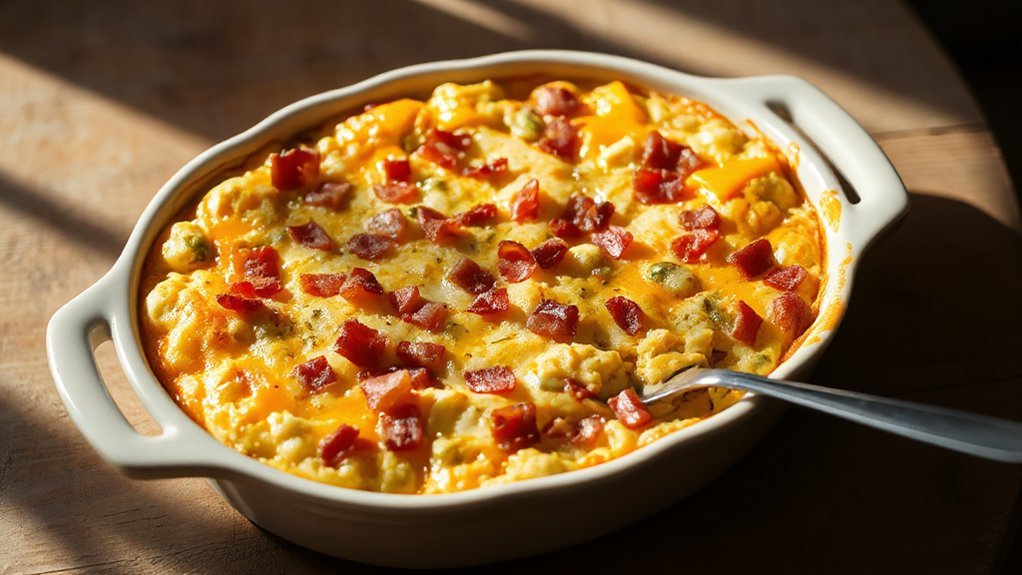

You can assemble a breakfast casserole the night before or freeze it for months—no morning stress required. The magic comes from four components: roughly one pound of browned protein (sausage, bacon, ham), three to four cups of pre-cooked vegetables, three to four cups of cubed bread or hash browns for structure, and a custard of twelve eggs mixed with milk and cheese. Bake at 350°F for thirty-five to fifty minutes until edges turn golden and the center stays slightly jiggly. Want to master the timing, fixes, and storage tricks that keep this dish perfect every single time?
Key Takeaways
- Combine four essential components: 1 lb protein, 3–4 cups vegetables, 3–4 cups starch, and egg-cheese mixture for structural integrity.
- Bake at 350°F for 35–50 minutes in a 9×13 pan until edges are golden and center is slightly jiggly.
- Assemble the night before or freeze up to 3 months; thaw overnight in refrigerator before baking for convenience.
- Brown and drain meats; pre-sauté watery vegetables; pat potatoes dry to prevent grease pools and excess moisture.
- Test doneness by inserting a toothpick into the center—clean or barely moist crumbs indicate the casserole is ready.
Why This Casserole Works as Make-Ahead Breakfast
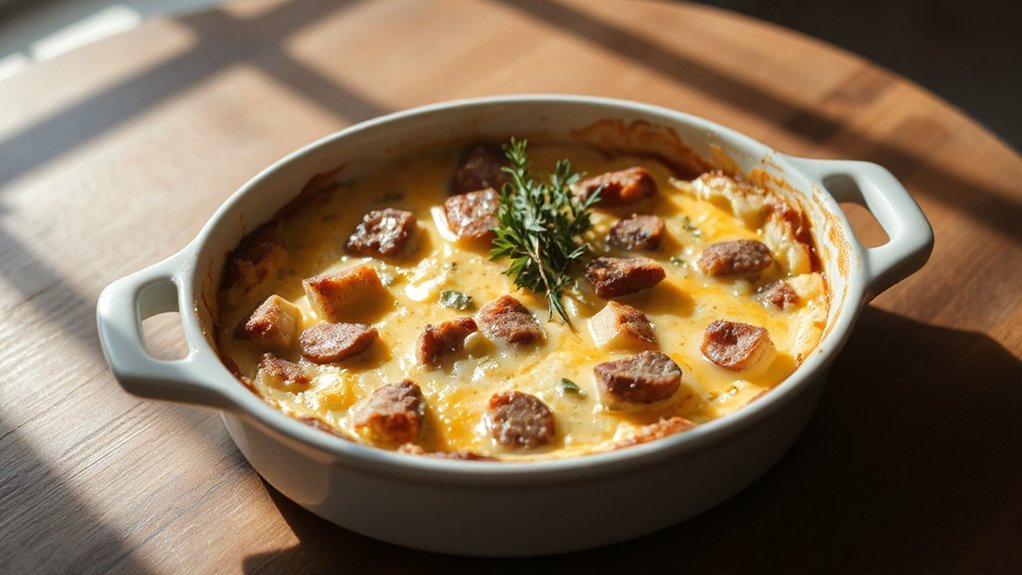
Assembling a breakfast casserole the night before—or even months ahead—is genuinely one of the smartest moves you can make in the kitchen. You’ll save yourself serious morning stress.
Here’s why it works: you can refrigerate your fully assembled casserole for up to 24 hours, or freeze it for 2–3 months. That flexibility means prep when you’re calm, bake when you’re ready. The starches—bread or thawed hash browns—absorb the egg mixture as it sits, preventing that dreaded soggy texture while actually strengthening the structure.
Better yet? Cook your fillings the day before. Brown that sausage, sauté your vegetables, then simply layer everything together when assembly time comes. This cuts your morning bake time substantially.
And here’s a pro tip: slightly underbake before refrigerating. Let the edges set while the center stays a touch jiggly. When you reheat, you’ll get perfect texture. Your casserole reheats beautifully—individual portions zip through the microwave, whole pans warm at 350°F—making grab-and-go breakfasts genuinely convenient for busy mornings or feeding crowds.
The Four Essential Components of a Perfect Breakfast Casserole
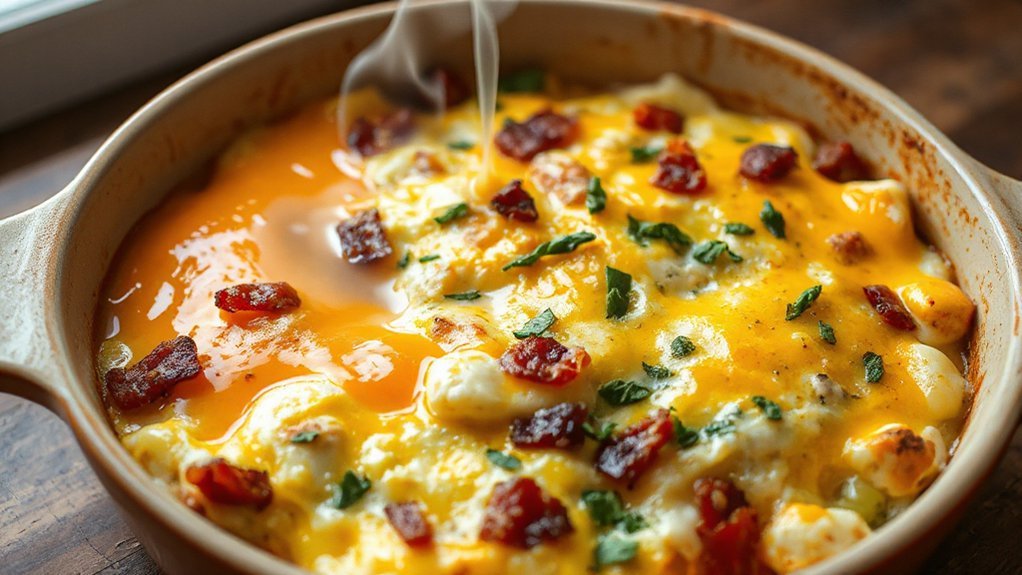
Since every great breakfast casserole depends on the same winning formula, let’s break down the four essential components you’ll need—and yes, you really do need all of them.
Every great breakfast casserole depends on the same winning formula: four essential components that truly do need all of them.
- Vegetables (3–4 cups): Sauté your onions, bell peppers, spinach, and mushrooms first to soften them and squeeze out excess moisture. A runny casserole? Nobody wants that.
- Protein (1 lb): Brown your sausage, bacon, or chorizo completely, then drain it well. You’re after even flavor and no grease pools.
- Starch (3–4 cups): Use cubed bread or hash browns as your structural backbone. This absorbs the egg liquid and prevents mushiness.
- Egg mixture & cheese (12 eggs, 1–1.5 cups milk, 1–2 cups cheese): Whisk everything together to create that creamy, custardy texture that holds everything in place.
That’s it. Four components, infinite combinations.
Customize Your Breakfast Casserole With Mix-And-Match Ingredients
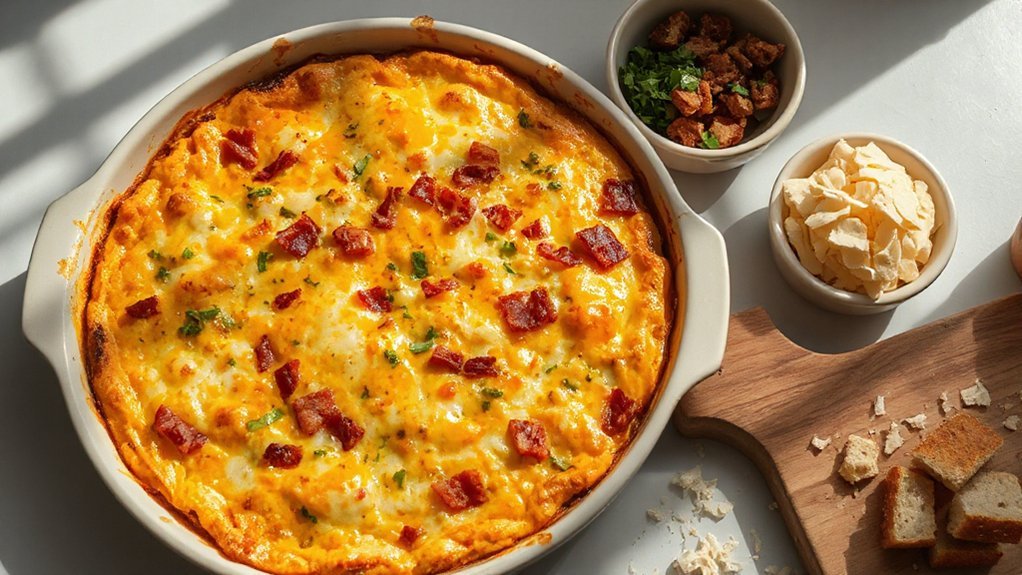
The beauty of breakfast casserole? You’re not locked into any one formula—swap your proteins (sausage, bacon, ham, chicken), play with cheeses (cheddar, pepper jack, gouda), and load up vegetables based on what you’ve got on hand or what your crew actually eats. Your starch choice matters too: frozen hash browns give you heartier, chewier texture, while cubed bread creates that softer, almost strata-like feel, so pick whichever vibe matches your breakfast goals. Once you understand these three core swap zones—protein, vegetables and cheese, bread and starch—you can confidently build a casserole that’s genuinely yours, not just a recipe you’re following.
Protein & Meat Swaps
Make this casserole truly yours by swapping out the protein—because, honestly, breakfast meat preferences are personal, and there’s no reason you can’t build exactly what your crew craves.
- Pork sausage (1–2 lb) is your classic move—brown and drain it first to dodge grease buildup
- Bacon or ham (½–1 lb) bring milder, crowd-pleasing vibes with minimal prep required
- Turkey or chicken sausage work beautifully for leaner results, though you’ll want to boost seasonings since they’re subtler
- Chorizo or spicy sausage deliver bold heat and depth—just taste before salting
Going vegetarian? Skip the meat entirely and bulk up with extra veggies or crumbled tofu instead. Cook and drain any replacements like you would meat. The beauty here? You’re in control. Adjust seasonings to match your protein’s personality, and you’ll nail it every time.
Vegetable & Cheese Combinations
Layering vegetables and cheese is where your casserole goes from good to genuinely crave-worthy—and you’ve got total freedom to build exactly what you’re hungry for. Aim for 3–4 cups total veggies: think 1–1½ cups diced bell peppers, 1 cup sautéed onions, 1 cup wilted spinach. The key? Pre-cook watery vegetables like mushrooms or zucchini to drain excess moisture—soggy casserole’s nobody’s goal. For cheese, use 1–2 cups shredded from a block (pre-shredded’s got anti-caking stuff that gums things up). Match your flavors: cheddar with sausage and peppers, Swiss with ham and broccoli, feta with spinach and roasted reds, smoked gouda with bacon. These pairings aren’t rules—they’re your starting point. Mix, match, taste as you go.
Bread & Starch Options
Once you’ve nailed your veggie-and-cheese combo, your bread or starch choice becomes the backbone—literally the structure that’ll hold everything together and determine whether you’re biting into something custardy and tender or crispy and hearty.
Here’s what you’re working with:
- Crusty bread (sourdough, ciabatta, baguette)—use about 4 cups cubed; slightly stale bread absorbs the egg mixture without turning mushy
- Rich, flaky options (croissants, brioche, biscuits)—these deliver indulgence but need extra bread for structural support
- Frozen hash browns (thaw and pat dry first)—roughly 3 cups prevents excess moisture and bakes evenly
- Crispy alternatives (tater tots, roasted potatoes)—par-cook fresh potatoes to drive off water before assembly
Your starch choice directly impacts bake time and texture. Bread absorbs liquid for that creamy interior; potatoes need longer baking but reward you with heartiness.
Bake Your Breakfast Casserole Until Golden and Set
You’re ready to bake—preheat your oven to 350°F (or 375°F if you’re making a denser, bread-and-potato version), then slide your casserole in for 35–50 minutes until those edges turn golden and the center jiggles just slightly. Here’s your doneness test: stick a butter knife or toothpick into the middle, and if it comes out clear with maybe a tiny bit of moisture and no pooling, you’ve nailed it. Keep in mind that thicker pans, cold assembled casseroles, or anything baking from frozen will need an extra 5–20 minutes, so start checking early and add time as you go.
Golden Edges, Jiggly Center
Because timing’s everything with breakfast casseroles, you’ll want to preheat your oven to 350°F (or bump it to 375°F if you’re working with a denser, bread-heavy situation) and plan for roughly 35–50 minutes in a standard 9×13 pan.
Here’s what you’re really after—that sweet spot between set and jiggly:
- Golden edges should be firm and deeply browned, signaling the outer third’s locked in
- A lightly jiggly center that wobbles slightly when you gently shake the pan
- The knife test: insert a thin spatula into the middle; if liquid pools, keep baking; if it comes out mostly clean with just slight jiggle, you’re golden
- Carryover heat finishes the job as it cools, so don’t overbake
That lightly set middle? That’s your ticket to creamy, tender bites instead of rubbery disappointment.
Timing Adjustments by Pan
Pan size matters more than you’d think—it’s the difference between creamy perfection and a dry, overcooked mess. Your standard 9×13-inch pan? That’s your sweet spot, baking at 350°F for 35–50 minutes or 375°F for 40–45 minutes. Going deeper with an 8×8-inch dish demands patience: cover it, bake about an hour, then uncover for another 10 minutes until set. Want shallower? Halve your ingredients, use a 9-inch square pan, and knock down your time to 32–36 minutes. Already prepped and chilled? Add 5 extra minutes and let it sit 10–15 minutes at room temperature first—trust me, your casserole’ll cook way more evenly. Always knife-test the center; slight jiggle’s fine, but pooling liquid means keep going.
Toothpick Test for Doneness
After the minimum bake time’s up—around 35 minutes for a standard 350°F casserole—grab a clean toothpick or butter knife and head straight for the thickest part of the center. Here’s what you’re looking for:
- Clean or barely moist crumbs clinging to the toothpick signal you’re done
- Glossy, runny egg pooling on the pick means keep baking—retest in 5–7 minutes
- Set edges with golden color while the middle stays slightly jiggly
- Firm center after cooling—that slight wobble’s perfectly normal right out of the oven
If you’re testing a chilled or frozen casserole, add 5–15 extra minutes before your first check. The toothpick test beats guessing every time. You’ll know that perfect doneness when you see it.
Fix a Dry, Undercooked, or Overbrowned Casserole
Even the best breakfast casserole can stumble in the oven—you’ll pull it out to find the center’s still jiggling like it just woke up, the edges have turned dark brown, or worse, the whole thing’s dried out like yesterday’s toast.
Here’s how to save it. If the middle’s undercooked, return it to 350°F, loosely cover it with foil, and bake another 10–20 minutes until edges set and the center’s only slightly jiggly. For overbrowning while the inside needs time, tent the casserole with foil and drop the temperature to 325–350°F so the interior finishes without further crisping.
Already overdone and dry? Reheat it covered at 300–325°F with a few tablespoons of milk or sour cream drizzled over the slices—this restores moisture beautifully. Single servings? Microwave with a damp paper towel for 30–60 seconds. Quick fix, real results.
Store, Freeze, and Reheat for Weeknight Meals
Once you’ve got your casserole sorted—whether it came out perfect or you’ve nursed it back to life—the real magic happens in the planning ahead.
Here’s your roadmap for stress-free mornings:
- Refrigerate baked leftovers tightly covered for 3–4 days maximum; unbaked casseroles keep refrigerated up to 24 hours (sometimes 48).
- Freeze assembled casseroles wrapped in plastic then foil for 2–3 months—thaw overnight in the fridge before baking.
- Portion intelligently by dividing into two pans or freezing individual slices; microwave single servings or reheat larger portions at 350°F for 25–30 minutes.
- Prevent sogginess by fully browning and draining meats, patting frozen potatoes dry, and adding cream only when you want extra richness.
The secret? Bring everything to room temperature before baking or reheating. That 10–15 minute pause pays dividends, ensuring even cooking and better texture throughout.
Frequently Asked Questions
What Is Jackie Kennedy’s Casserole?
Jackie Kennedy’s casserole is your go-to retro comfort dish—a creamy, one-pan bake you’ll find at potlucks everywhere. You’re mixing protein (usually canned tuna or chicken), cooked noodles, condensed cream soup, and veggies like peas. Then you’re topping it with breadcrumbs, crushed chips, or cheese before baking until bubbly and golden. Since families adapt it constantly, there’s no single recipe—you’re working with whatever ingredients feel right to you.
So
Your breakfast casserole’s like a well-built bridge—you’ve got sturdy supports, smart planning, and flexibility built in. You’ve mastered the formula, customized it to fit your crew, and conquered the baking science. Now you’re prepping meals like a pro, freezing portions, reheating without drama. That’s not just breakfast; that’s you winning mornings before they even start. You’ve got this down.







Leave a Comment