

You can build a quiet, spiritual morning practice in just ten minutes that grounds you before the day unfolds. You’ll prepare a small calm space, use simple breathwork, a short presence meditation, and a tiny ritual to carry centeredness forward. It’s practical and gentle—keep going to see the exact steps.
Why a 10-Minute Spiritual Practice Matters

Starting your day with just ten minutes of spiritual practice grounds you quickly and gently, so you meet the day from a place of clarity rather than reactivity. You’ll notice how short, focused rituals sharpen attention, reduce overwhelm, and create reliable momentum for the day. Ten minutes respects time efficiency while offering consistent depth; it’s long enough to center and short enough to stick to. By repeating these moments daily you build habit formation that supports resilience, presence, and clearer choices under pressure. Keep the practice simple: breathe, set an intention, notice sensations, and return when your mind wanders. With patience and gentle consistency you’ll find that small, regular practices reshape your experience and stabilize your mornings. They quietly expand your sense of calm.
Preparing Your Space and Mind for the Morning

Now that you’ve seen how a brief practice steadies your attention, prepare both your surroundings and your inner field so those ten minutes land more fully. Open curtains to invite Natural light, clear a small surface, and choose an Aroma selection that soothes you. Keep choices minimal so you don’t decide during practice.
| Tip | Why | Action |
|---|---|---|
| Light | Wakes senses | Open curtains, face east if possible |
| Aroma | Anchors mood | Use one scent, a drop on cloth or diffuser |
Sit comfortably, set an intention, and let this simple setup support a consistent, kind morning routine. If distractions arise, acknowledge them briefly, adjust the space—remove clutter or dim lights—and return gently to your intention, honoring that small steady practices grow into lasting habits with calm daily consistency.
Quick Breathwork to Ground and Center
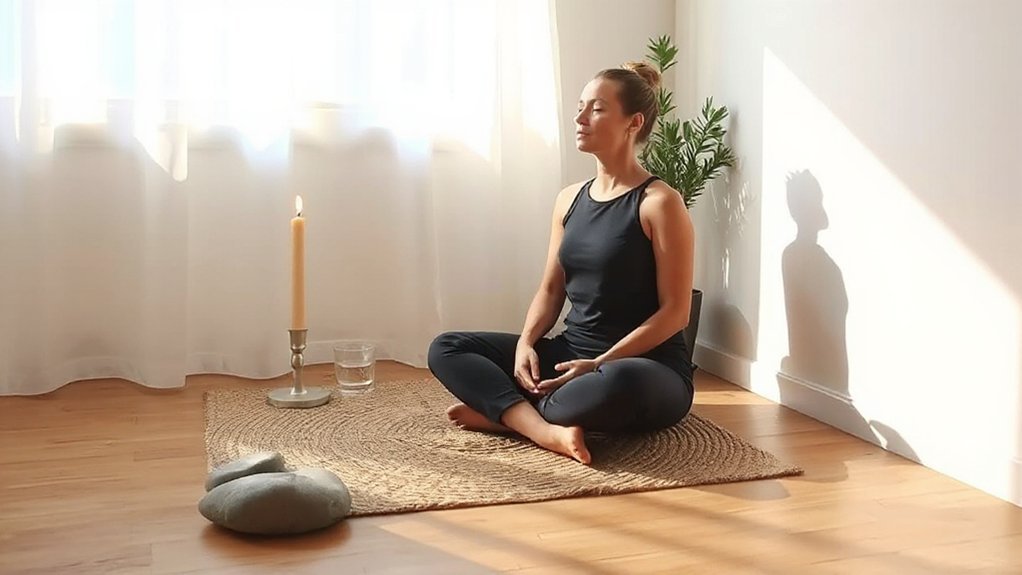
You can quickly ground and center yourself with simple breathwork like box breathing, which uses equal counts of inhale, hold, exhale, hold to steady the nervous system. Alternating nostril breathing balances your energy and calms the mind with gentle, controlled inhales and exhales through each nostril. Try a minute or two of each to start your morning feeling present and centered.
Box Breathing Practice
Although mornings can feel rushed, box breathing gives you a steady anchor to ground and center in just a few breaths; inhale for four, hold for four, exhale for four, and hold for four, repeating three to five times while letting your shoulders soften and attention return to the breath. You’ll find heart coherence and improved cognitive focus as rhythm calms the nervous system. Sit tall, breathe through the nose, and map the square in your mind. Use the table to guide subtle cues.
| Step | Count | Cue |
|---|---|---|
| Inhale | 4 | Fill abdomen |
| Hold | 4 | Soften shoulders |
| Exhale | 4 | Release tension |
| Hold | 4 | Notice heartbeat |
Finish with three gentle cycles, then continue your morning with clarity. Return to breath anytime you need calm and renewed presence.
Alternate Nostril Breathing
Practicing alternate nostril breathing helps balance your nervous system and quickly grounds you for the day. Sit comfortably, soften your shoulders, and use your right thumb to close your right nostril. Inhale slowly through the left, close it with your ring finger, then exhale through the right. Continue for five to ten cycles, keeping breaths smooth and even. You’ll notice immediate physiological benefits: lowered heart rate, calmer mind, and clearer focus. Try technique variations like longer exhales for relaxation or box-timing for rhythm. If you feel lightheaded, return to normal breathing. Practice gently, without forcing, and aim for consistency over intensity. In minutes, you’ll feel centered, present, and ready to begin your spiritual morning practice. You can repeat this sequence throughout the week for balance.
A 3-Minute Meditation to Find Presence
When mornings feel rushed, take three minutes to anchor yourself in the present. Sit comfortably, close your eyes, and let your breath slow. Start by noticing sounds, temperature, and the weight of your body—this Sensory Awareness grounds you quickly. Then follow a simple pattern:
- Breathe deeply for a count of four, hold one, exhale for four.
- Scan your body from head to toes, releasing tension as you find it.
- Return to the breath, noticing arrival and departure.
These Mindful Microbreaks reset your nervous system and sharpen focus without taking time from your day. If thoughts arise, greet them gently and guide attention back to sensation. Finish with a gentle stretch and carry the clarity into your next task and breathe kindly.
Setting an Intention and Small Daily Rituals
Because your morning sets the tone, take a quiet minute to name a clear intention and pair it with one tiny, repeatable ritual you’ll actually do. Choose an intention that feels simple and honest — for example, “stay present” or “move with kindness” — and select a ritual trigger that reliably reminds you: the faucet, the first sip of water, or putting on your shoes. Keep the action small: three breaths, a brief stretch, or a conscious pause. This links behavior to value and creates value alignment between what you say you care about and what you practice. Over time, those ritual triggers build a gentle structure, so your intention isn’t a thought alone but a lived moment that deeply grounds the rest of your day.
Gratitude, Short Readings, and Carrying the Practice Forward
Begin each morning by naming a few things you’re grateful for and reading a short passage that grounds you. These small acts anchor your attention and set a gentle tone for the day. Keep the practice going by choosing a simple ritual you can repeat and carrying that gratitude into one intentional action as you move through your day.
Gratitude and Readings
As you settle into your morning practice, name three things you’re genuinely grateful for and let each one soften your attention. Begin with a quiet inhale, notice how gratitude shifts your body, then reach for a short reading that resonates—Memoir Excerpts can ground memory, Verse Study can open language. Choose a passage under a minute.
- Read slowly, letting one line land.
- Pause, breathe, and notice what stirs.
- Offer a brief reflection or intention.
These small acts steady you without pressure. Keep selections tiny and meaningful so the practice fits ten minutes. Let gratitude and readings be a compassionate container: simple, steady, and enough to orient you toward the day. Return to this rhythm whenever you need a gentle re-centering in morning stillness today, always.
Carry Practice Forward
After tending to gratitude and a short reading, you can carry that steadiness into your day with small, repeatable actions.
| Action | Cue | Time |
|---|---|---|
| Three breaths | Before meeting | 1 min |
| Gratitude note | Morning | 2 min |
| Mindful walk | Midday | 10 min |
| Check-in | Weekly | 5 min |
Use brief rituals—three breaths before meetings, a mindful walk, or a pause to note one kindness—to keep presence. Set progress checkpoints midweek and monthly, and reflect briefly; this keeps practice alive. Invite a friend or join a group for community accountability; sharing wins steadies habit. Keep notes in a single place so you see growth. When stress arrives, return to one breath and one grateful thought. These tiny choices compound gently and build resilience over time, with patience and compassion always.






Leave a Comment