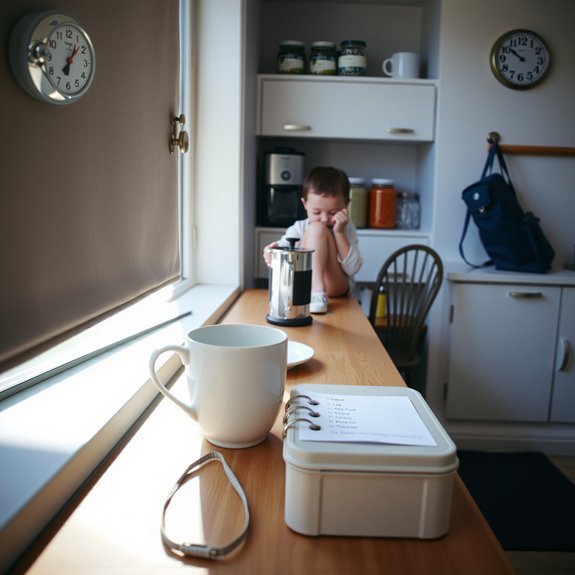

You juggle work, kids, and mornings that feel chaotic, and you don’t have to do it alone. With simple night‑before rituals, a capsule wardrobe, grab‑and‑go breakfasts and tiny routines kids can own, you’ll shave minutes and stress from each day. Try a few small shifts and you’ll notice the difference—here’s how to make them stick.
Night-Before Prep Rituals That Save Time

Laying out outfits, packing lunches, and charging devices the night before can shave off rushed, stressful minutes in the morning; you’ll wake to a clear plan instead of a to-do pile. You’ll also do a quick Calendar Review to spot meetings, school events, or dropped-off items so you can prioritize prep tonight. Set a five-minute checklist: pack lunches, lay out clothes, Prep Toiletries in a small bag, and place keys and bags by the door. Involve your kids with simple tasks so you’re not carrying every responsibility. When you make these rituals consistent, mornings feel manageable rather than frantic. Stick with small habits; they compound into calmer days and give you minutes — even moments — back for yourself. You deserve that breathing room every day.
Streamline Your Wardrobe With a Capsule System

Pick a capsule palette of neutrals with a couple of accent colors so every piece works together. Limit your closet to about 30 versatile pieces to cut decision fatigue and make mornings easier. You’ll quickly mix-and-match outfits that feel put-together without extra effort.
Choose a Capsule Palette
How would mornings change if every top, bottom, and jacket in your closet worked together? You’d save decision energy and feel put-together fast. Start with Undertone Mapping to choose base neutrals that flatter your skin. Pick two to three accent hues with Accent Selection—muted and bold options that mix with everything. Use a simple palette rule: 3 neutrals, 2 accents, 1 pattern.
| Element | Purpose |
|---|---|
| Neutrals | Foundation, easy pairing |
| Accents | Personality, adaptable pops |
Lay out outfits weekly, photograph favorites, and rotate intentionally. You don’t need perfection—just a reliable, flexible set that makes mornings calmer and confidence easier. Keep hangers organized by outfit, store off-season pieces separately, photograph go-to combinations, and trust this simple system to cut mental load so you arrive at work composed and ready. Small routines compound into big calm every single day.
Limit to 30 Pieces
Once you’ve settled on a capsule palette, pare your wardrobe down to 30 thoughtfully chosen pieces that all play together. Treat this as a gentle Declutter Routine: pull everything out, try items on with the palette in mind, and set aside what you haven’t worn in six months. Keep essentials, versatile layers, and two shoes you love for work and errands. Set Purchase Criteria before you buy: fit, fabric, and a clear hole it fills in your capsule. Limit duplicates and sentimental items that don’t serve daily life. You’ll simplify mornings, speed decisions, and reduce laundry overwhelm. When something wears out, replace with that Purchase Criteria, and repeat the Declutter Routine seasonally to keep the count honest. You’ll feel calmer and more confident daily.
Mix-And-Match Outfits
Want outfits that feel effortless every morning? Build a small capsule wardrobe of versatile basics you love and mix-and-match quickly. Choose 8–12 tops, 4 bottoms, 2 layers and 2 dresses that work interchangeably; pick a neutral palette with two accent colors to simplify Pattern Pairing so prints complement rather than compete. Lay out three go-to combos on hangers for rushed days and store them together. Use Accessory Rotation to refresh looks—scarves, belts, and a couple of statement necklaces can change mood without extra decisions. Schedule a monthly edit: discard what you didn’t wear and replace one tired item. You’ll save time, reduce stress, and still feel polished every morning—practical, simple, and totally doable. Start tonight and notice how much calmer your mornings become soon.
10-Minute Breakfasts That Fuel the Family

Although mornings feel chaotic, you can still put nutritious, grab-and-go breakfasts on the table in minutes that the whole family will eat. Choose quick wins: Microwave Omelettes in ramekins for protein, and Yogurt Parfaits layered in jars for fiber and fruit. Prep bases night before, then heat or assemble while you sip coffee. Keep bowls, spoons, and grab-and-go cups accessible so you move fast. Rotate three simple menus to avoid decision fatigue. Use frozen fruit, pre-washed greens, and single-serve nut butter for fast boosts. These small systems cut stress and keep mornings calm, so you leave knowing everyone ate well.
| Plan | Time |
|---|---|
| Omelette ramekin | 2–3 min |
| Parfait jar | 1–2 min |
| Smoothie cup | 2 min |
| Toast + toppings | 1–2 min |
You’ll thank yourself later every morning.
Kid-Friendly Routines That Build Independence
You can build independence by assigning simple morning chores like putting away pajamas, packing a backpack, or loading a snack. Offer limited choices—pick between two outfits or choose the cereal—to give them control while keeping mornings calm. With consistent, age-appropriate tasks and quick praise, you’ll free up time and help them learn responsibility.
Simple Morning Chores
In the morning, give your child two or three simple, consistent chores—making their bed, picking out clothes, and packing a snack—that they can do without help so they start the day feeling capable and you reclaim a few calm minutes. You can add tiny tasks like pet feeding or plant watering to teach responsibility and routine. Keep instructions visual and brief, praise effort, and model tasks once so they follow safe steps. Use timers to keep momentum and gently redirect when they stall; you’ll build habits without nagging.
- Make bed and tidy stuffed animals
- Pack snack and water bottle
- Feed pet or water the plant
Celebrate small wins; consistency beats perfection. You’ll notice mornings get smoother as confidence grows each week and stress reduces.
Choice-Based Routines
How can small, predictable choices change your morning chaos into calm? You set up choice-based routines that let kids pick within limits—outfit A or B, cereal X or Y, backpack now or after breakfast. These Decision Rituals reduce questions and power struggles because your child knows the script. Use simple visuals and timers so decisions stay quick and clear. Pair choices with Priority Mapping: list three morning musts and let kids choose order for nonessential tasks. That keeps your schedule intact while building independence. You’ll save time and tension, and your kids will gain confidence. Start with one swap this week, be consistent, and celebrate tiny wins. Small steps compound into habits that actually stick daily.
Quick Morning Self-Care Practices for Energy
Starting your day with small, energizing habits can make a huge difference—even when you’re short on time. You deserve simple self-care that boosts energy without adding stress. Begin with Hydration Rituals: drink a full glass of water right away to kickstart metabolism and clarity. Pair that with Sunlight Exposure—open curtains or step outside for two to five minutes to reset your circadian rhythm and lift mood. Add a two-minute movement routine to wake muscles and sharpen focus.
- Drink a glass of water immediately.
- Step outside or face sunlight for a few minutes.
- Do a two-minute stretch or brisk march in place.
These tiny habits stack, helping you show up calmer and more present. Keep them consistent and watch your mornings become more manageable daily.
Time-Saving Tech and Automation Hacks
You can reclaim minutes each morning by automating routine tasks like lights, coffee, and thermostat settings. Set smart-home shortcuts to trigger a “school/work” scene so you’re not juggling switches and schedules. Pair that with meal-prep apps that plan grocery lists and quick recipes, and you’ll start the day calmer and more in control.
Automate Morning Routines
Automating simple tasks like coffee brewing, lighting, and school reminders can shave precious minutes off your morning—and it doesn’t have to be complicated or costly. You can set up low-friction systems that handle mundane steps so you focus on what matters. Link medication schedules to phone alarms and Medication Management apps so doses aren’t missed. Sync calendar alerts with Commute Scheduling tools to pick the best departure time and reduce stress. Start small, test one automation for a week, then add another.
- Use a programmable coffee maker and an app timer.
- Tie pill reminders to an app that notifies caregivers.
- Automate calendar alerts for drop-offs and traffic updates.
These changes respect your time and energy, making mornings calmer and more predictable and less frantic.
Smart Home Shortcuts
How much easier would mornings feel if your home handled the small, repetitive stuff for you? Smart home shortcuts cut decision fatigue: program lights to brighten gently at wake-up, set thermostats to a comfy temperature, and queue kid-friendly music so routines go smoother. You can create single-tap scenes—“school mode” turns off distractions, locks doors, and starts your coffee maker—so you do less and get more focus. Check Privacy Controls before connecting devices, limit data sharing, and use local processing where possible to keep your family safe. Use simple Energy Monitoring to spot wasteful habits and lower bills without extra effort. Start small, test one shortcut a week, and celebrate extra calm mornings you earn, soon.
Meal-Prep Apps
Wondering what would happen if your meal planning ran on autopilot? Meal-prep apps can take the stress out of mornings by automating grocery lists, scheduling batch cooking, and offering recipe discovery tailored to your family. You’ll save time, reduce waste, and feel calmer before the school run.
Use apps that sync with your calendar and provide nutrition analysis so you know meals hit protein, veggies, and calories without guessing.
- Auto-generated weekly shopping lists
- One-click batch cooking plans
- Kid-friendly recipe filters
Try one app for a month, adjust preferences, and watch routines stick. You deserve a simpler morning; these tools help you feed the family well with less effort. Start small, set reminders, and celebrate small wins each week. It really works, I promise now.
Packing and Lunch Prep Shortcuts
When mornings feel rushed, packing lunches the night before takes one big stress off your plate. You’ll save time by assembling components—sandwiches, cut fruit, snack packs—into containers so mornings are finish-and-go. Create snack stations in the fridge and pantry with grab-and-go options your kids recognize. Use Label systems on bins and lunchboxes to speed choices and prevent mix-ups; color-code for each child. Prep a few versatile staples each weekend: hard-boiled eggs, chopped veggies, hummus portions and frozen smoothie packs. Keep a small caddy with utensils, napkins and condiments near your lunch zone. These simple routines make mornings calmer, build consistency, and give you one fewer thing to think about before you head out the door. You’ll feel steadier and more confident each weekday morning.
Managing Mornings When Schedules Change
Because plans shift—early meetings, school events, or a sick child,you’ll need a few quick pivots to keep mornings calm. Start by building simple contingency plans: a backup breakfast, a neighbor or carpool contact, and pre-packed essentials in an “oops” bag. Use buffer zones—extra 10–15 minutes between tasks—so delays don’t cascade. Communicate changes early: a quick text or calendar edit prevents surprises. Stay flexible but decisive; pick one solution and act. Trust small routines to anchor you when plans wobble. You’ll manage unpredictability better each time; small systems compound into real relief, daily wins.
- Keep an “oops” bag with snacks, meds, and spare clothes.
- Set a 10–15 minute buffer between home tasks and departures.
- Prearrange a backup pick-up or remote work option.
Stress-Reducing Mindset Shifts and Checklists
How could a few simple mindset shifts and a short checklist change your mornings? You’ll start by replacing harsh inner commentary with compassionate self talk that steadies your nerves when things go sideways. Use micro goal setting: list three tiny wins—pack lunches, set outfits, breathe for one minute—and celebrate them. Keep a visible checklist by the door and update it nightly so mornings feel predictable, not frantic. When a task slips, reframe it as information, not failure, and adjust tomorrow’s plan. These small mental habits reduce stress, free mental energy, and help you leave the house calmer and more confident. Over time, consistent simplicity becomes a buffer against chaos. You’ll notice mornings getting easier as you repeat these small, doable shifts every day consistently.
Carpool and Community Tips to Share the Load
Once you’ve steadied your inner chatter and mastered a short checklist, letting your community carry some of the load multiplies those gains. You can’t do everything solo, and small systems ease mornings: set a Driver Rotation for regular carpools, create Pickup Pods with nearby families, and agree on simple backup plans. Communicate times, addresses, and expectations in a shared chat so confusion doesn’t steal calm.
- Propose a weekly Driver Rotation and stick to it.
- Form Pickup Pods by geography and school schedule.
- Keep a short emergency plan: contacts, car keys, and alternate rides.
You’ll feel lighter, more reliable, and supported when everyone pitches in. Start small this week, ask neighbors, test one Pickup Pods route, adjust as needed for smoother, kinder mornings together soon.






Leave a Comment