

You juggle a lot each morning, and that constant rush wears on you. Small, consistent routines can reduce stress and increase calm, and habit research plus time‑blocking studies back that up. You’ll get practical, doable steps—prep lunches and outfits, set a drop zone, carve two minutes of self‑care—that you can try starting tonight—and notice the difference.
Prep the Night Before for a Smoother Morning

Packing lunches, laying out clothes, and prepping backpacks the night before can cut morning chaos and lower your stress. You’ll feel steadier when you set out outfit choices, pack lunches with kid-approved snacks, and place keys where you’ll grab them. Charge devices overnight and tuck chargers in a dedicated pouch so you’re not hunting in the morning. Do a quick security sweep, lock doors, check windows, and confirm alarms so you can leave the house confident. Evidence shows routines reduce decision fatigue and improve punctuality, so keep checklists short and repeatable. Delegate simple tasks to kids to build habits and lighten your load. With small, consistent steps you’ll reclaim time, reduce meltdowns, and start days more calmly, backed by research on habit and stress.
Create a Short, Realistic Morning Ritual
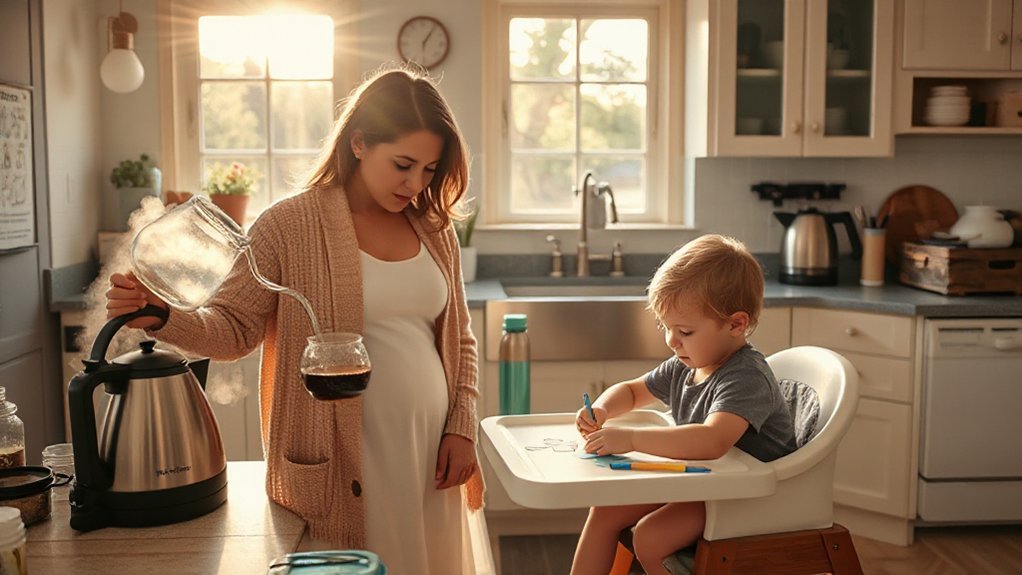
You can start your day with two to five minutes of mindful breathing or a simple stretch to center yourself—research shows brief mindfulness boosts focus and lowers stress. Pair that with one small, achievable task like making the bed or setting out snacks so you get an immediate sense of progress. Those tiny, consistent rituals build momentum and make mornings feel more manageable without adding pressure.
Quick Mindful Minutes
Taking two to five minutes each morning to center yourself can lower stress and sharpen focus; studies show brief mindfulness practices reduce cortisol and improve attention, so pick a simple ritual—three deep breaths, a quick body scan, or a single grateful thought—that fits your routine and commit to it daily. You can do breath counting for thirty seconds while you sit at the kitchen counter, or try sensory grounding: name three things you hear, see, and feel to anchor your mind. Keep it short, consistent, and nonjudgmental; set a tiny cue like the kettle boiling or your phone alarm. Over time those minutes build resilience, helping you face the day calmer and more present for your family. You’ll notice small steady improvements each week.
One Small Win
Celebrating one small win each morning primes your brain for momentum and makes routine change feel doable. Choose a realistic ritual—five minutes of deep breaths, a glass of water, or a quick stretch—and commit to it daily. Neuroscience shows consistent, tiny habits build neural pathways; small successes reduce resistance. Track progress visually: create a Win Wall with sticky notes or a checklist by the door so you see cumulative gains. Pair the ritual with Tiny Rewards, like a favorite song or a quiet cup, to reinforce behavior without derailing time. If you miss a day, note what blocked you and adjust. Over weeks, these short, repeatable wins compound into greater confidence and a morning that actually supports you and honors your needs deliberately today.
Streamline Breakfast With Quick, Healthy Options

Although mornings feel chaotic, you can put out quick, nutritious breakfasts that keep kids satisfied and steady on energy until lunch. Set up a Smoothie Station with pre-portioned frozen fruit, spinach, Greek yogurt, and a scoop of oats—kids can push a button while you finish other tasks; blends with protein and fiber reduce mid-morning hunger. Prep Veggie Scrambles in muffin tins ahead: whisk eggs, add chopped peppers, spinach, and a little cheese, bake, and refrigerate for reheating. Keep whole-grain toast, nut butter, hard-boiled eggs, and fresh fruit accessible for grab-and-go choices. Evidence shows routine and balanced macronutrients improve concentration and mood in children. Start small, test favorites, and adjust portions—consistency beats perfection. Keep a simple checklist to streamline mornings and reduce decision fatigue daily.
Build a Simple Outfit and Laundry System
You can cut morning decision fatigue by planning weekly outfits for you and the kids, laying them out or using labeled bins so mornings start with one less choice. Create a simple laundry flow—one hamper per person, a set laundry day, and quick sorting—to keep clean clothes ready. Studies show routines reduce stress and save time, so try this low-effort system for calmer mornings.
Plan Weekly Outfits
Planning outfits ahead reduces morning decision fatigue and gives you a predictable rhythm for laundry and wardrobe choices. You can create a capsule wardrobe of versatile pieces and use simple color coordination to mix-and-match confidently each week. Pick outfits on Sunday, note weather and activities, and label days so you’re not deciding under time pressure. Evidence shows routines lower stress; this tiny planning habit frees mental space and models organization for kids. Use the table below to map quick combinations you repeat, keeping options realistic and comfortable.
| Day | Top | Bottom |
|---|---|---|
| Mon | White tee | Dark jeans |
| Wed | Striped blouse | Khaki pants |
| Fri | Neutral sweater | Black skirt |
Rotate pieces monthly, donate what doesn’t serve you, and celebrate how small systems reduce morning friction and guilt. Breathe.
Streamline Laundry Flow
If you build a simple outfit-and-laundry loop, you’ll cut morning decision fatigue and keep clean clothes within reach. Designate a small set of outfit combinations per family member and rotate them weekly; that predictability saves time and limits morning stress. Use labeled bins for efficient sorting—one for lights, darks, delicates, and a quick-turn basket for school uniforms. Pre-treat stains as they happen: keep a spray and stain treatments at the laundry area so spots don’t set. Do a short load every other day to avoid overwhelming piles; research shows smaller, frequent loads reduce time and energy. Involve kids with age-appropriate tasks to teach responsibility and keep the system sustainable. Track what works and tweak routines monthly so the system stays realistic and stress-free always.
Use Time Blocks and Timers to Stay on Track
When you carve your morning into focused time blocks and use timers, you’ll cut decision fatigue and get more done with less stress. Try Task Batching: group similar tasks—breakfast prep, packing bags, quick cleanups—into single blocks so your brain stays in one mode. Use short, evidence-backed intervals (25–30) with quick breaks: think Pomodoro Parenting to sustain attention without burning out. Set one timer for each block and an audible alarm to signal transitions; research shows external cues reduce procrastination and switching costs. Be realistic about buffer time for interruptions and build a recovery block for unexpected needs. Review what worked next morning and adjust lengths. Small, consistent tweaks create reliable momentum and calmer starts for you and your family. You’ll feel more able to cope.
Delegate Small Tasks to Kids and Partners
Once you’ve set clear time blocks, share small, concrete tasks with your kids and partner to keep the morning running smoothly.
Assign one task each (packing lunches, shoes, pet care) and rotate weekly; chore rotations build habit and fairness.
Use simple charts and brief instructions so children succeed; evidence shows clarity reduces resistance.
Consider gentle reward systems for consistent effort, not perfection.
Communicate expectations in the moment, praise specific actions, and adjust as needed.
| Role | Morning Task |
|---|---|
| Partner | Coffee & bag check |
| Age 7-9 | Lunch pack |
| Age 4-6 | Socks & shoes |
| All | Quick tidy |
Be flexible: swap duties if someone’s overwhelmed, keep cues short, and celebrate small wins to reinforce routines while maintaining family connection and reducing morning stress. Over time, mornings improve. You’ll notice it.
Carve Out Two Minutes of Morning Self-Care
Although mornings race by, you can reclaim two minutes for yourself and get measurable stress relief; short, focused practices like one-minute diaphragmatic breathing or a quick body scan lower cortisol and improve attention, according to brief-mindfulness and microbreak studies. Use two minutes right after you wake or while teeth are brushing: inhale deeply, exhale slowly, and do a brief posture check to align your spine. Add a skin refresh—splash water or apply moisturizer—to anchor the pause and cue self-care. These tiny habits build resilience and clarity across the day. Try this quick sequence and notice calmer reactions, better focus, and lower tension. Do it consistently for measurable long-term benefits.
- One minute diaphragmatic breathing
- Quick posture check and neck release
- Skin refresh: splash or moisturizer
Organize a Drop Zone for Bags and Shoes
You can cut morning chaos by creating a simple drop zone where everyone hangs bags on designated bag hooks. Evidence shows that consistent spots for daily items reduce search time and stress, so pair those hooks with low, accessible shoe shelving and clear labels. Make it kid-height and part of your quick pre-departure routine so outings go smoother.
Designated Bag Hooks
When you install a set of designated bag hooks near the door, mornings get simpler and less frantic: everyone knows where to hang backpacks, purses, and a pair of shoes, so grabbing and leaving becomes quicker. Think about height placement for each family member — mount lower for kids, higher for adults — and select durable material choice like stainless steel or heavy-duty wood. Hooks reduce clutter, cut search time, and lower stress; studies show organized entryways improve morning efficiency. Label or color-code hooks so kids learn responsibility. Keep lines short and expectations clear.
- Assign one hook per person to avoid fights.
- Use hooks with rounded ends to protect straps.
- Check screws quarterly to verify safety.
You’ll save minutes every day and reduce hurried mistakes consistently.
Accessible Shoe Shelving
Pair hooks with accessible shoe shelving to keep the entryway fully functional and cut morning chaos: low open shelves or cubbies let kids stash sneakers within reach while adults use higher slots or a narrow bench with storage underneath. You’ll reduce delays by assigning each person a shelf and labeling spaces; studies on visual cues and routines show clear zones speed shifts. Choose units offering adjustable heights to accommodate growing kids and seasonal boots, and add anti slip surfaces to prevent spills and trips. Opt for durable, easy-clean materials and position the shelving near the door so shoes don’t migrate. Maintain the system with weekly quick checks and involve kids in resetting their spots — small habits create smoother mornings for calmer schooldays ahead.
Simplify School and Activity Prep With Checklists
Set up a simple checklist the night before to cut morning chaos and make school and activity prep predictable. You’ll reduce decision fatigue and increase on-time departures by listing outfits, bags, and snacks. Use color coded lists for each child and visible supply trackers for items like instruments or sports gear; research shows visual systems improve compliance. Lay out clothes, pack lunches, and check permission slips as you tick boxes to build routine muscle memory. Share the checklist with older kids so they take ownership and you can step back.
- Pack lunch, water bottle, and afternoon snack
- Confirm uniform, shoes, and any props/equipment
- Add permission slips, signed forms, and contact info
Checklists reduce stress and save you time daily every morning.
Keep a Flexible Plan for Unexpected Delays
Because unexpected delays — from traffic to tantrums — are normal, build small buffers and backup options into your morning so one hiccup doesn’t ruin the whole routine. When you add buffer scheduling—short, realistic time cushions between tasks—you lower stress and improve adherence to plans; research links brief buffers to better time management and wellbeing. Prepare pivot strategies: quick alternatives like a pared-down breakfast, a ready-to-go bag, or a simple at-home activity can keep momentum without perfection. Practice these shifts with your kids so changes feel predictable. Keep one tech-free checklist visible and review it nightly to spot where delays recur. Over time you’ll identify patterns, adjust buffer lengths, and feel more in control while staying compassionate with yourself. Celebrate small wins every day.






Leave a Comment