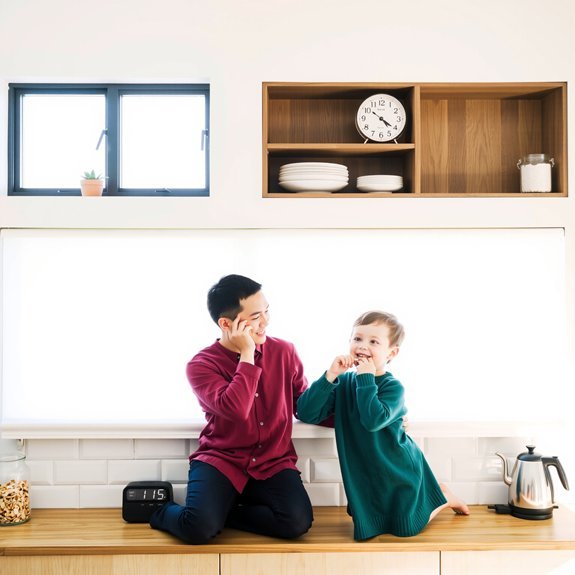

You want mornings that aren’t frantic and that let everyone leave feeling capable. With predictable nights, two simple choices for kids, a quick checklist at their height and a five‑minute buffer you’ll cut stress and power struggles. You can teach routines that match their development and still get out the door on time—here’s a practical, kid‑friendly plan…
Set a Calm Nighttime Routine

When you set a calm nighttime routine, you give your child predictable signals that it’s time to wind down, which makes mornings easier for everyone. You’ll choose a short sequence—bath, pajamas, story—that matches their age and attention span, and stick to it most nights. Use light dimming to cue sleepiness and lower activity: softer lamps after bath help brains shift. Introduce calming scents like lavender lightly and safely, avoiding direct application for infants, to reinforce the pattern. Keep screens off at least 30 minutes before bed and make changes gentle so melatonin production isn’t disrupted. When you’re consistent but flexible for growth or setbacks, bedtime becomes less of a battle and more of a reliable, comforting pause before sleep and wake-ups more predictable overall.
Prep Clothes and Backpacks the Night Before

Laying out clothes and packing backpacks the night before cuts morning chaos and gives your child a predictable routine they can follow. You can involve your child in choosing clothes to build independence while you do a quick weather check and adjust layers. Create an accessory station by the door with shoes, hats, and a small bin for permission slips or art projects. Use clear steps they can follow so mornings become simple and calm:
- Let your child pick tomorrow’s outfit and zipper their jacket.
- Pack the backpack together, checking lists and water bottles.
- Place shoes and sun/rain gear at the accessory station near the door.
This practice reduces last-minute stress and supports your child’s growing self-care skills. You’ll both feel more prepared.
Simplify Breakfast: Fast, Healthy Options
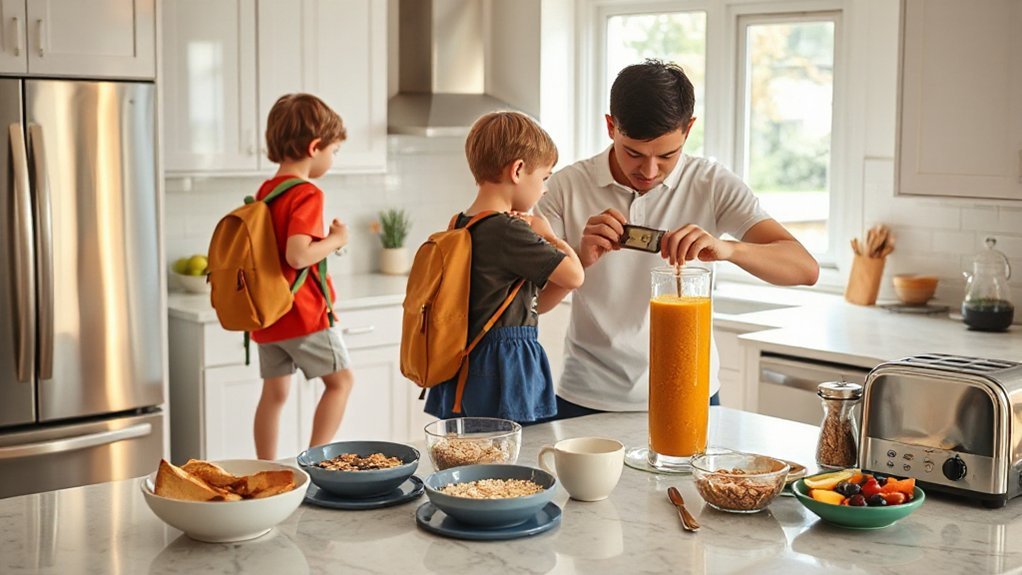
You’ll make mornings calmer by simplifying breakfast with a few reliable options kids can eat quickly. Prep make-ahead items like overnight oats or egg muffins the night before so they can grab balanced meals without dragging out the routine. Keep quick proteins—yogurt, nut-butter portions, cheese sticks—and portable fruit combos like banana with nut butter or berries in a cup within reach for small hands and changing appetites.
Make-Ahead Breakfasts
Prepping breakfasts the night before eases morning chaos and gives kids steady, age-appropriate fuel for focus and mood; with a few simple recipes and clear steps, you won’t be scrambling or negotiating over food while they’re still waking up. Use Batch Freezing for waffles, muffins, and fruit portions, and a Labeling System so you and your child know reheating times and allergens. Let kids pick between two options to honor autonomy. Keep simple routines and visible containers.
- Freeze single servings for quick grab-and-go.
- Rotate favorites weekly to prevent battles.
- Teach older kids to reheat safely and check temps.
These habits reduce decision fatigue, respect developmental needs, and make mornings calmer for everyone. Start small and adjust as your family learns together.
Quick Protein Choices
How can you add easy, kid-approved protein to busy mornings without adding stress? Offer simple, familiar options that match your child’s development: toddlers handle soft textures, older kids can assemble. Keep single-serve Greek yogurt cups on hand for a creamy, high-protein base—add a sprinkle of cereal or nut butter for texture and extra calories. Try cottage cheese in a small bowl; it’s mild and mixes well with a drizzle of honey for school-age kids (skip honey for under one). Pre-portion boiled eggs, slice deli turkey, or keep nut butter packets accessible for spreading on whole-grain toast. Rotate choices so kids learn preferences. Aim for ten to twenty grams of protein to support concentration and steady energy without morning meltdowns. You’ll see calmer mornings soon.
Portable Fruit Combos
After offering quick proteins, add portable fruit combos to round out the meal—fruit brings hydration, fiber, and a familiar sweetness that helps kids eat without a fuss. Choose combos that respect development: small hands, emerging teeth, and sensory preferences. Offer Texture Pairings and Flavor Matches so each bite feels safe and interesting. Pack portions in containers kids can manage and label choices for independence.
- Sliced banana + nut butter on whole-grain crackers for creamy + firm.
- Berries + yogurt dip in a spill-proof container for sweet + tart contrast.
- Apple slices + cheese cubes for crisp + savory balance.
You’ll reduce morning negotiation, support satiety, and model simple variety without pressure. Rotate choices across the week to build acceptance and lessen rejection over time.
Create a Simple Morning Checklist
Start by listing the essential tasks—getting dressed, teeth brushed, and backpack packed—so you and your child know what must happen before leaving. Turn that list into a visual checklist with pictures or simple icons that match your child’s reading level. That way you set clear expectations, build independence, and cut morning stress for both of you.
Essential Tasks First
When mornings feel chaotic, you can calm the rush by listing just the essentials—wake-up, teeth, dressed, breakfast, backpack—so kids know exactly what comes next and you avoid last-minute scrambling. Prioritize essential tasks first: separate must-dos from nice-to-dos, set a simple hygiene order and note medication timing so routines are predictable. Keep steps short, use cues like timers, and offer brief choices to boost cooperation. Expect spills and pauses; adapt steps to your child’s age and attention span. A compact checklist helps you both stay steady. If mornings are rushed, rehearse the checklist the night before, praise small wins, and celebrate progress so kids gain confidence and mornings feel calmer each week together.
- Wake, wash, dress
- Breakfast, meds, backpack
- Quick tidy, shoes, out the door
Make It Visual
How can you make the routine obvious without nagging? Use a simple morning checklist that matches your child’s stage. Together, pick three to six tasks—wash face, dress, eat, pack—and show them on a board or chart at child height. Use Color coded labels for each task or family member so kids scan quickly. Add Icon based cues—tiny toothbrush, shirt, bowl—so pre‑readers follow independently. Keep language short, positive, and consistent. Review the list at bedtime and again in the morning for predictability. Celebrate completion with a sticker or brief praise to reinforce success. Adjust expectations for age: toddlers need one-step pictures; school‑agers can handle sequence words. This visual approach reduces reminders and builds competence. You’ll be calmer and kids gain steady independence over time, too.
Use Visual Timers and Gentle Reminders
A simple kitchen timer or a colorful sand timer gives kids a clear sense of how much time they have and reduces the need for constant nagging. Use visual timers and gentle auditory cues to signal shifts; they help a child anticipate what’s next without stress. Consider wearable timers for older children who respond to subtle vibrations. Keep instructions short and consistent, and pair timers with warm, calm reminders as needed.
- Set clear chunks (dress, teeth, backpack) with a visible countdown.
- Offer a calm verbal prompt five minutes before a change.
- Celebrate finish times with brief praise to reinforce routines.
You’re supporting independence while staying patient and predictable. Adjust timers over time to match your child’s pace and development regularly too.
Delegate Age-Appropriate Tasks
Because kids build competence by doing, give them small, specific tasks that match their skills—toddlers can hand you socks, preschoolers can pull on shoes or choose outfits, and school-age kids can pack their bags or make a simple breakfast. Let your expectations fit their development; use clear prompts and brief task negotiation so kids feel ownership. Use sibling coordination to divide morning duties and avoid power struggles. Praise attempts, not perfection. A simple chart helps everyone know roles.
| Role | Morning Task |
|---|---|
| Toddler | Hand socks |
| Preschooler | Choose outfit |
| School-age | Pack bag |
| All kids | Put dishes away |
Rotate tasks weekly, check in briefly, and adjust based on mood or time to keep routines flexible. Celebrate small wins.
Build in Buffer Time and Realistic Expectations
Leaving extra minutes in your morning plan gives you breathing room when kids move slower than planned, spill cereal, or argue over a shirt. Use Schedule padding so you aren’t rushed and can respond calmly to typical developmental delays like slower dressing or dawdling. Set Expectation alignment with kids: explain what realistic on-time looks like for their age and give choices within limits. Use a visual timer or simple checklist so they know steps.
- Build in ten to fifteen minutes of buffer for switches.
- Communicate one clear expectation per routine.
- Adjust wake times by small increments when needed.
You’ll reduce stress, model patience, and help kids learn time sense over weeks. Celebrate small punctual successes and tweak your schedule as kids develop over time.
Turn Tasks Into Games and Positive Rituals
After you build in buffer time, make morning tasks feel playful and predictable so kids cooperate more willingly. Use short rituals: a wake-up hug, a toothbrush song, a chosen outfit parade. Turn getting dressed into roleplay chores—pretend shirts are superhero capes, socks are treasure to find—so motor skills and self-help feel fun, not forced. For shifts, use upbeat cues: a two-minute song, a simple countdown, or Dance shifts between activities to change energy and focus. Keep instructions brief, offer choices, and praise attempts to build confidence. Repeat routines consistently so expectations become self-guiding. You’ll reduce nagging, increase independence, and help mornings start calmly while respecting each child’s pace and development. Adapt games to age and sensory needs, keeping wins achievable and encouraging curiosity daily.
Troubleshoot Common Morning Roadblocks
When mornings break down, start by spotting the pattern—what’s consistently derailing you: sleepiness, sensory overload, power struggles, or forgetfulness—and tackle that specific cause rather than fighting each symptom. Notice cues: a toddler who’s groggy needs earlier wind-downs; a tween who stalls needs a checklist. Use small fixes you can repeat.
- For sibling conflicts, set short shared rituals and separate spaces for shoes and backpacks.
- To prevent transport disruptions, pack essentials the night before and have a quick backup plan for rides.
- If sensory overload or resistance shows up, simplify choices and offer clear, calm prompts.
You’ll reduce friction by matching interventions to development: expect setbacks, reinforce routines, and adjust as kids grow. Celebrate small wins to build consistency and confidence daily.




Leave a Comment