

You can reclaim calm mornings with a few low-effort rituals and predictable habits. You’ll still have messy days, but steady systems cut panic and save time. Night-before prep, short wake routines, and one clear priority make departures smoother. Stick with small experiments and celebrate tiny wins—you’ll be surprised at how quickly mornings shift, and there’s one simple trick parents swear by.
Morning Mindset: Small Shifts That Make Big Differences

Shifting your mindset in small, intentional ways can make mornings feel calmer and more manageable instead of chaotic. You’ll feel less rushed when you set tiny micro goals—like getting one kid dressed before breakfast or packing lunches during a TV ad—so success builds fast. Begin with a two-minute gratitude practice when you wake: name three simple things you appreciate, and you’ll steady your mood. Keep expectations realistic and communicate one clear priority to the family each morning. When setbacks happen, pause, breathe, and adjust without judgment; modeling calm helps everyone reset. These small shifts don’t require perfection, just consistency. Over time, you’ll notice mornings becoming smoother, kinder, and more intentional for the whole household. Celebrate tiny wins each day to reinforce the new routine.
The Night-Before Plan: Prep That Saves Time and Stress
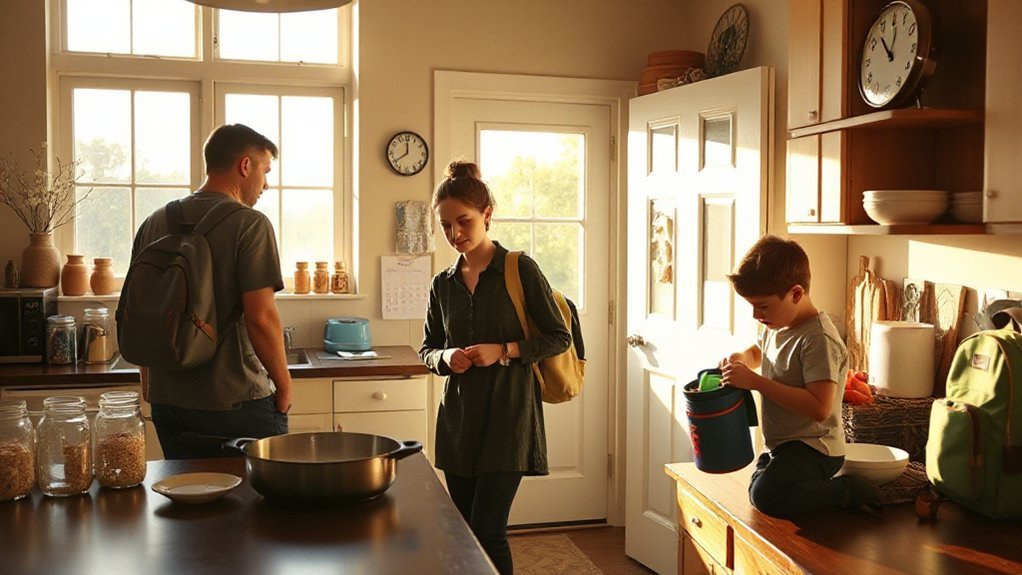
When you spend ten to twenty minutes the night before, your morning will feel miles easier—lay out outfits, pack lunches, set backpacks by the door, and program the coffee maker so you wake to a small win. You’ll thank yourself when the house isn’t scrambling: clear counters, refill water bottles, and set a simple landing zone for keys and permission slips. Charge devices on a designated shelf — tech charging becomes a nonnegotiable so no frantic searches happen. Place medications and a checklist together to simplify medication organization and reduce worry. Keep instructions visible for anyone who helps. If you hit bump, adjust the plan; small tweaks make mornings smoother. You’re building calm in fifteen minutes, and that’s progress. Celebrate the small wins daily.
Simple, Repeatable Routines for Every Age

Create simple morning checklists tailored to your child’s age—toddlers get two or three steps, school-age kids get a short checklist, and teens get a few key responsibilities—so everyone knows what’s expected. Use consistent wake-up cues, like the same song, soft light, or a gentle sequence, so they’ll learn the rhythm and mornings feel predictable. You’ll cut down on nagging and start the day calmer when routines match development and repeat reliably.
Morning Checklist by Age
A short, age-tailored checklist helps you match tasks to your child’s abilities so mornings feel manageable instead of chaotic. For toddlers, keep three items: get dressed, brush teeth, choose a toy — you guide each step and praise attempts. Preschoolers handle simple tasks: unpack backpack, set breakfast plate, and tidy toys; use picture prompts and a timer. School-age kids can follow multi-step routines: pack lunch, lay out clothes, and feed a pet; introduce chore scaling so responsibilities grow with skill. Teens need a clear checklist for essentials: hygiene, devices charged, and necessary items for the day; agree on screen allowances as a reward after tasks. Review weekly, tweak expectations, and celebrate steady progress. You’ll build calm momentum when expectations match ability and praise is consistent.
Consistent Wake-Up Cues
Pairing your age-tailored checklist with consistent wake-up cues makes mornings more predictable and less frantic for everyone. Choose three cues—light, sound, and scent—and keep them the same daily. Use a soft alarm or playlist for older kids, a gentle chime for younger ones, and gradual room brightening for toddlers. Automate lighting and Thermostat Schedule so temperature shifts signal the day starting. Add Scent Diffusers with a mild morning scent to help you and sensitive noses wake calmly. Teach each child their cue and link it to one simple action: get dressed, brush teeth, or pack a bag. Practice for a week, adjust timing, and celebrate small wins. Consistency builds security; you’ll see smoother, faster routines. Stick with it; instincts and cooperation will follow soon.
Fast, Healthy Breakfasts Your Family Will Actually Eat
You don’t have to spend mornings stressing—try 5-minute protein boosts like Greek yogurt with nut butter or quickly scrambled eggs for staying power. Make-ahead breakfasts such as overnight oats, pre-baked egg muffins, or frozen smoothie packs save time and sanity. Sneaky veggie additions—spinach in smoothies, grated zucchini in pancakes, or bell peppers in muffins—keep nutrition up without complaints.
5-Minute Protein Boosts
Boosting mornings with quick protein keeps everyone fuller and calmer until lunch, and these bite-sized ideas cut prep and cleanup to minutes so you won’t scramble. You can mix Greek yogurt with berries and a sprinkle of granola, stir in collagen or powdered protein for better Amino Timing, and hand a spoon to a tired child. Toast with nut butter and banana slices gives protein and comfort without fuss. Microwave egg scrambles in a mug or prep cottage cheese cups topped with fruit for a tangy, fast option. Keep single-serve string cheese or tuna packets in the fridge for grab-and-go protein. If digestion is sensitive, choose options with added Digestive Enzymes or pair with fruit to ease fullness. Small swaps make mornings calmer today.
Make-Ahead Breakfast Ideas
Starting the day with a make-ahead breakfast removes morning chaos and gives your family healthy options they’ll actually eat. You can prep ahead, save time, and reduce stress without complex recipes. Focus on simple, nourishing items that reheat well and appeal to picky eaters.
- Batch oatmeal jars with fruit and nuts for grab-and-go mornings.
- Muffins from seasonal baking recipes you freeze; thaw or warm as needed.
- Egg-and-cheese cups baked in a muffin tin and stored freezer friendly for weeks.
Set aside a weekend hour to assemble and label portions. In the morning you’ll feel calm, offer consistent choices, and teach kids routines. Small prep today makes smoother, happier mornings for everyone. Rotate options weekly so variety stays interesting and prep doesn’t feel like drudgery.
Sneaky Veggie Additions
Sneaking veggies into familiar breakfasts makes mornings healthier without a fight. You’ll blend spinach into pancakes, grate carrots into muffins, and fold pureed squash into oatmeal so kids taste sweetness, not greens. Use Sauce Secrets—tomato or yogurt-based drizzles—to mask texture and boost flavor without added sugar. Turn roasted sweet potato into hash or mash cauliflower into ricotta-style spread for bagels; you’ll get fiber and vitamins in familiar forms. Treat produce like Dessert Veggies by adding cinnamon and a touch of maple to roasted fruit-veggie combos so they feel like a treat. Prep shredded and pureed components on weekends, freeze portions, and pull them out for five-minute breakfasts. You’ll feel calmer knowing meals are ready and nourishing daily.
Gentle Wake-Up Strategies to Start Calmly
When mornings feel rushed and tense, you can change the whole day by waking your family gently and predictably. Use soft light, quiet music, and a consistent sequence so bodies and minds adjust without jolt. You can cue each person with small rituals that feel comforting and efficient.
- Open curtains slowly for a few minutes of window watching together.
- Offer pet cuddles as a calm bridge from sleep to movement.
- Whisper choices: “two minutes to stretch or five to read?”
Keep routines short, repeatable, and visible so expectations stay clear. Expect bumps; adjust timing rather than force speed. Over time these tiny, kind signals reduce resistance and make mornings feel cooperative instead of chaotic. Soon you’ll notice calmer faces and smoother exits every day.
Clothing, Backpacks, and Lunches: Streamline Getting Dressed
Laying out clothes, packing backpacks, and assembling lunches the night before takes pressure off mornings and helps everyone move through the routine without last-minute scrambling. You’ll set up simple Outfit Stations—labeled bins or hooks for each child with complete outfits, socks, and weather extras—so choices are quick and independent. Create Backpack Zones near the door with school papers, permission slips, and reusable snack containers ready to drop in. Prep lunches in assembly-line fashion: protein, fruit, treat, packed into grab-and-go containers and refrigerated. Involve kids by letting them pick one item or check a checklist; that builds ownership and reduces questions. Keep a quick spare kit for emergencies. Small, repeatable steps like these make mornings calmer and give you breathing room. Start tonight, you’ll notice.
Time Management and Transition Tricks for Smooth Departure
After you set out clothes, backpacks, and lunches the night before, the next step is making departures predictable and calm. Use Buffer Blocks—short, built-in pockets of time—to prevent last-minute rushes. Give each child a simple task and a clear finish time so changes become routine. Practice a quick Drop off Choreography: keys, hug, backpack check, out the door. Keep cues consistent, like a five-minute warning and a cheerful playlist to signal wrap-up. If something goes off, stay calm; kids mirror your tempo. Over time these small habits build reliability and reduce stress. Try this mini checklist to visualize flow:
- 5-minute warning bell and visual timer
- One last backpack/lunch scan
- Quick chore hug and exit cue
Reinforce praise for small wins daily. You’ve got this.
Troubleshooting Common Morning Challenges and Fixes
If mornings derail despite your best plans, don’t beat yourself up — you can solve most problems with quick, concrete fixes that match the actual snag. Start by identifying the trigger: missed sleep, hunger, or rushed schedules. For Sibling Squabbles, separate kids briefly, give simple choices, and assign a calming task, praise cooperation immediately. For Tech Glitches, keep chargers and a backup device handy, update apps overnight, and set a “no-screen” buffer before leaving. If missing items derail you, create a landing station for backpacks and keys. Rehearse one short routine with the family and tweak based on what actually goes wrong. Small, consistent adjustments cut stress and make good mornings repeatable. Celebrate small wins so the family builds confidence and momentum daily too.





Leave a Comment