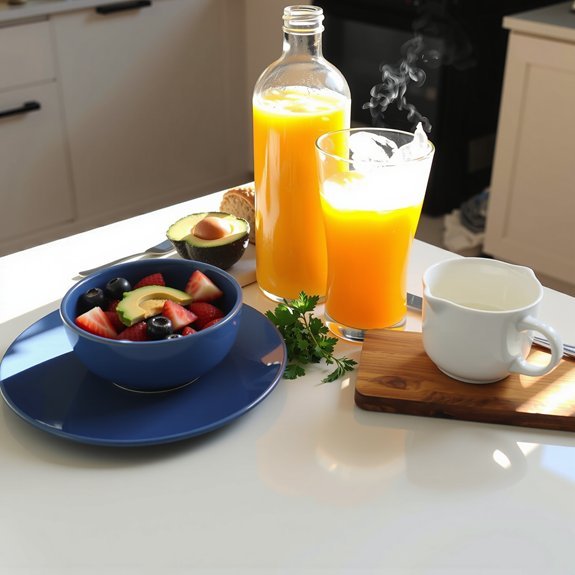

You’re more likely to start the day well when you choose quick breakfasts that balance protein, fiber, and flavor. Small swaps—a 5-minute smoothie, overnight oats, or a make-ahead egg bowl—steady energy and reduce cravings. These choices fit busy routines and back your goals. Keep going—the practical ideas and one prep trick will cut morning time dramatically.
5-Minute Smoothies for Busy Mornings
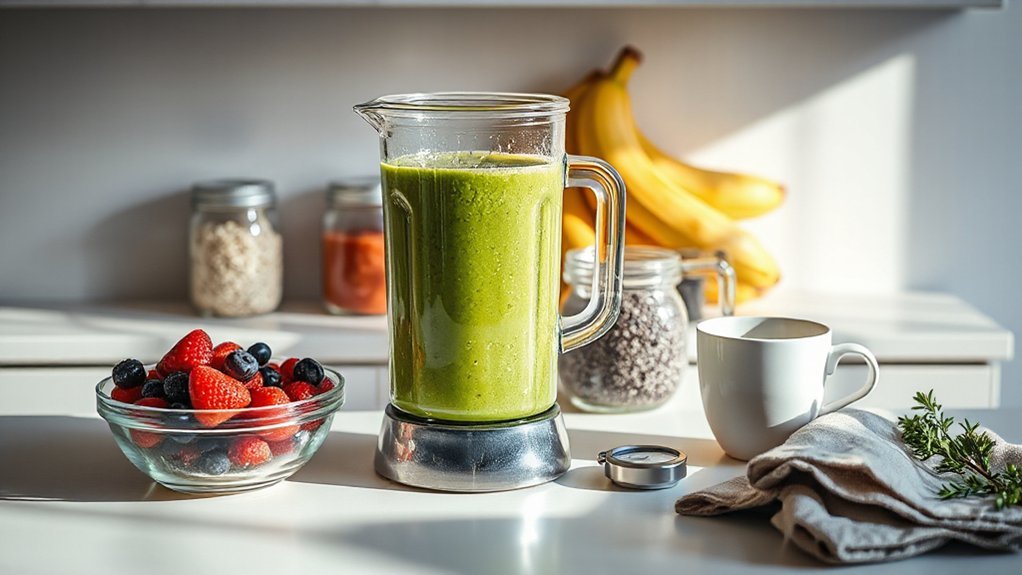
Although mornings are hectic, you can blend a nutritious smoothie in under five minutes by following a simple template: a protein source (Greek yogurt, protein powder, or silken tofu), fiber-rich produce (frozen berries or a banana plus spinach), a healthy fat (nut butter or avocado), and a liquid (water, milk, or fortified plant milk). Start by pre-portioning ingredients to meet your goals: 20–30 g protein, a cup of produce, and a tablespoon of fat. Use blender hacks like layering liquids first and frozen items last to get a smoother texture and faster cleanup. Consider batch freezing individual portions of fruit and greens to save time and reduce waste. Taste and adjust consistency; you’ll get reliable results that fit your schedule and nutrition needs daily.
Make-Ahead Overnight Oats and Jars
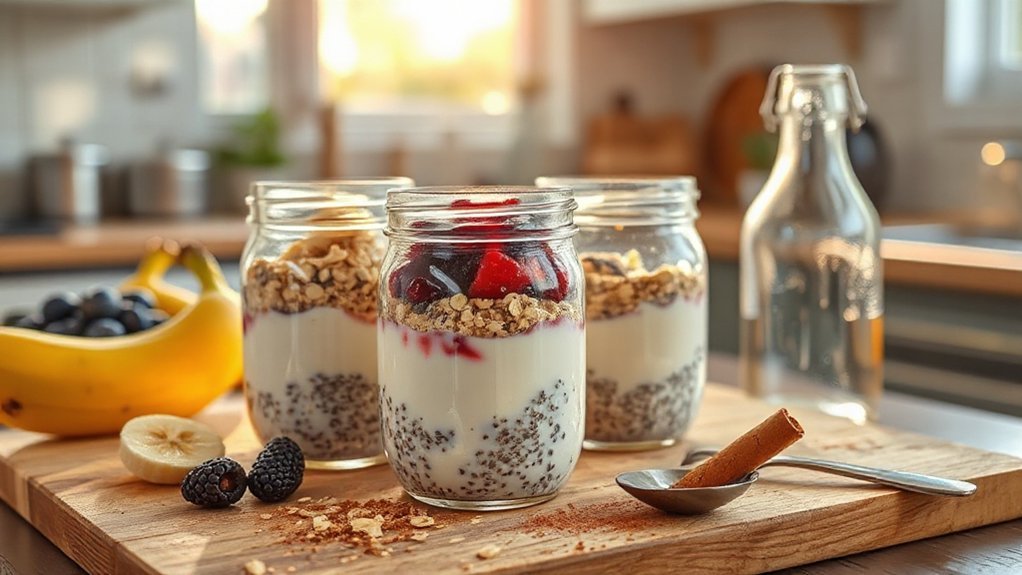
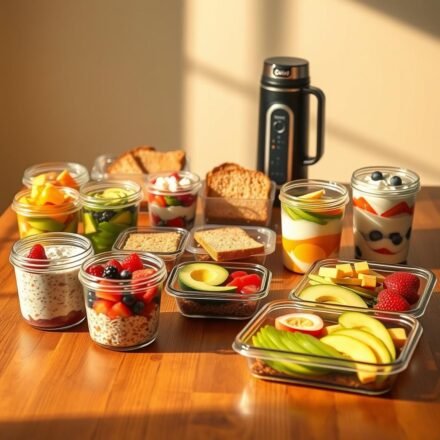
If you liked the grab-and-go convenience of 5-minute smoothies, make-ahead overnight oats and jars give you another quick, nutrient-balanced option you can pull from the fridge. You’ll combine rolled oats, milk or yogurt, a protein source like Greek yogurt or chia seeds, and fruit for fiber. Use Mason layering to separate wet ingredients from toppings so textures stay pleasant; gravity settles overnight. Plan servings, follow 4–12 hour chilling recommendations, and rotate flavors to avoid palate fatigue. Implement a simple Labeling system with date and variant abbreviations to track freshness and intake. That client-centered approach supports adherence, reduces waste, and helps you start the day energized without extra morning prep. Prep multiple jars at once to save time, and customize portions to meet your goals.
Protein-Packed Egg Scrambles and Bowls
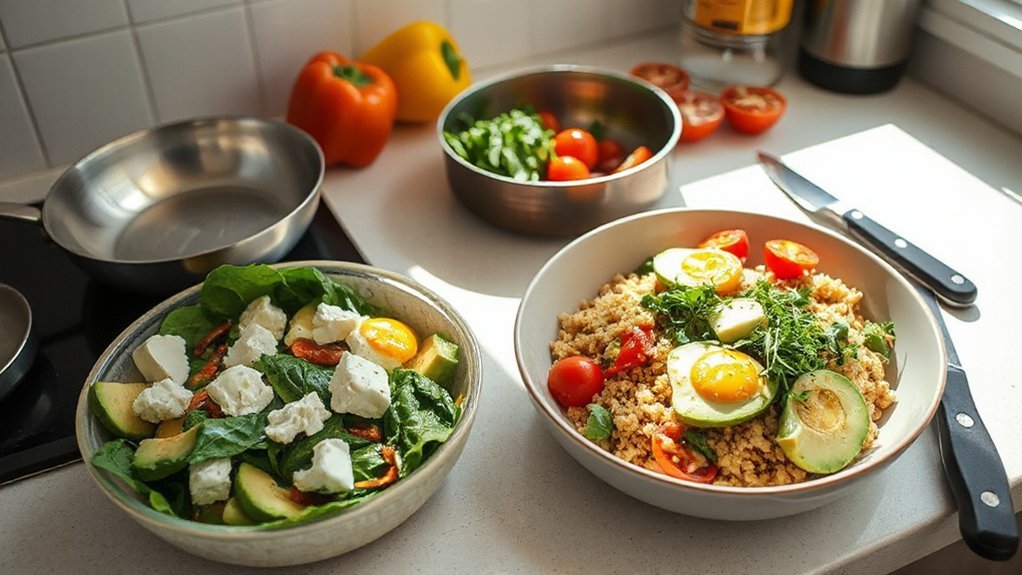
You can boost morning protein with a quick veggie egg scramble—whisk eggs with chopped peppers, spinach, and mushrooms for a micronutrient-rich start. Or assemble power breakfast bowls combining scrambled eggs or tofu with whole grains, roasted vegetables, and a sprinkle of seeds, which research shows helps sustain energy and satiety. Prep components ahead and you’ll be able to reheat and assemble in minutes to match your schedule and goals.
Veggie Egg Scramble
Building a veggie egg scramble gives you a fast, protein-rich breakfast that supports satiety and muscle maintenance while letting you tailor ingredients to dietary needs. You’ll choose Seasonal Vegetables to maximize flavor, nutrients, and budget; aim for color variety to boost fiber, vitamins, and antioxidants. Use two eggs or a mix of eggs and egg whites to meet protein targets, and sauté vegetables briefly to retain texture. Consider Herb Pairings—parsley and chives for freshness, basil with tomatoes, or cilantro for a brighter note—to enhance palatability without extra sodium. Portion by pairing with whole-grain toast or a small fruit for balanced carbs. If you have allergies or preferences, adjust fats, dairy, and salt; measure portions to stay aligned with goals. Track intake and observe results.
Power Breakfast Bowls
Start with a protein target—aim for about 20–30 g at breakfast—so your power bowl keeps you full, supports muscle maintenance, and helps stabilize blood sugar. Build bowls around eggs, Greek yogurt, or smoked salmon and add beans, quinoa, or tofu for variety. Choose colorful vegetables and a small serving of whole grains or fruit to round out energy and fiber. Follow a clear macronutrient strategy: roughly 30% protein, 30–40% carbs, 30–40% fat can work for many people, but tailor it to your needs. Use portion control—measure or estimate with your palm and cupped hand—to avoid excess calories while meeting goals. Prep components ahead so you assemble a balanced, satisfying breakfast in minutes. Swap ingredients based on preferences, allergies, and your activity level for performance.
Toast Upgrades: Savory and Sweet Toppings
You can turn simple toast into a balanced meal by adding savory protein toppings like smoked salmon, cottage cheese, or a fried egg to boost satiety and support muscle maintenance. For a sweeter option, top with Greek yogurt, fresh berries or mashed banana and a smear of nut butter to add fiber and antioxidants. Finish with crunchy nuts and seeds—chia, pumpkin, or chopped almonds—for healthy fats, texture, and a nutrient-dense calorie boost.
Savory Protein Toppings
Protein-rich toppings turn plain toast into a balanced, satisfying breakfast. You can add smoked salmon with light cream cheese, capers, and lemon for omega-3s and flavor; studies link this to improved satiety. For plant-based options, marinated tofu or hummus delivers protein and texture—choose low-sodium marinades. Keep portions practical: two to three ounces of fish or a quarter to half cup of tofu per slice. Use whole-grain bread to increase fiber and steady blood sugar. Table below highlights feelings and practical tips.
| Topping | Feeling & Tip |
|---|---|
| Smoked salmon | Nourished — layer thinly, add lemon |
| Marinated tofu | Satisfied — press, season, warm |
If you have dietary restrictions, consult a dietitian to tailor portions and sodium; swaps like avocado or cottage cheese raise protein while fitting preferences.
Sweet Fruit and Spreads
After enjoying savory toppings, sweet fruit and spreads can brighten toast while still supporting steady energy and nutrients. You can choose whole fruit like sliced banana or berries to add fiber and antioxidants; research links fruit to satiety and better glucose control when paired with protein or whole grain. Use light spreads—Greek yogurt, ricotta, or modest nut butters—to balance sweetness without excess sugar. Apply seasonal pairings: summer peaches with ricotta, autumn figs with honey, winter citrus with yogurt. Practice flavor layering by combining a base spread, fresh fruit, and a sprinkle of spice (cinnamon or citrus zest) to boost taste without added sugar. Aim for portion control and include a protein or whole-grain toast to maintain steady energy. Adjust portions to match your appetite.
Crunchy Nuts and Seeds
A handful of toasted almonds or a sprinkle of chia can turn plain toast into a nutrient-dense bite. You get protein, healthy fats and fiber that stabilize blood sugar, and research links these foods to satiety. Be client-centered: ask about allergies and note Allergy awareness measures. Offer sunflower or pumpkin seeds as alternatives. Prefer brands with Sustainable sourcing and low processing. Toast lightly, chop, then sprinkle over olive oil or yogurt. Store airtight to keep crunch and flavor. Use measured portions to meet goals and support adherence. Adjust portions to needs.
| Topping | Benefit | Portion |
|---|---|---|
| Almonds | Protein, vitamin E | 1 tbsp |
| Chia | Omega-3, fiber | 1 tbsp |
Quick Grain Bowls With Leftover Veggies
When you’re short on time, grain bowls let you turn leftover veggies into a balanced breakfast in minutes. You choose a base—try brown rice, quinoa, or farro—and use Grain Swaps to match texture and cook time to what’s left in your fridge. Add roasted or sautéed vegetables, a protein like beans or a soft-boiled egg, and leafy greens for fiber. For flavor and adherence to preferences, keep a few Sauce Pairings ready: lemon-tahini, soy-ginger, or herb vinaigrette. Portion for satiety: roughly one cup grains, half cup veggies, quarter cup protein. This approach is efficient, adaptable to dietary needs, and supported by guidelines emphasizing balanced macronutrients for morning energy. You can batch prep components to save time on busy weekdays and weekends with minimal cleanup.
Yogurt Parfaits With Crunchy Mix-Ins
Pick a yogurt that meets your nutrition needs — Greek or skyr for higher protein, or plain low-fat to limit added calories — and check labels for added sugars. Add creative crunchy mix-ins like toasted oats, nuts, seeds, or whole-grain granola to improve texture and satiety. Assemble layers just before eating, keep wet ingredients separate when storing, and portion into single-serve containers so they’re grab-and-go.
Choosing the Yogurt
How do you choose a yogurt that’s both nutritious and sturdy enough to stay creamy under crunchy mix-ins? You prioritize protein, Fat Content, and plain varieties with minimal additives. Check labels for protein per serving and live cultures; Greek or Icelandic styles often deliver more protein and stability. Consider Milk Source for allergies, flavor, and sustainability—cow, goat, or plant-based options vary in protein and texture. Choose full-fat or low-fat based on satiety needs and dietary goals. Taste-test single-serving tubs before batch prepping. Store chilled, stir gently, and add crunchy toppings just before eating to maintain creaminess.
| Feature | Impact |
|---|---|
| Protein | Holds texture |
| Fat Content | Adds creaminess |
| Milk Source | Affects flavor |
| Live Cultures | Aid digestion |
Use these criteria to personalize choices confidently; consult a dietitian soon.
Creative Crunch Mix-Ins
Because textural contrast boosts satiety and enjoyment, choose mix-ins that balance crunch, fat, and fiber so your parfait stays creamy and nourishing: nuts and seeds add protein and healthy fats, toasted oats or low-sugar granola give sustained energy, crushed high-fiber cereal or roasted chickpeas increase bulk without sogginess, and freeze-dried fruit preserves flavor without added moisture. When you select mix-ins, prioritize nutrient density and portion control — a tablespoon of cacao nibs delivers antioxidants and crunch while keeping sugar low; a small handful of wasabi peas offers fiber and an umami kick but can be high in sodium, so don’t ignore salt-sensitive diets. Pre-portion to avoid overeating, store crunchy components separately, and choose unsweetened options for better glycemic control. Adjust quantities to your calorie and taste—don’t.
Assembling and Serving Tips
When assembling your parfait, layer ingredients so the crunch stays dry—start with yogurt, add fruit, then sprinkle crunchy mix-ins just before serving or place them in a separate ramekin to preserve texture. You’ll improve acceptability and adherence by offering customizable bowls and clear serveware selection: choose transparent tumblers to display layers and shallow bowls for kids. Use portion labeling to guide calories and sugar targets; a simple sticker or pre-measured scoop reduces guesswork. For bulk prep, store mix-ins separately in airtight containers and keep fruit chopped in citrus-treated water to maintain color. When serving, encourage clients to stir in mix-ins for immediate crunch or leave them on top for softer bites later. Monitor feedback and adjust textures and portions accordingly to suit personal preferences.
On-the-Go Wraps and Breakfast Burritos
Packing a breakfast wrap or burrito lets you secure a balanced, portable meal when mornings are rushed, and research shows combos of protein and fiber help sustain energy and curb mid-morning hunger. You can customize fillings—eggs, lean turkey, beans, avocado—and add sautéed veggies for nutrients and texture. Prep strategies include batch-cooking proteins, portioning fillings, and using whole-grain tortillas to boost fiber. Learn Burrito Origins to appreciate ingredient simplicity, then explore Regional Varieties for ideas like California-style with avocado or Southwestern with black beans and salsa. Wrap tightly, cool before refrigerating, and reheat in a pan or microwave with a damp paper towel to preserve moisture. These practical steps save time, support satiety, and fit varied tastes and dietary needs. You’ll enjoy steady, focused mornings.
Sweet Pancake and Waffle Shortcuts
If you want quick, satisfying sweet breakfasts without sacrificing nutrition, use simple shortcuts that boost protein and fiber to keep you full longer: mix whole-grain pancake or waffle batter with protein powder or Greek yogurt, fold in mashed banana or oats for fiber, and cook in a waffle iron or nonstick pan in batches to refrigerate or freeze. You can also make a smooth blender batter for uniform texture and add frozen berries for antioxidants. Portion and label so reheating is fast; reheat waffles or pancakes in a toaster or oven to preserve texture. For larger prep, try sheet pan pancakes for even cooking and easy slicing — they save time and reduce waste. Aim for balanced toppings like nut butter and fruit daily.
Energizing Chia Puddings and Seed Bowls
Preparing chia puddings and seed bowls gives you a fast, nutrient-dense breakfast that’s easy to customize and prep ahead. You’ll get protein, fiber and hydration benefits from soaked seeds; research supports improved satiety and steady energy. Build bowls with Greek yogurt, milk alternatives, fresh fruit and nuts to balance macros. Aim for texture contrast—creamy pudding, crunchy seeds, juicy fruit—to increase satisfaction. Make jars to grab or chill overnight; portioning supports adherence to goals. Below is a quick emotional checklist to motivate your routine.
| Feeling | Action |
|---|---|
| Comfort | Warm spoonfuls |
| Energy | Steady fuel |
| Calm | Hydrating rhythm |
| Joy | Bright toppings |
Use measured portions and simple recipes so you stick with the habit; adjust sweetness and seeds based on preference and activity level, and track progress with metrics.
Kid-Friendly Grab-and-Go Options
Stock up on simple, portable breakfasts you and your kids can grab without fuss so mornings stay calm and nutritious. Choose balanced items—whole-grain muffins, yogurt tubes, hard-boiled eggs, fruit, and nut butter packs—that combine protein, fiber, and healthy fats to support concentration. Prepare portions the night before using clear containers and resealable bags; that evidence-based packing strategies cuts decision fatigue and guarantees portions. Let kids help pick favorites and use color-coded labeling systems to teach responsibility and speed selection. Keep an extra bin in the fridge or pantry labeled by day or child so you’re able to swap items based on activity level. Aim for variety across the week to prevent burnout while meeting nutritional needs for school-aged children. Adjust portions as needed daily.
Leave a Comment