

You can’t start every morning calmly by accident; you can design it. Small, research-backed habits — night-before prep, brief wake-up rituals, timed breakfasts, and kid-friendly tasks — cut chaos and stress. You’ll get practical steps and simple tools that make mornings smoother and more resilient, with options for different ages and schedules.
Cultivating a Calm Morning Mindset

Because mornings set the tone for the whole day, you’ll lower stress and boost focus by creating a calm mindset before the chaos starts. Begin with two minutes of mindful breathing—inhale slowly for four counts, hold one, exhale for six—to gently reduce cortisol and sharpen attention. Invite a brief gratitude practice: name three small things you appreciate to reframe priorities and increase resilience. If kids resist, model the routine; short, consistent habits stick. Keep cues simple: a timer, a sticky note, or a calming playlist. Evidence shows brief morning rituals improve mood and cognitive control, so adjust length to fit your family. Be gentle with yourself; consistency matters more than perfection when building a calmer morning. Celebrate small wins and track progress weekly together.
Night-Before Prep That Saves Time
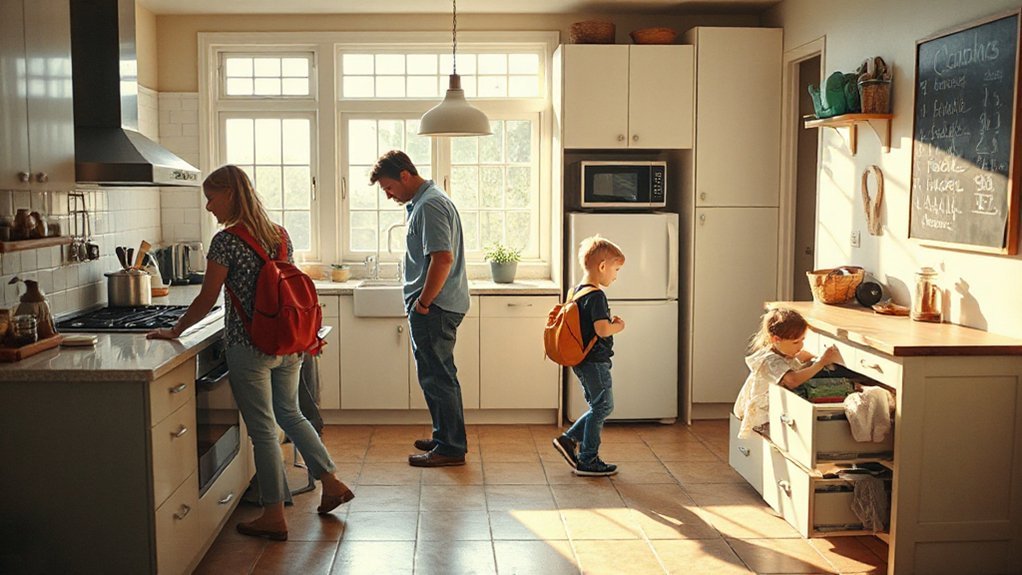
Laying out clothes, prepping lunches, and gathering backpacks the night before cuts morning chaos and decision fatigue, so you’ll move through your routine faster and with less stress. Set a short checklist: clothes for each person, lunch components in labeled containers, and school papers organized. Charge devices overnight in a common spot to avoid frantic searches and make sure device charging is complete. Put keys, wallets, and shoes by the door. For kids, involve them in simple choices to build habit and reduce reminders. Don’t forget pet prep—fill bowls, set walks or feeding times, and stash leashes where you’ll grab them. Evidence shows planning reduces cortisol and speeds shifts; this small investment saves minutes and emotional energy each morning, so everyone starts the day calmer.
Fast, Effective Wake-Up Rituals

Night-before prep gives you breathing room in the morning, so use that extra margin to set a fast, predictable wake-up ritual that helps everyone get moving with less friction. Start with gentle Sunlight Exposure—open curtains or step outside for two to five minutes to reset circadian cues and boost alertness. Follow with a short Stretch Sequence: two minutes of neck rolls, arm swings, hip hinges and calf stretches to raise circulation and reduce stiffness. Use a consistent cue (a song or soft chime) and a three to five minute timer so kids know what’s next. Keep instructions simple and praise compliance; research shows routines reduce stress and improve cooperation. Adjust timing to age and sleep needs, and keep rituals consistent on weekdays and weekends.
Breakfast Shortcuts for Busy Families
When mornings are hectic, you can save time and stress by preparing make-ahead breakfasts like overnight oats or egg muffins. Keep grab-and-go options—yogurt parfaits, whole fruit, or whole-grain wraps—ready in the fridge or a bin by the door. Make small, evidence-backed swaps, such as whole grains, Greek yogurt, or nut butter instead of sugary cereals, to boost nutrition without adding prep time.
Make-Ahead Breakfasts
Prepping breakfasts ahead saves you time and cuts morning stress—research shows that planning meals increases the likelihood you’ll serve healthier options on busy days. Think about simple make-ahead staples adapted from regional specialties and smart preservation methods so flavors stay bright. You’ll feel calmer knowing meals are ready. Schedule one prep session weekly, label containers, and use child-friendly portions. Try these easy ideas:
- Overnight oats with fruit and nuts, pre-portioned for quick warming.
- Baked egg muffins with veggies, frozen and reheated in minutes.
- Whole-grain breakfast bars made in bulk, sliced and wrapped.
- Slow-cooker steel-cut oats, cooled and chilled for grab-from-fridge servings.
Rotate recipes to avoid burnout and involve kids in prep to build routine. Small habits compound; your mornings will steadily become less chaotic.
Grab-and-Go Options
You’ve already cut morning stress by prepping breakfasts; now focus on grab-and-go options that keep that momentum on the busiest days. Pack balanced, portable choices—yogurt tubes, hard-boiled eggs, fruit and nut packs, whole-grain muffins—to eat en route or at school. Assemble items the night before and place them near Doorway Cubbies or Key Stations so kids can grab food as they grab backpacks and shoes. Studies show routine cues reduce forgetfulness and improve adherence; a consistent staging area cuts decision fatigue. Rotate a small weekly menu to simplify shopping and avoid boredom. Label containers with names and dates, and keep a visible checklist so everyone knows what’s ready. You’ll save time, reduce morning friction, and keep nutrition consistent. Celebrate small wins with quick praise.
Quick Healthy Swaps
Swap in smart, simple swaps to keep mornings healthy without adding time or stress. You can trade sugary cereals for high-fiber options, use Greek yogurt instead of sugary toppings, and rely on prepped fruit to grab quickly. Small switches boost nutrients and curb cravings without extra prep.
- Prep overnight oats with fruit and use Sugar alternatives like mashed banana or stevia to cut refined sugar.
- Make egg muffins in advance — they reheat fast and add protein to keep kids full.
- Choose whole-grain toast with avocado instead of butter; consider Oil alternatives such as mashed avocado or hummus.
- Keep single-serve nut butter packs and frozen smoothie packs for quick, balanced breakfasts.
These choices save time and support long-term healthy habits daily.
Getting Kids Ready: Routines That Work
When mornings feel chaotic, a few consistent steps can change everything. You’ll reduce stress by setting simple, predictable rituals: visual schedules, timed music cues, and a clear order for dressing, hygiene, and backpacks. Use positive language to invite cooperation—say “Let’s try socks next” rather than “Hurry up.” Encourage sibling teamwork by assigning small roles (shoe helper, hair check), which builds responsibility and lowers nagging. Start with one new habit, practice it for two weeks, then add another—research shows routine adoption improves compliance and decreases morning cortisol. Offer short, specific choices so kids feel control, and use timers and praise to keep momentum. Be patient; consistency beats perfection, and small wins compound into calmer starts. If mornings derail, gently reset the plan and try again.
Streamlined Lunch Packing Strategies
You can cut morning stress by planning weekly menus so choices are clear and shopping is targeted. Pack lunches the night before to save time and avoid rushed decisions. Use compartmentalized bento boxes to keep portions balanced, make variety appealing, and speed up assembly.
Plan Weekly Menus
Before the week begins, set a simple menu that pairs batch-prepped mains, rotating components, and grab-and-go snacks so you’ll cut decision fatigue and speed up packing. Use Theme Nights to limit choices—Mediterranean Monday, Taco Tuesday—then rotate proteins, grains, and veggies. Check your Grocery Inventory before shopping to avoid duplicates and wasted time. Plan portioned lunches that reuse one main across different sides for variety with less work.
- Prep a large main (roast chicken, tofu) and portion for 3-4 lunches.
- List 3 interchangeable sides (salad, grain, steamed veg) for quick swaps.
- Pack snack boxes of fruit, nuts, and cheese for easy grabs.
- Schedule weekly grocery trip based on your inventory and menu.
This approach reduces morning stress and saves up to 20 minutes.
Pack Night Before
After planning your week’s menu, pack lunches the night before to lock in the time savings and cut decision fatigue from busy mornings. You’ll reduce stress, improve nutrition choices, and create predictable mornings. Prep components in clear containers, label them, and stash thermoses in the fridge. Include quick Pet Prep items if pets need feeding before you leave, and lay out Car Essentials like reusable bags and ice packs by the door. Evidence shows routine reduces cognitive load; routines also save about 10 to 20 minutes per morning. Use this simple checklist:
| Item | Action |
|---|---|
| Sandwiches | Assemble & wrap |
| Veg/Fruit | Cut & portion |
| Snacks | Pack in small bags |
| Thermos/Drinks | Chill & place in fridge |
Grab the pre-packed bags in the morning and you’re ready.
Use Bento Boxes
Packing lunches into bento boxes makes assembling balanced, grab-and-go meals simpler and less stressful on rushed mornings. You’ll save time by prepping portions—protein, grain, fruit, veg—in reusable compartments so choices stay appealing and safe. Research shows portioning reduces waste and improves intake, and honoring Bento aesthetics encourages kids to eat. Respecting Cultural origins of bento can make lunches richer and teach kids about food traditions. Start small; rotate fillings weekly; involve kids in selection. Benefits include less morning decision fatigue and fresher lunches.
- Prep proteins and grains on prep day.
- Wash, chop, and portion produce in advance.
- Use dividers and silicone cups for variety.
- Let kids pick one fun item each evening.
These small steps free mornings and boost nourishment.
Smooth School and Work Departure Plans
When mornings feel rushed, you can cut stress by treating departures as a small, repeatable process: set out backpacks, clothes, and lunches the night before, agree on clear roles (who handles shoes, backpacks, pets), and build a 10–15 minute buffer into your leave time so unexpected delays don’t derail the whole household. Use simple checklists and visual cues so kids follow steps independently; evidence shows routines lower cortisol and improve punctuality. Coordinate carpools and communicate pickup windows clearly to reduce friction; Carpool Coordination paired with staggered exit times can simplify traffic. Plan Emergency Contingencies like neighbor backup or a pre-packed emergency kit for missed buses or sudden work calls. Review plans weekly, adjust based on what actually works, and praise effort to reinforce habit.
Tailoring Routines by Age and Household Rhythm
Because children’s needs and attention spans shift as they grow, you’ll get the most mileage from routines that match both developmental stage and your household’s natural rhythm. Assess ages: toddlers need repetition, school-age kids benefit from checklists, teens need autonomy. Use chronotype alignment—schedule demanding tasks when each person’s alertness peaks. Create predictable shifts and visual cues for younger children; set brief choice windows for tweens. Coordinate timing and spaces so tasks don’t collide.
- Morning roles: assign simple tasks by age.
- Time blocks: match activities to energy peaks.
- Sibling choreography: stagger wake times or task sequences.
- Review weekly: tweak based on sleep, mood, and outcomes.
These steps use developmental research and practical trial to reduce stress. Adjust gradually and track progress.




Leave a Comment