

You can cut morning chaos with a few targeted habits that fit your busy life. Do a quick night-before prep, pick three priorities, and start with hydration plus a short movement burst. These small changes free mental space, boost focus, and make drop-offs smoother—so you won’t scramble. Keep going to get a compact, practical routine you can try as soon as tonight.
Night-Before Prep to Simplify Morning Chaos

When you spend 10–20 minutes the night before, mornings stop feeling like a race: pack lunches, set out clothes (including shoes and accessories), prep breakfast components, and put backpacks or work bags by the door. You’ll also do quick Outfit Planning — choose outfits for everyone, confirm shoes and accessories, and hang outfits together so kids can dress themselves. Do a simple Workspace Prep: clear clutter, charge devices, set out documents and keys, and note top three tasks for the morning. Lay out snacks and water bottles without turning it into a project. Use a checklist on the fridge or phone to keep it consistent. This small routine reduces stress, gets everyone moving, and buys calm time for your commute or first meeting daily.
Quick Breakfasts That Fuel Focus and Energy

You’ve already shaved minutes off your morning by prepping outfits and bags—now use that same 10–15 minutes to set up breakfasts that actually keep you focused. Choose quick, nutrient-dense options you can grab or blend: batch Protein Smoothies, overnight oats, and Savory Oatmeals with eggs. Prep portions, freeze fruit packs, and pre-measure greens and protein powder.
| Option | Prep tip |
|---|---|
| Protein Smoothies | Freeze fruit, portion powder |
| Savory Oatmeals | Cook base, store toppings |
| Egg Muffins | Bake in batch |
| Greek Yogurt Parfait | Layer jars for grab-and-go |
You’ll feel calmer, more alert, and ready to tackle work without sacrificing nutrition. Start with two weekly prep sessions: one big-batch morning cook and one blender day so you won’t think about breakfast during busy schooldays or early meetings anymore, seriously.
Streamlined Kid-Ready Routines and Drop-Off Strategies
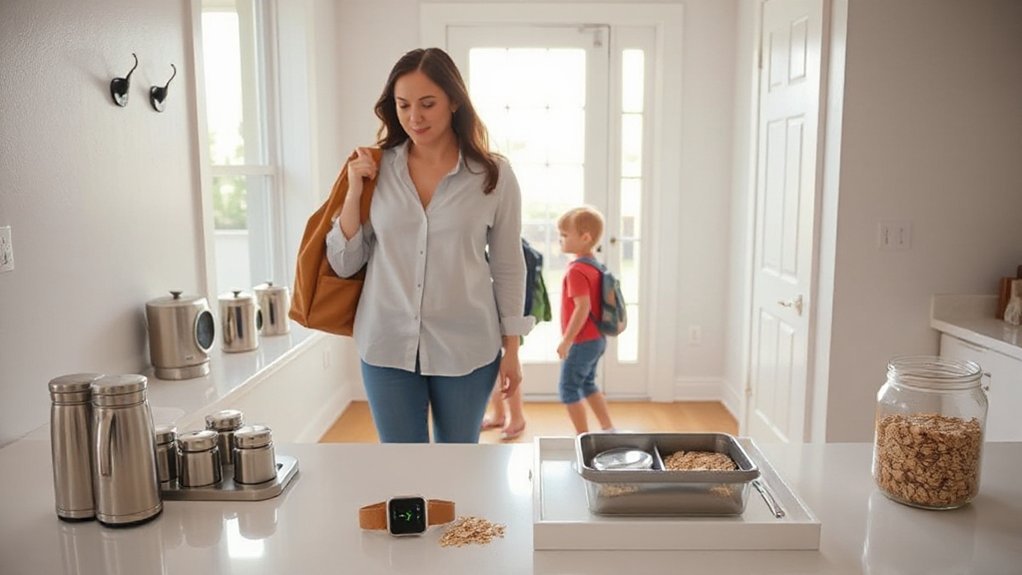
Because mornings feel chaotic, set simple systems that get kids out the door with minimal fuss: create a checklist by the door, lay out outfits the night before, pack lunches together, and assign clear roles. Use Sibling Stations—designate zones with morning tasks (clothes, teeth, backpack) so each child knows responsibilities and you reduce reminders. Practice quick Carpool Choreography: rehearse drop-off order, designate who opens doors, and keep a bin with permission slips and snacks in the car. Use visual timers and a wall calendar for pickups and after-school notes. On busy days, pick one nonnegotiable (arrival on time) and simplify other expectations. You’ll lower stress, save minutes, and leave home confident instead of frazzled. Adjust routines weekly so they always stay realistic and flexible.
Short Energizing Rituals: Movement, Breath, and Mindset
You can wake your body with a 2–3 minute movement burst—jumping jacks, squats, or marching in place—to raise energy and clear morning fog. Pair that with a simple breathwork pattern like three rounds of 4-4-6 (inhale 4, hold 4, exhale 6) to steady your focus. These tiny rituals fit any schedule and give you a calm, centered start before the day speeds up.
Quick Movement Burst
Jump-start your day with a 3–5 minute movement burst that combines simple stretches, intentional breaths, and a one-line mindset cue to sharpen energy and calm the mind. You’ll get quick blood flow, clearer thinking, and immediate momentum. Use mini routines you can do at the kitchen counter, top of stairs, or beside your desk.
- 30 seconds stair sprints (fast, controlled)
- 30 seconds desk circuits: chair squats and calf raises
- 30 seconds arm-open stretches to open chest
- 30 seconds hip swings and gentle twists
- 30 seconds standing reach + mindset cue: “I move with purpose”
Keep it consistent, modify intensity for sleepiness or soreness, and finish feeling ready to tackle priorities. Repeat daily, even on rushed mornings, and notice improved focus and steadier mood today.
Breathwork for Focus
After that quick movement burst, add a short breath routine to lock in focus and calm.
| Breath | Calm | Focus |
|---|---|---|
| Deep | Soothing | Clear |
| Steady | Safe | Alert |
| Everyday | Present | Resilient |
You’ll do 4–6 slow diaphragmatic breaths, then box-breathe (4-4-4-4) for six rounds to cue autonomic regulation and prompt cognitive enhancement. Keep it two minutes; it steadies your heart rate, clears scattered thoughts, and primes decision-making. If a toddler interrupts, inhale deeply, exhale slowly, and return. Use a gentle timer and verbal cue to make it habitual. Start your day with this compact ritual and notice sharper attention and more patient responses. Repeat before meetings or school runs to reset. You’ve got this—tiny practices yield steady gains. Celebrate small wins; consistency builds lasting focus and calm today.
Time-Blocking and Priority-Setting Before Work
Use a simple morning time-block template: 5 minutes to plan, 20 minutes for focused priority work or self-care, and short buffers for kids and transit. Write your top priorities first—one must-do and one should-do—and slot them into the freshest blocks. This keeps your energy focused and stops mornings from getting hijacked by low-value tasks.
Morning Time-Block Template
How do you make a morning routine actually work when you’ve got kids, deadlines, and very little time? Use a compact time-block template that balances morning tasks with realistic shifts. Divide your morning into Color Coded Blocks for visual clarity and include short Buffer Windows to absorb interruptions. A sample 60‑minute template:
- 5 min: Wake, hydrate, quick breath
- 15 min: Kids-ready / prep task
- 10 min: Personal care (fast)
- 20 min: Focused micro-task (email or prep)
- 10 min: Buffer Windows for drop-ins
Customize durations, keep blocks visible, and set soft alarms. You’ll reduce decision fatigue, handle surprises, and leave for work calm and prepared without rigid perfection. Start the night before with a simplified checklist to make mornings smoother and decisions quicker every day.
Top Priorities First
Pair your morning time-blocks with a short priority check so you tackle the top 1–3 things that actually move your day forward. Before you jump into email or chores, spend five minutes on a quick Priority Triage: list tasks, mark high-impact items, and discard or defer nonessentials. Use a simple Decision Framework—urgency vs. impact—to choose one clear winner and a backup. Block focused time for those tasks early, when interruptions are lower and your energy’s higher. If something unexpected appears, re-run the triage quickly and adjust a single block rather than scattering attention. This habit reduces overwhelm, protects momentum, and gives you permission to say no, so your morning drives results without stealing family time. You’ll feel calmer and more productive all day today.
Micro Self-Care Habits That Sustain Productivity
Even on the busiest mornings, small rituals you can do in two to five minutes steady your focus and energy for the day. You don’t need long self-care sessions—micro habits reset your nervous system and prepare you to show up. Try a short sequence you can repeat daily:
- Drink a glass with a hydration reminders alarm to anchor your morning.
- Do three deep breaths to lower stress and sharpen attention.
- Splash face and follow quick skincare rituals for a signal of self-respect.
- Stretch shoulders and neck to release tension from sleep.
- Review one clear priority to direct your energy.
These tiny, repeatable actions build momentum, protect focus, and make productivity sustainable without guilt. Do them consistently; they’ll compound into calmer, more effective days soon.






Leave a Comment