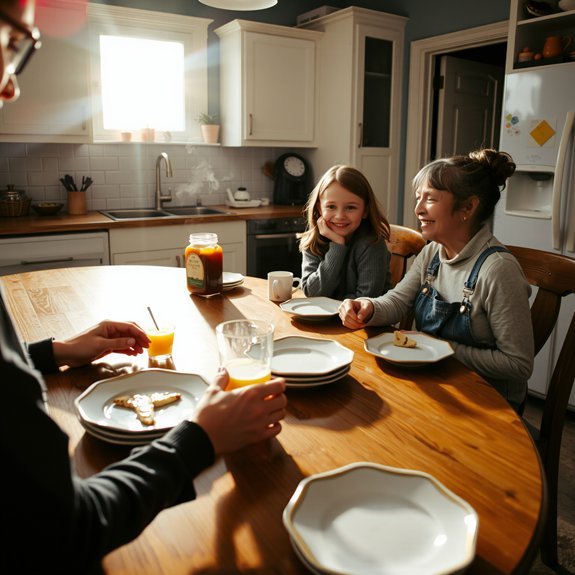

You know mornings can feel chaotic, yet you already have small strengths—shared routines, quick tasks kids can do, simple recipes—that help steady the day. When you build a short, predictable breakfast rhythm, you ease stress, steady blood sugar, and deepen connection. Ready to see practical, time-tested steps that fit your family’s life?
The Benefits of Sharing Morning Meals

When families eat breakfast together, you build a steady rhythm that nourishes both bodies and relationships. You create predictable time that reduces stress, lets people share plans, and models routines that support wellbeing. Over time, this simple practice deepens emotional bonding as you listen, laugh, and notice small shifts in mood or need. It also strengthens cultural connection when you pass recipes, stories, and rituals across generations, affirming identity and belonging. You don’t need a perfect meal—consistency matters more than cuisine. By valuing this shared start, you reinforce resilience across the family system, highlight everyone’s strengths, and make daily care practical and doable, even on busy mornings. Small decisions—who sets the table, who brews tea—let you distribute responsibility and celebrate contributions every single day.
How Breakfast Supports Kids’ Learning and Behavior

Sharing breakfast also gives kids a steady foundation for learning and positive behavior. When you sit together, you create predictable rhythms that calm mornings and support attention in class. A consistent meal stabilizes blood sugar so children engage more easily, improving Cognitive Performance during lessons and boosting Memory Retention for new skills. You model routines, self-regulation, and problem-solving, which teachers then reinforce. Notice small strengths—persistence at chores, calmer shifts—and build on them by keeping connection time regular. If mornings feel rushed, focus on one intentional habit rather than perfection; even brief, warm interactions help. You’re not fixing everything with food, but you’re reinforcing networks—biological, emotional, social—that help kids learn, behave, and grow with confidence. Celebrate progress together and adjust routines as needs evolve gently.
Quick, Nutritious Breakfast Ideas for Busy Families

Although mornings can feel chaotic, you can build a simple, reliable breakfast routine that feeds bodies and brains without extra stress. Focus on small systems: prep components, rotate favorites, and let kids choose. Make Overnight Oats in jars with oats, milk, yogurt, fruit, and nuts — label cups for grab-and-go. Batch-freeze Smoothie Packs with fruit, spinach, and protein powder; dump into a blender with milk or water for seconds. Keep hard-boiled eggs, whole-grain toast, yogurt cups, and cheese sticks accessible. Use versatile staples so you’ll mix quick combos that cover protein, fiber, and healthy fats. Celebrate what works, tweak what doesn’t, and rely on these portable, nutritious options on your busiest mornings. Small investments now pay off with calmer, nourished kids and caregivers daily.
Building a Consistent and Joyful Morning Routine
With grab-and-go breakfasts and prepped components in place, you can build a morning routine that runs on small, repeatable steps and feels cheerful instead of frantic. You set clear roles, simplify decisions, and create cues that prompt connection. Start with short gratitude moments at the table and upbeat wake up playlists to ease shifts. Keep routines flexible so success is reachable every day.
- Plan: choose two go-to breakfasts and set out dishes.
- Roles: assign simple tasks so everyone contributes.
- Timing: use alarms or timers to sync departures.
- Reflection: note wins and adjust small steps.
You’ll reinforce habit through consistency, celebrate strengths, and reduce rush without pressure. Over time the routine becomes a calming family rhythm that supports well-being and resilience.
Overcoming Common Obstacles to Family Breakfasts
When mornings feel chaotic and schedules collide, you can make family breakfasts work by pinpointing the specific barriers and turning them into manageable, strengths-based solutions. Start by mapping routines: note school timings, commute windows, and work shifts so you can identify where scheduling conflicts occur and adjust expectations. Use shared planning — a simple weekly checklist helps everyone contribute, building ownership and reducing morning stress. If financial constraints limit options, focus on affordable, nutritious staples and batch-cook on weekends to save time and money. Celebrate small wins: a five-minute sit-down counts. When you center strengths and system-level tweaks, you’ll create a sustainable rhythm that respects individual needs while nurturing family connection. Keep adapting together, and your breakfasts will evolve into resilient, meaningful daily rituals.






Leave a Comment