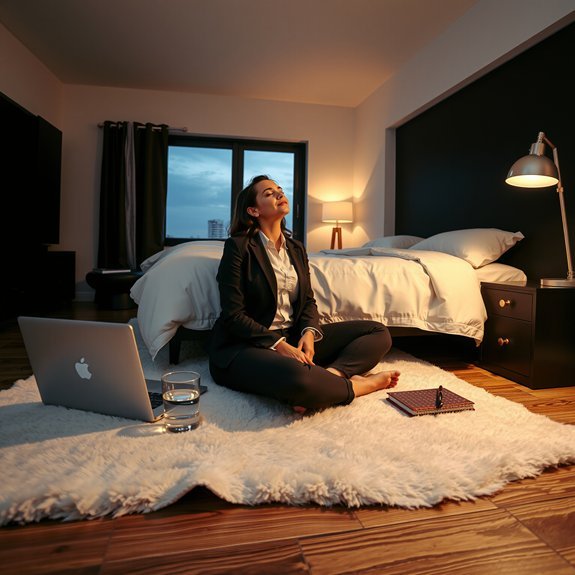

You can improve sleep without lengthy treatments by using practical, evidence-based habits that fit a busy work life. Keep regular bed and wake times, control light and temperature, limit late caffeine and alcohol, and use a short wind‑down routine. These steps often boost daytime function—here’s how to apply them.
Build a Consistent Sleep Schedule
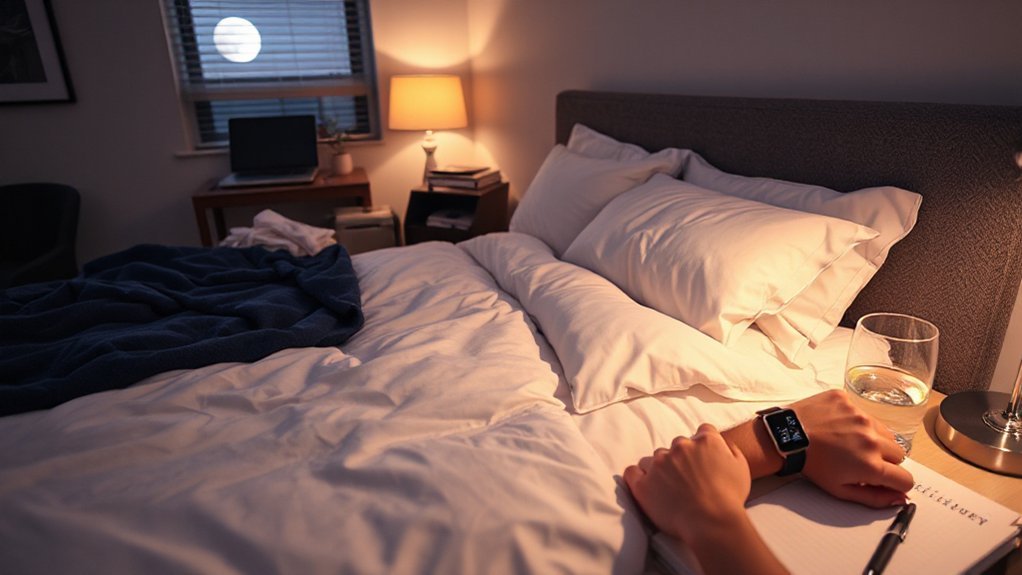
Regularly keeping the same bedtime and wake time helps entrain your circadian rhythm and improves sleep efficiency. You’ll set a target sleep window and shift it gradually by 15–30 minutes per night until it matches work demands and natural sleepiness. Track your timing consistently for two weeks to identify patterns and use habit stacking — attach a consistent pre-sleep routine to an existing evening behavior, like finishing dinner or brushing teeth — to automate timing. Limit late caffeine and schedule exercise earlier in the day. Use an accountability partner to report progress weekly; shared monitoring increases adherence. If shift work or insomnia prevents consistency, consult a clinician for timed light therapy, cognitive behavioral strategies, or medication review to optimize timing without compromising overall safety.
Optimize Your Bedroom Environment
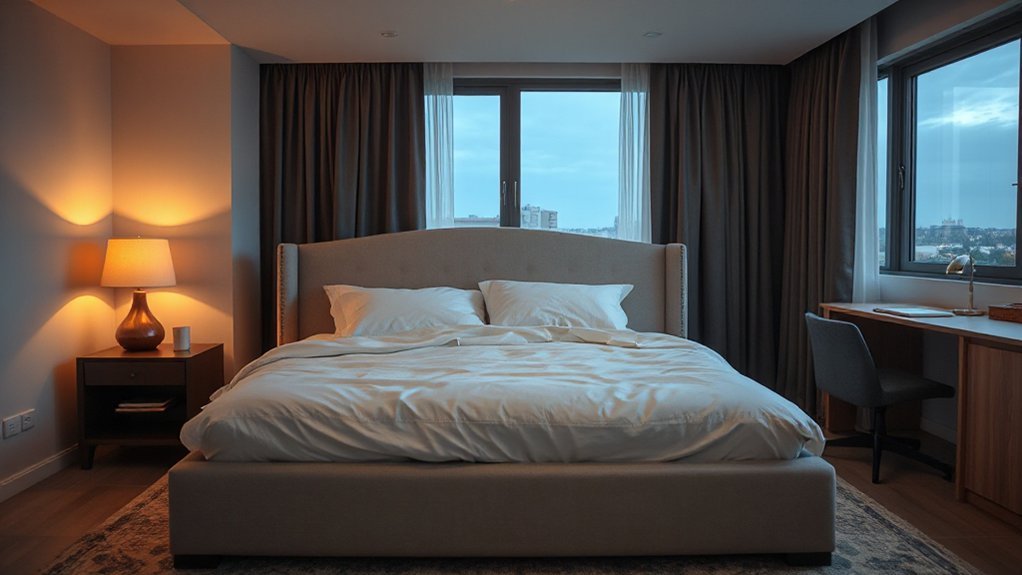
You’ll improve sleep by controlling light and noise in your bedroom. Install blackout curtains, dim or remove electronic lights, and use earplugs or a white-noise machine; studies show these measures reduce awakenings. Set your bedroom temperature to about 60–67°F (15.6–19.4°C) to support sleep onset and maintenance.
Control Light and Noise
Because even low levels of light and intermittent noise disrupt sleep physiology, control of your bedroom’s sensory environment is a clinical priority: aim for near-dark (<10 lux) conditions with consistent, low-level sound or masking if complete silence isn’t possible. Use evidence-based steps: perform Noise Mapping to identify intermittent peaks, apply blackout curtains or shutters, and consider Facade Treatments if external sources persist. You should eliminate light sources (LED clocks, chargers) and use warm, dimmable bedside lighting for pre-sleep routines. Follow these practical interventions:
- Seal gaps and add blackout layers to windows.
- Deploy white-noise or tailored masking at stable levels.
- Relocate or shield electronic light sources; set devices to night mode.
Review outcomes weekly and adjust interventions based on sleep logs and objective measures regularly monitored.
Set Ideal Temperature
If you set your bedroom to a sleep‑promoting cool range, you’ll shorten sleep onset and support deeper restorative sleep by aligning ambient conditions with normal nocturnal thermoregulation. Aim for 16–19°C (60–67°F) as a general target, but adjust within that window for age differences and individual metabolic variations. Cooler core temperatures facilitate slow-wave sleep; overweight or younger adults with higher metabolic rates may prefer slightly different set points. Use a programmable thermostat, fans, or breathable bedding to maintain stable temperatures and avoid bedroom humidity above 60%. Measure with a reliable thermometer at mattress level. If you wake chilled, add layers rather than increasing room temperature, since transient warming can fragment sleep. Track sleep quality as you titrate temperature for objective improvement. Consult clinicians if needed.
Create a Short, Calming Pre-Sleep Routine
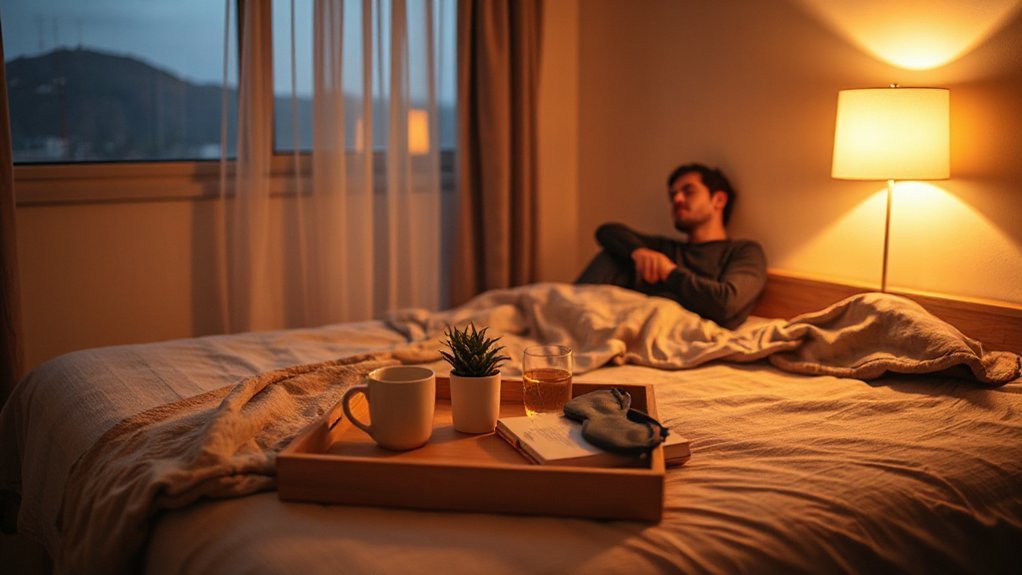
You should pick a consistent bedtime and wake time to stabilize your circadian rhythm and improve sleep efficiency. Turn off screens at least 30–60 minutes before bed to reduce blue-light exposure and evening arousal. Finish with a brief 3–5 minute paced-breathing exercise (about 4–6 breaths per minute) to lower heart rate and ease sleep onset.
Set a Consistent Time
When you go to bed at a consistent time and follow a brief, calming routine—about 20–30 minutes of low‑stimulus activities like reading, light stretching, or breathing exercises—you signal your circadian system and promote endogenous melatonin release, which shortens sleep onset and improves sleep efficiency. Aim for a fixed bedtime within 15–30 minutes nightly to stabilize sleep drive and daytime alertness. Use alarm personalization and partner coordination to align wake times without fragmenting sleep. Monitor results for two weeks, tracking sleep latency and perceived restoration.
- Set a target bedtime and stick to it daily.
- Adjust gradually by 15-minute increments when needed.
- Review objective and subjective sleep metrics weekly.
Small, consistent changes produce clinically meaningful improvements in sleep continuity and daytime function regularly.
Limit Screen Exposure
Although many people reach for phones or laptops in bed, exposure to bright, short‑wavelength light and engaging content both delay melatonin onset and raise cognitive arousal, worsening sleep latency and continuity. You can reduce impact by creating a short, calming pre‑sleep routine that eliminates screens 30–60 minutes before lights‑out. Perform an App Usage Audit to identify evening triggers and uninstall or mute apps that provoke engagement. Replace device time with low‑arousal activities: reading printed material, light stretching, or hygiene tasks. Shift notifications to grayscale and enable night‑mode earlier if you must use devices. Incorporate Screen Free Commutes—leave phones in a bag or do silent transit—to lower evening screen temptation and reset your circadian cues. These practical steps measurably improve sleep onset and continuity.
Soothing Breathing Exercises
After removing screens, incorporate brief respiratory exercises to lower physiological arousal and shorten sleep latency. You’ll perform 10-minute practices focusing on slow diaphragmatic breathing to optimize diaphragm function and moderate CO2 tolerance, which reduces hyperventilation and sympathetic tone. Start seated or supine, relax shoulders, keep breathing nasal.
- Box breathing: inhale 4, hold 4, exhale 4, hold 4 — repeat 5 cycles to steady heart rate.
- 6-4-8 pattern: inhale 6, hold 4, exhale 8 — promotes vagal activation and raises CO2 tolerance gently.
- Diaphragm trains: 5 minutes of slow nasal breaths with hands on abdomen to reinforce diaphragm function and sensory feedback.
Practice nightly, avoid forcing depth, and stop if lightheaded. Consult your clinician if you have respiratory disease, anxiety disorder, or unexplained dizziness during practice regularly.
Manage Light Exposure for Better Circadian Rhythm
Because light is the strongest cue for your circadian clock, deliberately timing and controlling exposure can shift sleep drive and daytime alertness. Aim for Morning Brightness within 30–60 minutes of waking: get 10–30 minutes of outdoor light or simulate it with high-correlated color temperature fixtures. Use Spectral Lighting principles—maximize short-wavelength (blue) content in the morning to suppress melatonin and enhance alertness, then reduce it in the evening. Dim screens and ambient lighting two hours before bedtime; employ warm, low-intensity bulbs and blue-light filters. For shift work or travel, use timed bright-light exposure and sunglasses strategically to phase-shift rhythms. Measure outcomes: track sleep onset latency, total sleep time, and daytime sleepiness to adjust timing. Consult occupational health or sleep medicine for persistent circadian disruption regularly.
Limit Stimulants and Alcohol Timing
Limit caffeine after mid-afternoon—you’ll often feel its effects for 6–8 hours, which can delay sleep onset and reduce sleep depth. Don’t use alcohol as a sleep aid; it may help you fall asleep but fragments sleep and suppresses REM later in the night. Aim to stop alcohol at least 3–4 hours before bed and track your individual sensitivity to stimulants.
Limit Caffeine Late Day
If you consume caffeine late in the day, its stimulating effects can persist for several hours and reduce both sleep quantity and quality. You should assess timing and dose: stop caffeine six to eight hours before planned sleep, adjust earlier if you have genetic sensitivity or metabolic differences that slow clearance. Use objective monitoring, track sleep latency and wake after sleep onset when you alter timing. Replace late coffee with decaf or herbal tea.
- Test: move your last caffeinated drink earlier by two hours for a week and measure sleep.
- Dose: reduce milligrams per serving; prefer low-caf options late afternoon.
- Consistency: keep sleep schedule and caffeine timing stable to evaluate effects.
Discuss concerns with your clinician if symptoms persist or worsen.
Avoid Alcohol Before Bed
Although alcohol often speeds sleep onset, it fragments sleep later by suppressing REM, increasing wake after sleep onset, and worsening respiratory instability in people with sleep-disordered breathing. You should avoid alcohol for at least 3–4 hours before bed; studies show later drinking reduces restorative REM and deep sleep and raises nocturnal arousals. If social expectations make evening drinking common, set limits: switch to decoys, commit to alcohol-free nights, or plan earlier consumption with a cut-off. Challenge alcohol myths that claim it “helps you sleep” by tracking sleep quality with an app or diary and reviewing objective outcomes. If you use alcohol to manage stress or insomnia, discuss alternatives—CBT-I techniques, relaxation training, and brief pharmacologic options—with a clinician to optimize sleep health for long-term benefit.
Use Naps Strategically and Sparingly
When used sparingly and timed right, brief naps can restore alertness and improve cognitive performance without disrupting nighttime sleep. You’ll treat naps as targeted interventions: schedule a 10-20 minute power nap in the early afternoon to boost vigilance and procedural memory. Limit naps to avoid sleep inertia and reduced sleep drive at night. Use a quiet, dim environment and set an alarm to prevent oversleeping. Avoid napping within 6-8 hours of your intended bedtime. If you rely on naps regularly, reassess nocturnal sleep duration and consistency. Consult a clinician if excessive daytime sleepiness persists, as underlying sleep disorders may be present now. Track nap timing, duration, and effects weekly.
- Recommended duration: 10-20 minutes.
- Timing: early afternoon, not near bedtime.
- Clinical follow-up for persistent sleepiness.
Move Your Body During the Day
Because regular daytime movement strengthens your sleep drive and circadian signals, aim for moderate aerobic activity most days and brief activity breaks every 30–60 minutes, especially if you sit for long periods. You’ll reduce sleep latency and improve sleep efficiency by combining 150 minutes weekly of moderate exercise with frequent micro workouts during the day: 2–5 minute high-intensity or resistance bursts that raise heart rate and metabolic demand. Implement posture breaks hourly to reset spinal alignment, reduce musculoskeletal strain and lower physiological arousal before sleep. Prioritize timing and consistency — earlier exercise favors sleep onset; avoid vigorous exertion in the last hour before bed. Track activity objectively when possible, set calendar prompts for movement, and treat these interventions as measurable components of your sleep hygiene plan.
Tame Evening Screen Time and Notifications
If you want to fall asleep faster and sleep more deeply, limit evening screen exposure and silence notifications since bright screens and alerting tones suppress melatonin and raise cognitive and physiological arousal. Dim screens, enable night mode, and set device Do Not Disturb 60–90 minutes pre-bed. Use Notification batching and Priority filters to reduce interruptions.
- Batch notifications: send nonurgent alerts at scheduled times.
- Configure priority filters: allow only essential contacts and alarms.
- Remove devices: charge phones outside the bedroom to cut temptation.
Track outcomes with sleep logs or wearable metrics and adjust timing and filter rules based on objective improvement. Clinical trials show reducing evening light and interruptions improves sleep latency and continuity, so iterate settings based on objective data and workplace needs regularly.
Manage Stress and Winding-Down Techniques
Reducing screen light and alerts lowers physiological arousal, but you still need strategies to calm racing thoughts and bodily tension before bed. Use progressive muscle relaxation, diaphragmatic breathing, brief mindfulness, cognitive reframing, and gratitude journaling to reduce sympathetic activity and pre-sleep rumination. Aim for a consistent 20–30 minute routine; clinical trials show benefits for sleep latency and continuity. If intrusive thoughts persist, schedule a 10-minute “worry time” earlier in the evening and jot actionable next steps. Avoid alcohol and heavy meals near bedtime. Monitor response and adjust techniques; combine behavioral skills with sleep opportunity stabilization. Below is a reference table.
| Technique | Purpose |
|---|---|
| Progressive muscle relaxation | Reduce muscle tension |
| Diaphragmatic breathing | Slow heart rate |
| Cognitive reframing | Reinterpret unhelpful thoughts |
| Gratitude journaling | Shift attention to positives |
Advocate for Sleep-Friendly Workplace Practices
When you push for sleep-friendly workplace practices, you’re promoting interventions that clinical studies link to better sleep, fewer errors, and improved productivity; start by proposing evidence-based changes like predictable schedules, limits on after-hours communications, controlled workplace lighting, and access to brief rest spaces or flexible start times. You can brief leadership on benefits and propose Manager Training that covers circadian health, duty rostering, and communication policies. Offer Sleep Education to staff via short modules and posters. Track outcomes (sleep duration, errors, absenteeism) and pilot flexible starts. Use simple metrics and iterate. Practical steps win buy-in:
- Implement predictable scheduling and limits on after-hours messages.
- Provide brief rest spaces and optional flexible start times.
- Deliver Manager Training and staff Sleep Education; measure impacts.
Report quarterly results.




Leave a Comment