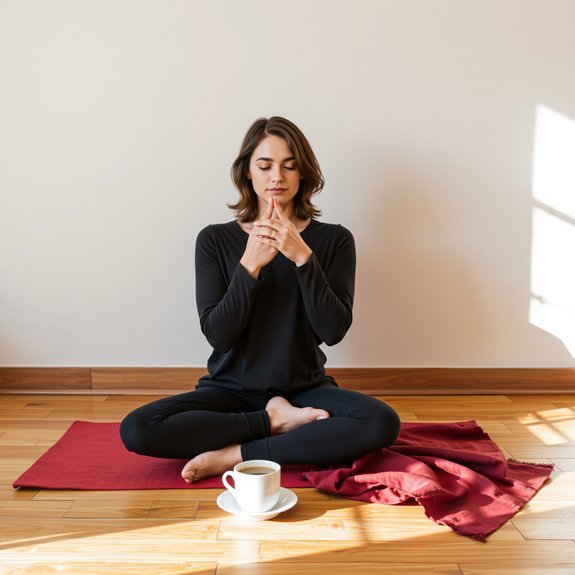

If mornings feel rushed, you can use short mindfulness practices to lower stress and sharpen focus. These simple, evidence-based habits regulate breathing, ease tension, and prime attention without taking extra time. You don’t need to be experienced to benefit. Here are five practical morning practices you can try—starting with a three-minute breath awareness.
Three-Minute Mindful Breathing
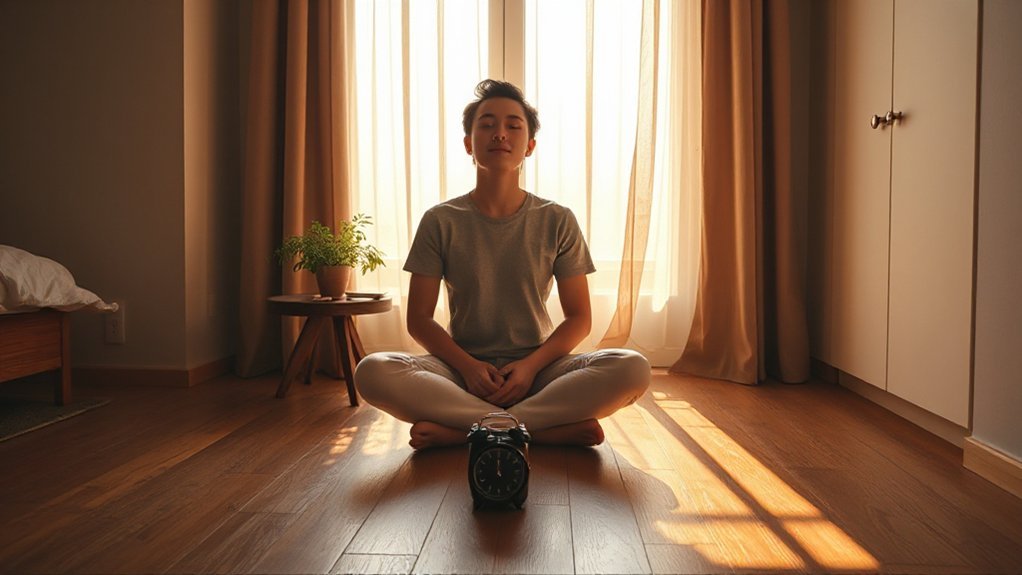
If you’ve got three minutes, sit comfortably, close your eyes or soften your gaze, and bring attention to your breath—inhale slowly through the nose, exhale gently through the mouth, and anchor each breath with a simple count or the sensation at your nostrils. You’ll use Breath Anchoring to return your focus when thoughts drift; notice without judgment and guide attention back to inhalation and exhalation. Try a brief Box Breathing pattern—four counts in, four hold, four out, four hold—to stabilize heart rate and reduce stress. Research shows short, regular sessions improve attention and lower physiological arousal. Aim for consistency: three minutes every morning builds neural pathways for calm. If emotions arise, acknowledge them and resume the rhythm; you’re practicing resilience. You’ll notice small changes.
Gentle Morning Body Scan
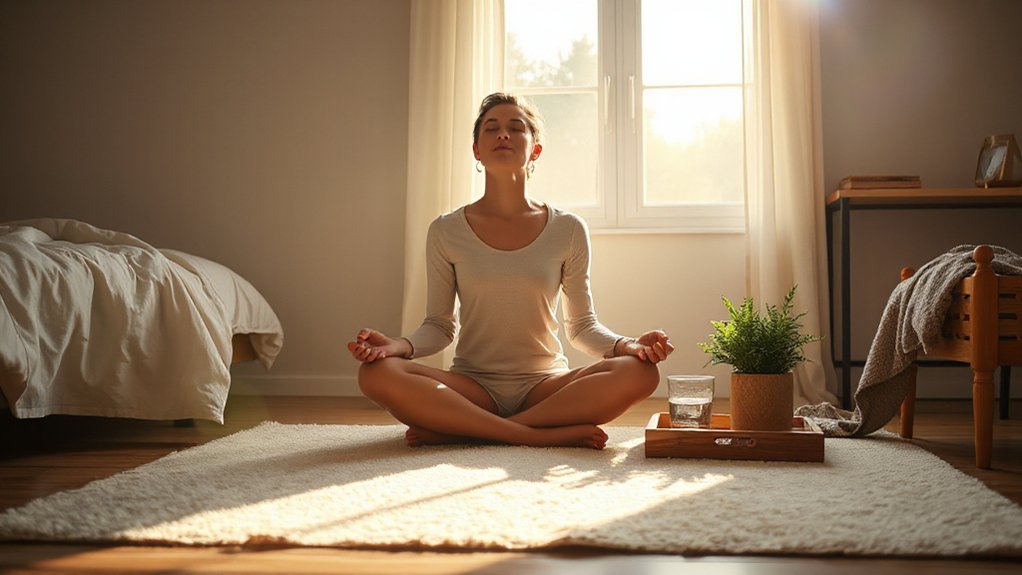
Because your body holds the morning’s tension, a gentle body scan helps you notice and release it before your day ramps up. You lie or sit comfortably, close your eyes, and bring curious attention to each region. This practice builds body literacy, so you can read stress signals early and respond calmly. Follow a simple sequence:
- Focus on your breath for a few cycles, sensing contact points.
- Bring attention to your feet, ankles, and legs, noticing sensations.
- Move awareness through hips, abdomen, chest, and shoulders without judgment.
- Finish at the neck and face, softening any held tension.
Research shows brief scans reduce autonomic arousal and improve mood. Practice daily for gradual benefit. Keep sessions short; consistency matters more than duration.
Mindful Movement and Stretching

Starting your morning with gentle, mindful movement and stretching wakes up your muscles and nervous system while anchoring attention in the body. You’ll move deliberately through simple sequences—neck rolls, spine stretches, hip openers—that increase circulation and improve mobility. Short routines reduce stiffness, lower stress markers, and raise focus. Include desk stretches if you expect sitting later; they maintain posture and circulation. Add balance exercises to enhance proprioception and reduce fall risk. Aim for 5–10 minutes, breathing steadily and noticing sensations. Modify intensity based on comfort and consult a clinician as needed. Use the table below to choose a quick routine that fits your needs.
| Movement | Benefit |
|---|---|
| Neck rolls | Release tension |
| Cat–cow | Spine mobility |
| Hip opener | Hip flexibility |
| Heel-to-toe | Balance exercises |
| Seated twist | Desk stretches |
Mindful Coffee or Tea Ritual
After gentle movement and stretching, pause to bring that embodied attention to your morning cup: make the act of brewing and sipping coffee or tea a brief, intentional practice. You’ll lower stress, sharpen focus by slowing down; research links mindful moments to reduced cortisol and improved mood. Begin with a ritual setup: choose your mug, water temperature, and place where you won’t be rushed. While brewing, focus on the sounds and movements. As you lift the cup, practice savoring aroma and notice body sensations. Let each sip be measured and attentive, setting a calm baseline for the day.
- Prepare intentionally: select tools and space.
- Observe brewing: sound, color, steam.
- Inhale: savoring aroma, bodily response.
- Sip slowly: notice taste, swallow, pause.
Setting Intentions With a Brief Gratitude Practice
How can a short gratitude practice clarify your intentions for the day? Take one to three minutes each morning to name something you appreciate, then state a simple, specific intention that reflects that feeling. Research links gratitude to improved mood and goal commitment, so pairing thanks with purpose helps form values aligned intentions you can actually follow. Treat this as a micro affirmation ritual: say aloud, write, or breathe the affirmation once, anchoring it with a slow exhale. That brief repetition reinforces neural pathways supporting motivation and focus. You’ll feel grounded without taking time away from your schedule, and you’ll increase the likelihood that choices throughout the day mirror who you want to be. Practice consistently and notice subtle shifts in your behavior regularly.






Leave a Comment